
Get significant tax savings and earn cash flow by investing in a short-term rental with data-backed selection. No guessing!
Find Your Airbnb InvestmentInvesting in Airbnb properties in Acadia National Park, Maine, presents a compelling opportunity given the region's consistent appeal as a premier tourist destination. Current market conditions in the area are characterized by strong seasonal demand for accommodations, fueled by millions of visitors annually drawn to the park's natural beauty, outdoor activities, and charming coastal towns. While property values in desirable locations within and around Acadia can be high, the robust tourism trends and limited supply of traditional lodging options contribute to a high occupancy rate and strong nightly rates for short-term rentals, indicating significant investment potential. However, it's crucial to consider the seasonal nature of the market, local regulations, and potential property management needs to ensure a profitable venture in Acadia National Park.
Average Airbnb earnings in Acadia National Park area range from $150-400 per night depending on property type and location, with monthly revenues typically spanning $3,000-12,000 for active hosts. Peak summer months generate 60-80% higher revenues compared to winter periods, with July and August commanding premium rates due to optimal weather and park accessibility. Seasonal variations show spring and fall shoulder seasons earning moderate rates around $200-250 nightly, while winter months often drop to $100-180 per night with significantly lower occupancy rates of 30-50% compared to summer's 80-90% occupancy. Earnings factors include proximity to park entrances, ocean views, property size and amenities, with waterfront properties and those within walking distance of popular attractions like Bar Harbor commanding 25-40% premium rates. Properties offering unique experiences such as historic charm, luxury amenities, or pet-friendly accommodations typically outperform standard listings by 15-30%. Competition intensity varies significantly by location, with Bar Harbor area having higher competition but also higher rate potential, while more remote locations offer less competition but may require competitive pricing strategies. Revenue optimization depends heavily on dynamic pricing strategies, professional photography, and maintaining high guest satisfaction ratings above 4.8 stars to achieve maximum booking potential and premium rate justification.
Airbnb investments near Acadia National Park typically generate ROI between 8-15% annually, with prime locations within 10 miles of the park entrance achieving the higher end of this range due to strong seasonal demand from May through October. The average payback period for initial investment ranges from 7-12 years, depending on property acquisition costs and renovation expenses, with waterfront or view properties recovering costs faster despite higher purchase prices. Short-term rentals in this market significantly outperform traditional long-term rentals, which typically yield 4-6% ROI annually, because Acadia-area Airbnbs can command $150-400 per night during peak season compared to monthly rents of $1,200-2,500 for similar properties. Properties in Bar Harbor, Southwest Harbor, and Northeast Harbor show the strongest performance with occupancy rates averaging 65-75% during the tourist season, while inland properties still achieve respectable 6-10% ROI with lower acquisition costs offsetting reduced nightly rates. The seasonal nature of the market means most annual revenue is concentrated in a 5-6 month window, requiring careful cash flow management, but the premium pricing during peak periods and growing popularity of Maine as a vacation destination has consistently driven appreciation rates of 3-7% annually beyond rental income returns.
Airbnb occupancy rates in the Acadia National Park area of Maine average approximately 65-70% annually, with dramatic seasonal fluctuations that peak at 85-95% during July and August when tourism is highest, dropping to 15-25% during winter months from December through March. The shoulder seasons of May-June and September-October maintain moderate occupancy rates around 50-65%, while spring months of April see rates climb from winter lows to about 40%. These rates significantly exceed Maine's statewide Airbnb average of approximately 55% and surpass the national average of roughly 48%, reflecting Acadia's status as one of the most visited national parks in the United States. The park's proximity to Bar Harbor and other coastal communities creates a concentrated tourism market that drives higher occupancy rates compared to more dispersed vacation rental markets, though the extreme seasonality creates challenges for year-round property management and revenue optimization.
The best Airbnb investment neighborhoods near Acadia National Park include Bar Harbor, which offers the highest pricing power due to its position as the main gateway town with walkable access to park entrances, downtown restaurants, and the ferry to the Cranberry Isles, attracting affluent tourists willing to pay premium rates of $200-400 per night during peak season. Southwest Harbor provides excellent value with lower property acquisition costs while maintaining strong rental demand from visitors seeking a quieter base near the park's western entrance and Somes Sound, typically commanding $150-250 nightly rates. Northeast Harbor appeals to upscale demographics with its yacht club atmosphere and proximity to Jordan Pond, offering luxury rental potential at $250-350 per night despite higher initial investment costs. Seal Harbor presents opportunities for high-end properties targeting wealthy visitors drawn to its exclusive character and easy park access, with potential rates of $300-500 per night for premium accommodations. Winter Harbor on the Schoodic Peninsula offers emerging investment potential with lower competition and property costs while serving visitors to the less crowded Schoodic section of the park, typically earning $125-200 per night. Bass Harbor provides affordable entry points for investors with steady demand from visitors accessing the park's southwestern areas and the famous lighthouse, generating $100-175 nightly rates. Tremont rounds out the options with budget-friendly property prices and consistent bookings from families seeking affordable accommodations near the park's quieter western sections, earning $90-150 per night with strong occupancy rates during summer months.
Short-term rental regulations around Acadia National Park in Maine vary by municipality, with Bar Harbor implementing some of the strictest controls in the region. Bar Harbor requires all short-term rentals to obtain a license through their Planning Department, with annual fees ranging from $200-400 depending on property size, and limits occupancy to 2 people per bedroom plus 2 additional guests with a maximum of 10 people total. The town enforces a 10% cap on the total number of short-term rental licenses available, calculated based on year-round housing units, and requires properties to be owner-occupied for at least 90 days per year or demonstrate local property management. Mount Desert, which encompasses several villages near the park, requires registration and limits rentals to properties in specific zoning districts, prohibiting them in residential areas zoned R1 and R2, while allowing them in village centers and commercial zones. Southwest Harbor and Tremont have implemented similar registration requirements with occupancy limits of 2 people per bedroom and mandatory parking provisions. In 2023, Bar Harbor reduced its short-term rental license cap from 15% to 10% and increased penalties for violations to $500 per day, while also requiring all rentals to have 24/7 local contact persons and noise monitoring systems, reflecting growing concerns about housing availability for year-round residents and seasonal workers in this popular tourist destination.
Short-term rentals in the Acadia National Park area of Maine are subject to Maine's statewide lodging tax of 9% on gross rental receipts, which includes the 5.5% general sales tax plus an additional 3.5% lodging tax. Bar Harbor, the primary gateway community to Acadia, requires short-term rental operators to obtain a business license costing approximately $25-50 annually and register with the town's Code Enforcement Office for around $100-150 per year. Mount Desert Island communities typically charge registration fees ranging from $75-200 annually, while some municipalities like Southwest Harbor and Northeast Harbor impose additional local option taxes of 1-3% on top of state requirements. Property owners must also pay standard property taxes, which average 1.2-1.4% of assessed value in Hancock County, and may face special assessments for tourism infrastructure improvements ranging from $50-300 annually depending on the municipality. Some towns require annual fire safety inspections costing $75-125 and septic system certifications every 3-5 years at approximately $200-400 per inspection.
Investing in Airbnb properties in Acadia National Park, Maine, presents a compelling opportunity given the region's consistent appeal as a premier tourist destination. Current market conditions in the area are characterized by strong seasonal demand for accommodations, fueled by millions of visitors annually drawn to the park's natural beauty, outdoor activities, and charming coastal towns. While property values in desirable locations within and around Acadia can be high, the robust tourism trends and limited supply of traditional lodging options contribute to a high occupancy rate and strong nightly rates for short-term rentals, indicating significant investment potential. However, it's crucial to consider the seasonal nature of the market, local regulations, and potential property management needs to ensure a profitable venture in Acadia National Park.
Average Airbnb earnings in Acadia National Park area range from $150-400 per night depending on property type and location, with monthly revenues typically spanning $3,000-12,000 for active hosts. Peak summer months generate 60-80% higher revenues compared to winter periods, with July and August commanding premium rates due to optimal weather and park accessibility. Seasonal variations show spring and fall shoulder seasons earning moderate rates around $200-250 nightly, while winter months often drop to $100-180 per night with significantly lower occupancy rates of 30-50% compared to summer's 80-90% occupancy. Earnings factors include proximity to park entrances, ocean views, property size and amenities, with waterfront properties and those within walking distance of popular attractions like Bar Harbor commanding 25-40% premium rates. Properties offering unique experiences such as historic charm, luxury amenities, or pet-friendly accommodations typically outperform standard listings by 15-30%. Competition intensity varies significantly by location, with Bar Harbor area having higher competition but also higher rate potential, while more remote locations offer less competition but may require competitive pricing strategies. Revenue optimization depends heavily on dynamic pricing strategies, professional photography, and maintaining high guest satisfaction ratings above 4.8 stars to achieve maximum booking potential and premium rate justification.
Airbnb investments near Acadia National Park typically generate ROI between 8-15% annually, with prime locations within 10 miles of the park entrance achieving the higher end of this range due to strong seasonal demand from May through October. The average payback period for initial investment ranges from 7-12 years, depending on property acquisition costs and renovation expenses, with waterfront or view properties recovering costs faster despite higher purchase prices. Short-term rentals in this market significantly outperform traditional long-term rentals, which typically yield 4-6% ROI annually, because Acadia-area Airbnbs can command $150-400 per night during peak season compared to monthly rents of $1,200-2,500 for similar properties. Properties in Bar Harbor, Southwest Harbor, and Northeast Harbor show the strongest performance with occupancy rates averaging 65-75% during the tourist season, while inland properties still achieve respectable 6-10% ROI with lower acquisition costs offsetting reduced nightly rates. The seasonal nature of the market means most annual revenue is concentrated in a 5-6 month window, requiring careful cash flow management, but the premium pricing during peak periods and growing popularity of Maine as a vacation destination has consistently driven appreciation rates of 3-7% annually beyond rental income returns.
Airbnb occupancy rates in the Acadia National Park area of Maine average approximately 65-70% annually, with dramatic seasonal fluctuations that peak at 85-95% during July and August when tourism is highest, dropping to 15-25% during winter months from December through March. The shoulder seasons of May-June and September-October maintain moderate occupancy rates around 50-65%, while spring months of April see rates climb from winter lows to about 40%. These rates significantly exceed Maine's statewide Airbnb average of approximately 55% and surpass the national average of roughly 48%, reflecting Acadia's status as one of the most visited national parks in the United States. The park's proximity to Bar Harbor and other coastal communities creates a concentrated tourism market that drives higher occupancy rates compared to more dispersed vacation rental markets, though the extreme seasonality creates challenges for year-round property management and revenue optimization.
The best Airbnb investment neighborhoods near Acadia National Park include Bar Harbor, which offers the highest pricing power due to its position as the main gateway town with walkable access to park entrances, downtown restaurants, and the ferry to the Cranberry Isles, attracting affluent tourists willing to pay premium rates of $200-400 per night during peak season. Southwest Harbor provides excellent value with lower property acquisition costs while maintaining strong rental demand from visitors seeking a quieter base near the park's western entrance and Somes Sound, typically commanding $150-250 nightly rates. Northeast Harbor appeals to upscale demographics with its yacht club atmosphere and proximity to Jordan Pond, offering luxury rental potential at $250-350 per night despite higher initial investment costs. Seal Harbor presents opportunities for high-end properties targeting wealthy visitors drawn to its exclusive character and easy park access, with potential rates of $300-500 per night for premium accommodations. Winter Harbor on the Schoodic Peninsula offers emerging investment potential with lower competition and property costs while serving visitors to the less crowded Schoodic section of the park, typically earning $125-200 per night. Bass Harbor provides affordable entry points for investors with steady demand from visitors accessing the park's southwestern areas and the famous lighthouse, generating $100-175 nightly rates. Tremont rounds out the options with budget-friendly property prices and consistent bookings from families seeking affordable accommodations near the park's quieter western sections, earning $90-150 per night with strong occupancy rates during summer months.
Short-term rental regulations around Acadia National Park in Maine vary by municipality, with Bar Harbor implementing some of the strictest controls in the region. Bar Harbor requires all short-term rentals to obtain a license through their Planning Department, with annual fees ranging from $200-400 depending on property size, and limits occupancy to 2 people per bedroom plus 2 additional guests with a maximum of 10 people total. The town enforces a 10% cap on the total number of short-term rental licenses available, calculated based on year-round housing units, and requires properties to be owner-occupied for at least 90 days per year or demonstrate local property management. Mount Desert, which encompasses several villages near the park, requires registration and limits rentals to properties in specific zoning districts, prohibiting them in residential areas zoned R1 and R2, while allowing them in village centers and commercial zones. Southwest Harbor and Tremont have implemented similar registration requirements with occupancy limits of 2 people per bedroom and mandatory parking provisions. In 2023, Bar Harbor reduced its short-term rental license cap from 15% to 10% and increased penalties for violations to $500 per day, while also requiring all rentals to have 24/7 local contact persons and noise monitoring systems, reflecting growing concerns about housing availability for year-round residents and seasonal workers in this popular tourist destination.
Short-term rentals in the Acadia National Park area of Maine are subject to Maine's statewide lodging tax of 9% on gross rental receipts, which includes the 5.5% general sales tax plus an additional 3.5% lodging tax. Bar Harbor, the primary gateway community to Acadia, requires short-term rental operators to obtain a business license costing approximately $25-50 annually and register with the town's Code Enforcement Office for around $100-150 per year. Mount Desert Island communities typically charge registration fees ranging from $75-200 annually, while some municipalities like Southwest Harbor and Northeast Harbor impose additional local option taxes of 1-3% on top of state requirements. Property owners must also pay standard property taxes, which average 1.2-1.4% of assessed value in Hancock County, and may face special assessments for tourism infrastructure improvements ranging from $50-300 annually depending on the municipality. Some towns require annual fire safety inspections costing $75-125 and septic system certifications every 3-5 years at approximately $200-400 per inspection.
* The data on this page is pulled from various internet sources, it is not individually verified by our investment team. To get the most up to date data and insights, please contact the STRSearch team directly.
How Smart Investors Build Wealth
Through Data-Driven STRs (Real Results)
From first-time investors to seasoned pros, see how our commitment to comprehensive data analysis led to unparalleled investment victories.
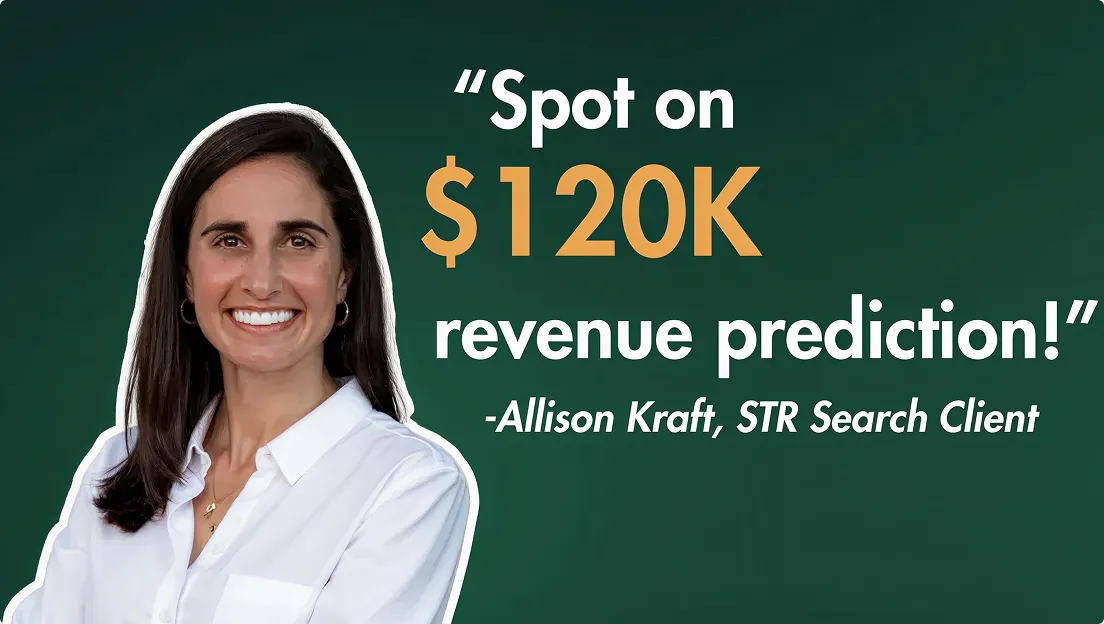
From zero real estate experience to a thriving short-term rental business, Allison locked in $120K in revenue her first year and is now expanding with STR Search again. Proof that the right team can turn analysis paralysis into profitable action!

Thanks to John's expert guidance, I made my first real estate and Airbnb investment a massive success, with consistent positive cash flow and an exceptional return on investment!

John's training gave me the confidence to secure a loan on the spot and scale from one STR to three. His approach is a total game-changer!
Why Choose STR Search?

Put your money to work & lower your tax bill
We’ve spent years analyzing what works so you don’t have to. Our job is to cut through bad data and help you make smart, profitable decisions backed by real numbers.
Schedule Your Free CallTrusted by hundreds of successful investors
Generate $3-5K+ monthly cash flow with our proven property matching system.
Build long-term wealth through STRs with cash flow, equity, and bonus depreciation.
Skip 6-12 months of trial and error with our data-driven underwriting and market analysis
We have a 100% success rate across $90M+ in Real Estate
Out of the 275+ properties we've helped our clients buy every single one has been profitable.
You want more money. More time. More freedom. But may be stuck trading hours for dollars, and scaling your investment strategy feels out of reach.
While others are getting lost in analysis paralysis, you’ve got capital and drive to change your situation. Investors who choose the right STRs can generate $3–5K/month in cash flow, plus serious tax benefits and long-term wealth.
We’ve spent years obsessed with STR investing data so you don’t have to.
With our property match services, there’s no guesswork! Just profitable properties built to perform. With the right deal, your capital can buy more than returns. It can buy your freedom.




All The Ways We Can Help You
Free courses, services, and trainings, to help you maximize your earnings from AirBnb...



Get in touch with us.
Everything Smart Investors Ask About STR Wealth Building
To start an Airbnb near Acadia National Park in Maine, begin by researching Bar Harbor, Southwest Harbor, and surrounding towns' short-term rental regulations, as many municipalities implemented strict ordinances between 2018-2022 limiting new STR licenses due to housing shortages. Contact local planning departments to understand zoning requirements, as residential zones may prohibit commercial lodging, and obtain necessary permits including business licenses, fire safety inspections, and potentially conditional use permits which can take 3-6 months. Search for properties within 30 minutes of the park entrance, focusing on areas like Bar Harbor ($400,000-$800,000 range), Ellsworth ($200,000-$400,000), or Trenton, ensuring the property allows short-term rentals under current zoning. Furnish with durable, coastal-themed furniture emphasizing comfort for hikers, including quality mattresses, outdoor gear storage, and kitchen essentials, budgeting $15,000-$30,000 for a 2-3 bedroom property. Create listings on Airbnb, VRBO, and local platforms highlighting proximity to Acadia's attractions like Cadillac Mountain and Jordan Pond, using professional photography showcasing both interior and nearby park views. Manage the property by establishing relationships with local cleaning services ($75-$150 per turnover), maintenance contractors familiar with coastal property challenges, and consider property management companies like Vacasa or RedAwning if you're not local, which typically charge 20-35% commission but handle guest communication, cleaning coordination, and emergency issues year-round.
To identify profitable short-term rental properties near Acadia National Park in Maine, focus on locations within 10-15 minutes of park entrances in Bar Harbor, Southwest Harbor, or Northeast Harbor, prioritizing properties with water views, proximity to downtown areas, and easy access to hiking trails. Seek 2-4 bedroom properties built after 1980 with modern amenities, outdoor spaces like decks or fire pits, parking for multiple vehicles, and unique features such as ocean views, historic charm, or luxury finishes that command premium rates of $200-500+ per night during peak season (June-October). Conduct pricing analysis using AirDNA and Mashvisor to identify properties generating $40,000-80,000 annually, with cap rates of 6-10%, while researching competition through Airbnb and VRBO to find underserved niches like pet-friendly or family-oriented properties. Utilize tools like Rabbu, AllTheRooms, and local MLS data combined with resources from the Bar Harbor Chamber of Commerce, Acadia National Park visitor statistics, and Maine's tourism data to understand seasonal demand patterns, with properties typically seeing 70-80% occupancy during summer months and 20-30% in winter, making year-round appeal through features like fireplaces, hot tubs, or proximity to winter activities crucial for maximizing profitability.
To obtain an Airbnb/STR permit for properties near Acadia National Park in Maine, you must apply through the specific municipality where your property is located, as Maine does not have a statewide STR registration system. For Bar Harbor (the most common location), apply through the Bar Harbor Code Enforcement Office by submitting a completed Short-Term Rental Registration application along with a site plan showing parking spaces, septic system documentation, fire safety inspection certificate from the Bar Harbor Fire Department, proof of liability insurance (minimum $300,000), and a $150 annual registration fee. The process typically takes 30-45 days for approval. Bar Harbor requires STRs to have adequate parking (minimum 2 spaces), functioning smoke and carbon monoxide detectors, posted maximum occupancy limits, and compliance with the town's noise ordinance with quiet hours from 9 PM to 7 AM. Properties must also meet septic capacity requirements based on the number of bedrooms and pass annual fire safety inspections. Other nearby towns like Southwest Harbor and Mount Desert have similar requirements but may have different fee structures ranging from $100-$200 annually, and some municipalities limit the total number of STR permits issued or require properties to be owner-occupied for part of the year.
Short-term rentals (STRs) are not legal within Acadia National Park itself, as federal law prohibits commercial lodging operations on National Park Service lands, but they are legal in the surrounding communities of Bar Harbor, Southwest Harbor, and other towns near the park in Maine. The towns around Acadia have implemented various regulations since 2018-2020, with Bar Harbor requiring STR permits, limiting the number of licenses, and restricting rentals in certain residential zones, while Southwest Harbor has similar permitting requirements and occupancy limits. Recent changes include Bar Harbor's 2019 ordinance that capped the number of STR licenses and required annual renewals, and in 2021-2022, several communities tightened noise restrictions and parking requirements due to increased tourism pressure. Visitors seeking STR accommodations must stay in properties located in the gateway communities outside the park boundaries, with many concentrated in Bar Harbor, which serves as the primary entrance town to Acadia National Park.
The best areas for Airbnb investment near Acadia National Park include Bar Harbor, which serves as the primary gateway to the park and attracts millions of visitors annually from May through October, offering proximity to park entrances, downtown restaurants, and the scenic Shore Path. Southwest Harbor provides a quieter alternative with access to the less crowded western side of the park and attracts visitors seeking authentic Maine fishing village experiences, particularly during the summer lobster season and fall foliage period from September to October. Northeast Harbor appeals to upscale travelers and offers luxury vacation rental potential due to its historic summer colony atmosphere, high-end shops, and proximity to Jordan Pond and Cadillac Mountain. Winter Harbor on the Schoodic Peninsula represents an emerging opportunity with lower property costs and growing interest in the park's quieter section, attracting nature photographers and off-season visitors. Ellsworth, located 20 minutes from the park, offers more affordable investment properties while still capturing overflow demand during peak summer months and providing access to business travelers visiting the regional medical center and government offices year-round.
Airbnb properties in the Acadia National Park area of Maine are subject to multiple lodging taxes that vary by municipality, with Bar Harbor imposing a 5% local lodging tax on short-term rentals under 28 days, while the state of Maine requires a 9% lodging tax on all transient accommodations including Airbnb rentals. These taxes are typically collected automatically by Airbnb through their platform for participating jurisdictions and remitted directly to the appropriate tax authorities on a monthly basis, though some smaller municipalities may require hosts to register separately and remit taxes manually on a quarterly basis. Mount Desert Island communities including Southwest Harbor and Northeast Harbor generally follow similar tax structures with rates ranging from 4-6% locally plus the state rate, while Trenton and other gateway communities near the park may have lower rates around 3-4% locally. Exemptions typically apply to stays over 28 consecutive days which are considered long-term rentals, and some municipalities exempt stays under $15 per night, though hosts must maintain detailed records and may need to obtain local business licenses or lodging permits depending on the specific town's requirements.
To start an Airbnb in Acadia National Park, Maine, expect total costs around $650,000-$750,000. Property purchase represents the largest expense at approximately $500,000-$600,000 for a median 2-3 bedroom home near the park, with waterfront or prime location properties commanding premium prices. Furnishing costs typically range $25,000-$35,000 for quality furniture, bedding, kitchen essentials, and outdoor equipment suitable for vacation rental guests. Initial setup including professional photography, listing creation, welcome materials, and basic renovations runs $3,000-$5,000. Permits and fees include Maine lodging license ($50), local business registration ($100-$300), and potential homeowner association approvals, totaling around $500-$1,000. Insurance costs approximately $2,000-$3,500 annually for short-term rental coverage through companies like Proper Insurance or CBIZ. Utilities including electricity, water, internet, cable, and heating average $300-$500 monthly in this region. First six months operating costs encompass utilities ($1,800-$3,000), cleaning services ($2,400-$4,800 assuming $100-$200 per turnover), maintenance reserves ($2,000), marketing ($1,000), and platform fees to Airbnb/VRBO ($3,000-$6,000 based on projected bookings), totaling approximately $10,200-$16,800 for initial operations.
Airbnb properties near Acadia National Park in Maine demonstrate strong profitability potential, with average nightly rates ranging from $150-400 depending on property type and proximity to the park, generating annual revenues of $25,000-75,000 for active hosts during the peak May-October season. Operating expenses typically include 25-30% for Airbnb fees, cleaning costs of $75-150 per turnover, property maintenance averaging $3,000-8,000 annually, insurance premiums of $1,200-2,500, and utilities costs of $2,400-4,800 yearly, resulting in net profit margins of 35-55% for well-managed properties. Success factors include strategic location within 15 miles of Bar Harbor or park entrances, professional photography showcasing Maine's coastal charm, amenities like kayaks or hiking gear, and maintaining super-host status through consistent 4.8+ ratings. Properties in Bar Harbor and Southwest Harbor command premium rates of $300-500 nightly during July-August peak season, while inland properties near Ellsworth offer better cash flow with $125-250 rates and lower acquisition costs. A typical 3-bedroom cottage purchased for $400,000 in 2019 near Jordan Pond generates approximately $45,000 annual revenue with $18,000 in expenses, yielding $27,000 net profit and 15-20% ROI, though success heavily depends on active management, seasonal marketing strategies, and maintaining competitive positioning against the area's 800+ active Airbnb listings.
Airbnb investments near Acadia National Park in Maine typically generate annual ROI of 12-18% with cash-on-cash returns ranging from 8-15%, driven by the park's 3.5 million annual visitors and peak summer season occupancy rates of 85-95%. Properties within 10 miles of the park, particularly in Bar Harbor, Southwest Harbor, and Tremont, command nightly rates of $200-450 during peak season (June-October) and $100-200 in shoulder months, with average annual occupancy of 65-75%. Initial investments of $400,000-800,000 for suitable vacation rental properties typically reach profitability within 18-24 months, factoring in renovation costs of $50,000-100,000 for short-term rental optimization. The market benefits from limited hotel inventory in the area, strong repeat visitor rates of 40%, and Maine's favorable short-term rental regulations, though investors should account for seasonal fluctuations where winter months may see occupancy drop to 20-30%, making diversification across multiple properties or markets advisable for consistent returns.
STRSearch is a leading national platform that specializes in identifying profitable short-term rental properties for investors looking in the Acadia National Park area of Maine. Local real estate agents who focus on investment properties in this region include Knowles Company Real Estate & Rentals, which has been serving Bar Harbor and surrounding areas since 1946, and Village Real Estate in Bar Harbor that specializes in vacation rental properties. Legacy Properties Sotheby's International Realty has agents experienced in luxury vacation rental investments throughout Mount Desert Island. National services include Mashvisor, which provides Airbnb analytics and property search tools for the Maine market, AirDNA for market data analysis, and Awning which offers end-to-end Airbnb investment services including property identification in Maine coastal areas. RedAwning and Vacasa also provide property management and investment consultation services for short-term rentals near Acadia National Park. Local property management companies like Acadia Cottage Rentals and Bar Harbor Vacation Rentals can provide insights into profitable properties and market conditions, while national platforms like BiggerPockets connect investors with local experts familiar with Maine's vacation rental regulations and seasonal market dynamics in the Acadia region.
Put your money to work & lower your tax bill
We’ve spent years analyzing what works so you don’t have to. Our job is to cut through bad data and help you make smart, profitable decisions backed by real numbers.
Schedule Your Free Call