
Get significant tax savings and earn cash flow by investing in a short-term rental with data-backed selection. No guessing!
Find Your Airbnb InvestmentInvesting in Airbnb properties in Barnstable, Massachusetts, presents a promising opportunity, largely due to its strong tourism appeal as a popular Cape Cod destination. Current market conditions in Barnstable show a consistent demand for short-term rentals, fueled by seasonal vacationers and visitors drawn to its picturesque beaches, charming towns, and maritime history. Property values in Barnstable, while relatively high, have shown steady appreciation, suggesting a stable real estate market. The investment potential is strong, particularly for properties that cater to the tourist demographic, offering amenities and locations desirable for short-term stays.
Based on available market data and rental performance analytics, Airbnb hosts in Barnstable, Massachusetts typically earn between $2,800 to $6,500 per month during peak summer season (June through August), with shoulder seasons generating approximately $1,200 to $3,200 monthly, and winter months averaging $800 to $1,800 per month. Properties closer to popular beaches like Craigville or Hyannis Port command premium rates of $250-450 per night in summer compared to $120-220 for inland locations, while waterfront properties can exceed $500 nightly during July Fourth and other peak weekends. Key factors influencing earnings include proximity to beaches and ferry terminals, property size and amenities, seasonal tourism patterns driven by Cape Cod's summer appeal, local events and festivals, and competition from traditional hotels and other short-term rentals. The average annual gross revenue for well-positioned properties ranges from $25,000 to $55,000, though luxury waterfront homes can generate upwards of $75,000 annually, with occupancy rates typically reaching 70-85% during summer months but dropping to 25-40% in winter. Data estimates are derived from vacation rental market analysis platforms, local tourism statistics, and hospitality industry reports tracking Cape Cod rental performance metrics.
Airbnb investments in Barnstable, Massachusetts typically generate ROI between 8-15% annually, with prime waterfront and downtown properties achieving the higher end of this range due to strong summer tourism demand on Cape Cod. The average payback period for initial investment ranges from 7-12 years, depending on property location and seasonal performance, with properties near beaches and Hyannis Port commanding premium rates during peak summer months from June through September. Compared to traditional long-term rentals in Barnstable which average 6-9% ROI annually, short-term rentals can outperform by 2-6 percentage points, though they require significantly more active management and face seasonal occupancy fluctuations that drop to 20-30% during winter months. Properties within walking distance of Main Street Hyannis or near popular beaches like Kalmus Beach typically see occupancy rates of 70-85% during peak season with average daily rates of $200-400, while off-season rates drop to $80-150 with much lower occupancy, making the annual performance heavily dependent on maximizing the critical May through October rental period.
Barnstable, Massachusetts experiences average Airbnb occupancy rates of approximately 65-70% annually, with significant seasonal variation typical of Cape Cod destinations. Peak season occupancy from June through August reaches 85-95%, driven by summer tourism and beach activities, while shoulder seasons in May and September see rates around 60-70%. Winter months from November through March drop to 25-35% occupancy as tourism declines significantly. Spring months of April and May show gradual increases to 45-55% as weather improves and visitors return. These rates generally exceed Massachusetts state averages by 10-15 percentage points during peak season due to Barnstable's coastal location and tourist appeal, though they align more closely with state averages during off-season periods. Compared to national Airbnb averages of approximately 48-52%, Barnstable performs substantially better during summer months but falls below national averages during winter, reflecting the highly seasonal nature of Cape Cod tourism where properties may remain vacant for extended periods during colder months.
The best Airbnb investment neighborhoods in Barnstable include Hyannis, which offers strong year-round demand due to its downtown amenities, ferry access to Nantucket and Martha's Vineyard, and proximity to beaches, allowing for premium pricing of $200-350 per night during peak season. Centerville provides excellent investment potential with its upscale residential character, beautiful beaches like Craigville Beach, and attracts affluent families willing to pay $250-400 nightly for quality accommodations. Osterville stands out as a luxury market with high-end properties near Dowses Beach and the village center, commanding $300-500 per night from wealthy vacationers seeking exclusive Cape Cod experiences. Cotuit offers a quieter, family-friendly atmosphere with access to pristine beaches and the famous Cotuit Oysters area, appealing to visitors seeking authentic Cape experiences at $200-300 nightly rates. Marstons Mills provides more affordable entry points for investors while still offering proximity to beaches and attractions, with rental rates of $150-250 per night and good occupancy due to its central location. West Barnstable attracts visitors interested in historic charm and proximity to Sandy Neck Beach, one of Cape Cod's most spectacular beaches, supporting rates of $200-350 per night. Barnstable Village itself offers historical appeal with the courthouse, old homes, and harbor access, drawing culturally-minded tourists willing to pay $180-280 per night for authentic New England experiences.
In Barnstable, Massachusetts, short-term rentals require a business certificate and must comply with local zoning bylaws that restrict such rentals primarily to certain residential districts, with many areas prohibiting them entirely in single-family neighborhoods. Properties must obtain a certificate of inspection from the health department and fire department, with occupancy typically limited to two persons per bedroom plus two additional guests, not exceeding 10 people total. Owner-occupancy requirements vary by district, with some zones requiring the owner to live on-site during rentals while others allow non-owner-occupied rentals with additional restrictions. The registration process involves submitting applications to the licensing authority with proof of insurance, floor plans, septic system compliance, and parking arrangements, along with annual renewal fees around $200-400. Zoning restrictions are particularly strict in historic districts and near beaches, with setback requirements and limitations on the number of rental units per property. Recent changes have included stricter enforcement of existing regulations, enhanced inspection requirements, increased penalties for violations, and discussions about implementing a cap on the total number of short-term rental permits, though specific numerical limits and recent ordinance modifications have been debated at town meetings with varying outcomes across different villages within Barnstable.
Short-term rentals in Barnstable, Massachusetts are subject to several fees and taxes including the state lodging tax of 5.7%, the local option room occupancy tax of 6% (totaling 11.7% in combined lodging taxes), and Cape Cod Commission development of regional impact fees averaging $2,500-$5,000 for new registrations. Annual permit costs range from $300-$500 depending on property size and location within Barnstable's villages, with initial registration fees of approximately $150-$250. Properties must also pay annual fire safety inspection fees of $75-$125, health department permits averaging $100-$200, and potential homeowners association fees where applicable. Additional costs may include business license fees of $50-$100 annually, parking permit fees of $25-$50 per space, and waste management surcharges of $150-$300 annually depending on occupancy levels and waste generation.
Investing in Airbnb properties in Barnstable, Massachusetts, presents a promising opportunity, largely due to its strong tourism appeal as a popular Cape Cod destination. Current market conditions in Barnstable show a consistent demand for short-term rentals, fueled by seasonal vacationers and visitors drawn to its picturesque beaches, charming towns, and maritime history. Property values in Barnstable, while relatively high, have shown steady appreciation, suggesting a stable real estate market. The investment potential is strong, particularly for properties that cater to the tourist demographic, offering amenities and locations desirable for short-term stays.
Based on available market data and rental performance analytics, Airbnb hosts in Barnstable, Massachusetts typically earn between $2,800 to $6,500 per month during peak summer season (June through August), with shoulder seasons generating approximately $1,200 to $3,200 monthly, and winter months averaging $800 to $1,800 per month. Properties closer to popular beaches like Craigville or Hyannis Port command premium rates of $250-450 per night in summer compared to $120-220 for inland locations, while waterfront properties can exceed $500 nightly during July Fourth and other peak weekends. Key factors influencing earnings include proximity to beaches and ferry terminals, property size and amenities, seasonal tourism patterns driven by Cape Cod's summer appeal, local events and festivals, and competition from traditional hotels and other short-term rentals. The average annual gross revenue for well-positioned properties ranges from $25,000 to $55,000, though luxury waterfront homes can generate upwards of $75,000 annually, with occupancy rates typically reaching 70-85% during summer months but dropping to 25-40% in winter. Data estimates are derived from vacation rental market analysis platforms, local tourism statistics, and hospitality industry reports tracking Cape Cod rental performance metrics.
Airbnb investments in Barnstable, Massachusetts typically generate ROI between 8-15% annually, with prime waterfront and downtown properties achieving the higher end of this range due to strong summer tourism demand on Cape Cod. The average payback period for initial investment ranges from 7-12 years, depending on property location and seasonal performance, with properties near beaches and Hyannis Port commanding premium rates during peak summer months from June through September. Compared to traditional long-term rentals in Barnstable which average 6-9% ROI annually, short-term rentals can outperform by 2-6 percentage points, though they require significantly more active management and face seasonal occupancy fluctuations that drop to 20-30% during winter months. Properties within walking distance of Main Street Hyannis or near popular beaches like Kalmus Beach typically see occupancy rates of 70-85% during peak season with average daily rates of $200-400, while off-season rates drop to $80-150 with much lower occupancy, making the annual performance heavily dependent on maximizing the critical May through October rental period.
Barnstable, Massachusetts experiences average Airbnb occupancy rates of approximately 65-70% annually, with significant seasonal variation typical of Cape Cod destinations. Peak season occupancy from June through August reaches 85-95%, driven by summer tourism and beach activities, while shoulder seasons in May and September see rates around 60-70%. Winter months from November through March drop to 25-35% occupancy as tourism declines significantly. Spring months of April and May show gradual increases to 45-55% as weather improves and visitors return. These rates generally exceed Massachusetts state averages by 10-15 percentage points during peak season due to Barnstable's coastal location and tourist appeal, though they align more closely with state averages during off-season periods. Compared to national Airbnb averages of approximately 48-52%, Barnstable performs substantially better during summer months but falls below national averages during winter, reflecting the highly seasonal nature of Cape Cod tourism where properties may remain vacant for extended periods during colder months.
The best Airbnb investment neighborhoods in Barnstable include Hyannis, which offers strong year-round demand due to its downtown amenities, ferry access to Nantucket and Martha's Vineyard, and proximity to beaches, allowing for premium pricing of $200-350 per night during peak season. Centerville provides excellent investment potential with its upscale residential character, beautiful beaches like Craigville Beach, and attracts affluent families willing to pay $250-400 nightly for quality accommodations. Osterville stands out as a luxury market with high-end properties near Dowses Beach and the village center, commanding $300-500 per night from wealthy vacationers seeking exclusive Cape Cod experiences. Cotuit offers a quieter, family-friendly atmosphere with access to pristine beaches and the famous Cotuit Oysters area, appealing to visitors seeking authentic Cape experiences at $200-300 nightly rates. Marstons Mills provides more affordable entry points for investors while still offering proximity to beaches and attractions, with rental rates of $150-250 per night and good occupancy due to its central location. West Barnstable attracts visitors interested in historic charm and proximity to Sandy Neck Beach, one of Cape Cod's most spectacular beaches, supporting rates of $200-350 per night. Barnstable Village itself offers historical appeal with the courthouse, old homes, and harbor access, drawing culturally-minded tourists willing to pay $180-280 per night for authentic New England experiences.
In Barnstable, Massachusetts, short-term rentals require a business certificate and must comply with local zoning bylaws that restrict such rentals primarily to certain residential districts, with many areas prohibiting them entirely in single-family neighborhoods. Properties must obtain a certificate of inspection from the health department and fire department, with occupancy typically limited to two persons per bedroom plus two additional guests, not exceeding 10 people total. Owner-occupancy requirements vary by district, with some zones requiring the owner to live on-site during rentals while others allow non-owner-occupied rentals with additional restrictions. The registration process involves submitting applications to the licensing authority with proof of insurance, floor plans, septic system compliance, and parking arrangements, along with annual renewal fees around $200-400. Zoning restrictions are particularly strict in historic districts and near beaches, with setback requirements and limitations on the number of rental units per property. Recent changes have included stricter enforcement of existing regulations, enhanced inspection requirements, increased penalties for violations, and discussions about implementing a cap on the total number of short-term rental permits, though specific numerical limits and recent ordinance modifications have been debated at town meetings with varying outcomes across different villages within Barnstable.
Short-term rentals in Barnstable, Massachusetts are subject to several fees and taxes including the state lodging tax of 5.7%, the local option room occupancy tax of 6% (totaling 11.7% in combined lodging taxes), and Cape Cod Commission development of regional impact fees averaging $2,500-$5,000 for new registrations. Annual permit costs range from $300-$500 depending on property size and location within Barnstable's villages, with initial registration fees of approximately $150-$250. Properties must also pay annual fire safety inspection fees of $75-$125, health department permits averaging $100-$200, and potential homeowners association fees where applicable. Additional costs may include business license fees of $50-$100 annually, parking permit fees of $25-$50 per space, and waste management surcharges of $150-$300 annually depending on occupancy levels and waste generation.
* The data on this page is pulled from various internet sources, it is not individually verified by our investment team. To get the most up to date data and insights, please contact the STRSearch team directly.
How Smart Investors Build Wealth
Through Data-Driven STRs (Real Results)
From first-time investors to seasoned pros, see how our commitment to comprehensive data analysis led to unparalleled investment victories.
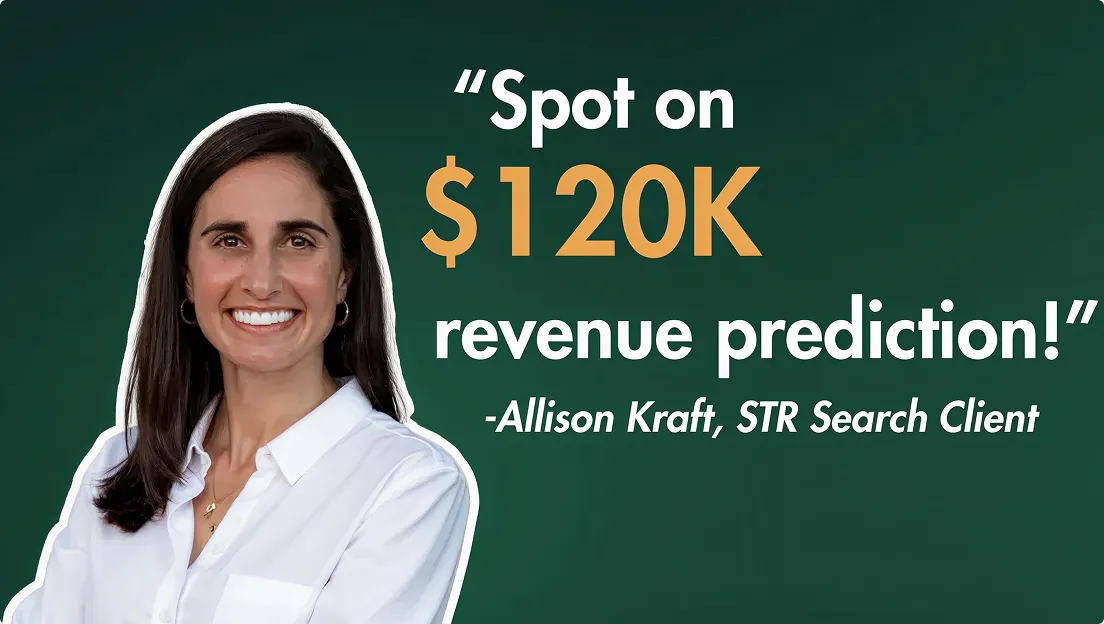
From zero real estate experience to a thriving short-term rental business, Allison locked in $120K in revenue her first year and is now expanding with STR Search again. Proof that the right team can turn analysis paralysis into profitable action!

Thanks to John's expert guidance, I made my first real estate and Airbnb investment a massive success, with consistent positive cash flow and an exceptional return on investment!

John's training gave me the confidence to secure a loan on the spot and scale from one STR to three. His approach is a total game-changer!
Why Choose STR Search?

Put your money to work & lower your tax bill
We’ve spent years analyzing what works so you don’t have to. Our job is to cut through bad data and help you make smart, profitable decisions backed by real numbers.
Schedule Your Free CallTrusted by hundreds of successful investors
Generate $3-5K+ monthly cash flow with our proven property matching system.
Build long-term wealth through STRs with cash flow, equity, and bonus depreciation.
Skip 6-12 months of trial and error with our data-driven underwriting and market analysis
We have a 100% success rate across $90M+ in Real Estate
Out of the 275+ properties we've helped our clients buy every single one has been profitable.
You want more money. More time. More freedom. But may be stuck trading hours for dollars, and scaling your investment strategy feels out of reach.
While others are getting lost in analysis paralysis, you’ve got capital and drive to change your situation. Investors who choose the right STRs can generate $3–5K/month in cash flow, plus serious tax benefits and long-term wealth.
We’ve spent years obsessed with STR investing data so you don’t have to.
With our property match services, there’s no guesswork! Just profitable properties built to perform. With the right deal, your capital can buy more than returns. It can buy your freedom.





All The Ways We Can Help You
Free courses, services, and trainings, to help you maximize your earnings from AirBnb...


Get in touch with us.
Everything Smart Investors Ask About STR Wealth Building
To start an Airbnb in Barnstable, Massachusetts, begin by researching local zoning laws and short-term rental regulations, as Barnstable requires hosts to obtain a Short-Term Rental License through the Town Clerk's office and comply with specific occupancy limits and safety requirements. Contact the Barnstable Building Department at 508-862-4786 to verify your property meets fire safety codes and obtain necessary permits, including potential fire department inspections and smoke detector certifications. Find a suitable property in residential zones that allow short-term rentals, keeping in mind that some areas may have restrictions on rental duration or guest capacity. Furnish the space with quality furniture, linens, and amenities while ensuring compliance with Massachusetts innkeeper laws and ADA accessibility requirements where applicable. Create your listing on Airbnb and other platforms, highlighting proximity to Cape Cod attractions like Hyannis Harbor and local beaches, while setting competitive rates based on seasonal demand patterns typical to the Cape Cod area. For ongoing management, establish relationships with local cleaning services, maintenance contractors, and consider property management companies familiar with Barnstable's tourism seasons, while maintaining detailed records for Massachusetts state tax requirements including the 5.7% short-term rental excise tax and local room occupancy taxes that may apply to your Barnstable location.
To identify profitable short-term rental properties in Barnstable, Massachusetts, focus on locations within 0.5-1 mile of popular beaches like Craigville Beach or Hyannis Harbor, properties near downtown Hyannis for walkability to restaurants and ferry terminals to Martha's Vineyard and Nantucket, and neighborhoods like Centerville, Osterville, and Cotuit that offer quintessential Cape Cod charm. Target 3-4 bedroom properties built after 1980 with modern amenities, outdoor spaces like decks or patios, parking for 2+ cars, and classic Cape Cod features such as cedar shingles or coastal décor that photograph well for listings. Conduct pricing analysis using AirDNA and Mashvisor to identify properties where potential STR revenue (typically $150-400/night in peak summer season, $75-150 in shoulder seasons) exceeds long-term rental income by 40-60%, while accounting for Barnstable's seasonal occupancy patterns that peak June-September. Research competition by analyzing similar properties within 2-mile radius on Airbnb and VRBO, noting average daily rates, occupancy rates, and guest reviews to identify market gaps or oversaturated areas. Utilize Cape Cod-specific resources like the Cape Cod Commission's housing data, Barnstable's zoning maps to ensure STR compliance, local property management companies like Cape Cod Oceanview or Vacasa for market insights, and connect with Barnstable real estate agents specializing in investment properties who understand seasonal rental regulations and can identify off-market opportunities in this competitive vacation rental market.
To obtain an Airbnb/STR permit in Barnstable, Massachusetts, you must first apply through the Barnstable Building Division and Planning & Development Department by submitting a Short-Term Rental Registration application available on the Town of Barnstable website. Required documents include a completed application form, proof of property ownership or lease agreement, floor plan showing maximum occupancy, septic system inspection certificate (if applicable), parking plan showing required spaces, contact information for a local representative within 30 minutes of the property, and a $200 annual registration fee. The process typically takes 4-6 weeks for approval once all documents are submitted. Barnstable-specific requirements include limiting occupancy to 2 people per bedroom plus 2 additional guests, maintaining a maximum of 10 guests total, providing adequate parking (1 space per bedroom), ensuring septic system compliance for properties not on municipal sewer, displaying the registration number in all advertisements, maintaining a guest registry, and having a local contact person available 24/7 who can respond to the property within 30 minutes. Properties must also comply with all zoning regulations, building codes, and health department requirements, and the registration must be renewed annually by December 31st with the same fee and updated documentation.
Short-term rentals (STRs) are legal in Barnstable, Massachusetts, but are subject to comprehensive local regulations implemented in 2019 and updated in subsequent years. The town requires STR operators to obtain annual permits, pay registration fees, and comply with occupancy limits, parking requirements, and noise restrictions. Properties must meet health and safety standards, including smoke and carbon monoxide detectors, and operators must provide 24/7 contact information for complaints. STRs are prohibited in certain residential zones and require special permits in others, with the town maintaining stricter controls in densely populated areas to preserve neighborhood character. Recent changes include enhanced enforcement mechanisms, increased penalties for violations, and requirements for local representation if owners are not residents. The town also imposes a local rooms tax on STR stays and requires operators to register with the state, reflecting Massachusetts' broader regulatory framework that took effect around 2019-2020 requiring all STR operators to register with the Department of Revenue and collect state taxes.
The best Airbnb investment areas in Barnstable, Massachusetts include Hyannis, which serves as the commercial hub with year-round ferry access to Nantucket and Martha's Vineyard, attracting both tourists and business travelers, particularly strong during summer months and Cape Cod Baseball League season. Centerville offers upscale beachfront properties near Craigville Beach, popular with families and young adults, while Osterville provides luxury vacation rental opportunities with its prestigious waterfront locations and proximity to high-end shopping and dining. Cotuit appeals to visitors seeking quieter, authentic Cape Cod experiences with its historic village charm and oyster farming heritage, while Marstons Mills offers more affordable investment options while still providing access to beaches and outdoor activities. West Barnstable attracts nature enthusiasts with proximity to Sandy Neck Beach and conservation areas, and the area benefits from events at the Cape Cod Fairgrounds and seasonal festivals throughout the year, making these neighborhoods particularly attractive for short-term rental investments due to consistent tourist demand from May through October.
Airbnb properties in Barnstable, Massachusetts are subject to multiple lodging taxes including the state excise tax of 5.7% on short-term rentals under 90 days, the state sales tax of 6.25%, and a local room occupancy tax of 6% imposed by Barnstable County. These taxes are typically collected by Airbnb directly from guests at the time of booking through their automated tax collection system, which began around 2017-2018 for Massachusetts properties. Airbnb remits the collected state taxes directly to the Massachusetts Department of Revenue on a monthly basis, while local taxes are remitted to the appropriate municipal authorities. Property owners are required to register with the state and obtain a room occupancy excise tax account, and must file returns even when Airbnb collects the taxes to ensure compliance. Exemptions may apply for stays exceeding 90 consecutive days, which are considered long-term rentals rather than short-term accommodations, and certain properties used for permanent residency purposes may be exempt from the room occupancy tax, though hosts should verify current exemption criteria with local tax authorities as regulations can change.
Starting an Airbnb in Barnstable, Massachusetts requires approximately $650,000-$750,000 in total initial investment. Property purchase costs average $580,000 based on 2024 median home prices in the area. Furnishing a typical 3-bedroom property runs $25,000-$35,000 including beds, linens, kitchen essentials, living room furniture, and decor from retailers like IKEA, Wayfair, and local suppliers. Initial setup costs including professional photography, listing creation, and basic renovations total $8,000-$12,000. Permits and fees include a $200 short-term rental license from Barnstable, $150 state registration, and potential $500-$1,000 in legal/consulting fees. Insurance premiums for short-term rental coverage cost $2,500-$4,000 annually. Utility setup and deposits for electricity, gas, water, internet, and cable run $800-$1,200. First six months operating costs including utilities ($1,800), cleaning services ($3,600), maintenance ($1,500), property management software ($300), and marketing ($1,000) total approximately $8,200. Additional considerations include potential HOA fees averaging $200-$400 monthly in some Barnstable communities and a recommended $5,000-$10,000 emergency fund for unexpected repairs or vacancy periods.
Airbnb properties in Barnstable, Massachusetts demonstrate strong seasonal profitability with average annual revenues ranging from $35,000-$65,000 for typical 2-3 bedroom properties, driven by Cape Cod's peak summer tourism from June through September when nightly rates reach $200-$400. Operating expenses typically consume 40-50% of gross revenue, including property management fees (15-25%), cleaning costs ($75-$150 per turnover), utilities ($200-$400 monthly), insurance premiums ($2,000-$4,000 annually), and maintenance costs averaging $3,000-$6,000 yearly. Properties within walking distance of beaches or downtown Hyannis command premium rates and achieve 70-85% occupancy during peak season, while inland properties see 50-65% occupancy with lower nightly rates of $150-$250. Success factors include professional photography showcasing coastal proximity, responsive guest communication, partnerships with local cleaning services, and strategic pricing that captures both summer vacationers and shoulder-season visitors attending events at venues like the Cape Cod Melody Tent. Well-managed waterfront properties can achieve net profit margins of 25-35%, while average properties typically see 15-25% margins, with break-even occupancy rates around 35-40% annually due to the market's strong seasonal demand and limited hotel inventory on Cape Cod.
Airbnb investments in Barnstable, Massachusetts typically generate annual ROI of 8-12% with cash-on-cash returns ranging from 6-10% depending on property location and seasonal demand. Properties near popular beaches like Craigville Beach or downtown Hyannis command higher returns, with peak summer months (June-September) driving 60-70% of annual revenue at daily rates of $200-400. Initial profitability usually occurs within 18-24 months for well-positioned properties, with break-even typically achieved by the second summer season. The Cape Cod market benefits from consistent tourist demand, with occupancy rates averaging 65-75% during peak season and 25-35% off-season, though properties require significant upfront investment for furnishing and seasonal maintenance that can impact first-year returns.
STRSearch leads the market in Airbnb investment property analysis nationwide including Barnstable, Massachusetts. Local real estate agents specializing in short-term rental investments in Barnstable include Cape Cod & Islands Association of Realtors members like Kinlin Grover Real Estate, Robert Paul Properties, and Sandpiper Realty who understand Cape Cod's seasonal rental market dynamics. National services include Awning (formerly RedAwning) which launched in 2011, Mashvisor founded in 2014 for rental property analytics, AirDNA established in 2015 for market data, and Roofstock which expanded into short-term rentals around 2018. Regional specialists include New England-focused firms like Berkshire Hathaway HomeServices Robert Paul Properties and Century 21 Tassinari & Associates who have deep knowledge of Barnstable's zoning regulations and seasonal tourism patterns. Additional services include STR Helper for property management setup, Hostfully for guest experience optimization, and local property management companies like Cape Cod Oceanview and Vacation Cape Cod that assist investors in transitioning properties to profitable Airbnb operations while navigating Massachusetts short-term rental compliance requirements.
Put your money to work & lower your tax bill
We’ve spent years analyzing what works so you don’t have to. Our job is to cut through bad data and help you make smart, profitable decisions backed by real numbers.
Schedule Your Free Call