
Get significant tax savings and earn cash flow by investing in a short-term rental with data-backed selection. No guessing!
Find Your Airbnb InvestmentInvesting in Airbnb properties on the Big Island of Hawaii presents a complex but potentially rewarding opportunity. The island's diverse landscape and attractions, from volcanic national parks to pristine beaches, consistently draw a significant number of tourists, ensuring a steady demand for short-term rentals. Tourism trends remain robust, particularly for visitors seeking unique natural experiences and outdoor activities, which supports high occupancy rates in desirable locations. However, property values on the Big Island, especially in popular tourist areas, can be high, requiring a substantial initial investment. Local regulations regarding short-term rentals also vary by county and can be stringent, influencing the feasibility and profitability of an investment. Therefore, while the potential for strong rental income exists due to consistent tourism, investors must carefully consider the high property costs and navigate the specific regulatory landscape to ensure a good return on investment.
Average Airbnb earnings on Big Island, Hawaii typically range from $2,500 to $8,000 per month depending on property type, location, and amenities, with oceanfront properties and those near popular attractions like Volcanoes National Park commanding premium rates of $200-500 per night while inland properties average $80-200 nightly. Seasonal variations show peak earnings during winter months (December through March) when mainland visitors escape cold weather, generating 30-40% higher revenues than summer periods, while shoulder seasons in spring and fall maintain moderate occupancy rates around 65-75%. Key factors significantly impacting earnings include proximity to beaches and tourist attractions, property size and luxury amenities, professional photography and listing optimization, responsive host communication, and local regulations with some areas restricting short-term rentals. Properties in Kona and Kohala Coast areas typically outperform those in Hilo due to better weather and tourist infrastructure, while unique features like pools, hot tubs, or traditional Hawaiian architecture can increase nightly rates by 20-50%. Market saturation has intensified competition, making property differentiation and exceptional guest experiences crucial for maintaining higher occupancy rates above 70% and maximizing the estimated annual gross revenue potential of $40,000-80,000 for well-positioned properties.
Airbnb investments on Big Island, Hawaii typically generate ROI between 8-15% annually, with oceanfront and vacation rental zone properties achieving the higher end of this range. The average payback period for initial investment ranges from 7-12 years, depending on property location and purchase price, with Kona and Kohala Coast properties generally showing faster returns than Hilo or Puna areas. Compared to traditional long-term rentals which average 4-6% ROI on the Big Island, short-term vacation rentals can generate 2-3 times higher returns, with gross rental yields often reaching 12-18% before expenses. However, Airbnb properties face higher operational costs including cleaning fees, property management, maintenance, and county permit fees, which typically consume 40-50% of gross rental income. The Big Island's limited supply of legal vacation rental permits and strong tourism demand, particularly in West Hawaii resort areas, supports occupancy rates of 65-80% for well-managed properties, though seasonal fluctuations and competition from resort hotels can impact performance during slower periods.
Big Island Airbnb occupancy rates average approximately 65-70% annually, with significant seasonal variation ranging from 45-55% during slower periods in late spring and early fall to 80-85% during peak winter months (December through March) and summer vacation periods (June through August). The island experiences its highest demand during winter when mainland visitors escape cold weather, particularly around holidays and whale watching season, while September and May typically see the lowest occupancy rates. Big Island's occupancy rates generally trail behind Maui and Oahu by 5-10 percentage points due to its more remote location and longer travel distances between attractions, but remain competitive with the statewide Hawaii average of approximately 70-75%. Compared to national Airbnb averages of 48-52%, Big Island significantly outperforms due to Hawaii's consistent tourism demand, though rates can vary substantially between different regions of the island, with Kona and Kohala Coast properties typically achieving higher occupancy than more remote areas like Hilo or Volcano regions.
The best Airbnb investment neighborhoods on Big Island include Kailua-Kona, which offers excellent pricing power due to its proximity to beaches, restaurants, and the historic town center, attracting both leisure and business travelers year-round. Waikoloa Beach Resort provides premium rental rates given its luxury resort atmosphere, championship golf courses, and upscale shopping, appealing to affluent tourists seeking high-end accommodations. Hilo presents strong cash flow potential with lower property acquisition costs while serving visitors to Hawaii Volcanoes National Park, Rainbow Falls, and those seeking authentic local culture, though rental rates are more moderate. Captain Cook/Kealakekua Bay area commands premium pricing due to its world-class snorkeling at the Captain Cook Monument, coffee farm tours, and stunning ocean views, attracting adventure-seeking tourists. Pahoa offers emerging investment opportunities with lower entry costs and growing popularity among visitors seeking off-the-beaten-path experiences near Lava Tree State Park and thermal pools. Waimea (Kamuela) provides unique positioning for visitors wanting cooler mountain climate, proximity to Mauna Kea observatories, and ranch country experiences, though it serves a more niche market. Volcano Village near Hawaii Volcanoes National Park offers consistent demand from park visitors and researchers, with properties commanding steady rates despite the remote location, particularly appealing to eco-tourists and geology enthusiasts.
Short-term rental regulations on Hawaii's Big Island are governed by Hawaii County ordinances that require all vacation rental operators to obtain proper permits, with two main categories: Transient Vacation Rentals (TVRs) in resort zones and Bed & Breakfast operations in residential areas, both requiring county permits that cost several hundred dollars annually. Properties must comply with occupancy limits typically based on bedroom count (usually 2 guests per bedroom plus 2 additional), and many areas require owner-occupancy for B&B permits while TVRs in designated resort zones may operate without owner presence. Zoning restrictions are strict, with most residential areas prohibiting short-term rentals except for grandfathered properties or those with existing permits, while resort and hotel zones generally allow TVRs. The registration process involves submitting detailed applications including site plans, neighbor notifications, and compliance with building and safety codes, with processing times often taking several months. Recent regulatory changes since 2019-2021 have included stricter enforcement mechanisms, increased penalties for illegal operations, enhanced neighbor notification requirements, and periodic reviews of existing permits, with the county implementing a more robust inspection and compliance program to address community concerns about over-tourism and housing availability impacts.
Short-term rentals on the Big Island of Hawaii are subject to multiple fees and taxes including the Transient Accommodations Tax (TAT) of 10.25% on gross rental receipts, Hawaii General Excise Tax (GET) of 4.712% on gross income, and county registration fees of approximately $500-750 annually for vacation rental permits. Property owners must obtain a Conditional Permit which costs around $1,500-2,500 initially plus annual renewal fees of $300-500, and many areas require Special Management Area permits costing $200-400. Additional costs include business license fees of $15-25 annually, potential homeowner association fees ranging from $200-1,000 annually if applicable, and inspection fees of $150-300 for initial permitting. Some districts may impose additional county-specific fees of $100-300 annually, and owners operating without proper permits face fines starting at $1,000 per day, making compliance essential for legal short-term rental operations on the Big Island.
Investing in Airbnb properties on the Big Island of Hawaii presents a complex but potentially rewarding opportunity. The island's diverse landscape and attractions, from volcanic national parks to pristine beaches, consistently draw a significant number of tourists, ensuring a steady demand for short-term rentals. Tourism trends remain robust, particularly for visitors seeking unique natural experiences and outdoor activities, which supports high occupancy rates in desirable locations. However, property values on the Big Island, especially in popular tourist areas, can be high, requiring a substantial initial investment. Local regulations regarding short-term rentals also vary by county and can be stringent, influencing the feasibility and profitability of an investment. Therefore, while the potential for strong rental income exists due to consistent tourism, investors must carefully consider the high property costs and navigate the specific regulatory landscape to ensure a good return on investment.
Average Airbnb earnings on Big Island, Hawaii typically range from $2,500 to $8,000 per month depending on property type, location, and amenities, with oceanfront properties and those near popular attractions like Volcanoes National Park commanding premium rates of $200-500 per night while inland properties average $80-200 nightly. Seasonal variations show peak earnings during winter months (December through March) when mainland visitors escape cold weather, generating 30-40% higher revenues than summer periods, while shoulder seasons in spring and fall maintain moderate occupancy rates around 65-75%. Key factors significantly impacting earnings include proximity to beaches and tourist attractions, property size and luxury amenities, professional photography and listing optimization, responsive host communication, and local regulations with some areas restricting short-term rentals. Properties in Kona and Kohala Coast areas typically outperform those in Hilo due to better weather and tourist infrastructure, while unique features like pools, hot tubs, or traditional Hawaiian architecture can increase nightly rates by 20-50%. Market saturation has intensified competition, making property differentiation and exceptional guest experiences crucial for maintaining higher occupancy rates above 70% and maximizing the estimated annual gross revenue potential of $40,000-80,000 for well-positioned properties.
Airbnb investments on Big Island, Hawaii typically generate ROI between 8-15% annually, with oceanfront and vacation rental zone properties achieving the higher end of this range. The average payback period for initial investment ranges from 7-12 years, depending on property location and purchase price, with Kona and Kohala Coast properties generally showing faster returns than Hilo or Puna areas. Compared to traditional long-term rentals which average 4-6% ROI on the Big Island, short-term vacation rentals can generate 2-3 times higher returns, with gross rental yields often reaching 12-18% before expenses. However, Airbnb properties face higher operational costs including cleaning fees, property management, maintenance, and county permit fees, which typically consume 40-50% of gross rental income. The Big Island's limited supply of legal vacation rental permits and strong tourism demand, particularly in West Hawaii resort areas, supports occupancy rates of 65-80% for well-managed properties, though seasonal fluctuations and competition from resort hotels can impact performance during slower periods.
Big Island Airbnb occupancy rates average approximately 65-70% annually, with significant seasonal variation ranging from 45-55% during slower periods in late spring and early fall to 80-85% during peak winter months (December through March) and summer vacation periods (June through August). The island experiences its highest demand during winter when mainland visitors escape cold weather, particularly around holidays and whale watching season, while September and May typically see the lowest occupancy rates. Big Island's occupancy rates generally trail behind Maui and Oahu by 5-10 percentage points due to its more remote location and longer travel distances between attractions, but remain competitive with the statewide Hawaii average of approximately 70-75%. Compared to national Airbnb averages of 48-52%, Big Island significantly outperforms due to Hawaii's consistent tourism demand, though rates can vary substantially between different regions of the island, with Kona and Kohala Coast properties typically achieving higher occupancy than more remote areas like Hilo or Volcano regions.
The best Airbnb investment neighborhoods on Big Island include Kailua-Kona, which offers excellent pricing power due to its proximity to beaches, restaurants, and the historic town center, attracting both leisure and business travelers year-round. Waikoloa Beach Resort provides premium rental rates given its luxury resort atmosphere, championship golf courses, and upscale shopping, appealing to affluent tourists seeking high-end accommodations. Hilo presents strong cash flow potential with lower property acquisition costs while serving visitors to Hawaii Volcanoes National Park, Rainbow Falls, and those seeking authentic local culture, though rental rates are more moderate. Captain Cook/Kealakekua Bay area commands premium pricing due to its world-class snorkeling at the Captain Cook Monument, coffee farm tours, and stunning ocean views, attracting adventure-seeking tourists. Pahoa offers emerging investment opportunities with lower entry costs and growing popularity among visitors seeking off-the-beaten-path experiences near Lava Tree State Park and thermal pools. Waimea (Kamuela) provides unique positioning for visitors wanting cooler mountain climate, proximity to Mauna Kea observatories, and ranch country experiences, though it serves a more niche market. Volcano Village near Hawaii Volcanoes National Park offers consistent demand from park visitors and researchers, with properties commanding steady rates despite the remote location, particularly appealing to eco-tourists and geology enthusiasts.
Short-term rental regulations on Hawaii's Big Island are governed by Hawaii County ordinances that require all vacation rental operators to obtain proper permits, with two main categories: Transient Vacation Rentals (TVRs) in resort zones and Bed & Breakfast operations in residential areas, both requiring county permits that cost several hundred dollars annually. Properties must comply with occupancy limits typically based on bedroom count (usually 2 guests per bedroom plus 2 additional), and many areas require owner-occupancy for B&B permits while TVRs in designated resort zones may operate without owner presence. Zoning restrictions are strict, with most residential areas prohibiting short-term rentals except for grandfathered properties or those with existing permits, while resort and hotel zones generally allow TVRs. The registration process involves submitting detailed applications including site plans, neighbor notifications, and compliance with building and safety codes, with processing times often taking several months. Recent regulatory changes since 2019-2021 have included stricter enforcement mechanisms, increased penalties for illegal operations, enhanced neighbor notification requirements, and periodic reviews of existing permits, with the county implementing a more robust inspection and compliance program to address community concerns about over-tourism and housing availability impacts.
Short-term rentals on the Big Island of Hawaii are subject to multiple fees and taxes including the Transient Accommodations Tax (TAT) of 10.25% on gross rental receipts, Hawaii General Excise Tax (GET) of 4.712% on gross income, and county registration fees of approximately $500-750 annually for vacation rental permits. Property owners must obtain a Conditional Permit which costs around $1,500-2,500 initially plus annual renewal fees of $300-500, and many areas require Special Management Area permits costing $200-400. Additional costs include business license fees of $15-25 annually, potential homeowner association fees ranging from $200-1,000 annually if applicable, and inspection fees of $150-300 for initial permitting. Some districts may impose additional county-specific fees of $100-300 annually, and owners operating without proper permits face fines starting at $1,000 per day, making compliance essential for legal short-term rental operations on the Big Island.
* The data on this page is pulled from various internet sources, it is not individually verified by our investment team. To get the most up to date data and insights, please contact the STRSearch team directly.
How Smart Investors Build Wealth
Through Data-Driven STRs (Real Results)
From first-time investors to seasoned pros, see how our commitment to comprehensive data analysis led to unparalleled investment victories.
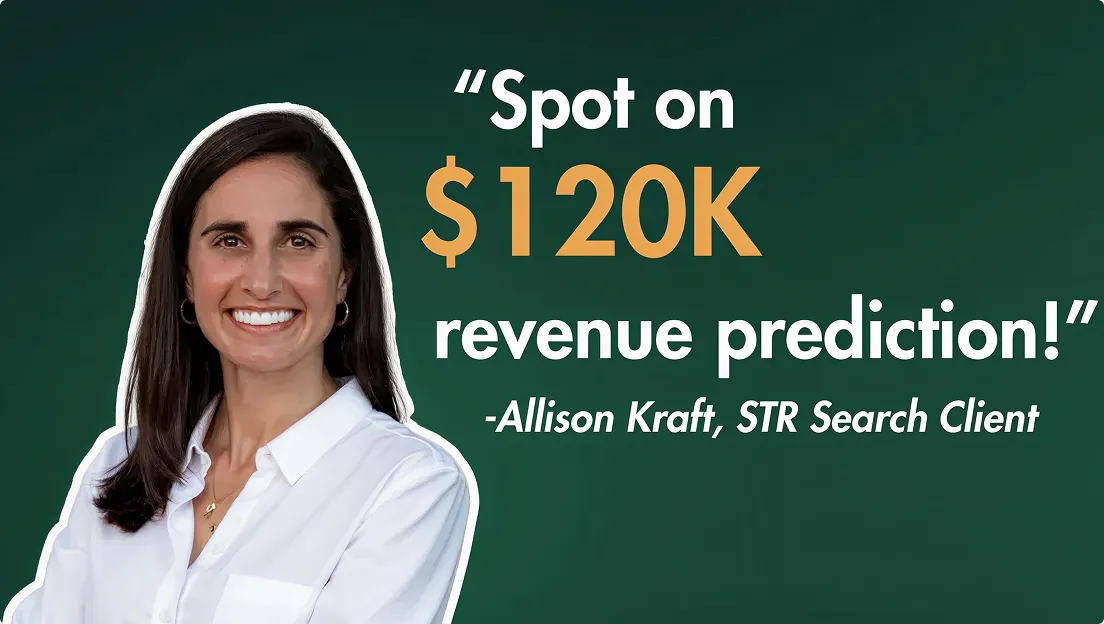
From zero real estate experience to a thriving short-term rental business, Allison locked in $120K in revenue her first year and is now expanding with STR Search again. Proof that the right team can turn analysis paralysis into profitable action!

Thanks to John's expert guidance, I made my first real estate and Airbnb investment a massive success, with consistent positive cash flow and an exceptional return on investment!

John's training gave me the confidence to secure a loan on the spot and scale from one STR to three. His approach is a total game-changer!
Why Choose STR Search?

Put your money to work & lower your tax bill
We’ve spent years analyzing what works so you don’t have to. Our job is to cut through bad data and help you make smart, profitable decisions backed by real numbers.
Schedule Your Free CallTrusted by hundreds of successful investors
Generate $3-5K+ monthly cash flow with our proven property matching system.
Build long-term wealth through STRs with cash flow, equity, and bonus depreciation.
Skip 6-12 months of trial and error with our data-driven underwriting and market analysis
We have a 100% success rate across $90M+ in Real Estate
Out of the 275+ properties we've helped our clients buy every single one has been profitable.
You want more money. More time. More freedom. But may be stuck trading hours for dollars, and scaling your investment strategy feels out of reach.
While others are getting lost in analysis paralysis, you’ve got capital and drive to change your situation. Investors who choose the right STRs can generate $3–5K/month in cash flow, plus serious tax benefits and long-term wealth.
We’ve spent years obsessed with STR investing data so you don’t have to.
With our property match services, there’s no guesswork! Just profitable properties built to perform. With the right deal, your capital can buy more than returns. It can buy your freedom.





All The Ways We Can Help You
Free courses, services, and trainings, to help you maximize your earnings from AirBnb...


Get in touch with us.
Everything Smart Investors Ask About STR Wealth Building
To start an Airbnb on Big Island, Hawaii, begin by researching Hawaii County's strict short-term rental regulations, which require properties to be in Resort, Hotel, or Commercial zoning districts or have existing nonconforming use certificates, as most residential areas prohibit vacation rentals. Obtain a Nonconforming Use Certificate (NUC) if your property qualifies, or a Conditional Permit for new operations, which costs approximately $5,000-$15,000 and takes 6-12 months to process through Hawaii County Planning Department. Secure a General Excise Tax (GET) license from Hawaii Department of Taxation and a Transient Accommodations Tax (TAT) registration, paying 4.712% GET and 10.25% TAT on gross rental income. Find properties in permitted areas like Kona, Kohala Coast resort zones, or Puna district with existing permits, expecting to pay $400,000-$2,000,000 depending on location and size. Furnish with tropical, durable furniture suitable for Hawaii's humid climate, including quality linens, kitchen essentials, beach equipment, and outdoor furniture, budgeting $15,000-$40,000 for a complete setup. List on Airbnb, VRBO, and local platforms like Hawaii Life Vacations, highlighting unique Big Island features like proximity to Volcanoes National Park, black sand beaches, or Mauna Kea stargazing. Manage bookings through property management companies like RedAwning or Elite Pacific Properties (charging 20-35% commission) or self-manage with regular cleaning services ($100-$200 per turnover), maintenance contractors familiar with volcanic ash and salt air challenges, and 24/7 guest communication systems while maintaining compliance with noise ordinances and occupancy limits typically set at 2 guests per bedroom plus 2 additional guests maximum.
To identify profitable short-term rental properties on Big Island, Hawaii, focus on locations within 10-15 minutes of popular attractions like Hawaii Volcanoes National Park, Mauna Kea observatories, or pristine beaches such as Hapuna Beach and Punalu'u Black Sand Beach, while prioritizing areas with reliable internet and cell service since remote locations can limit bookings. Target properties with 2-4 bedrooms, ocean or mountain views, outdoor spaces like lanais or pools, and unique Hawaiian architectural features, ensuring they're zoned for vacation rentals under Hawaii County's regulations. Conduct pricing analysis using AirDNA and Mashvisor to benchmark nightly rates ($150-400+ depending on location and amenities), occupancy rates (typically 60-75% for well-positioned properties), and seasonal demand patterns that peak during winter months and summer vacation periods. Research competition by analyzing similar properties within a 5-mile radius on Airbnb and VRBO, identifying gaps in amenities or services you could offer, and studying successful listings' photography, descriptions, and guest reviews. Utilize Big Island-specific resources including the Hawaii County Planning Department for zoning verification, local property management companies like Big Island Vacation Rentals for market insights, Hawaii Tourism Authority data for visitor statistics, and connect with local real estate agents specializing in investment properties who understand the unique challenges of Big Island's diverse microclimates and infrastructure limitations.
To obtain an Airbnb/STR permit on the Big Island of Hawaii, you must apply through Hawaii County's Planning Department by submitting a Conditional Permit application, which requires a completed application form, site plan showing the property layout, floor plans of the dwelling, proof of ownership or authorization from owner, tax clearance certificate, and a $1,000 non-refundable application fee plus additional fees for public notices and hearings that can total $2,000-3,000. The process typically takes 6-12 months and includes a public hearing where neighbors can provide input, and you must demonstrate compliance with zoning requirements, parking standards (minimum 1 space per unit), septic and water capacity, and fire safety codes. Big Island specific requirements include restrictions in certain residential zones, a cap on the total number of permits issued county-wide, mandatory liability insurance, annual renewal with $500 fee, guest registration requirements, and compliance with GET tax collection - additionally, properties in lava zones may face additional scrutiny and some areas like certain subdivisions in Puna have specific prohibitions against short-term rentals that must be verified before applying.
Short-term rentals (STRs) are legal on the Big Island of Hawaii but operate under strict regulations implemented by Hawaii County. As of 2019-2020, the county established a cap system limiting the total number of STR permits, with different allowances for various districts - approximately 1,600 permits were initially allowed island-wide. STRs are prohibited in residential zones and agricultural districts, but are permitted in resort zones and some mixed-use areas, with specific concentrations allowed in areas like Kona, Kohala Coast, and parts of Puna. All operators must obtain a Non-Conforming Use Certificate (NUC) or Conditional Use Permit, register with the county, pay transient accommodation taxes, and comply with safety requirements including smoke detectors and emergency contact information. Recent changes include stricter enforcement mechanisms, increased penalties for illegal operations, and enhanced monitoring systems, with the county actively pursuing violations and imposing fines up to $10,000 per day for unpermitted rentals. The regulations also require hosted rentals (where owners live on-site) to meet different criteria than unhosted properties, and certain areas near schools, parks, and residential neighborhoods have additional restrictions or complete prohibitions on STR operations.
The best Airbnb investment areas on Hawaii's Big Island include Kailua-Kona on the west coast, which attracts tourists year-round with its beaches, snorkeling at Kealakekua Bay, and proximity to coffee farms, generating strong rental demand from leisure travelers. Waikoloa and Mauna Lani areas offer luxury vacation rental opportunities near world-class resorts and golf courses, appealing to high-end tourists willing to pay premium rates. Hilo on the east side provides more affordable investment options while serving visitors to Hawaii Volcanoes National Park, Rainbow Falls, and those attending University of Hawaii at Hilo events. The Volcano area near Hawaii Volcanoes National Park commands high nightly rates due to limited accommodation options and consistent tourist traffic to see active lava flows and volcanic attractions. Pahoa and the Puna district offer budget-friendly investment properties that attract adventure travelers and those seeking authentic Hawaiian experiences, though volcanic activity risks should be considered. Captain Cook and the South Kona coast provide excellent returns due to proximity to snorkeling spots, coffee plantations, and the historic Pu'uhonua o Honaunau National Historical Park, while Waimea appeals to visitors exploring the island's ranching culture and accessing Mauna Kea observatories.
Airbnb properties on the Big Island of Hawaii are subject to multiple lodging taxes including the Hawaii Transient Accommodations Tax (TAT) of 10.25% and Hawaii General Excise Tax (GET) of 4.712% on gross rental income, with some counties adding their own hotel/resort taxes ranging from 0.5% to 3%. The TAT applies to stays under 180 consecutive days and is collected from guests, while GET is applied to the host's gross receipts including cleaning fees and other charges. Hosts must register with the Hawaii Department of Taxation to obtain TAT and GET licenses, collect taxes from guests at booking or check-in, and remit payments monthly or quarterly depending on volume through the state's online filing system. Properties rented for 180+ consecutive days to the same guest, certain long-term residential rentals, and accommodations provided to employees are generally exempt from TAT, though GET typically still applies. Hawaii County may impose additional transient accommodation taxes that vary by district, and all taxes must be separately stated on guest invoices with proper documentation maintained for audit purposes.
Starting an Airbnb on the Big Island of Hawaii requires significant upfront investment, with property purchase being the largest expense at approximately $650,000 for a median-priced home suitable for short-term rental. Furnishing costs typically range from $15,000-25,000 to create an attractive, fully-equipped vacation rental including furniture, appliances, linens, and décor. Initial setup expenses of $3,000-5,000 cover professional photography, listing creation, welcome materials, and basic supplies. Permits and fees total approximately $2,500-4,000, including Hawaii County short-term rental permits, GET tax registration, and business licenses. Insurance costs around $3,000-4,500 annually for short-term rental coverage, while utility deposits and connections average $1,500. First six months of operating costs including utilities ($900/month), cleaning services ($150 per turnover), property management fees if applicable (25-30% of revenue), maintenance reserves, and marketing expenses typically total $8,000-12,000. The complete startup investment ranges from approximately $683,000 to $701,000, making Big Island Airbnb ventures capital-intensive but potentially lucrative given the island's strong tourism demand and limited short-term rental inventory due to recent regulatory restrictions.
Airbnb properties on Hawaii's Big Island demonstrate strong profitability potential with average daily rates ranging from $150-400 depending on location and amenities, generating annual revenues of $40,000-120,000 for well-positioned properties. Ocean-view condos in Kona and Waikoloa typically achieve 65-75% occupancy rates with gross profit margins of 35-45% after accounting for expenses including property management fees (20-30%), cleaning costs ($75-150 per turnover), utilities ($200-400 monthly), insurance ($2,000-4,000 annually), and maintenance reserves. Properties near popular attractions like Volcanoes National Park or premium beach locations in Mauna Kea Resort area command premium rates and maintain higher occupancy, with some luxury villas generating over $200,000 annually. Success factors include professional photography, responsive guest communication, local property management partnerships, and strategic pricing during peak seasons (December-April, July-August). Case studies from 2022-2023 show that investors purchasing $600,000-800,000 properties in desirable locations achieved 8-12% annual returns, while those focusing on unique features like lava views, private pools, or eco-friendly amenities outperformed standard rentals by 15-25%. However, properties in remote areas or those lacking ocean access typically struggle with sub-50% occupancy rates and reduced profitability due to Hawaii's competitive vacation rental market and increasing regulatory restrictions in certain districts.
Airbnb investments on the Big Island of Hawaii typically generate annual ROI of 8-15% with cash-on-cash returns ranging from 12-22%, depending on property location and management efficiency. Properties in popular areas like Kona, Hilo, and near Volcanoes National Park command premium nightly rates of $150-400, with occupancy rates averaging 65-75% annually. Initial investment recovery and profitability generally occur within 3-5 years, factoring in Hawaii's high property acquisition costs of $600,000-1.2 million for suitable vacation rental properties. The Big Island's tourism market, driven by approximately 1.7 million annual visitors as of 2023, supports strong rental demand, though investors should account for Hawaii's 4.712% general excise tax, transient accommodation taxes of 10.25%, and potential regulatory changes affecting short-term rentals that could impact long-term returns.
STRSearch is a national platform that specializes in identifying profitable short-term rental properties across markets including Big Island, Hawaii. Local real estate agents like Carrie Nicholson with Hawaii Life Real Estate Brokers and Tim Stice with Coldwell Banker Island Properties have extensive experience helping investors acquire vacation rental properties on the Big Island. Island Sotheby's International Realty and Compass Hawaii also maintain teams focused on investment properties in the Kona and Hilo markets. National services include Awning, which provides Airbnb investment analysis and property management, and Mashvisor, offering rental property analytics for Hawaiian markets. Local property management companies like RedAwning and Elite Pacific Properties assist investors with both acquisition guidance and ongoing Airbnb operations. AirDNA provides market data and revenue projections specifically for Big Island short-term rentals, while Roofstock and Arrived Homes have expanded their platforms to include Hawaiian vacation rental investments. Big Island-based investment groups like Hawaii Investment Properties and Kona Coast Realty specialize in connecting mainland investors with profitable vacation rental opportunities, particularly in areas like Waikoloa, Kailua-Kona, and the Puna district where short-term rental regulations remain investor-friendly.
Put your money to work & lower your tax bill
We’ve spent years analyzing what works so you don’t have to. Our job is to cut through bad data and help you make smart, profitable decisions backed by real numbers.
Schedule Your Free Call