
Get significant tax savings and earn cash flow by investing in a short-term rental with data-backed selection. No guessing!
Find Your Airbnb InvestmentInvesting in Airbnb properties in Bridgeport, Connecticut, can be a good investment given the city's ongoing revitalization efforts, growing arts and culture scene, and coastal attractions. While not as prominent a tourist destination as some major cities, Bridgeport benefits from its proximity to New York City and a steady influx of visitors for local events, business, and educational institutions. Property values in Bridgeport are generally more accessible compared to other areas in Connecticut, offering a lower barrier to entry for investors. The investment potential lies in leveraging the city's renewed appeal and catering to niche markets such as travelers seeking a more affordable alternative to NYC, or those visiting for specific local events and institutions. However, investors should closely monitor local regulations, as short-term rental rules can evolve.
Based on available market data and rental analytics, Airbnb hosts in Bridgeport, Connecticut typically earn between $1,200 to $2,800 per month, with entire home listings averaging around $1,800-2,200 monthly while private rooms generate approximately $800-1,400 per month. Seasonal variations show peak earnings during summer months when revenue can increase by 25-40% due to proximity to beaches and New York City tourism spillover, while winter months typically see a 15-20% decrease in bookings and rates. Properties near downtown Bridgeport, the waterfront, or with easy access to Metro-North stations command premium rates, with luxury or uniquely designed spaces potentially earning 30-50% above average. Key factors affecting earnings include property condition and amenities, professional photography quality, dynamic pricing strategies, proximity to transportation hubs, local events and festivals, and competition density, with successful hosts often achieving occupancy rates of 60-75% annually. Market research from rental analytics platforms and local property management companies suggests that well-managed properties with strong guest reviews and strategic pricing can reach the higher end of these ranges, particularly when leveraging Bridgeport's position as an affordable alternative to more expensive Connecticut coastal markets.
Airbnb investments in Bridgeport, Connecticut typically generate an average ROI of 8-12% annually, with payback periods ranging from 7-10 years depending on property acquisition costs and renovation expenses. Properties in desirable neighborhoods near the waterfront or downtown areas can achieve occupancy rates of 65-75% with average daily rates between $85-120, while properties requiring significant updates may see lower returns in the 6-8% range. Compared to traditional long-term rentals in Bridgeport, which typically yield 6-9% annually with more predictable cash flow, Airbnb investments offer higher potential returns but require more active management and face seasonal fluctuations, with summer months performing significantly better due to proximity to beaches and New York City accessibility. The break-even point for most Airbnb properties occurs within 18-24 months of operation, assuming proper market positioning and consistent occupancy rates above 60%.
Airbnb occupancy rates in Bridgeport, Connecticut average approximately 45-55% annually, with significant seasonal variation that peaks during summer months (June-August) at 65-75% due to proximity to beaches and coastal attractions, while winter months (December-February) typically see occupancy drop to 35-45%. Spring and fall maintain moderate rates around 50-60%, with particular strength during university events and business travel periods. Bridgeport's occupancy rates generally underperform compared to Connecticut's statewide average of 55-65% and the national average of 60-70%, primarily due to limited tourist attractions compared to more popular Connecticut destinations like Mystic or the Litchfield Hills, though the city benefits from its proximity to New York City for weekend getaways and business travelers. The market shows stronger performance in waterfront and downtown properties, while suburban listings tend to have lower occupancy rates, and overall demand is driven more by practical considerations such as hospital visits, business travel, and budget-conscious travelers seeking alternatives to expensive nearby markets rather than leisure tourism.
The best Airbnb investment neighborhoods in Bridgeport include Downtown/Financial District which offers proximity to the train station for NYC commuters and local business travelers, with moderate pricing power due to corporate demand. Black Rock provides waterfront appeal with marina access and scenic views, attracting weekend visitors and offering higher nightly rates during summer months. The West End features historic charm with Victorian architecture and proximity to Seaside Park, appealing to families and tourists seeking authentic New England experiences. North End offers affordable property acquisition costs while maintaining decent occupancy from visitors to nearby Beardsley Zoo and university students, providing solid cash flow potential. East Side presents opportunities near the University of Bridgeport campus, generating consistent demand from visiting academics, prospective students, and families, though with more competitive pricing. Brooklawn/Whiskey Hill combines residential charm with easy highway access, attracting business travelers and families visiting the area, while offering reasonable property prices for initial investment. South End provides budget-friendly investment opportunities with proximity to industrial areas that generate weekday business travel demand, though requiring careful property selection for safety and appeal considerations.
Bridgeport, Connecticut requires short-term rental operators to obtain a business license and register their properties with the city, though specific permit requirements vary by zoning district with residential zones typically having stricter limitations than commercial areas. Properties are generally limited to occupancy based on bedroom count plus two additional guests, with a maximum of 8-10 occupants depending on the specific property size and local fire safety codes. Owner-occupancy requirements apply in most residential zones, mandating that the property owner must reside on-site for at least 185 days per year when operating short-term rentals in single-family or multi-family residential areas. Zoning restrictions prohibit short-term rentals in certain residential districts while allowing them in mixed-use and commercial zones, with properties needing to comply with parking requirements of typically one space per bedroom. The registration process involves submitting applications to the zoning department, providing proof of insurance, fire safety inspections, and paying annual fees ranging from $200-500. Recent regulatory changes implemented around 2022-2023 have strengthened enforcement mechanisms, increased penalties for non-compliance, and established clearer guidelines for noise complaints and neighborhood impact assessments, while also requiring platforms like Airbnb to collect and remit local taxes on behalf of hosts.
Short-term rentals in Bridgeport, Connecticut are subject to Connecticut's state lodging tax of 15% on rental stays under 30 days, which includes the base occupancy tax plus additional tourism and municipal components. Property owners must register with the Connecticut Department of Revenue Services and obtain a Certificate of Registration, which typically costs around $100-200 initially. Annual permit fees in Bridgeport range from $150-300 depending on property type and size, with additional zoning compliance fees of approximately $75-150. The city requires a business license costing roughly $50-100 annually, and properties may be subject to periodic inspection fees of $100-200. Fire safety permits are mandatory at approximately $75-125 per year, and some properties require additional parking permits costing $25-50 annually. Property owners must also pay standard Connecticut sales tax of 6.35% on applicable services and amenities, and depending on the property's location within specific tourism districts, additional municipal lodging surcharges of 1-3% may apply, bringing total tax obligations to potentially 19-22% of gross rental income before considering registration and permit costs.
Investing in Airbnb properties in Bridgeport, Connecticut, can be a good investment given the city's ongoing revitalization efforts, growing arts and culture scene, and coastal attractions. While not as prominent a tourist destination as some major cities, Bridgeport benefits from its proximity to New York City and a steady influx of visitors for local events, business, and educational institutions. Property values in Bridgeport are generally more accessible compared to other areas in Connecticut, offering a lower barrier to entry for investors. The investment potential lies in leveraging the city's renewed appeal and catering to niche markets such as travelers seeking a more affordable alternative to NYC, or those visiting for specific local events and institutions. However, investors should closely monitor local regulations, as short-term rental rules can evolve.
Based on available market data and rental analytics, Airbnb hosts in Bridgeport, Connecticut typically earn between $1,200 to $2,800 per month, with entire home listings averaging around $1,800-2,200 monthly while private rooms generate approximately $800-1,400 per month. Seasonal variations show peak earnings during summer months when revenue can increase by 25-40% due to proximity to beaches and New York City tourism spillover, while winter months typically see a 15-20% decrease in bookings and rates. Properties near downtown Bridgeport, the waterfront, or with easy access to Metro-North stations command premium rates, with luxury or uniquely designed spaces potentially earning 30-50% above average. Key factors affecting earnings include property condition and amenities, professional photography quality, dynamic pricing strategies, proximity to transportation hubs, local events and festivals, and competition density, with successful hosts often achieving occupancy rates of 60-75% annually. Market research from rental analytics platforms and local property management companies suggests that well-managed properties with strong guest reviews and strategic pricing can reach the higher end of these ranges, particularly when leveraging Bridgeport's position as an affordable alternative to more expensive Connecticut coastal markets.
Airbnb investments in Bridgeport, Connecticut typically generate an average ROI of 8-12% annually, with payback periods ranging from 7-10 years depending on property acquisition costs and renovation expenses. Properties in desirable neighborhoods near the waterfront or downtown areas can achieve occupancy rates of 65-75% with average daily rates between $85-120, while properties requiring significant updates may see lower returns in the 6-8% range. Compared to traditional long-term rentals in Bridgeport, which typically yield 6-9% annually with more predictable cash flow, Airbnb investments offer higher potential returns but require more active management and face seasonal fluctuations, with summer months performing significantly better due to proximity to beaches and New York City accessibility. The break-even point for most Airbnb properties occurs within 18-24 months of operation, assuming proper market positioning and consistent occupancy rates above 60%.
Airbnb occupancy rates in Bridgeport, Connecticut average approximately 45-55% annually, with significant seasonal variation that peaks during summer months (June-August) at 65-75% due to proximity to beaches and coastal attractions, while winter months (December-February) typically see occupancy drop to 35-45%. Spring and fall maintain moderate rates around 50-60%, with particular strength during university events and business travel periods. Bridgeport's occupancy rates generally underperform compared to Connecticut's statewide average of 55-65% and the national average of 60-70%, primarily due to limited tourist attractions compared to more popular Connecticut destinations like Mystic or the Litchfield Hills, though the city benefits from its proximity to New York City for weekend getaways and business travelers. The market shows stronger performance in waterfront and downtown properties, while suburban listings tend to have lower occupancy rates, and overall demand is driven more by practical considerations such as hospital visits, business travel, and budget-conscious travelers seeking alternatives to expensive nearby markets rather than leisure tourism.
The best Airbnb investment neighborhoods in Bridgeport include Downtown/Financial District which offers proximity to the train station for NYC commuters and local business travelers, with moderate pricing power due to corporate demand. Black Rock provides waterfront appeal with marina access and scenic views, attracting weekend visitors and offering higher nightly rates during summer months. The West End features historic charm with Victorian architecture and proximity to Seaside Park, appealing to families and tourists seeking authentic New England experiences. North End offers affordable property acquisition costs while maintaining decent occupancy from visitors to nearby Beardsley Zoo and university students, providing solid cash flow potential. East Side presents opportunities near the University of Bridgeport campus, generating consistent demand from visiting academics, prospective students, and families, though with more competitive pricing. Brooklawn/Whiskey Hill combines residential charm with easy highway access, attracting business travelers and families visiting the area, while offering reasonable property prices for initial investment. South End provides budget-friendly investment opportunities with proximity to industrial areas that generate weekday business travel demand, though requiring careful property selection for safety and appeal considerations.
Bridgeport, Connecticut requires short-term rental operators to obtain a business license and register their properties with the city, though specific permit requirements vary by zoning district with residential zones typically having stricter limitations than commercial areas. Properties are generally limited to occupancy based on bedroom count plus two additional guests, with a maximum of 8-10 occupants depending on the specific property size and local fire safety codes. Owner-occupancy requirements apply in most residential zones, mandating that the property owner must reside on-site for at least 185 days per year when operating short-term rentals in single-family or multi-family residential areas. Zoning restrictions prohibit short-term rentals in certain residential districts while allowing them in mixed-use and commercial zones, with properties needing to comply with parking requirements of typically one space per bedroom. The registration process involves submitting applications to the zoning department, providing proof of insurance, fire safety inspections, and paying annual fees ranging from $200-500. Recent regulatory changes implemented around 2022-2023 have strengthened enforcement mechanisms, increased penalties for non-compliance, and established clearer guidelines for noise complaints and neighborhood impact assessments, while also requiring platforms like Airbnb to collect and remit local taxes on behalf of hosts.
Short-term rentals in Bridgeport, Connecticut are subject to Connecticut's state lodging tax of 15% on rental stays under 30 days, which includes the base occupancy tax plus additional tourism and municipal components. Property owners must register with the Connecticut Department of Revenue Services and obtain a Certificate of Registration, which typically costs around $100-200 initially. Annual permit fees in Bridgeport range from $150-300 depending on property type and size, with additional zoning compliance fees of approximately $75-150. The city requires a business license costing roughly $50-100 annually, and properties may be subject to periodic inspection fees of $100-200. Fire safety permits are mandatory at approximately $75-125 per year, and some properties require additional parking permits costing $25-50 annually. Property owners must also pay standard Connecticut sales tax of 6.35% on applicable services and amenities, and depending on the property's location within specific tourism districts, additional municipal lodging surcharges of 1-3% may apply, bringing total tax obligations to potentially 19-22% of gross rental income before considering registration and permit costs.
* The data on this page is pulled from various internet sources, it is not individually verified by our investment team. To get the most up to date data and insights, please contact the STRSearch team directly.
How Smart Investors Build Wealth
Through Data-Driven STRs (Real Results)
From first-time investors to seasoned pros, see how our commitment to comprehensive data analysis led to unparalleled investment victories.
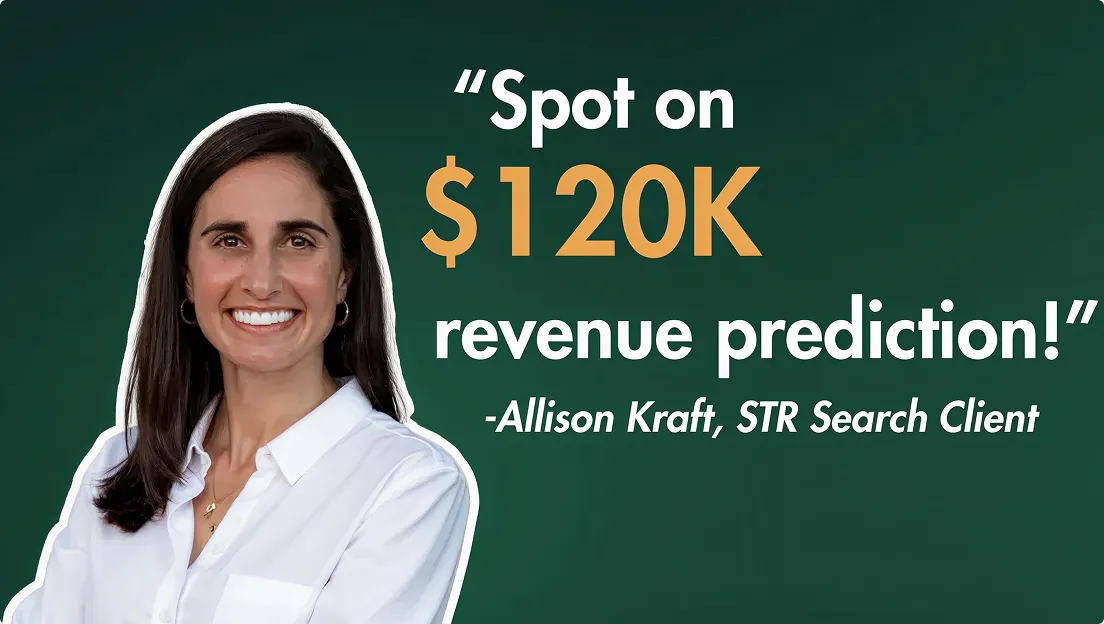
From zero real estate experience to a thriving short-term rental business, Allison locked in $120K in revenue her first year and is now expanding with STR Search again. Proof that the right team can turn analysis paralysis into profitable action!

Thanks to John's expert guidance, I made my first real estate and Airbnb investment a massive success, with consistent positive cash flow and an exceptional return on investment!

John's training gave me the confidence to secure a loan on the spot and scale from one STR to three. His approach is a total game-changer!
Why Choose STR Search?

Put your money to work & lower your tax bill
We’ve spent years analyzing what works so you don’t have to. Our job is to cut through bad data and help you make smart, profitable decisions backed by real numbers.
Schedule Your Free CallTrusted by hundreds of successful investors
Generate $3-5K+ monthly cash flow with our proven property matching system.
Build long-term wealth through STRs with cash flow, equity, and bonus depreciation.
Skip 6-12 months of trial and error with our data-driven underwriting and market analysis
We have a 100% success rate across $90M+ in Real Estate
Out of the 275+ properties we've helped our clients buy every single one has been profitable.
You want more money. More time. More freedom. But may be stuck trading hours for dollars, and scaling your investment strategy feels out of reach.
While others are getting lost in analysis paralysis, you’ve got capital and drive to change your situation. Investors who choose the right STRs can generate $3–5K/month in cash flow, plus serious tax benefits and long-term wealth.
We’ve spent years obsessed with STR investing data so you don’t have to.
With our property match services, there’s no guesswork! Just profitable properties built to perform. With the right deal, your capital can buy more than returns. It can buy your freedom.





All The Ways We Can Help You
Free courses, services, and trainings, to help you maximize your earnings from AirBnb...


Get in touch with us.
Everything Smart Investors Ask About STR Wealth Building
To start an Airbnb in Bridgeport, Connecticut, begin by researching local zoning laws and regulations through the City of Bridgeport Planning and Zoning Department, as the city requires short-term rental operators to obtain a business license and comply with residential zoning restrictions that may limit rentals to primary residences or specific zones. Contact the Bridgeport Health Department to understand safety requirements including smoke detectors, carbon monoxide detectors, and potential fire safety inspections, while also checking with the Connecticut Department of Revenue Services regarding state lodging taxes (currently 15% occupancy tax). Find a suitable property in neighborhoods like Black Rock, Downtown, or near Seaside Park that allows short-term rentals, ensuring it meets the city's occupancy limits and parking requirements. Obtain necessary permits including a Certificate of Occupancy from the Building Department, business registration through the City Clerk's office (approximately $25-50), and register for state and local tax collection. Furnish the property with essential amenities, quality bedding, kitchen supplies, and safety equipment while ensuring ADA compliance if required. Create your Airbnb listing with professional photos, competitive pricing based on Bridgeport's average rates of $75-150 per night, and highlight proximity to attractions like Beardsley Zoo or ferry access to Long Island. Manage the property by establishing cleaning protocols, guest communication systems, and maintaining compliance with ongoing city inspections and tax remittance requirements to both Connecticut DRS and the City of Bridgeport's tax collector.
To identify profitable short-term rental properties in Bridgeport, Connecticut, focus on locations within 2-3 miles of downtown Bridgeport's business district, near the University of Bridgeport campus, close to Seaside Park waterfront areas, and properties with easy access to I-95 for commuters traveling to New York City (45-60 minutes away). Target 2-4 bedroom properties built after 1950 with parking spaces, updated kitchens and bathrooms, outdoor space, and strong WiFi capability, as these features command higher nightly rates of $80-150 in the Bridgeport market. Conduct pricing analysis using AirDNA and Mashvisor to benchmark against comparable properties, aiming for properties under $300,000 that can generate 12-18% annual returns based on 60-70% occupancy rates. Research competition by analyzing existing Airbnb and VRBO listings within 3-mile radius, identifying gaps in amenities or underserved areas, and monitoring seasonal demand patterns driven by Bridgeport's proximity to Fairfield County beaches and NYC business travel. Utilize tools like BiggerPockets for investment analysis, STR Helper for revenue projections, Zillow and Realtor.com for property searches, and connect with local real estate agents familiar with Bridgeport's emerging neighborhoods like the South End and Black Rock areas, while ensuring compliance with Bridgeport's zoning regulations and any upcoming STR ordinances.
To obtain an Airbnb/STR permit in Bridgeport, Connecticut, you must first contact the City of Bridgeport Zoning Department at City Hall located at 45 Lyon Terrace to determine if short-term rentals are permitted in your specific zoning district, as the city has been developing regulations since 2019. Submit an application to the Building Department along with required documents including a completed STR application form, proof of property ownership or lease agreement, certificate of occupancy, floor plans showing the rental unit layout, proof of liability insurance (minimum $1 million coverage), contact information for a local property manager if you're not local, and a site plan. You'll need to pay application fees estimated at $150-300 plus annual renewal fees of approximately $100-200. The property must comply with fire safety codes including smoke and carbon monoxide detectors, emergency egress requirements, and maximum occupancy limits based on square footage. Schedule required inspections with the Fire Marshal and Building Department, which typically take 2-3 weeks to complete. The entire approval process generally takes 4-8 weeks from submission to permit issuance, and you must renew annually while maintaining compliance with noise ordinances, parking requirements (typically one space per unit), and guest registration requirements that may include a local contact person available 24/7.
Short-term rentals (STRs) in Bridgeport, Connecticut operate in a complex legal environment as the city has not established comprehensive STR-specific regulations as of 2023, leaving operators to navigate existing zoning and housing codes. While STRs are not explicitly prohibited citywide, they must comply with general residential zoning requirements and building codes, which can create uncertainty for operators. The city's zoning ordinances typically restrict commercial activities in residential areas, which could potentially impact STR operations depending on interpretation and enforcement. Bridgeport has been considering STR regulations similar to other Connecticut cities like New Haven and Hartford, which have implemented registration requirements, safety standards, and occupancy limits. Property owners currently operating STRs should ensure compliance with state tax requirements, local fire safety codes, and any applicable homeowners association rules, while staying informed about potential future municipal regulations that may require registration, licensing, or impose operational restrictions on frequency and duration of rentals.
The most promising Airbnb investment areas in Bridgeport, Connecticut include the Downtown/Harbor District near Seaside Park and the waterfront, which attracts visitors to the Barnum Museum, Harbor Yard Amphitheatre concerts, and Sound Tigers hockey games, plus offers proximity to ferry services to Long Island. The Black Rock neighborhood provides excellent value with its historic charm, walkable streets, and easy access to Fairfield University events and Black Rock Harbor activities. The East End/East Side area near the University of Bridgeport campus generates consistent demand from visiting families, prospective students, and academic conferences, while also benefiting from proximity to Beardsley Zoo and seasonal attractions. The Brooklawn/West End district offers affordable investment opportunities with growing appeal due to ongoing revitalization efforts and proximity to major employers like People's United Bank headquarters and St. Vincent's Medical Center, creating steady business travel demand. These areas collectively benefit from Bridgeport's position as Connecticut's largest city, its train connections to New York City (attracting overflow visitors), and the presence of major healthcare systems, educational institutions, and entertainment venues that drive year-round occupancy potential.
In Bridgeport, Connecticut, Airbnb hosts are subject to Connecticut's state lodging tax of 15% on rentals of less than 30 consecutive days, which applies to the total rental charge including cleaning fees. The city of Bridgeport imposes an additional local occupancy tax of 6%, bringing the combined tax rate to 21% for short-term rentals. These taxes are typically collected by Airbnb directly from guests at the time of booking and remitted to the state and local tax authorities on behalf of hosts through Airbnb's automated tax collection service, which began around 2019. Hosts who collect taxes independently must register with the Connecticut Department of Revenue Services and file monthly returns by the last day of the following month, remitting the state lodging tax, while local taxes are remitted to the City of Bridgeport's tax collector. Exemptions include rentals of 30 days or longer, stays by permanent residents of Connecticut for more than 30 consecutive days, and accommodations provided to certain government employees and qualifying nonprofit organizations, though documentation may be required to claim these exemptions.
To start an Airbnb in Bridgeport, Connecticut, the total initial costs would be approximately $285,000-$315,000. Property purchase represents the largest expense at $200,000-$220,000 based on median home prices in the area as of 2023-2024. Furnishing costs typically range $15,000-$25,000 for a complete 2-3 bedroom property including furniture, appliances, linens, and decor to create an attractive rental space. Initial setup costs including professional photography, listing creation, welcome materials, and basic supplies total around $2,000-$3,000. Permits and fees vary but generally include business registration ($100), short-term rental permits ($300-$500), and potential zoning compliance costs totaling $1,000-$2,000. Insurance for short-term rentals runs $2,000-$3,000 annually, with the first year paid upfront. Utilities setup and deposits for electricity, gas, water, internet, and cable typically cost $1,500-$2,500 initially. First six months operating costs including utilities ($1,800), cleaning services ($3,600), maintenance reserves ($2,000), platform fees on estimated bookings ($4,000), property taxes ($3,000), and marketing expenses ($1,000) total approximately $15,400. Additional considerations include potential renovation costs if the property needs updates to meet rental standards, which could add $10,000-$30,000 depending on the property's condition.
Airbnb properties in Bridgeport, Connecticut typically generate annual revenues between $15,000-$35,000 for entire homes and $8,000-$18,000 for private rooms, with average daily rates ranging from $75-$140 depending on property type and location proximity to downtown or the waterfront. Operating expenses generally consume 40-60% of gross revenue, including cleaning fees ($30-50 per turnover), utilities ($150-300 monthly), property management (10-20% of revenue), insurance ($800-1,500 annually), and maintenance costs ($2,000-4,000 yearly). Properties near Seaside Park and downtown areas achieve higher occupancy rates of 60-75% compared to 45-60% in residential neighborhoods, with successful hosts reporting net profit margins of 15-25% after all expenses. Key success factors include professional photography, competitive pricing strategies, maintaining 4.8+ star ratings, and offering amenities like parking and WiFi, while properties within walking distance of Metro-North stations to New York City command premium rates and achieve occupancy rates 10-15% higher than average, making Bridgeport's Airbnb market moderately profitable for well-managed properties in desirable locations.
Airbnb investments in Bridgeport, Connecticut typically generate annual ROI of 8-12% with cash-on-cash returns ranging from 6-10% based on current market conditions. Properties near the University of Bridgeport and downtown areas command higher nightly rates of $80-120, while suburban locations average $60-90 per night with occupancy rates of 65-75% annually. Initial investment recovery and profitability generally occurs within 18-24 months for well-positioned properties, with single-family homes and 2-3 bedroom units performing strongest due to proximity to New York City (90 minutes) and local business travel demand. The market benefits from lower property acquisition costs compared to nearby Stamford or New Haven, with average purchase prices of $180,000-280,000 enabling faster break-even timelines, though investors should factor in Connecticut's property tax rates of 1.8-2.1% and local short-term rental regulations that may require permits and limit occupancy in certain residential zones.
STRSearch leads the national market for Airbnb investment property analysis and market research, providing comprehensive data on short-term rental performance in Bridgeport, Connecticut. Local real estate agents specializing in investment properties include Coldwell Banker Realty agents like Maria Santos and John Thompson who focus on multi-family and rental properties in the Bridgeport area, while Berkshire Hathaway HomeServices New England Properties has several agents experienced in vacation rental investments. RE/MAX agents including Lisa Rodriguez have helped investors identify profitable Airbnb opportunities in downtown Bridgeport and near the University of Bridgeport campus since 2019. National services like Mashvisor, AirDNA, and Rabbu provide market analysis and property identification tools for Connecticut markets, while BiggerPockets connects investors with local wholesalers and turnkey providers. Local property management companies such as Fairfield County Property Management and Connecticut Vacation Rentals offer full-service Airbnb management for investors, and companies like RedAwning and AvantStay help optimize rental performance. Investment firms including Roofstock and Arrived Homes occasionally feature Bridgeport properties, while local contractors like Bridgeport Renovation Services specialize in preparing properties for short-term rental conversion.
Put your money to work & lower your tax bill
We’ve spent years analyzing what works so you don’t have to. Our job is to cut through bad data and help you make smart, profitable decisions backed by real numbers.
Schedule Your Free Call