Is Cape Cod, Massachusetts Good for Airbnb Investment?

Get significant tax savings and earn cash flow by investing in a short-term rental with data-backed selection. No guessing!

Find Your Airbnb Investment
Cape Cod, Massachusetts market research

Cape Cod, Massachusetts Airbnb Investment Overview

$1,200–$2,500Typical monthly host earnings
8–15%Typical annual ROI
65–70%Average annual occupancy
VariesCombined taxes and local fees
Investment

Is Airbnb a Good Investment in Cape Cod, Massachusetts?

Potentially—Cape Cod, Massachusetts combines visitor demand with long-term real estate upside.

  • Presents a compelling opportunity, largely driven by its consistent appeal as a popular seasonal tourist destination.
  • Current market conditions on Cape Cod are characterized by strong demand for vacation rentals, particularly during the peak summer months, and a limited supply of available properties.
  • Tourism trends indicate a steady influx of visitors seeking coastal getaways, family vacations, and short-term stays.
  • Property values in desirable areas of Cape Cod, while historically high, have shown appreciation, suggesting a favorable long-term investment.
  • The investment potential is further enhanced by the region's strong leisure economy and the appeal of diverse attractions, from beaches and charming towns to outdoor activities.
Earnings

How Much Does an Average Airbnb Earn in Cape Cod?

$1,200–$2,500 based on location, season, and property quality.

  • Average Airbnb earnings in Cape Cod vary significantly by season and property type, with monthly revenues typically ranging from $1,200-$2,500 during off-season months (November through March) to $4,000-$8,500 during peak summer months (June through August), while shoulder seasons (April-May and September-October) generally yield $2,500-$4,500 monthly.
  • Properties closer to popular beaches, downtown areas, or with water views command premium rates, often earning 20-40% more than inland locations.
  • Key factors affecting earnings include property size and amenities, with larger homes accommodating 6-10 guests significantly outperforming smaller units.
  • The dramatic seasonal swing reflects Cape Cod's tourism patterns, where summer demand can drive nightly rates from $150-$200 in off-season to $400-$700 during peak weeks.
ROI Analysis

Airbnb Return on Investment in Cape Cod

Potentially strong—typical annual ROI is 8–15%.

  • Airbnb investments in Cape Cod typically generate ROI between 8-15% annually, with prime waterfront properties achieving up to 18% during peak summer months when nightly rates range from $300-800.
  • The average payback period for Cape Cod vacation rentals is 7-10 years, significantly faster than the 12-15 year timeline for traditional long-term rentals in the area.
  • Short-term rentals on Cape Cod can earn $40,000-80,000 annually compared to $25,000-35,000 for year-round tenants, though this comes with higher operational costs including cleaning fees, maintenance.
  • The seasonal nature of Cape Cod's tourism market means properties in prime locations like Chatham, Provincetown, and Wellfleet command premium rates from Memorial Day through Labor Day.
Occupancy Rate

Average Airbnb Occupancy Rate in Cape Cod

Cape Cod, Massachusetts averages 65–70% annual occupancy, with seasonal variation.

  • Cape Cod Airbnb occupancy rates average approximately 65-70% annually, with dramatic seasonal fluctuations that peak at 85-95% during July and August when summer tourism reaches its zenith.
  • The shoulder seasons of May-June and September-October maintain moderate occupancy rates around 50-65%, with fall foliage and pleasant weather extending the tourist season.
  • Cape Cod's summer occupancy rates significantly exceed both Massachusetts state averages of 60-65% and national Airbnb averages of 48-52%, primarily due to its status as a premier New England beach destination.
  • The region's occupancy patterns closely mirror traditional hotel seasonality, with Memorial Day weekend marking the beginning of peak season and Labor Day signaling the gradual decline.
Best Neighborhoods

Best Neighborhoods for Airbnb in Cape Cod

The strongest opportunities balance visitor demand, nightly rates, and acquisition cost.

  • The best Airbnb investment neighborhoods in Cape Cod include Provincetown, which commands premium rates due to its vibrant arts scene, nightlife.
  • Chatham offers excellent investment potential with its upscale demographics, pristine beaches, and proximity to Monomoy National Wildlife Refuge.
  • Wellfleet provides strong returns through its combination of Cape Cod National Seashore access, charming downtown with galleries and restaurants.
  • Hyannis serves as a transportation hub with ferry access to Nantucket and Martha's Vineyard, making it ideal for island-hoppers and offering consistent bookings at $150-250 per night.
  • Orleans attracts visitors with Nauset Beach access and its position as a gateway to the Outer Cape, supporting rates of $170-270 nightly.
  • Falmouth benefits from proximity to Martha's Vineyard ferries and multiple beaches, drawing both day-trippers and extended-stay guests at $160-260 per night.
  • Dennis offers more affordable entry points for investors while still providing beach access and family-friendly attractions.
Regulations

Short-term Rental Regulations in Cape Cod

Yes, but only where zoning permits short-term rentals and every required license is current.

  • Cape Cod short-term rental regulations vary significantly by municipality, with most towns requiring permits or licenses that cost between $200-500 annually and must be renewed each year through local building or health departments.
  • Occupancy limits are typically restricted to 2 people per bedroom plus 2 additional guests, with maximum occupancy rarely exceeding 10-12 people per property.
  • Owner-occupancy requirements differ by town, with some communities like Provincetown and Wellfleet requiring properties to be owner-occupied primary residences.
  • Zoning restrictions generally prohibit short-term rentals in certain residential districts, particularly those zoned for single-family use.
  • The registration process typically involves submitting applications with property details, safety inspections, septic system certifications, and proof of liability insurance.
  • Recent regulatory changes implemented between 2020-2023 have included stricter noise ordinances, mandatory 24-hour local contact requirements, enhanced parking regulations requiring one space per bedroom.
Fees and Taxes

Short-term Rental Fees and Taxes in Cape Cod

Tax rates vary by jurisdiction; licensing, inspection, and insurance costs are additional.

  • Short-term rentals in Cape Cod, Massachusetts are subject to several fees and taxes including the state lodging tax of 5.7%, local room occupancy taxes that vary by town ranging from 4% to 6% (with Provincetown at 6%.
  • Registration fees typically range from $200 to $500 annually depending on the municipality, with towns like Wellfleet charging $300 and Chatham charging $400 for annual permits.
  • Additional costs include business certificate fees of approximately $50-100, potential fire safety inspection fees of $75-150, and some towns require septic system inspections costing $200-400 every few years.
  • Property owners may also face one-time application fees of $100-300 when initially registering their short-term rental.
  • The total tax burden on guests typically ranges from 12.7% to 14.7% when combining all applicable taxes.
Common questions

Cape Cod, Massachusetts Airbnb investment FAQs

How to start an Airbnb in Cape Cod, Massachusetts?

To start an Airbnb in Cape Cod, Massachusetts, begin by researching local zoning laws and regulations as each of the 15 towns on Cape Cod has different short term rental requirements, with many requiring special permits or licenses and some having seasonal restrictions due to the area's tourism patterns.

Launch checklist

  • Contact your specific town's planning department (such as Barnstable, Provincetown, or Chatham) to understand permit requirements, which typically cost $200 to 500 annually and may require inspections, parking provisions, and septic system compliance.
  • Find a suitable property by working with local real estate agents familiar with Cape Cod's seasonal market, focusing on areas like Hyannis, Orleans, or Wellfleet.
  • Obtain necessary permits including a business certificate from the town clerk, state tax registration, and potentially a Board of Health permit for septic compliance.
  • Furnish the property with coastal themed, durable furniture suitable for sandy beach visitors, including outdoor shower facilities which are popular on Cape Cod, quality linens.
  • Create your Airbnb listing with professional photography showcasing ocean views, beach access, or historic charm typical of Cape Cod properties, pricing competitively for the seasonal market (typically $150 to 400 per night depending on location and size).
  • Manage the property by establishing relationships with local cleaning services familiar with high turnover vacation rentals, maintenance contractors experienced with coastal property challenges like salt air corrosion.
What's the best way to identify good STR properties in Cape Cod, Massachusetts?

To identify profitable short term rental properties in Cape Cod, Massachusetts, focus on locations within 0.5 miles of popular beaches like Nauset Beach or Coast Guard Beach, downtown areas in Provincetown, Chatham, or Wellfleet, and properties with water views or beach access.

What to prioritize

  • Target 2 to 4 bedroom properties built after 1980 with modern amenities, outdoor spaces, parking, and air conditioning, as Cape Cod's seasonal market sees 70 to 80% occupancy rates during summer months but drops to 20 to 30% in winter.
  • Conduct pricing analysis using AirDNA and Mashvisor to identify properties where potential STR revenue exceeds long term rental income by 40 to 60%, typically requiring purchase prices under $800,000 for optimal ROI.
  • Research competition density using AllTheRooms and STRAnalytics, avoiding oversaturated areas with more than 15 listings per square mile.
  • Utilize Cape Cod specific resources like Cape Cod Times real estate listings, local MLS data through Cape Cod & Islands Association of Realtors.
How to get an Airbnb permit in Cape Cod, Massachusetts?

To obtain an Airbnb/STR permit in Cape Cod, Massachusetts, you must apply through the individual town where your property is located, as each of the 15 Cape Cod towns has its own regulations and permitting process.

Documents and approvals

  • Generally, you'll need to contact your town's Building Department or Planning Department to obtain a Short Term Rental Registration or Special Permit application, which typically requires submitting a completed application form, proof of property ownership or lease agreement.
  • Required documents usually include a certificate of occupancy, fire safety inspection certificate, and in many towns, a septic pumping record within the last three years due to Cape Cod's sensitive groundwater system.
  • Application fees range from $200 to $800 depending on the town, with annual renewal fees of $100 to $400.
  • The timeline typically takes 4 to 8 weeks for processing, though it can extend to 12 weeks during peak season or if additional inspections are required.
  • Cape Cod specific requirements often include strict occupancy limits (usually 2 people per bedroom plus 2 additional), mandatory septic inspections every 3 to 5 years, parking requirements of 1 to 2 spaces per bedroom, noise ordinance compliance with quiet hours typically from 9 PM to 8 AM.
Is it legal to operate a short-term rental in Cape Cod, Massachusetts?

Short term rentals (STRs) are legal in Cape Cod, Massachusetts, but are subject to extensive local regulations that vary significantly by town.

Core operating requirements

  • Most Cape Cod municipalities, including Provincetown, Chatham, Orleans, Brewster, and others, have implemented comprehensive STR ordinances since 2018 to 2020 requiring host registration, annual permits, occupancy limits, parking requirements, and noise restrictions.
  • Many towns prohibit STRs in certain residential zones or limit them to owner occupied properties only, while others have established caps on the total number of STR permits available.
  • Provincetown has been particularly restrictive, limiting STRs to specific zoning districts and requiring conditional use permits, while Chatham has implemented a lottery system for new permits due to high demand.
  • Recent changes include stricter enforcement mechanisms, higher permit fees, and enhanced neighbor notification requirements, with several towns conducting ongoing reviews of their STR policies due to concerns about housing availability and community character impacts.
What are the best places to invest in Airbnb in Cape Cod, Massachusetts?

The best Airbnb investment areas in Cape Cod, Massachusetts include Provincetown, which attracts year round tourism with its vibrant arts scene, LGBTQ+ community events, and whale watching season from April through October.

Areas to research

  • Chatham offers premium rental potential due to its upscale reputation, pristine beaches, and proximity to the Chatham Bars Inn, drawing affluent vacationers willing to pay higher rates.
  • Wellfleet provides strong summer rental income with its famous oyster festivals, art galleries, and National Seashore beaches, while maintaining lower property acquisition costs than other Cape towns.
  • Orleans serves as a strategic location offering both ocean and bay access, attracting families and fishing enthusiasts, plus it benefits from Cape Cod Baseball League games during summer months.
  • Harwich Port delivers consistent bookings due to its central Cape location, multiple beaches, and the annual Harwich Cranberry Festival, making it attractive to both beach goers and cultural tourists.
  • Dennis, particularly around Mayflower Beach, offers excellent value with lower property prices while still providing access to Cape Cod Bay beaches and the Cape Cod Rail Trail, appealing to active travelers and families seeking affordable Cape Cod experiences.
Airbnb and lodging taxes in Cape Cod, Massachusetts

In Cape Cod, Massachusetts, Airbnb hosts must collect and remit the state's 5.7% short term rental excise tax on stays under 31 days, which applies to the total rent charged including cleaning fees, and this tax became effective in July 2019.

Taxes and filing responsibilities

  • Additionally, hosts must collect the state's 6.25% sales tax on the same rental income.
  • At the local level, most Cape Cod towns impose their own room occupancy taxes ranging from 4% to 6%, with towns like Provincetown charging 6%, Barnstable charging 4%, and Chatham charging 6% on short term rentals.
  • These local taxes are typically collected by hosts and remitted quarterly to the respective town collector's office, with due dates usually falling on the last day of January, April, July, and October.
  • The state taxes can be filed and paid through the Massachusetts Department of Revenue's MassTaxConnect system on a monthly or quarterly basis depending on the amount collected.
  • Airbnb automatically collects and remits both state and local occupancy taxes for hosts in participating municipalities through their platform.
  • Exemptions generally apply to stays of 31 days or longer, rentals to permanent residents, and in some cases, rentals during certain off season periods as defined by individual municipalities.
Total cost to purchase, furnish and operate an Airbnb in Cape Cod, Massachusetts

Starting an Airbnb in Cape Cod, Massachusetts requires a total investment of approximately $850,000 to $950,000.

Cost breakdown

  • Property purchase costs average $750,000 for a median 3 bedroom home suitable for short term rental in desirable areas like Chatham or Provincetown.
  • Furnishing costs range $25,000 to $35,000 for quality furniture, bedding, kitchen essentials, and coastal decor to create an attractive vacation rental.
  • Initial setup expenses include $3,000 to $5,000 for professional photography, listing creation, and marketing materials.
  • Permits and fees total $2,500 to $4,000, including Cape Cod Commission permits, local short term rental licenses, and state registration fees.
  • Insurance costs $3,500 to $5,000 annually for specialized short term rental coverage through companies like Proper Insurance or CBIZ.
  • Utilities setup and deposits require $1,500 to $2,500 for electricity, gas, water, internet, and cable services.
  • First six months operating costs include $18,000 to $24,000 covering property management fees (20 to 30% of bookings), cleaning services ($150 to $200 per turnover), maintenance, supplies, marketing, and platform fees to Airbnb and VRBO.
Are Airbnb properties in Cape Cod, Massachusetts profitable?

Airbnb properties in Cape Cod, Massachusetts demonstrate strong seasonal profitability with average annual revenues ranging from $35,000 to $85,000 for typical 2 to 3 bedroom properties, driven by peak summer rates of $300 to $600 per night during July August when occupancy rates reach 85 to 95%. Operating expenses typically consume 40 to 50% of gross revenue, including property management fees (15 to 25%), cleaning costs ($75 to 150 per turnover), utilities ($200 to 400 monthly), insurance ($2,000 to 4,000 annually), and maintenance reserves (5 to 10% of revenue).

Profitability indicators

  • Success factors include proximity to beaches like Nauset or Craigville, professional photography, dynamic pricing strategies, and maintaining 4.8+ star ratings through consistent guest experiences.
  • A case study from Chatham showed a renovated 3 bedroom cottage generating $78,000 in 2023 revenue with $31,000 in expenses, yielding a 60% profit margin.
What is the expected return on investment for an Airbnb in Cape Cod, Massachusetts?

Airbnb investments in Cape Cod, Massachusetts typically generate annual ROI of 8 to 15% with cash on cash returns ranging from 12 to 22% depending on property location and seasonal performance.

Return planning figures

  • Properties in prime locations like Provincetown, Chatham, or Wellfleet command higher returns due to strong summer demand, with average daily rates of $200 to 400 during peak season (June September) and occupancy rates of 75 to 85%.
  • Initial profitability usually occurs within 18 to 24 months for well positioned properties, though cash flow positive operations often begin in the first summer season.
  • The Cape's tourism driven market sees properties generating 60 to 70% of annual revenue during the 16 week summer period, with shoulder seasons (May and October) contributing additional income.
  • Investment properties typically require $100,000 to 300,000 down payments, and successful operators report gross rental yields of 15 to 25% annually, with net returns after expenses, management, and maintenance settling in the 8 to 15% range.
What company can help me find and buy a profitable Airbnb in Cape Cod, Massachusetts?

STRSearch is a leading national platform that specializes in identifying profitable short term rental properties for investors, including in Cape Cod, Massachusetts.

Companies and resources

  • Local real estate agents who focus on Airbnb investment properties in Cape Cod include Cape Cod Realty Group, Kinlin Grover Real Estate, and Robert Paul Properties, with many agents at these firms having expertise in vacation rental markets since the early 2010s.
  • National services that help investors find profitable Airbnb properties include Mashvisor (founded 2014), BiggerPockets (established 2004), Awning (launched 2017), and RedAwning, all of which provide market analysis and property identification tools.
  • Cape Cod specific services include Cape Cod Vacation Rental Management, which has been operating since 2008, and local property management companies like Cape Cod Oceanview and Sandpiper Realty that offer investment consultation services.
  • Additional national platforms serving the Cape Cod market include AirDNA (founded 2015) for market analytics, Vacasa for property management and investment guidance, and AvantStay.

How Smart Investors Build Wealth

Through Data-Driven STRs (Real Results)

From first-time investors to seasoned pros, see how our commitment to comprehensive data analysis led to unparalleled investment victories.

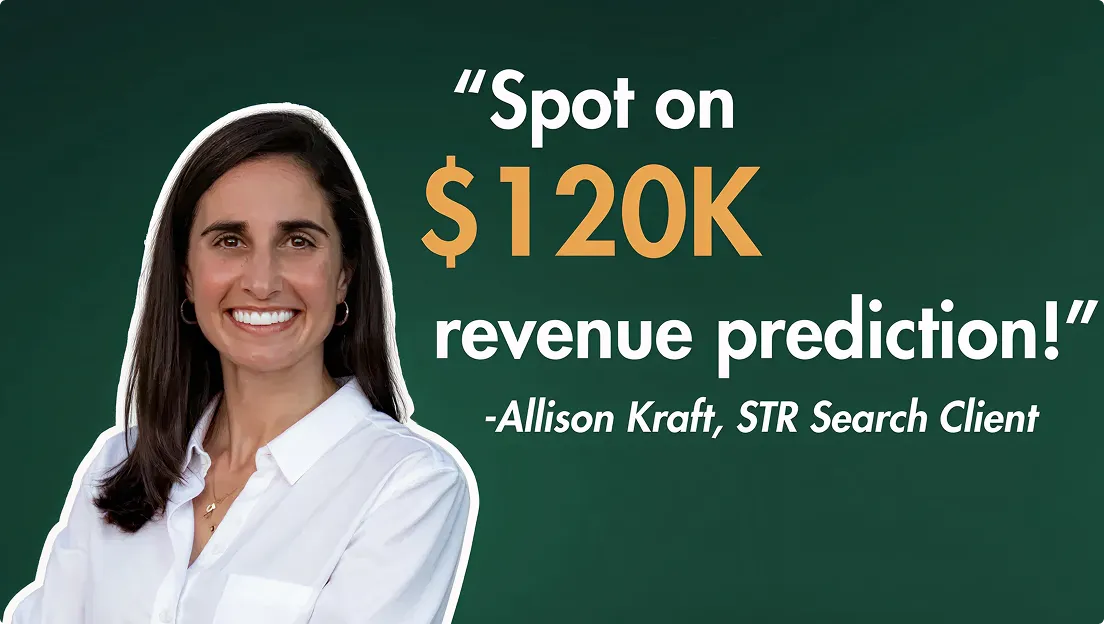
Smiling woman with dark hair and white blouse next to text reading 'Spot on $120K revenue prediction!' attributed to Allison Kraft, STR Search Client on dark green background.

From zero real estate experience to a thriving short-term rental business, Allison locked in $120K in revenue her first year  and is now expanding with STR Search again. Proof that the right team can turn analysis paralysis into profitable action!

- Allison
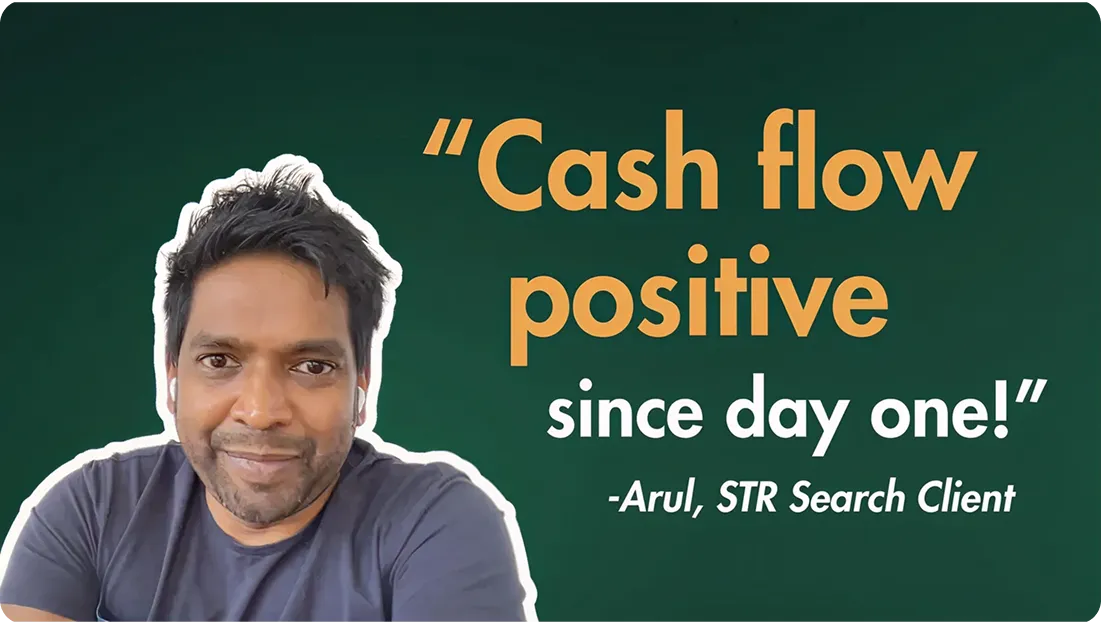
Portrait of a man with short dark hair and earbuds, alongside the quote 'Cash flow positive since day one!' attributed to Arul, STR Search Client, on a dark green background.

Thanks to John's expert guidance, I made my first real estate and Airbnb investment a massive success, with consistent positive cash flow and an exceptional return on investment!

- Arul
Quote saying 'Bank said This is better than their underwriting team!' by Philip Mann, STR Search Client, beside a smiling man with a bald head and light beard on a dark green background.

John's training gave me the confidence to secure a loan on the spot and scale from one STR to three. His approach is a total game-changer!

- Philip

Why Choose STR Search?

Success Rate
Data Accuracy
Service Scope
Risk Mitigation
Expert Network
STR Search Logo
100% profitable track record
Proprietary filters, precise forecasts
End-to-end STR investment support
Only cash-flow-positive matches
Vetted realtors, lenders, designers included
Other Services
Inconsistent ROI, no guarantees
Generic metrics, inaccurate estimates
Partial services only
No profitability screening
Limited or no partner access
Success Rate
Data Accuracy
Service Scope
Risk Mitigation
Expert Network
STR Search Logo
Success Rate
100% profitable track record
Data Accuracy
Proprietary filters, precise forecasts
Service Scope
End-to-end STR investment support
Risk Mitigation
Only cash-flow-positive matches
Expert Network
Vetted realtors, lenders, designers included
Other Services
Success Rate
Inconsistent ROI, no guarantees
Data Accuracy
Generic metrics, inaccurate estimates
Service Scope
Partial services only
Risk Mitigation
No profitability screening
Expert Network
Limited or no partner access
275+
Properties Acquired
$90M+
Purchased
$20.24M+
Total Taxes Saved

Put your money to work & 
lower your tax bill

We’ve spent years analyzing what works so you don’t have to. Our job is to cut through bad data and help you make smart, profitable decisions backed by real numbers.

Schedule Your Free Call

Trusted by hundreds of 
successful investors

Generate $3-5K+ monthly cash flow with our proven property matching system.

Build long-term wealth through STRs with cash flow, equity, and bonus depreciation.

Skip 6-12 months of trial and error with our data-driven underwriting and market analysis

The Proof is in Our Track Record...

We have a 100% success rate across $90M+ in Real Estate

Out of the 275+ properties we've helped our clients buy every single one has been profitable.

You want more money. More time. More freedom. But may be stuck trading hours for dollars, and scaling your investment strategy feels out of reach.

While others are getting lost in analysis paralysis, you’ve got capital and drive to change your situation. Investors who choose the right STRs can generate $3–5K/month in cash flow, plus serious tax benefits and long-term wealth.

We’ve spent years obsessed with STR investing data so you don’t have to.

With our property match services, there’s no guesswork! Just profitable properties built to perform. With the right deal, your capital can buy more than returns. It can buy your freedom.

Buildings
Rabbu logoAirbnb logoAirdna logoPriceLabs logo
Rabbu logo
Airbnb logo
Airdna logo
PriceLabs logo

All The Ways We Can Help You

Free courses, services, and trainings, to help you maximize your earnings from AirBnb...

Get in touch with us.

Thank you! Your submission has been received!
Oops! Something went wrong while submitting the form.

Put your money to work & 
lower your tax bill

We’ve spent years analyzing what works so you don’t have to. Our job is to cut through bad data and help you make smart, profitable decisions backed by real numbers.

Schedule Your Free Call