
Get significant tax savings and earn cash flow by investing in a short-term rental with data-backed selection. No guessing!
Find Your Airbnb InvestmentInvesting in Airbnb properties in Cape Henlopen, Delaware, presents a promising opportunity, driven by its strong appeal as a coastal tourist destination. Current market conditions in Cape Henlopen indicate a robust demand for short-term rentals, especially during peak seasons, due to its proximity to popular beaches, state parks, and charming downtown areas. Tourism trends show consistent visitation from families and vacationers seeking a relaxed beach getaway, ensuring a steady stream of potential renters. While property values in desirable coastal areas can be higher, the potential for strong rental income, coupled with the long-term appreciation of real estate in a sought-after vacation market, suggests a favorable investment potential.
Based on available vacation rental market data for the Cape Henlopen area in Delaware, average Airbnb earnings typically range from $1,200 to $3,500 per month for standard properties, with beachfront and larger homes commanding $2,800 to $6,000 monthly during peak periods. Seasonal variations are significant, with summer months generating approximately 60-70% of annual revenue due to beach tourism, while winter months often see earnings drop to $800-1,500 monthly. Peak season rates average $180-350 per night for quality properties, compared to $90-180 during off-season periods. Key factors affecting earnings include proximity to Cape Henlopen State Park and beaches (properties within 0.5 miles typically earn 25-40% more), property size and amenities, with 3-4 bedroom homes with pools or hot tubs performing best, and booking management efficiency. Occupancy rates generally range from 45-65% annually, with summer months reaching 75-85% for well-managed properties. Properties offering unique features like water views, modern renovations, or pet-friendly policies tend to achieve premium pricing and higher occupancy rates, while those requiring significant maintenance or lacking modern amenities typically underperform market averages by 15-30%.
Airbnb investments in Cape Henlopen, Delaware typically generate ROI between 8-14% annually, with oceanfront properties achieving the higher end due to premium summer demand from beach vacationers visiting Cape Henlopen State Park and nearby Rehoboth Beach. The average payback period ranges from 7-12 years depending on property type and initial investment, with beachfront homes recovering costs faster than inland properties. Peak season occupancy rates average 75-85% from May through September, while off-season drops to 25-35%, resulting in annual occupancy around 55-65%. Compared to traditional long-term rentals in the area which yield 6-8% ROI with 95% occupancy, short-term rentals command 2-3x higher nightly rates ($150-400 versus $1,200-2,500 monthly) but require significantly higher management costs, cleaning fees, and seasonal vacancy periods. Properties within walking distance to the beach or state park amenities consistently outperform inland locations by 3-5 percentage points in ROI, while the seasonal nature of the Delaware shore market creates cash flow challenges during winter months that investors must factor into their financial planning.
Cape Henlopen, Delaware maintains an average annual Airbnb occupancy rate of approximately 65-70%, with significant seasonal variations that reflect its coastal tourism patterns. Peak season occupancy from June through August reaches 85-90%, driven by beach tourism and proximity to Rehoboth Beach, while shoulder seasons in May and September see rates around 60-65%. Winter months experience the lowest occupancy at 35-45%, typical for Delaware beach communities. Spring occupancy gradually increases from 45% in March to 55% in May. Cape Henlopen's rates slightly exceed Delaware's statewide average of 62% due to its prime coastal location and state park attractions, and perform comparably to the national Airbnb average of 65%, though with more pronounced seasonal swings than inland markets. The area benefits from both weekend getaway traffic from Philadelphia, Baltimore, and Washington D.C., as well as extended summer vacation stays, with July typically representing the peak occupancy month at over 90%.
Cape Henlopen's premier Airbnb investment neighborhoods include Lewes Beach area, which commands premium rates due to direct beach access and proximity to Cape Henlopen State Park, attracting families and couples willing to pay $200-350 nightly for oceanfront properties. The Historic Lewes district offers strong year-round rental potential with its charming colonial architecture, walkability to restaurants and shops, and appeal to cultural tourists, generating consistent $150-250 nightly rates. Rehoboth Beach northern sections provide excellent investment opportunities with high summer demand from Washington DC and Philadelphia visitors, supporting $180-300 nightly pricing due to beach proximity and nightlife access. The Dewey Beach corridor attracts younger demographics and group rentals, offering strong weekend and summer occupancy with rates of $200-400 nightly, particularly for larger properties accommodating 8-12 guests. Milton's waterfront areas present emerging opportunities with lower acquisition costs but growing popularity among boating enthusiasts and nature lovers, currently supporting $120-200 nightly rates with significant upside potential. The Bethany Beach approach roads offer strategic positioning between major beach towns, appealing to budget-conscious families seeking beach access at $140-220 nightly rates. Finally, the Cape Henlopen State Park vicinity provides unique positioning for outdoor enthusiasts and eco-tourists, commanding $160-280 nightly rates due to limited supply and high demand from hiking, fishing, and wildlife viewing visitors.
Cape Henlopen State Park area falls under Delaware's broader short-term rental framework, which requires hosts to obtain a business license through the Delaware Division of Revenue and register with the state's lodging tax system, collecting and remitting 8% state lodging tax plus applicable local taxes. Properties must comply with local zoning ordinances that typically limit short-term rentals to residential zones, with occupancy generally restricted to two persons per bedroom plus two additional guests, not exceeding local fire code limits. Most jurisdictions in the area require annual registration renewal, basic safety equipment including smoke and carbon monoxide detectors, and compliance with Americans with Disabilities Act requirements where applicable. Owner-occupancy is not typically required for short-term rentals in this region, though some local municipalities may impose such restrictions. Properties must maintain current certificates of occupancy and may be subject to periodic inspections, with hosts required to provide emergency contact information and maintain guest registries. Recent regulatory trends have focused on increased enforcement of existing tax collection requirements and enhanced safety standards, with some areas implementing stricter noise ordinances and parking requirements to address neighborhood concerns about transient occupancy impacts.
Short-term rentals in Cape Henlopen, Delaware are subject to Delaware's 8% state lodging tax plus an additional 3% Sussex County accommodation tax, totaling 11% in lodging taxes that must be collected from guests and remitted to the state. Property owners must obtain a Delaware business license costing approximately $75 annually and register for a lodging tax license with no additional fee. Sussex County requires a short-term rental permit costing around $150-200 annually, and properties must comply with local zoning regulations which may require additional permits costing $50-100. The Delaware Division of Revenue requires monthly or quarterly tax filings depending on volume, with potential penalties of 5-25% for late payments. Property owners must also pay standard Delaware property taxes and may be subject to additional local municipal fees ranging from $25-75 annually depending on the specific municipality within Cape Henlopen area, plus any required inspections or safety certifications that typically cost $100-150 per inspection.
Investing in Airbnb properties in Cape Henlopen, Delaware, presents a promising opportunity, driven by its strong appeal as a coastal tourist destination. Current market conditions in Cape Henlopen indicate a robust demand for short-term rentals, especially during peak seasons, due to its proximity to popular beaches, state parks, and charming downtown areas. Tourism trends show consistent visitation from families and vacationers seeking a relaxed beach getaway, ensuring a steady stream of potential renters. While property values in desirable coastal areas can be higher, the potential for strong rental income, coupled with the long-term appreciation of real estate in a sought-after vacation market, suggests a favorable investment potential.
Based on available vacation rental market data for the Cape Henlopen area in Delaware, average Airbnb earnings typically range from $1,200 to $3,500 per month for standard properties, with beachfront and larger homes commanding $2,800 to $6,000 monthly during peak periods. Seasonal variations are significant, with summer months generating approximately 60-70% of annual revenue due to beach tourism, while winter months often see earnings drop to $800-1,500 monthly. Peak season rates average $180-350 per night for quality properties, compared to $90-180 during off-season periods. Key factors affecting earnings include proximity to Cape Henlopen State Park and beaches (properties within 0.5 miles typically earn 25-40% more), property size and amenities, with 3-4 bedroom homes with pools or hot tubs performing best, and booking management efficiency. Occupancy rates generally range from 45-65% annually, with summer months reaching 75-85% for well-managed properties. Properties offering unique features like water views, modern renovations, or pet-friendly policies tend to achieve premium pricing and higher occupancy rates, while those requiring significant maintenance or lacking modern amenities typically underperform market averages by 15-30%.
Airbnb investments in Cape Henlopen, Delaware typically generate ROI between 8-14% annually, with oceanfront properties achieving the higher end due to premium summer demand from beach vacationers visiting Cape Henlopen State Park and nearby Rehoboth Beach. The average payback period ranges from 7-12 years depending on property type and initial investment, with beachfront homes recovering costs faster than inland properties. Peak season occupancy rates average 75-85% from May through September, while off-season drops to 25-35%, resulting in annual occupancy around 55-65%. Compared to traditional long-term rentals in the area which yield 6-8% ROI with 95% occupancy, short-term rentals command 2-3x higher nightly rates ($150-400 versus $1,200-2,500 monthly) but require significantly higher management costs, cleaning fees, and seasonal vacancy periods. Properties within walking distance to the beach or state park amenities consistently outperform inland locations by 3-5 percentage points in ROI, while the seasonal nature of the Delaware shore market creates cash flow challenges during winter months that investors must factor into their financial planning.
Cape Henlopen, Delaware maintains an average annual Airbnb occupancy rate of approximately 65-70%, with significant seasonal variations that reflect its coastal tourism patterns. Peak season occupancy from June through August reaches 85-90%, driven by beach tourism and proximity to Rehoboth Beach, while shoulder seasons in May and September see rates around 60-65%. Winter months experience the lowest occupancy at 35-45%, typical for Delaware beach communities. Spring occupancy gradually increases from 45% in March to 55% in May. Cape Henlopen's rates slightly exceed Delaware's statewide average of 62% due to its prime coastal location and state park attractions, and perform comparably to the national Airbnb average of 65%, though with more pronounced seasonal swings than inland markets. The area benefits from both weekend getaway traffic from Philadelphia, Baltimore, and Washington D.C., as well as extended summer vacation stays, with July typically representing the peak occupancy month at over 90%.
Cape Henlopen's premier Airbnb investment neighborhoods include Lewes Beach area, which commands premium rates due to direct beach access and proximity to Cape Henlopen State Park, attracting families and couples willing to pay $200-350 nightly for oceanfront properties. The Historic Lewes district offers strong year-round rental potential with its charming colonial architecture, walkability to restaurants and shops, and appeal to cultural tourists, generating consistent $150-250 nightly rates. Rehoboth Beach northern sections provide excellent investment opportunities with high summer demand from Washington DC and Philadelphia visitors, supporting $180-300 nightly pricing due to beach proximity and nightlife access. The Dewey Beach corridor attracts younger demographics and group rentals, offering strong weekend and summer occupancy with rates of $200-400 nightly, particularly for larger properties accommodating 8-12 guests. Milton's waterfront areas present emerging opportunities with lower acquisition costs but growing popularity among boating enthusiasts and nature lovers, currently supporting $120-200 nightly rates with significant upside potential. The Bethany Beach approach roads offer strategic positioning between major beach towns, appealing to budget-conscious families seeking beach access at $140-220 nightly rates. Finally, the Cape Henlopen State Park vicinity provides unique positioning for outdoor enthusiasts and eco-tourists, commanding $160-280 nightly rates due to limited supply and high demand from hiking, fishing, and wildlife viewing visitors.
Cape Henlopen State Park area falls under Delaware's broader short-term rental framework, which requires hosts to obtain a business license through the Delaware Division of Revenue and register with the state's lodging tax system, collecting and remitting 8% state lodging tax plus applicable local taxes. Properties must comply with local zoning ordinances that typically limit short-term rentals to residential zones, with occupancy generally restricted to two persons per bedroom plus two additional guests, not exceeding local fire code limits. Most jurisdictions in the area require annual registration renewal, basic safety equipment including smoke and carbon monoxide detectors, and compliance with Americans with Disabilities Act requirements where applicable. Owner-occupancy is not typically required for short-term rentals in this region, though some local municipalities may impose such restrictions. Properties must maintain current certificates of occupancy and may be subject to periodic inspections, with hosts required to provide emergency contact information and maintain guest registries. Recent regulatory trends have focused on increased enforcement of existing tax collection requirements and enhanced safety standards, with some areas implementing stricter noise ordinances and parking requirements to address neighborhood concerns about transient occupancy impacts.
Short-term rentals in Cape Henlopen, Delaware are subject to Delaware's 8% state lodging tax plus an additional 3% Sussex County accommodation tax, totaling 11% in lodging taxes that must be collected from guests and remitted to the state. Property owners must obtain a Delaware business license costing approximately $75 annually and register for a lodging tax license with no additional fee. Sussex County requires a short-term rental permit costing around $150-200 annually, and properties must comply with local zoning regulations which may require additional permits costing $50-100. The Delaware Division of Revenue requires monthly or quarterly tax filings depending on volume, with potential penalties of 5-25% for late payments. Property owners must also pay standard Delaware property taxes and may be subject to additional local municipal fees ranging from $25-75 annually depending on the specific municipality within Cape Henlopen area, plus any required inspections or safety certifications that typically cost $100-150 per inspection.
* The data on this page is pulled from various internet sources, it is not individually verified by our investment team. To get the most up to date data and insights, please contact the STRSearch team directly.
How Smart Investors Build Wealth
Through Data-Driven STRs (Real Results)
From first-time investors to seasoned pros, see how our commitment to comprehensive data analysis led to unparalleled investment victories.
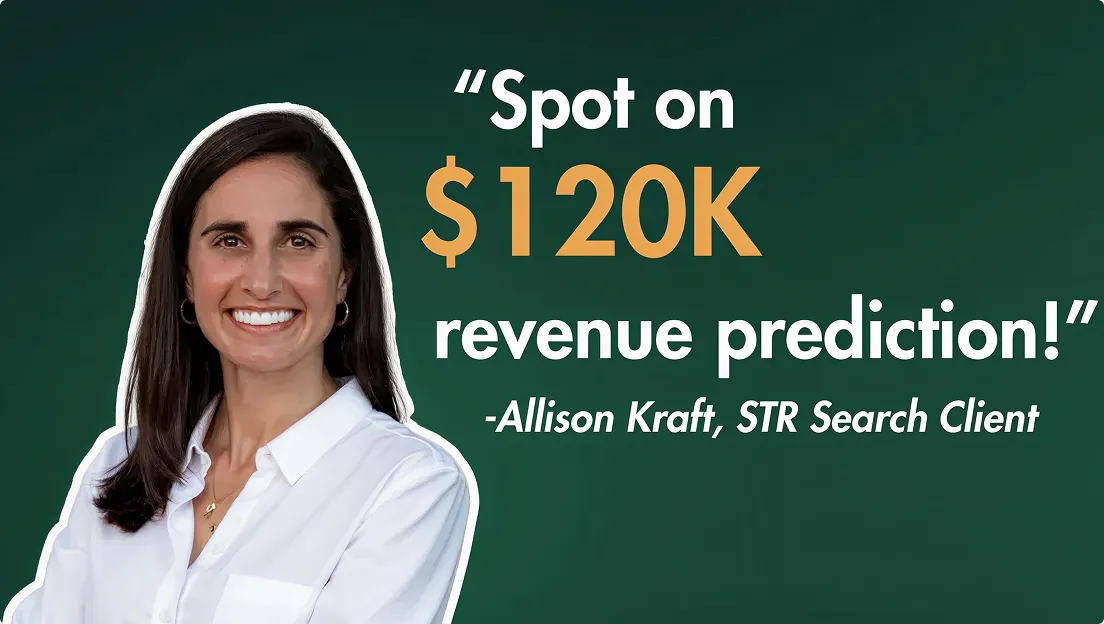
From zero real estate experience to a thriving short-term rental business, Allison locked in $120K in revenue her first year and is now expanding with STR Search again. Proof that the right team can turn analysis paralysis into profitable action!

Thanks to John's expert guidance, I made my first real estate and Airbnb investment a massive success, with consistent positive cash flow and an exceptional return on investment!

John's training gave me the confidence to secure a loan on the spot and scale from one STR to three. His approach is a total game-changer!
Why Choose STR Search?

Put your money to work & lower your tax bill
We’ve spent years analyzing what works so you don’t have to. Our job is to cut through bad data and help you make smart, profitable decisions backed by real numbers.
Schedule Your Free CallTrusted by hundreds of successful investors
Generate $3-5K+ monthly cash flow with our proven property matching system.
Build long-term wealth through STRs with cash flow, equity, and bonus depreciation.
Skip 6-12 months of trial and error with our data-driven underwriting and market analysis
We have a 100% success rate across $90M+ in Real Estate
Out of the 275+ properties we've helped our clients buy every single one has been profitable.
You want more money. More time. More freedom. But may be stuck trading hours for dollars, and scaling your investment strategy feels out of reach.
While others are getting lost in analysis paralysis, you’ve got capital and drive to change your situation. Investors who choose the right STRs can generate $3–5K/month in cash flow, plus serious tax benefits and long-term wealth.
We’ve spent years obsessed with STR investing data so you don’t have to.
With our property match services, there’s no guesswork! Just profitable properties built to perform. With the right deal, your capital can buy more than returns. It can buy your freedom.





All The Ways We Can Help You
Free courses, services, and trainings, to help you maximize your earnings from AirBnb...


Get in touch with us.
Everything Smart Investors Ask About STR Wealth Building
To start an Airbnb in Cape Henlopen, Delaware, begin by researching local zoning laws through Sussex County planning department, as Cape Henlopen falls under county jurisdiction and requires short-term rental permits which typically cost $200-400 annually and mandate safety inspections, business licenses, and compliance with occupancy limits of 2 guests per bedroom plus 2 additional. Contact Delaware Division of Revenue to obtain a business license ($75) and register for state lodging taxes (8% combined state and local). Find property within residential zones that allow short-term rentals, focusing on areas near Cape Henlopen State Park or Lewes Beach, with properties ranging $300,000-800,000 depending on proximity to water and size. Furnish the space with coastal-themed décor, essential amenities including WiFi, air conditioning, full kitchen, quality linens, and beach equipment like chairs and umbrellas, budgeting $15,000-30,000 for complete furnishing. List your property on Airbnb, VRBO, and Booking.com with professional photography highlighting beach access and local attractions, setting competitive rates of $150-400 per night based on season and property size. Manage the property by establishing cleaning protocols between guests ($75-150 per turnover), installing keyless entry systems, creating detailed house rules regarding noise and parking, maintaining responsive communication with guests, and considering hiring local property management companies like Vacasa or RedAwning if you're not local, which typically charge 20-35% commission but handle all operations including marketing, guest services, and maintenance coordination.
To identify profitable short-term rental properties in Cape Henlopen, Delaware, focus on locations within 0.5-1 mile of Cape Henlopen State Park beaches, particularly near Herring Point and The Point, as these areas command premium rates of $200-400 per night during peak summer months (June-August). Target 3-4 bedroom single-family homes or townhouses built after 1990 with parking for 2+ vehicles, outdoor spaces like decks or patios, and modern amenities including WiFi, air conditioning, and updated kitchens, as these features can increase occupancy rates by 15-25% compared to basic properties. Conduct pricing analysis using AirDNA and Mashvisor to benchmark against similar properties in nearby Rehoboth Beach and Lewes, where comparable properties average $180-320 nightly, while Cape Henlopen properties typically command 10-20% premiums due to state park proximity. Research competition through Airbnb, VRBO, and local property management companies like Vacasa and RedAwning, noting that the market has approximately 150-200 active STR listings with average occupancy rates of 65-75% annually. Utilize tools like Rabbu, BiggerPockets calculators, and local MLS data through Bright MLS, while consulting Delaware's STR regulations and Lewes city ordinances, as properties near the state park can generate $45,000-85,000 annually with proper management and marketing emphasizing beach access, fishing, hiking, and family-friendly activities.
To obtain an Airbnb/STR permit in Cape Henlopen, Delaware, you must first contact the Sussex County Planning and Zoning Department since Cape Henlopen falls under county jurisdiction, as the area operates under Sussex County's short-term rental regulations. Begin by submitting an application through the Sussex County government website or in-person at 2 The Circle, Georgetown, DE 19947, providing required documents including property deed or lease agreement, site plan showing parking and property boundaries, proof of liability insurance (minimum $1 million coverage), septic system inspection certificate if applicable, and completed zoning compliance form. The application fee is approximately $200-300 with an additional $150 annual renewal fee, and the process typically takes 4-6 weeks for approval. Cape Henlopen specific requirements include maintaining minimum parking spaces (2 per unit), ensuring compliance with coastal zone regulations due to proximity to Delaware Seashore State Park, adhering to occupancy limits based on septic capacity, providing 24/7 contact information for guests, and maintaining the property according to residential standards. You must also register with the Delaware Division of Revenue for lodging tax collection (8% state tax plus local taxes) and may need additional permits from the Department of Natural Resources and Environmental Control if the property is within 1000 feet of wetlands or coastal areas, which is common in Cape Henlopen.
Short-term rentals (STRs) in Cape Henlopen, Delaware are generally legal but subject to local municipal regulations and Delaware state laws. Cape Henlopen State Park itself prohibits commercial short-term rental operations within park boundaries, but the surrounding communities in Sussex County, including areas near Lewes and Rehoboth Beach, typically allow STRs with proper licensing and registration requirements. Property owners must obtain business licenses, collect and remit state and local taxes including the 8.25% Delaware accommodations tax, and comply with zoning restrictions that may limit STRs in certain residential areas. Recent changes around 2020-2022 have included stricter registration requirements and enhanced tax collection enforcement, with some municipalities implementing occupancy limits, parking requirements, and noise ordinances specifically targeting short-term rental properties. The legal framework varies between incorporated towns like Lewes versus unincorporated Sussex County areas, with Lewes requiring specific STR permits and regular inspections while county regulations focus primarily on tax compliance and basic safety standards.
The best areas for Airbnb investment in Cape Henlopen, Delaware are Lewes Beach and the Historic Downtown Lewes district, which attract tourists year-round due to their proximity to Cape Henlopen State Park, beautiful beaches, and charming colonial architecture dating back to the 1600s. The Lewes Ferry Terminal area is particularly lucrative as it serves as the gateway between Delaware and Cape May, New Jersey, creating consistent demand from travelers using the Cape May-Lewes Ferry system operated by Delaware River and Bay Authority since 1964. The Rehoboth Avenue corridor extending into Cape Henlopen offers strong rental potential due to its connection to nearby Rehoboth Beach's bustling boardwalk and summer tourism season, while properties near the Cape Henlopen State Park entrance benefit from nature enthusiasts, bird watchers, and families visiting the historic WWII observation towers and pristine beaches. The Pilottown Road area provides excellent investment opportunities as it's centrally located between the state park, downtown Lewes, and beach access points, making it attractive to diverse traveler segments including families, couples, and outdoor recreation enthusiasts who visit for fishing, hiking, and the annual Lewes Polar Bear Plunge events.
In Cape Henlopen, Delaware, Airbnb properties are subject to Delaware's state accommodations tax of 8% on gross rental receipts, which applies to all transient lodging rentals under 90 days. Additionally, Sussex County imposes a 3% accommodations tax, bringing the total lodging tax rate to 11% for short-term rentals in the Cape Henlopen area. These taxes are typically collected by Airbnb directly from guests at the time of booking and remitted to the Delaware Division of Revenue on behalf of hosts, though individual hosts may need to register for a business license and file quarterly returns if they exceed certain thresholds or if Airbnb doesn't collect on their behalf. The state requires registration through the Delaware One Stop Business Registration system, and taxes must be remitted by the 20th of the month following the quarter in which they were collected. Exemptions are limited and generally apply only to stays exceeding 90 consecutive days, government employees on official business, and certain nonprofit organizations, though documentation is required to claim these exemptions.
To start an Airbnb in Cape Henlopen, Delaware, expect total costs around $650,000-$750,000. Property purchase represents the largest expense at approximately $550,000-$650,000 for a median-priced home near this coastal area. Furnishing costs typically range $15,000-$25,000 for a complete setup including beds, linens, kitchen essentials, and coastal-themed decor. Initial setup costs including professional photography, listing creation, and basic renovations average $3,000-$5,000. Delaware requires a business license ($75), transient accommodation tax registration ($50), and local permits which vary by municipality but typically cost $200-$500 total. Insurance including short-term rental coverage runs $2,000-$3,500 annually. Utilities setup and deposits for electricity, water, internet, and cable average $500-$800 initially. First six months operating costs including utilities ($1,200), cleaning services ($2,400), maintenance ($1,000), property management software ($300), and marketing ($500) total approximately $5,400. Additional considerations include potential HOA fees ($1,200-$3,000 annually) and a recommended emergency fund of $5,000-$10,000 for unexpected repairs or vacancy periods.
Airbnb properties in Cape Henlopen, Delaware, demonstrate strong seasonal profitability with average annual revenues ranging from $35,000-$65,000 for typical 2-3 bedroom beach properties, driven by peak summer rates of $200-$400 per night during June through August when occupancy rates reach 80-90%. Operating expenses typically consume 40-50% of gross revenue, including property management fees (15-25%), cleaning costs ($75-$125 per turnover), utilities ($200-$300 monthly), insurance premiums ($2,000-$3,500 annually), and maintenance costs averaging $3,000-$5,000 yearly, resulting in net profit margins of 25-35% for well-managed properties. Success factors include proximity to Delaware Seashore State Park and Cape Henlopen State Park, professional photography showcasing ocean views or beach access, responsive guest communication, and strategic pricing that capitalizes on summer demand while offering competitive off-season rates of $80-$150 per night to maintain 30-40% winter occupancy. Properties within walking distance of beaches or featuring amenities like hot tubs, fire pits, or large outdoor spaces consistently outperform the market, with some premium oceanfront rentals achieving $80,000+ annual revenues and profit margins exceeding 40%, while inland properties typically generate $25,000-$40,000 annually with margins around 20-25%.
Airbnb investments in Cape Henlopen, Delaware typically generate annual ROI of 8-12% with cash-on-cash returns ranging from 6-10%, driven by the area's proximity to Cape Henlopen State Park and seasonal beach tourism. Properties within 2-3 miles of the beach command premium rates of $150-300 per night during peak summer months (June-August), while shoulder seasons see rates of $80-150 per night. Initial profitability usually occurs within 18-24 months for well-positioned properties, with investors like Vacasa and RedAwning reporting strong performance in the Lewes-Rehoboth Beach corridor. The market benefits from Delaware's tax-friendly environment and consistent demand from Philadelphia and Washington D.C. metro areas, though investors should expect 3-4 month low seasons and factor in property management costs of 20-25% of gross rental income. Properties purchased in 2019-2021 have shown particularly strong appreciation alongside rental income, with total returns often exceeding 15% annually when combining cash flow and property value increases.
STRSearch is a national platform that specializes in identifying profitable short-term rental properties for investors looking in Cape Henlopen, Delaware. Local real estate agents like those at Berkshire Hathaway HomeServices Gallo Realty and Coldwell Banker Realty have extensive knowledge of the Cape Henlopen market and can identify properties with strong Airbnb potential near the state park and beaches. AirDNA provides market data and analytics specifically for short-term rental investments in the Delaware coastal region, while Mashvisor offers investment property analysis tools that can evaluate Cape Henlopen properties for Airbnb profitability. National services like Roofstock and BiggerPockets connect investors with turnkey rental properties and investment opportunities, though their Cape Henlopen inventory may be limited. Local property management companies such as Vacasa and RedAwning can provide insights into which properties perform best as vacation rentals in the area, while also offering management services post-purchase. Real estate investment firms like HomeVestors and We Buy Ugly Houses occasionally have properties suitable for Airbnb conversion in Delaware beach communities, and platforms like LoopNet and Crexi list commercial and investment properties that could be converted to short-term rentals in the Cape Henlopen area.
Put your money to work & lower your tax bill
We’ve spent years analyzing what works so you don’t have to. Our job is to cut through bad data and help you make smart, profitable decisions backed by real numbers.
Schedule Your Free Call