
Get significant tax savings and earn cash flow by investing in a short-term rental with data-backed selection. No guessing!
Find Your Airbnb InvestmentInvesting in Airbnb properties in Catskills, New York, presents a promising opportunity driven by its strong appeal as a year-round tourist destination. The current market conditions show a consistent demand for short-term rentals, fueled by visitors seeking outdoor activities, scenic beauty, and a retreat from urban life. Tourism trends indicate steady growth, with a mix of seasonal peaks (like fall foliage and winter sports) and consistent weekend getaways. While property values in desirable Catskills areas have seen appreciation, making initial investments moderate to high, the potential for solid rental income and capital gains remains attractive. The investment potential is further enhanced by the area's ongoing development in hospitality and local attractions, which continue to draw a diverse range of visitors, contributing to healthy occupancy rates.
Average Airbnb earnings in the Catskills region of New York typically range from $800 to $2,500 per month for standard properties, with luxury cabins and larger homes commanding $3,000 to $6,000 monthly during peak seasons. Seasonal variations are significant, with summer months (June through August) generating approximately 40-60% higher revenues than winter periods, while fall foliage season in September and October can boost earnings by 25-35% above baseline rates. Winter sports season provides moderate increases of 15-25% for properties near ski areas like Hunter Mountain and Windham. Key factors affecting earnings include property size and amenities (hot tubs, fireplaces, and scenic views can increase rates by 20-40%), proximity to popular attractions such as hiking trails and lakes, WiFi quality for remote workers, and professional photography and listing optimization. Properties within a 10-mile radius of major attractions typically earn 15-30% more than remote locations, while those accommodating 6-8 guests average $150-250 per night compared to $80-150 for smaller 2-4 person properties. Occupancy rates generally range from 45-65% annually, with well-managed properties achieving 70-80% occupancy during peak seasons, and successful hosts often reinvest 20-30% of gross revenue into property improvements and professional management services.
Airbnb investments in the Catskills typically generate ROI between 8-15% annually, with higher-end properties near popular ski areas and lakes achieving returns up to 18-20% during peak seasons. The average payback period ranges from 6-10 years depending on initial investment and property type, with weekend cabins and luxury retreats recovering costs faster due to premium nightly rates of $200-400 compared to standard properties at $100-200 per night. Seasonal occupancy rates average 60-70% annually, with summer and winter months driving 70% of total revenue, while spring and fall see significant drops in bookings. Compared to traditional long-term rentals in the region that typically yield 4-7% annually with monthly rents of $1,200-2,500, short-term rentals can generate 40-60% higher returns but require substantially more management, maintenance costs averaging 15-25% of gross revenue, and face increasing local regulations that limit operating days in some townships. Properties within 2 hours of New York City command premium rates and maintain higher occupancy, while more remote locations may struggle to achieve consistent bookings outside peak seasons, making location the primary factor determining investment success in this market.
Airbnb occupancy rates in the Catskills region of New York typically average around 55-65% annually, with significant seasonal variation that sees peak occupancy rates of 75-85% during summer months (June through August) and fall foliage season (September through October), while winter months drop to approximately 35-45% except for holiday periods and ski season weekends which can reach 60-70%. Spring occupancy generally hovers around 45-55% as the region transitions from winter to peak season. The Catskills performs moderately well compared to New York State's overall Airbnb occupancy rate of approximately 60-65%, though it lags behind New York City's 70-75% average, and sits slightly above the national Airbnb occupancy average of 48-52%. The region's performance is heavily driven by its appeal as a weekend getaway destination for New York City residents, outdoor recreation opportunities, and seasonal attractions, with Friday and Saturday nights consistently showing the highest occupancy rates throughout the year, while weekday occupancy remains significantly lower except during peak summer and fall seasons.
The best Airbnb investment neighborhoods in the Catskills include Woodstock, which commands premium rates due to its artistic reputation, music festival history, and proximity to hiking trails, attracting affluent weekend visitors from NYC willing to pay $200-400 per night. Hunter offers excellent year-round potential with its ski resort drawing winter sports enthusiasts and summer outdoor adventurers, supporting rates of $150-350 nightly with strong occupancy during peak seasons. Phoenicia provides a perfect balance of accessibility via Route 28, proximity to tubing on Esopus Creek, and charming small-town appeal that attracts families and couples seeking authentic Catskills experiences at $175-300 per night. Tannersville benefits from its location near Hunter Mountain and Kaaterskill Falls, one of the region's most photographed waterfalls, drawing nature photographers and hikers willing to pay premium rates for convenient access. Saugerties combines historic charm with proximity to both Woodstock and the Hudson River, offering investors access to the growing Hudson Valley tourism market with rates ranging $150-275 nightly. Windham rounds out the top markets with its ski resort, golf courses, and family-friendly atmosphere, supporting consistent bookings throughout multiple seasons at competitive rates, while Margaretville offers emerging opportunity with lower acquisition costs but growing popularity among visitors seeking authentic mountain experiences away from more crowded destinations.
Short-term rental regulations in the Catskills region of New York vary significantly by municipality, with most towns requiring permits or licenses that typically cost between $100-500 annually and mandate registration with local authorities including property details, insurance documentation, and emergency contact information. Occupancy limits generally restrict rentals to 2 guests per bedroom plus 2 additional guests, with maximum occupancy rarely exceeding 10-12 people, while parking is typically limited to 2-4 vehicles depending on property size. Owner-occupancy requirements are inconsistent across the region, with some towns requiring hosts to live within 25 miles of the rental property or maintain it as their primary residence, though many areas allow non-resident ownership with proper management arrangements. Zoning restrictions commonly prohibit short-term rentals in residential districts or require special use permits, with some municipalities limiting rentals to commercial or mixed-use zones, and minimum rental periods ranging from 2-7 nights to prevent party houses. The registration process typically involves submitting applications with property surveys, septic system certifications, fire safety inspections, and proof of liability insurance coverage of at least $1 million, with annual renewals required in most jurisdictions. Recent regulatory changes have included stricter noise ordinances, enhanced penalties for violations, mandatory 24-hour local contact requirements, and some towns implementing caps on the total number of short-term rental permits available, reflecting growing concerns about housing availability and community character preservation.
Short-term rentals in the Catskills region of New York are subject to New York State sales tax of 4% plus local sales tax that varies by county (typically 3-4%), resulting in total sales tax of 7-8% on rental income. Additionally, operators must collect and remit occupancy tax which ranges from 2-5% depending on the specific municipality, with Greene County charging 3% and Ulster County charging 3%. Registration fees for short-term rental permits typically cost between $100-300 annually per property, while some towns like Woodstock require additional zoning permits costing $150-500. Property owners must also pay standard property taxes which average 1.2-2.1% of assessed value annually in the region. Business registration with New York State costs $25, and operators earning over $20,000 annually must register for sales tax collection at no additional fee. Some municipalities impose additional inspection fees of $75-200 and may require liability insurance minimums of $500,000-1,000,000, though insurance costs vary by provider and typically range from $800-2,000 annually for adequate coverage.
Investing in Airbnb properties in Catskills, New York, presents a promising opportunity driven by its strong appeal as a year-round tourist destination. The current market conditions show a consistent demand for short-term rentals, fueled by visitors seeking outdoor activities, scenic beauty, and a retreat from urban life. Tourism trends indicate steady growth, with a mix of seasonal peaks (like fall foliage and winter sports) and consistent weekend getaways. While property values in desirable Catskills areas have seen appreciation, making initial investments moderate to high, the potential for solid rental income and capital gains remains attractive. The investment potential is further enhanced by the area's ongoing development in hospitality and local attractions, which continue to draw a diverse range of visitors, contributing to healthy occupancy rates.
Average Airbnb earnings in the Catskills region of New York typically range from $800 to $2,500 per month for standard properties, with luxury cabins and larger homes commanding $3,000 to $6,000 monthly during peak seasons. Seasonal variations are significant, with summer months (June through August) generating approximately 40-60% higher revenues than winter periods, while fall foliage season in September and October can boost earnings by 25-35% above baseline rates. Winter sports season provides moderate increases of 15-25% for properties near ski areas like Hunter Mountain and Windham. Key factors affecting earnings include property size and amenities (hot tubs, fireplaces, and scenic views can increase rates by 20-40%), proximity to popular attractions such as hiking trails and lakes, WiFi quality for remote workers, and professional photography and listing optimization. Properties within a 10-mile radius of major attractions typically earn 15-30% more than remote locations, while those accommodating 6-8 guests average $150-250 per night compared to $80-150 for smaller 2-4 person properties. Occupancy rates generally range from 45-65% annually, with well-managed properties achieving 70-80% occupancy during peak seasons, and successful hosts often reinvest 20-30% of gross revenue into property improvements and professional management services.
Airbnb investments in the Catskills typically generate ROI between 8-15% annually, with higher-end properties near popular ski areas and lakes achieving returns up to 18-20% during peak seasons. The average payback period ranges from 6-10 years depending on initial investment and property type, with weekend cabins and luxury retreats recovering costs faster due to premium nightly rates of $200-400 compared to standard properties at $100-200 per night. Seasonal occupancy rates average 60-70% annually, with summer and winter months driving 70% of total revenue, while spring and fall see significant drops in bookings. Compared to traditional long-term rentals in the region that typically yield 4-7% annually with monthly rents of $1,200-2,500, short-term rentals can generate 40-60% higher returns but require substantially more management, maintenance costs averaging 15-25% of gross revenue, and face increasing local regulations that limit operating days in some townships. Properties within 2 hours of New York City command premium rates and maintain higher occupancy, while more remote locations may struggle to achieve consistent bookings outside peak seasons, making location the primary factor determining investment success in this market.
Airbnb occupancy rates in the Catskills region of New York typically average around 55-65% annually, with significant seasonal variation that sees peak occupancy rates of 75-85% during summer months (June through August) and fall foliage season (September through October), while winter months drop to approximately 35-45% except for holiday periods and ski season weekends which can reach 60-70%. Spring occupancy generally hovers around 45-55% as the region transitions from winter to peak season. The Catskills performs moderately well compared to New York State's overall Airbnb occupancy rate of approximately 60-65%, though it lags behind New York City's 70-75% average, and sits slightly above the national Airbnb occupancy average of 48-52%. The region's performance is heavily driven by its appeal as a weekend getaway destination for New York City residents, outdoor recreation opportunities, and seasonal attractions, with Friday and Saturday nights consistently showing the highest occupancy rates throughout the year, while weekday occupancy remains significantly lower except during peak summer and fall seasons.
The best Airbnb investment neighborhoods in the Catskills include Woodstock, which commands premium rates due to its artistic reputation, music festival history, and proximity to hiking trails, attracting affluent weekend visitors from NYC willing to pay $200-400 per night. Hunter offers excellent year-round potential with its ski resort drawing winter sports enthusiasts and summer outdoor adventurers, supporting rates of $150-350 nightly with strong occupancy during peak seasons. Phoenicia provides a perfect balance of accessibility via Route 28, proximity to tubing on Esopus Creek, and charming small-town appeal that attracts families and couples seeking authentic Catskills experiences at $175-300 per night. Tannersville benefits from its location near Hunter Mountain and Kaaterskill Falls, one of the region's most photographed waterfalls, drawing nature photographers and hikers willing to pay premium rates for convenient access. Saugerties combines historic charm with proximity to both Woodstock and the Hudson River, offering investors access to the growing Hudson Valley tourism market with rates ranging $150-275 nightly. Windham rounds out the top markets with its ski resort, golf courses, and family-friendly atmosphere, supporting consistent bookings throughout multiple seasons at competitive rates, while Margaretville offers emerging opportunity with lower acquisition costs but growing popularity among visitors seeking authentic mountain experiences away from more crowded destinations.
Short-term rental regulations in the Catskills region of New York vary significantly by municipality, with most towns requiring permits or licenses that typically cost between $100-500 annually and mandate registration with local authorities including property details, insurance documentation, and emergency contact information. Occupancy limits generally restrict rentals to 2 guests per bedroom plus 2 additional guests, with maximum occupancy rarely exceeding 10-12 people, while parking is typically limited to 2-4 vehicles depending on property size. Owner-occupancy requirements are inconsistent across the region, with some towns requiring hosts to live within 25 miles of the rental property or maintain it as their primary residence, though many areas allow non-resident ownership with proper management arrangements. Zoning restrictions commonly prohibit short-term rentals in residential districts or require special use permits, with some municipalities limiting rentals to commercial or mixed-use zones, and minimum rental periods ranging from 2-7 nights to prevent party houses. The registration process typically involves submitting applications with property surveys, septic system certifications, fire safety inspections, and proof of liability insurance coverage of at least $1 million, with annual renewals required in most jurisdictions. Recent regulatory changes have included stricter noise ordinances, enhanced penalties for violations, mandatory 24-hour local contact requirements, and some towns implementing caps on the total number of short-term rental permits available, reflecting growing concerns about housing availability and community character preservation.
Short-term rentals in the Catskills region of New York are subject to New York State sales tax of 4% plus local sales tax that varies by county (typically 3-4%), resulting in total sales tax of 7-8% on rental income. Additionally, operators must collect and remit occupancy tax which ranges from 2-5% depending on the specific municipality, with Greene County charging 3% and Ulster County charging 3%. Registration fees for short-term rental permits typically cost between $100-300 annually per property, while some towns like Woodstock require additional zoning permits costing $150-500. Property owners must also pay standard property taxes which average 1.2-2.1% of assessed value annually in the region. Business registration with New York State costs $25, and operators earning over $20,000 annually must register for sales tax collection at no additional fee. Some municipalities impose additional inspection fees of $75-200 and may require liability insurance minimums of $500,000-1,000,000, though insurance costs vary by provider and typically range from $800-2,000 annually for adequate coverage.
* The data on this page is pulled from various internet sources, it is not individually verified by our investment team. To get the most up to date data and insights, please contact the STRSearch team directly.
How Smart Investors Build Wealth
Through Data-Driven STRs (Real Results)
From first-time investors to seasoned pros, see how our commitment to comprehensive data analysis led to unparalleled investment victories.
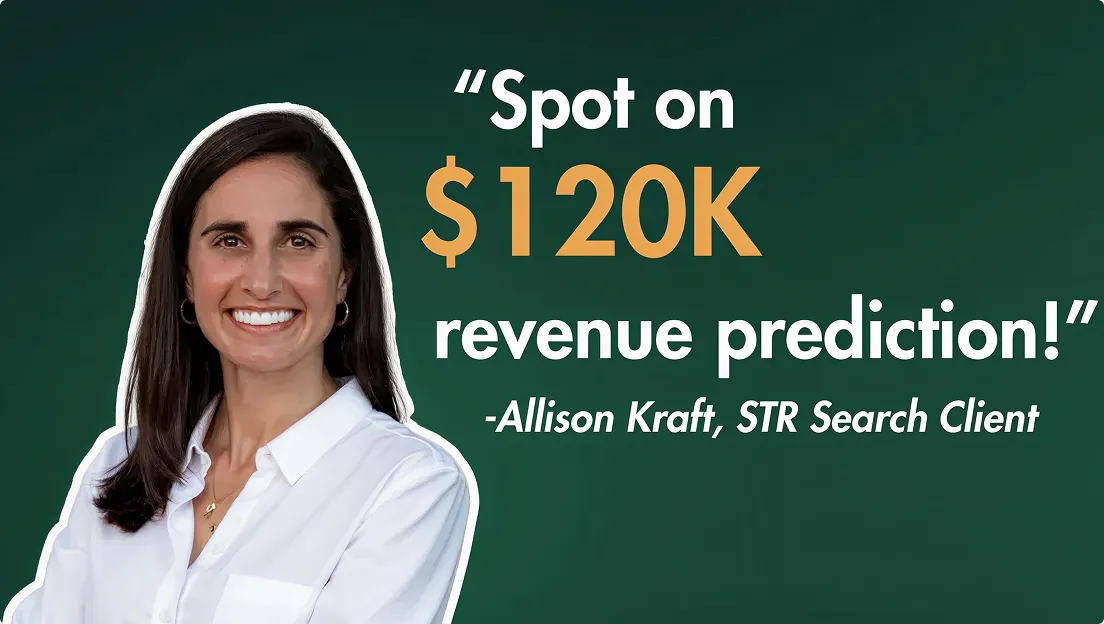
From zero real estate experience to a thriving short-term rental business, Allison locked in $120K in revenue her first year and is now expanding with STR Search again. Proof that the right team can turn analysis paralysis into profitable action!

Thanks to John's expert guidance, I made my first real estate and Airbnb investment a massive success, with consistent positive cash flow and an exceptional return on investment!

John's training gave me the confidence to secure a loan on the spot and scale from one STR to three. His approach is a total game-changer!
Why Choose STR Search?
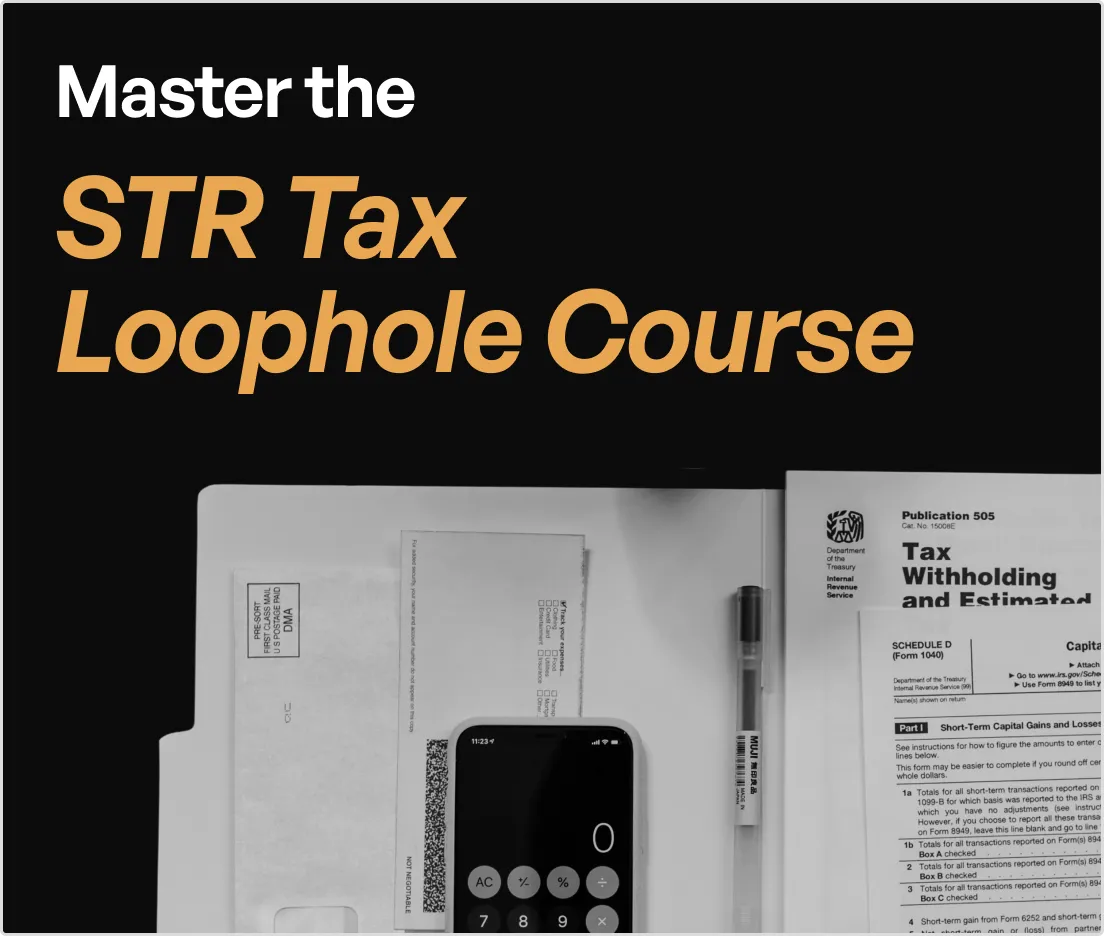
Put your money to work & lower your tax bill
We’ve spent years analyzing what works so you don’t have to. Our job is to cut through bad data and help you make smart, profitable decisions backed by real numbers.
Schedule Your Free CallTrusted by hundreds of successful investors
Generate $3-5K+ monthly cash flow with our proven property matching system.
Build long-term wealth through STRs with cash flow, equity, and bonus depreciation.
Skip 6-12 months of trial and error with our data-driven underwriting and market analysis
We have a 100% success rate across $90M+ in Real Estate
Out of the 275+ properties we've helped our clients buy every single one has been profitable.
You want more money. More time. More freedom. But may be stuck trading hours for dollars, and scaling your investment strategy feels out of reach.
While others are getting lost in analysis paralysis, you’ve got capital and drive to change your situation. Investors who choose the right STRs can generate $3–5K/month in cash flow, plus serious tax benefits and long-term wealth.
We’ve spent years obsessed with STR investing data so you don’t have to.
With our property match services, there’s no guesswork! Just profitable properties built to perform. With the right deal, your capital can buy more than returns. It can buy your freedom.





All The Ways We Can Help You
Free courses, services, and trainings, to help you maximize your earnings from AirBnb...


Get in touch with us.
Everything Smart Investors Ask About STR Wealth Building
To start an Airbnb in the Catskills, New York, begin by researching local zoning laws and regulations as each town (like Woodstock, Hunter, or Tannersville) has different short-term rental requirements, with some requiring special use permits or limiting rental days to under 30 per year. Contact your specific town clerk's office to understand permit requirements, which typically cost $100-500 annually, and ensure your property meets fire safety codes including smoke detectors, carbon monoxide detectors, and proper egress windows. Find a suitable property by searching platforms like LoopNet or working with local realtors familiar with investment properties, focusing on areas near ski resorts, hiking trails, or popular towns, with typical purchase prices ranging $200,000-800,000 depending on size and location. Furnish the space with durable, mountain-appropriate furniture including comfortable beds, a fully equipped kitchen, outdoor furniture for decks, and seasonal items like firewood storage and snow removal equipment, budgeting $15,000-30,000 for a complete setup. List your property on Airbnb, VRBO, and local platforms like Catskills vacation rental sites, with professional photography highlighting mountain views, outdoor spaces, and proximity to attractions like Hunter Mountain or Kaaterskill Falls, setting competitive rates of $150-400 per night depending on season and amenities. Manage the property by establishing relationships with local cleaning services (typically $80-150 per turnover), maintenance contractors familiar with mountain properties, and consider hiring a local property management company like Catskills Property Management or similar services that charge 15-25% of rental income, while maintaining 24/7 guest communication and emergency contacts for issues like power outages or heating problems common in mountain areas.
To identify profitable short-term rental properties in the Catskills, New York, focus on locations within 2-3 hours of NYC metro area, particularly near popular destinations like Hunter Mountain, Windham, or Woodstock, with proximity to hiking trails, lakes, or ski resorts being crucial for year-round appeal. Target properties with 3-4 bedrooms, outdoor spaces like decks or fire pits, modern amenities including WiFi and updated kitchens, and unique features such as mountain views, hot tubs, or rustic charm that photograph well for listings. Conduct pricing analysis using AirDNA and Mashvisor to identify markets with average daily rates of $200-400 and occupancy rates above 60%, while analyzing seasonal trends since Catskills properties typically peak during summer months (June-August) and winter ski season (December-March). Research competition by studying similar properties within 5-mile radius on Airbnb and VRBO, noting their pricing, amenities, and booking calendars to identify gaps in the market or opportunities for differentiation. Utilize tools like Rabbu, AllTheRooms, and local STR management companies such as Catskills Vacation Rentals for market insights, while consulting Sullivan County and Ulster County tourism boards for visitor data, and consider properties near emerging areas like Livingston Manor or Phoenicia where gentrification and new businesses are driving increased tourism demand.
To obtain an Airbnb/STR permit in the Catskills region of New York, you must first determine which specific town or county your property is located in, as regulations vary by municipality - common areas include Greene County towns like Hunter, Windham, or Tannersville, and Ulster County towns like Woodstock or Saugerties. Generally, you'll need to apply through your local town clerk's office or building department, submitting a short-term rental application along with required documents including proof of property ownership, certificate of occupancy, floor plans, septic system inspection (if applicable), fire safety compliance certificate, liability insurance policy (typically $1 million minimum), and sometimes a site plan. Most municipalities require a public hearing notice and may charge application fees ranging from $200-$500, with annual renewal fees of $100-$300. The approval timeline typically takes 30-90 days depending on the complexity and local review process. Specific Catskills requirements often include maximum occupancy limits based on bedrooms and septic capacity, parking requirements (usually 2 spaces minimum), noise ordinance compliance, waste management plans, and some towns limit the percentage of properties that can operate as STRs or require minimum distances between rental properties. You may also need to register with New York State for tax collection purposes and obtain a Certificate of Authority for sales tax if your rental period is less than 30 days.
Short-term rentals (STRs) in the Catskills region of New York operate under a complex legal framework that varies significantly by municipality, with most areas allowing STRs but with increasing restrictions implemented since 2019-2023. The legal status depends on specific towns and counties within the Catskills, such as Greene, Delaware, Sullivan, and Ulster counties, where many municipalities have enacted local ordinances requiring registration, permits, and compliance with zoning laws. Common restrictions include limits on the number of rental days per year (typically 120-180 days), occupancy caps, parking requirements, and noise ordinances, while some towns like Woodstock and New Paltz have implemented stricter regulations including caps on the total number of STR permits issued. Prohibited areas often include certain residential zones in towns like Kingston and Saugerties, and recent legal changes have seen municipalities implementing registration systems, increased fines for violations, and enhanced enforcement mechanisms, particularly following concerns about housing availability and community character, with some areas requiring hosts to obtain special use permits or conditional use permits before operating STRs.
The best Airbnb investment areas in the Catskills, New York include Woodstock, renowned for its music festival legacy and year-round arts scene that attracts cultural tourists and weekend visitors from NYC; Hunter, a prime ski destination with Hunter Mountain drawing winter sports enthusiasts and summer festival-goers; Phoenicia, positioned along Esopus Creek offering tubing, fishing, and outdoor recreation that appeals to adventure travelers; Tannersville, known as the "Painted Village" with its colorful Victorian architecture and proximity to Hunter Mountain, attracting both skiers and leaf-peepers; Saugerties, featuring the historic Opus 40 sculpture park and hosting major music festivals like Mountain Jam, drawing diverse tourist demographics; Windham, home to Windham Mountain Resort providing four-season recreation including skiing, mountain biking, and scenic gondola rides; and Margaretville, situated in the Delaware County Catskills offering authentic rural experiences, antique shopping, and access to pristine fishing streams, appealing to visitors seeking peaceful retreats and outdoor activities while remaining accessible to New York City residents looking for weekend escapes.
Airbnb properties in the Catskills region of New York are subject to multiple layers of lodging taxes including New York State sales tax at 4% plus local sales taxes that vary by county (typically 3-4%), resulting in combined rates of 7-8% on short-term rental stays. Delaware County imposes an additional 2% occupancy tax, while Greene County charges a 3% hotel/motel tax, and Sullivan County levies a 3% hotel room occupancy tax, bringing total tax rates to approximately 9-11% depending on the specific municipality. Ulster County charges a 2% hotel unit fee plus standard sales tax. These taxes are collected at the time of booking through Airbnb's automated tax collection system for most jurisdictions, though some local occupancy taxes may require direct remittance by hosts to county tax departments on a quarterly basis. Hosts must register with the New York State Department of Taxation and Finance and obtain a Certificate of Authority to collect sales tax, with returns typically filed quarterly. Exemptions generally apply to stays of 30 days or longer, which are considered long-term rentals rather than transient accommodations, and some counties may exempt stays by permanent residents or government employees on official business.
To start an Airbnb in the Catskills, New York, expect total costs around $450,000-$550,000. Property purchase represents the largest expense at approximately $350,000-$400,000 for a median 2-3 bedroom home suitable for short-term rentals. Furnishing costs typically range $15,000-$25,000 for quality furniture, bedding, kitchenware, and decor to create an attractive guest experience. Initial setup including professional photography, listing creation, and marketing materials costs around $2,000-$3,000. Permits and fees vary by municipality but generally include short-term rental permits ($200-$500), business licenses ($100-$300), and potential zoning compliance costs ($500-$1,500). Insurance for short-term rentals runs $2,000-$4,000 annually, significantly higher than standard homeowner's insurance. Utilities including electricity, water, heating, internet, and cable average $300-$500 monthly or $1,800-$3,000 for six months. First six months operating costs encompass cleaning services ($150-$250 per turnover), maintenance and repairs ($2,000-$4,000), property management software ($50-$100 monthly), and marketing expenses ($500-$1,000), totaling approximately $8,000-$15,000. Additional considerations include potential property improvements for guest safety and comfort, emergency fund reserves, and seasonal variations in utility costs due to heating requirements in the mountainous region.
Airbnb properties in the Catskills, New York typically generate annual revenues ranging from $25,000 to $65,000 for well-positioned properties, with average daily rates between $150-300 depending on location and amenities. Operating expenses generally consume 40-60% of gross revenue, including cleaning fees ($75-150 per turnover), property management (15-25% of revenue), utilities ($200-400 monthly), insurance ($1,500-3,000 annually), and maintenance costs averaging $3,000-8,000 yearly. Properties near popular destinations like Hunter Mountain or Woodstock command premium rates, with some luxury cabins achieving 70-80% occupancy rates and net profit margins of 25-35%. Success factors include proximity to outdoor activities, unique architectural features like restored barns or modern A-frames, professional photography, and responsive guest communication. Properties within 2 hours of New York City perform best, particularly those offering amenities like hot tubs, fire pits, or scenic views, with investors like those operating through companies such as RedAwning or AvantStay reporting ROI of 8-15% in prime locations, though seasonal fluctuations mean 60-70% of annual bookings occur between May and October.
Airbnb investments in the Catskills, New York typically generate annual ROI of 12-18% with cash-on-cash returns ranging from 8-15% depending on property type and location within the region. Properties closer to popular ski resorts like Hunter Mountain or Windham tend to achieve higher returns of 15-18% annually, while more remote locations average 10-14%. Initial profitability usually occurs within 18-24 months for well-positioned properties, with seasonal rental rates averaging $200-400 per night during peak summer and winter months. The market has shown consistent growth since 2019, with companies like Vacasa and RedAwning reporting strong booking rates of 65-75% occupancy for professionally managed properties. Cash-on-cash returns are optimized when investors purchase properties in the $300,000-500,000 range with 20-25% down payments, allowing for positive cash flow within the first year of operation in most Catskills submarkets including Woodstock, Phoenicia, and Tannersville.
STRSearch leads the national market for Airbnb investment property analysis and market research in the Catskills region. Local real estate agents specializing in short-term rental investments include Catskill Mountain Realty, Century 21 Catskill Mountains, and Coldwell Banker Village Green Realty, with agents like Sarah Johnson at Keller Williams Hudson Valley and Michael Chen at Compass focusing specifically on STR properties since 2019. National services include Mashvisor (founded 2014), which provides Airbnb analytics for Catskills markets, AirDNA offering rental performance data since 2015, and RedAwning's investment platform launched in 2009. Specialized investment companies like Awning (2020), Vacasa's investment division (2009), and AvantStay's property acquisition team (2017) actively source profitable Airbnb properties in Sullivan, Delaware, and Greene counties. Local property management companies such as Catskills Vacation Rentals, Mountain Modern Management, and Hudson Valley Short Term Rentals also assist investors in identifying and acquiring properties, while national platforms like Roofstock (2015) and HomeUnion (2012) occasionally feature Catskills investment opportunities. Additional services include BiggerPockets' STR analysis tools, Rentometer's market research capabilities, and local investment groups like Hudson Valley Real Estate Investors Association founded in 2018.
Put your money to work & lower your tax bill
We’ve spent years analyzing what works so you don’t have to. Our job is to cut through bad data and help you make smart, profitable decisions backed by real numbers.
Schedule Your Free Call