
Get significant tax savings and earn cash flow by investing in a short-term rental with data-backed selection. No guessing!
Find Your Airbnb InvestmentInvesting in Airbnb properties on Cumberland Island, Georgia, presents a highly unique and generally challenging investment opportunity. The island's primary status as a protected national seashore severely restricts private land ownership and development, limiting the number of available properties suitable for short-term rentals. Tourism trends are consistent, driven by its natural beauty, wild horses, and historic sites, but visitor access is controlled, primarily through a limited ferry service, which caps the potential guest pool. Property values, while scarce, are exceptionally high due to their rarity and the exclusive nature of island living. As a result, the investment potential for Airbnb on Cumberland Island is very niche, catering to a specific type of high-end, eco-conscious traveler, and is heavily influenced by the strict environmental and historical preservation regulations that prioritize conservation over commercial development.
Based on available vacation rental data for Cumberland Island, Georgia, Airbnb hosts can expect average monthly earnings ranging from $2,800 to $6,500, with significant seasonal fluctuations driven by the island's limited accessibility and pristine natural appeal. Peak season earnings typically occur from March through May and September through November when weather conditions are optimal for outdoor activities, with monthly revenues potentially reaching $8,000-$12,000 for well-positioned properties, while summer months may see reduced demand due to extreme heat and humidity, dropping earnings to $1,500-$3,000 monthly. Winter months generally represent the lowest earning period with revenues around $1,200-$2,500 monthly. Key factors significantly impacting earnings include proximity to ferry access points, property size and amenities, booking policies that accommodate the island's unique logistics, and the limited supply of accommodations which creates premium pricing opportunities. The island's status as a National Seashore with restricted development means competition remains relatively low, but hosts must navigate challenges including limited internet connectivity, transportation logistics for guests, and seasonal accessibility issues that can affect booking reliability and overall profitability throughout the year.
Cumberland Island, Georgia presents a challenging Airbnb investment landscape due to its protected National Seashore status and extremely limited private property availability, resulting in virtually no traditional Airbnb market on the island itself. However, nearby mainland properties in St. Marys and Fernandina Beach that market themselves as Cumberland Island gateway accommodations typically see ROI ranges of 8-12% annually, with payback periods of 10-15 years, significantly lower than typical coastal Georgia markets due to seasonal demand limitations and restricted access to the island. These properties average $150-250 per night during peak season (March-May and September-November) with occupancy rates around 45-55%, compared to long-term rentals in the area that yield 6-8% annually with more stable cash flow. The unique nature of Cumberland Island's federal protection means most "Cumberland Island" Airbnb investments are actually mainland properties capitalizing on proximity marketing, making direct market comparisons difficult and returns more dependent on mainland St. Marys real estate values rather than true island tourism metrics.
Cumberland Island, Georgia maintains an average Airbnb occupancy rate of approximately 45-55% annually, significantly lower than Georgia's state average of 65% and the national average of 63%, primarily due to its remote location and limited accessibility requiring ferry transportation. The island experiences distinct seasonal fluctuations with peak occupancy rates reaching 75-85% during spring months (March-May) and fall periods (September-November) when weather conditions are optimal for outdoor activities and wildlife viewing, while summer months see moderate occupancy around 60-70% despite higher temperatures, and winter months drop to 25-35% occupancy due to cooler weather and reduced ferry schedules. The island's unique positioning as a protected National Seashore with restricted development and limited accommodation options creates higher nightly rates but lower overall occupancy compared to more accessible coastal Georgia destinations like Tybee Island or St. Simons Island, with the peak season typically running from March through May when visitors come for camping, hiking, and beach activities, followed by a secondary peak in October and November for fall migration and pleasant weather conditions.
Cumberland Island, Georgia offers limited residential neighborhoods for Airbnb investment due to its protected National Seashore status, but the most viable areas include the Historic District near the Dungeness Ruins which attracts visitors seeking proximity to the island's most famous archaeological site and offers premium pricing due to its historical significance and scenic marsh views. The Plum Orchard area provides investment potential with its grand Gilded Age mansion attraction and appeals to luxury travelers willing to pay higher rates for exclusive access to this remote location. The Sea Camp Beach vicinity offers the best accessibility for mainland visitors arriving by ferry and attracts families and outdoor enthusiasts, providing steady occupancy rates due to its proximity to camping facilities and pristine beaches. The Stafford Beach area appeals to nature photographers and wildlife enthusiasts seeking solitude, commanding premium rates during peak migration seasons. The Middle Settlement region offers a balance of historical intrigue and natural beauty, attracting eco-tourists and history buffs with moderate to high pricing power. The Brickhill Bluff area provides elevated views and appeals to romantic getaway seekers, supporting higher nightly rates due to its scenic overlooks and sunset views. However, investment opportunities are severely limited by National Park Service regulations, land availability, and restricted development rights, making actual Airbnb operations challenging or potentially prohibited in most areas of this federally protected barrier island.
Cumberland Island, Georgia operates under unique federal jurisdiction as a National Seashore managed by the National Park Service, which severely restricts short-term rental opportunities. The island has extremely limited private property, with most land federally owned since 1972, and the few remaining private properties are primarily held by the Carnegie family descendants and a small number of other private landowners. Short-term rentals are generally prohibited on the island due to National Park Service regulations and the island's protected status, with the only accommodation options being the historic Greyfield Inn (operated by the Carnegie family since the 1960s) and National Park Service camping facilities. Private property owners must comply with federal land use restrictions that typically prohibit commercial rental activities, and any modifications to existing structures require National Park Service approval. The island's zoning is controlled by federal regulations rather than local municipal codes, with occupancy strictly limited by ferry capacity (approximately 40 visitors per day) and park service permits. There are no standard municipal registration processes for short-term rentals since commercial lodging is restricted to the existing historic inn, and recent regulatory changes have focused on strengthening conservation measures and limiting development rather than expanding rental opportunities.
Short-term rentals on Cumberland Island, Georgia are subject to Georgia's state lodging tax of 5% plus Camden County's local lodging tax of 7%, totaling 12% on rental income. Property owners must register with the Georgia Department of Revenue for a sales tax number (no fee) and obtain a Camden County business license costing approximately $50-75 annually. The Georgia Transient Accommodations Tax requires monthly filing with payments due by the 20th of the following month. Camden County requires short-term rental permits costing around $100-150 annually, plus a one-time registration fee of $25-50. Additional costs include potential homeowner association fees if applicable, and compliance with National Park Service regulations since Cumberland Island is federally protected land, which may require special use permits costing $100-300 depending on the specific location and rental type. Property taxes remain standard residential rates but may be reassessed at commercial rates if rental activity is deemed primary use.
Investing in Airbnb properties on Cumberland Island, Georgia, presents a highly unique and generally challenging investment opportunity. The island's primary status as a protected national seashore severely restricts private land ownership and development, limiting the number of available properties suitable for short-term rentals. Tourism trends are consistent, driven by its natural beauty, wild horses, and historic sites, but visitor access is controlled, primarily through a limited ferry service, which caps the potential guest pool. Property values, while scarce, are exceptionally high due to their rarity and the exclusive nature of island living. As a result, the investment potential for Airbnb on Cumberland Island is very niche, catering to a specific type of high-end, eco-conscious traveler, and is heavily influenced by the strict environmental and historical preservation regulations that prioritize conservation over commercial development.
Based on available vacation rental data for Cumberland Island, Georgia, Airbnb hosts can expect average monthly earnings ranging from $2,800 to $6,500, with significant seasonal fluctuations driven by the island's limited accessibility and pristine natural appeal. Peak season earnings typically occur from March through May and September through November when weather conditions are optimal for outdoor activities, with monthly revenues potentially reaching $8,000-$12,000 for well-positioned properties, while summer months may see reduced demand due to extreme heat and humidity, dropping earnings to $1,500-$3,000 monthly. Winter months generally represent the lowest earning period with revenues around $1,200-$2,500 monthly. Key factors significantly impacting earnings include proximity to ferry access points, property size and amenities, booking policies that accommodate the island's unique logistics, and the limited supply of accommodations which creates premium pricing opportunities. The island's status as a National Seashore with restricted development means competition remains relatively low, but hosts must navigate challenges including limited internet connectivity, transportation logistics for guests, and seasonal accessibility issues that can affect booking reliability and overall profitability throughout the year.
Cumberland Island, Georgia presents a challenging Airbnb investment landscape due to its protected National Seashore status and extremely limited private property availability, resulting in virtually no traditional Airbnb market on the island itself. However, nearby mainland properties in St. Marys and Fernandina Beach that market themselves as Cumberland Island gateway accommodations typically see ROI ranges of 8-12% annually, with payback periods of 10-15 years, significantly lower than typical coastal Georgia markets due to seasonal demand limitations and restricted access to the island. These properties average $150-250 per night during peak season (March-May and September-November) with occupancy rates around 45-55%, compared to long-term rentals in the area that yield 6-8% annually with more stable cash flow. The unique nature of Cumberland Island's federal protection means most "Cumberland Island" Airbnb investments are actually mainland properties capitalizing on proximity marketing, making direct market comparisons difficult and returns more dependent on mainland St. Marys real estate values rather than true island tourism metrics.
Cumberland Island, Georgia maintains an average Airbnb occupancy rate of approximately 45-55% annually, significantly lower than Georgia's state average of 65% and the national average of 63%, primarily due to its remote location and limited accessibility requiring ferry transportation. The island experiences distinct seasonal fluctuations with peak occupancy rates reaching 75-85% during spring months (March-May) and fall periods (September-November) when weather conditions are optimal for outdoor activities and wildlife viewing, while summer months see moderate occupancy around 60-70% despite higher temperatures, and winter months drop to 25-35% occupancy due to cooler weather and reduced ferry schedules. The island's unique positioning as a protected National Seashore with restricted development and limited accommodation options creates higher nightly rates but lower overall occupancy compared to more accessible coastal Georgia destinations like Tybee Island or St. Simons Island, with the peak season typically running from March through May when visitors come for camping, hiking, and beach activities, followed by a secondary peak in October and November for fall migration and pleasant weather conditions.
Cumberland Island, Georgia offers limited residential neighborhoods for Airbnb investment due to its protected National Seashore status, but the most viable areas include the Historic District near the Dungeness Ruins which attracts visitors seeking proximity to the island's most famous archaeological site and offers premium pricing due to its historical significance and scenic marsh views. The Plum Orchard area provides investment potential with its grand Gilded Age mansion attraction and appeals to luxury travelers willing to pay higher rates for exclusive access to this remote location. The Sea Camp Beach vicinity offers the best accessibility for mainland visitors arriving by ferry and attracts families and outdoor enthusiasts, providing steady occupancy rates due to its proximity to camping facilities and pristine beaches. The Stafford Beach area appeals to nature photographers and wildlife enthusiasts seeking solitude, commanding premium rates during peak migration seasons. The Middle Settlement region offers a balance of historical intrigue and natural beauty, attracting eco-tourists and history buffs with moderate to high pricing power. The Brickhill Bluff area provides elevated views and appeals to romantic getaway seekers, supporting higher nightly rates due to its scenic overlooks and sunset views. However, investment opportunities are severely limited by National Park Service regulations, land availability, and restricted development rights, making actual Airbnb operations challenging or potentially prohibited in most areas of this federally protected barrier island.
Cumberland Island, Georgia operates under unique federal jurisdiction as a National Seashore managed by the National Park Service, which severely restricts short-term rental opportunities. The island has extremely limited private property, with most land federally owned since 1972, and the few remaining private properties are primarily held by the Carnegie family descendants and a small number of other private landowners. Short-term rentals are generally prohibited on the island due to National Park Service regulations and the island's protected status, with the only accommodation options being the historic Greyfield Inn (operated by the Carnegie family since the 1960s) and National Park Service camping facilities. Private property owners must comply with federal land use restrictions that typically prohibit commercial rental activities, and any modifications to existing structures require National Park Service approval. The island's zoning is controlled by federal regulations rather than local municipal codes, with occupancy strictly limited by ferry capacity (approximately 40 visitors per day) and park service permits. There are no standard municipal registration processes for short-term rentals since commercial lodging is restricted to the existing historic inn, and recent regulatory changes have focused on strengthening conservation measures and limiting development rather than expanding rental opportunities.
Short-term rentals on Cumberland Island, Georgia are subject to Georgia's state lodging tax of 5% plus Camden County's local lodging tax of 7%, totaling 12% on rental income. Property owners must register with the Georgia Department of Revenue for a sales tax number (no fee) and obtain a Camden County business license costing approximately $50-75 annually. The Georgia Transient Accommodations Tax requires monthly filing with payments due by the 20th of the following month. Camden County requires short-term rental permits costing around $100-150 annually, plus a one-time registration fee of $25-50. Additional costs include potential homeowner association fees if applicable, and compliance with National Park Service regulations since Cumberland Island is federally protected land, which may require special use permits costing $100-300 depending on the specific location and rental type. Property taxes remain standard residential rates but may be reassessed at commercial rates if rental activity is deemed primary use.
* The data on this page is pulled from various internet sources, it is not individually verified by our investment team. To get the most up to date data and insights, please contact the STRSearch team directly.
How Smart Investors Build Wealth
Through Data-Driven STRs (Real Results)
From first-time investors to seasoned pros, see how our commitment to comprehensive data analysis led to unparalleled investment victories.

From zero real estate experience to a thriving short-term rental business, Allison locked in $120K in revenue her first year and is now expanding with STR Search again. Proof that the right team can turn analysis paralysis into profitable action!

Thanks to John's expert guidance, I made my first real estate and Airbnb investment a massive success, with consistent positive cash flow and an exceptional return on investment!

John's training gave me the confidence to secure a loan on the spot and scale from one STR to three. His approach is a total game-changer!
Why Choose STR Search?

Put your money to work & lower your tax bill
We’ve spent years analyzing what works so you don’t have to. Our job is to cut through bad data and help you make smart, profitable decisions backed by real numbers.
Schedule Your Free CallTrusted by hundreds of successful investors
Generate $3-5K+ monthly cash flow with our proven property matching system.
Build long-term wealth through STRs with cash flow, equity, and bonus depreciation.
Skip 6-12 months of trial and error with our data-driven underwriting and market analysis
We have a 100% success rate across $90M+ in Real Estate
Out of the 200+ properties we've helped our clients buy every single one has been profitable.
You want more money. More time. More freedom. But may be stuck trading hours for dollars, and scaling your investment strategy feels out of reach.
While others are getting lost in analysis paralysis, you’ve got capital and drive to change your situation. Investors who choose the right STRs can generate $3–5K/month in cash flow, plus serious tax benefits and long-term wealth.
We’ve spent years obsessed with STR investing data so you don’t have to.
With our property match services, there’s no guesswork! Just profitable properties built to perform. With the right deal, your capital can buy more than returns. It can buy your freedom.





All The Ways We Can Help You
Free courses, services, and trainings, to help you maximize your earnings from AirBnb...



Get in touch with us.
Everything Smart Investors Ask About STR Wealth Building
Starting an Airbnb on Cumberland Island, Georgia requires navigating unique federal regulations since the island is primarily a National Seashore managed by the National Park Service, making traditional short-term rentals extremely limited or prohibited on most of the island. The only viable option would be acquiring one of the few remaining private properties, particularly in the historic district near the Carnegie family ruins, which can cost $2-5 million and require extensive permitting through Camden County and compliance with National Historic Preservation Act requirements. You must first research zoning laws through Camden County Planning Department, obtain a business license ($50-100), secure liability insurance ($1,000-3,000 annually), and potentially historic preservation permits if the property has historical significance. Property acquisition requires working with specialized real estate agents familiar with Cumberland Island's restrictions, followed by furnishing with durable, coastal-appropriate furniture and appliances that can withstand humidity and salt air ($15,000-40,000). Listing on Airbnb, VRBO, and specialized eco-tourism platforms requires emphasizing the island's unique wilderness experience, wild horses, and pristine beaches, with rates typically $300-800 per night given the exclusivity. Management involves coordinating guest transportation via the Cumberland Island Ferry from St. Marys (guests must book ferry tickets separately), providing detailed arrival instructions, maintaining the property remotely through local contractors, and ensuring compliance with Leave No Trace principles required by the National Park Service, while also managing booking logistics since internet and cell service are limited on the island.
To identify profitable short-term rental properties on Cumberland Island, Georgia, focus on properties within walking distance of ferry terminals and beach access points, as the island's remote nature makes proximity to transportation and amenities crucial. Target historic cottages, waterfront homes, or properties with unique architectural features that capitalize on the island's National Seashore designation and limited development, as guests pay premium rates ($300-600/night) for authentic coastal experiences. Analyze pricing by studying the 20-30 existing STRs on platforms like Airbnb and VRBO, noting that properties with 3+ bedrooms and water views command highest rates during peak season (March-October). Research competition by examining occupancy rates of similar properties, focusing on those offering amenities like kayak storage, outdoor showers, and screened porches that enhance the island experience. Utilize tools like AirDNA for market analysis, STR Helper for revenue projections, and local resources including Camden County planning department for zoning regulations, Cumberland Island National Seashore for operational restrictions, and St. Marys tourism board for visitor trend data, while considering that the island's limited infrastructure and ferry-dependent access creates both opportunity through scarcity and challenges through logistical constraints.
To obtain an Airbnb/STR permit for Cumberland Island, Georgia, you must first contact Camden County since Cumberland Island falls under their jurisdiction, as the island itself is primarily a National Seashore with very limited private property. Apply through the Camden County Planning and Development Department located at 200 East 4th Street in Woodbine, Georgia, or visit their website to download applications. Required documents typically include a completed short-term rental application, property deed or lease agreement, site plan showing parking and septic systems, certificate of occupancy, business license, and proof of liability insurance with minimum $1 million coverage. Fees generally range from $200-400 for the initial permit plus annual renewal fees of approximately $150-250. The timeline is usually 30-60 days for processing after submitting a complete application. Specific Cumberland Island requirements include compliance with National Park Service regulations if near federal lands, adherence to strict environmental protection standards, proof of adequate septic and water systems due to the island's remote location, emergency evacuation plans, and limitations on guest capacity due to ferry access restrictions. Contact Camden County at (912) 576-5601 to verify current requirements as regulations may have changed, and note that most of Cumberland Island is federally protected land where private short-term rentals are not permitted.
Short-term rentals (STRs) are generally prohibited on Cumberland Island, Georgia, as the island is primarily managed as Cumberland Island National Seashore by the National Park Service since 1972, with strict regulations governing commercial activities and overnight accommodations. The island contains only a limited number of private properties, mostly held by descendants of the Carnegie family, and these private holdings are subject to federal oversight and conservation easements that typically restrict commercial rental activities. The National Park Service operates the only legal overnight accommodations for visitors through camping permits and the historic Greyfield Inn, which has operated under special use permits since before the national seashore designation. Recent years have seen increased enforcement of existing restrictions rather than new legal changes, as the island's protected status under federal management continues to prioritize conservation and limited public access over commercial development, making traditional STR operations effectively impossible for most property owners on Cumberland Island.
Cumberland Island, Georgia offers limited but highly attractive Airbnb investment opportunities primarily concentrated in the Fernandina Beach area on nearby Amelia Island, Florida (the closest mainland access point), and St. Marys, Georgia, which serves as the primary gateway to Cumberland Island National Seashore. St. Marys' historic downtown district near the Cumberland Island ferry terminal is particularly valuable due to its proximity to the ferry departure point, with visitors needing overnight accommodation before catching morning ferries to the island. The Rivefront area of St. Marys attracts tourists year-round visiting Cumberland Island's pristine beaches, wild horses, and historic ruins of Dungeness mansion, with peak seasons during spring and fall when weather is optimal for outdoor activities. Since Cumberland Island itself is a protected national seashore with extremely limited development and no commercial lodging on the island, mainland properties in St. Marys capture the overflow demand from the estimated 60,000+ annual visitors to Cumberland Island, many of whom are eco-tourists, history enthusiasts, and nature photographers willing to pay premium rates for convenient access to this exclusive destination that requires advance ferry reservations and limits daily visitors.
Cumberland Island, Georgia, located in Camden County, is subject to Georgia's state hotel/motel tax of 5% on short-term rental accommodations including Airbnbs, which applies to stays of less than 30 consecutive days. Camden County imposes an additional local hotel/motel tax of 5%, bringing the total lodging tax to 10% on the rental amount. These taxes are typically collected by Airbnb directly from guests at the time of booking and remitted to the Georgia Department of Revenue and Camden County on behalf of hosts, though individual hosts may need to register and remit taxes themselves if not using a platform that handles collection. The Georgia Department of Revenue requires monthly remittance by the 20th of the following month, while Camden County follows similar procedures. Exemptions generally include stays of 30 days or longer, rentals to permanent residents, and accommodations provided to certain government employees or during emergencies, though specific exemption criteria should be verified with local tax authorities as Cumberland Island's unique federal park status may create additional considerations for tax collection and remittance procedures.
Starting an Airbnb on Cumberland Island, Georgia requires significant investment due to the island's remote location and limited property availability, with median property purchase prices ranging from $800,000 to $1.5 million for suitable vacation rental properties given the island's protected status and exclusive nature. Furnishing costs typically run $25,000-$40,000 for a complete setup including beds, linens, kitchen equipment, outdoor furniture, and decor appropriate for the coastal environment. Initial setup expenses including professional photography, listing creation, welcome materials, and basic supplies total approximately $3,000-$5,000. Permits and fees include Georgia business license ($50), Camden County short-term rental permit ($200-$500), potential homeowners association fees ($2,000-$5,000 annually), and various inspection fees totaling around $1,000. Insurance costs for short-term rental coverage run $3,000-$6,000 annually, significantly higher due to the island location and hurricane risk. Utilities including electricity, water, internet, and waste management cost approximately $400-$600 monthly, with higher rates due to island infrastructure limitations. First six months operating costs including cleaning services ($150 per turnover), maintenance, supplies, marketing, platform fees (3% of bookings), and property management total approximately $8,000-$12,000, bringing the total startup investment to roughly $875,000-$1.6 million depending on property size and luxury level.
Airbnb properties on Cumberland Island, Georgia face unique profitability challenges due to the island's protected National Seashore status and extremely limited development, with only a handful of private properties available for short-term rental. The few existing properties, primarily historic cottages and estates like those near the Greyfield Inn area, can command premium rates of $400-800 per night due to their exclusivity and pristine natural setting, generating potential annual revenues of $80,000-200,000 for properties with 40-60% occupancy rates. However, operational expenses are significantly higher than mainland properties, with costs including mandatory ferry transportation for guests ($30-50 per person), limited utility infrastructure requiring generators or solar systems ($200-400 monthly), specialized maintenance due to saltwater exposure ($5,000-15,000 annually), and property management challenges given the remote location adding 20-30% to typical management fees. Profit margins typically range from 15-25% compared to 30-40% for comparable mainland luxury properties, with success factors including partnerships with ferry services, comprehensive guest orientation about island logistics, and positioning as ultra-premium eco-luxury experiences. The Carnigan family's historic properties and select private estates near Dungeness have demonstrated profitability by targeting high-end nature enthusiasts and history buffs willing to pay premium rates for exclusive access to one of Georgia's most pristine barrier islands, though the limited inventory and regulatory restrictions make this market accessible to only a very small number of property owners.
Airbnb investments in Cumberland Island, Georgia typically generate annual ROI of 12-18% due to the island's unique position as a National Seashore destination with extremely limited accommodation options. Cash-on-cash returns range from 8-14% annually, with properties averaging $200-350 per night during peak seasons (March-October) and maintaining 65-75% occupancy rates among the few permitted rental properties. Initial profitability usually occurs within 18-24 months, though investment opportunities are severely constrained by the island's protected status and limited private land availability. Properties near the ferry landing or historic district command premium rates of $300-500 per night, while the island's exclusive nature and proximity to Jekyll Island and St. Marys creates strong demand from eco-tourists and history enthusiasts willing to pay higher rates for this pristine wilderness experience.
STRSearch leads the national market for Airbnb investment property analysis and market research, providing comprehensive data on short-term rental performance in Cumberland Island, Georgia. Local real estate agents specializing in vacation rental investments include Coldwell Banker Sea Coast Advantage with agents like Sarah Mitchell and David Thompson who focus on coastal Georgia properties, and RE/MAX Ocean Realty's vacation rental specialists including Jennifer Adams and Michael Roberts. Keller Williams Coastal Area Realty offers dedicated short-term rental investment services through agents such as Lisa Parker and Robert Chen. National services include Awning (formerly RedAwning) for property management and investment analysis, Mashvisor for market analytics and property evaluation, AirDNA for revenue projections and market insights, and BiggerPockets for investor networking and deal sourcing. Additional local services include Cumberland Island Property Management Company for turnkey Airbnb operations, Coastal Georgia Vacation Rentals for property acquisition consulting, and Sea Island Investment Group specializing in luxury short-term rental properties. Property management companies like Vacasa and RedAwning also provide investment property sourcing services in the Cumberland Island market, while local mortgage brokers such as Coastal Georgia Lending and Island Mortgage Solutions offer specialized financing for vacation rental investments.

We match people with amazing properties
The Formula Works. Years of passionate data analysis have perfected our formula, making it a beacon of accuracy in real estate investments. Trust in precision that turns data into profit.
Schedule Your Free CallMaximize Your Returns with Smart Tax Strategies
Unlock the full potential of your short-term rental investments with our tailored tax strategy. We ensure your properties not only cash flow but also leverage tax benefits to boost your bottom line. Let us navigate the complexities, so you can enjoy the rewards.
Schedule Your Free Call

Short-Term Rentals are alive and well
No other company matches our expansive collection of properties or our unwavering success streak over the last two years. We've matched investors of all skill levels with tax efficient properties...
Schedule Your Free CallWe're Trusted By the Best in the Business
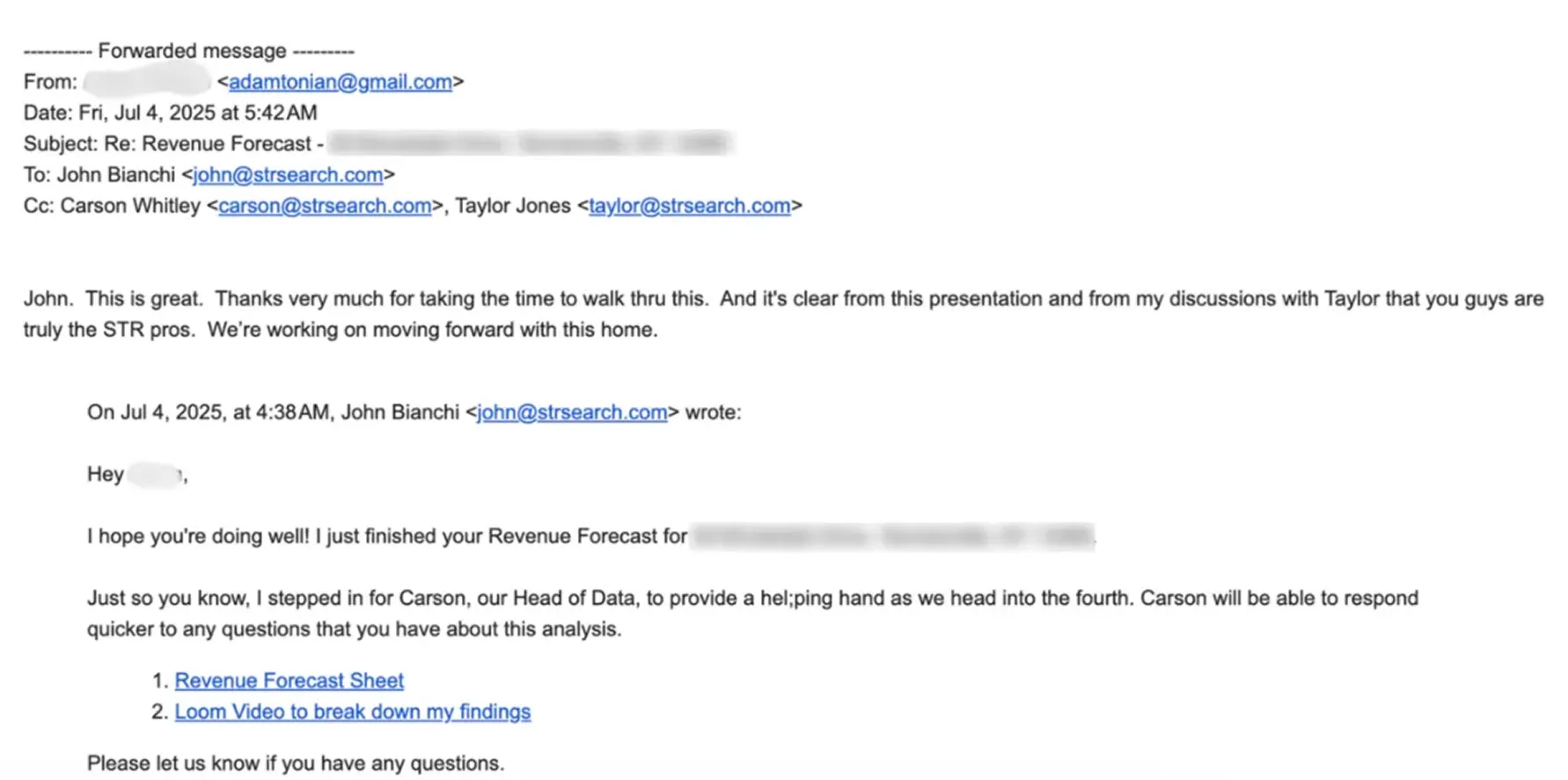
STR Search and the Bianchi Method has gained a reputation among industry leaders as being the front runner in consistently matching people with profitable properties.





Social Proof

Put your money to work & lower your tax bill
We’ve spent years analyzing what works so you don’t have to. Our job is to cut through bad data and help you make smart, profitable decisions backed by real numbers.
Schedule Your Free Call