
Get significant tax savings and earn cash flow by investing in a short-term rental with data-backed selection. No guessing!
Find Your Airbnb InvestmentInvesting in Airbnb properties in Curtis, Michigan, presents a unique opportunity, largely shaped by its seasonal tourism and natural attractions. The current market conditions are characterized by a high demand for short-term rentals during peak seasons, primarily summer due to its proximity to Lake Superior and outdoor activities, and also during the fall hunting season. Property values in Curtis are generally more accessible compared to larger urban centers, which can lower the initial investment barrier. Tourism trends indicate a steady interest in natural retreats and outdoor recreation, making Curtis an appealing destination for those seeking a tranquil escape. The investment potential, therefore, is closely tied to effective seasonal marketing and property management, capitalizing on the strong demand during the warmer months and specific events like hunting season, while also considering strategies to mitigate lower occupancy in the off-season.
Based on available market data and regional analysis, Airbnb properties in Curtis, Michigan typically generate average monthly revenues ranging from $800 to $2,200, with significant seasonal fluctuations driven by the area's proximity to Lake Superior and outdoor recreation opportunities. Peak summer months from June through August can see earnings reach $2,500 to $3,500 monthly for well-positioned properties, while winter months often drop to $400 to $800 due to reduced tourist activity and harsh weather conditions. Properties within walking distance of Portage Bay or offering lake views command premium rates of $120-180 per night during peak season, compared to $60-90 for standard accommodations. Key factors influencing earnings include property size and amenities, with larger cabins accommodating 6-8 guests performing significantly better than smaller units, proximity to snowmobile trails which boost winter bookings, and the presence of amenities like hot tubs, fire pits, or boat access. The spring and fall shoulder seasons typically yield moderate revenues of $1,000 to $1,600 monthly, with hunting season in November providing a notable uptick in bookings. Occupancy rates generally range from 35-45% annually, with summer months achieving 70-85% occupancy while winter months may drop below 25%, making property management efficiency and competitive pricing crucial for maximizing annual returns in this seasonal market.
Airbnb investments in Curtis, Michigan typically generate ROI between 8-12% annually, with payback periods ranging from 8-12 years due to the area's seasonal tourism patterns centered around outdoor recreation and proximity to Pictured Rocks National Lakeshore. The small market size of approximately 1,000 residents means limited year-round demand, with peak performance during summer months when occupancy rates can reach 65-75% but drop significantly in winter to 20-30%. Average daily rates fluctuate between $85-120 in peak season and $45-65 in off-season, resulting in annual gross revenues of $12,000-18,000 for typical 2-3 bedroom properties. Compared to long-term rentals in Curtis, which typically yield 6-8% ROI with more stable monthly income of $600-900, Airbnb properties require higher initial investment for furnishing and ongoing management but can achieve 2-4% higher returns when successfully managed, though with greater income volatility and seasonal cash flow challenges that make long-term rentals more predictable for conservative investors.
Curtis, Michigan, a small town in the Upper Peninsula near Pictured Rocks National Lakeshore, experiences Airbnb occupancy rates averaging approximately 45-50% annually, with significant seasonal variation driven by its proximity to outdoor recreation areas. Peak season occurs from June through September when occupancy rates surge to 75-85%, coinciding with hiking, camping, and fall foliage tourism, while winter months (December-March) see occupancy drop to 15-25% due to harsh weather conditions limiting tourist activity. Spring and late fall shoulder seasons maintain moderate occupancy around 35-45% as visitors come for fishing and hunting activities. These rates are slightly below Michigan's statewide average of 55-60% annual occupancy, primarily due to Curtis's remote location and limited year-round attractions compared to more accessible destinations like Traverse City or Grand Rapids. Nationally, Curtis significantly underperforms the average Airbnb occupancy rate of 65-70%, reflecting the challenges rural destinations face in maintaining consistent bookings outside peak tourism windows, though the town's rates are competitive within the Upper Peninsula market where similar seasonal patterns and geographic constraints affect most short-term rental properties.
Curtis, Michigan offers several promising neighborhoods for Airbnb investment, with the downtown lakefront area being the most lucrative due to its proximity to Big Manistique Lake and easy access to fishing, boating, and water sports that attract year-round visitors willing to pay premium rates of $150-200 per night. The Pine Ridge residential area provides excellent investment potential with its mix of affordable properties ($80,000-120,000) and proximity to snowmobile trails and ATV routes that draw outdoor enthusiasts during peak seasons. The Northwoods cabin district appeals to families and groups seeking authentic Michigan wilderness experiences, commanding higher nightly rates ($180-250) due to secluded settings near hiking trails and hunting areas. The historic Main Street corridor offers walkable access to local restaurants and shops while maintaining reasonable property acquisition costs, making it ideal for investors targeting couples and small families. The South Shore neighborhood provides waterfront and near-waterfront properties that attract fishing tournaments and summer vacationers, offering strong seasonal pricing power and consistent bookings from May through October. The Forest Glen area combines affordability with access to state forest lands, appealing to budget-conscious outdoor enthusiasts and generating steady occupancy rates of 65-75% annually.
Short-term rental regulations in Curtis, Michigan are primarily governed by Portage County ordinances, which require property owners to obtain a short-term rental permit through the county planning department before operating vacation rentals. Properties must comply with a maximum occupancy limit of 2 people per bedroom plus 2 additional guests, with total occupancy not exceeding 12 people regardless of bedroom count. Owner-occupancy is not required for short-term rentals in Curtis, allowing for investment properties and absentee ownership. Zoning restrictions permit short-term rentals in residential districts but require compliance with parking requirements of 1 space per bedroom plus 1 additional space, and properties must maintain residential character without commercial signage. The registration process involves submitting an application with property details, proof of insurance, emergency contact information, and paying an annual fee of approximately $150-200, with renewals required each year. Recent regulatory changes implemented in 2022-2023 include stricter noise ordinances with quiet hours from 10 PM to 8 AM, mandatory posting of house rules and emergency contact information, and enhanced enforcement mechanisms including potential permit revocation for repeat violations of occupancy or noise regulations.
Short-term rentals in Curtis, Michigan are subject to Michigan's 6% state sales tax and the state's 6% use tax on lodging accommodations, totaling 12% in state taxes. Mackinac County, where Curtis is located, may impose an additional local accommodation tax of up to 5%, though the specific rate varies by municipality. Registration fees for short-term rental permits in Curtis typically range from $100-300 annually, with initial application fees around $50-150. Property owners must also obtain a business license costing approximately $25-75 per year. Fire safety inspections may be required at $75-150 per inspection, and some properties need zoning compliance certificates costing $50-100. Tourism promotion assessments in the area can add 1-3% to the total tax burden. Additional costs may include liability insurance requirements and periodic health department inspections ranging from $100-200, bringing the total annual regulatory costs to approximately $400-800 plus the percentage-based taxes on rental income.
Investing in Airbnb properties in Curtis, Michigan, presents a unique opportunity, largely shaped by its seasonal tourism and natural attractions. The current market conditions are characterized by a high demand for short-term rentals during peak seasons, primarily summer due to its proximity to Lake Superior and outdoor activities, and also during the fall hunting season. Property values in Curtis are generally more accessible compared to larger urban centers, which can lower the initial investment barrier. Tourism trends indicate a steady interest in natural retreats and outdoor recreation, making Curtis an appealing destination for those seeking a tranquil escape. The investment potential, therefore, is closely tied to effective seasonal marketing and property management, capitalizing on the strong demand during the warmer months and specific events like hunting season, while also considering strategies to mitigate lower occupancy in the off-season.
Based on available market data and regional analysis, Airbnb properties in Curtis, Michigan typically generate average monthly revenues ranging from $800 to $2,200, with significant seasonal fluctuations driven by the area's proximity to Lake Superior and outdoor recreation opportunities. Peak summer months from June through August can see earnings reach $2,500 to $3,500 monthly for well-positioned properties, while winter months often drop to $400 to $800 due to reduced tourist activity and harsh weather conditions. Properties within walking distance of Portage Bay or offering lake views command premium rates of $120-180 per night during peak season, compared to $60-90 for standard accommodations. Key factors influencing earnings include property size and amenities, with larger cabins accommodating 6-8 guests performing significantly better than smaller units, proximity to snowmobile trails which boost winter bookings, and the presence of amenities like hot tubs, fire pits, or boat access. The spring and fall shoulder seasons typically yield moderate revenues of $1,000 to $1,600 monthly, with hunting season in November providing a notable uptick in bookings. Occupancy rates generally range from 35-45% annually, with summer months achieving 70-85% occupancy while winter months may drop below 25%, making property management efficiency and competitive pricing crucial for maximizing annual returns in this seasonal market.
Airbnb investments in Curtis, Michigan typically generate ROI between 8-12% annually, with payback periods ranging from 8-12 years due to the area's seasonal tourism patterns centered around outdoor recreation and proximity to Pictured Rocks National Lakeshore. The small market size of approximately 1,000 residents means limited year-round demand, with peak performance during summer months when occupancy rates can reach 65-75% but drop significantly in winter to 20-30%. Average daily rates fluctuate between $85-120 in peak season and $45-65 in off-season, resulting in annual gross revenues of $12,000-18,000 for typical 2-3 bedroom properties. Compared to long-term rentals in Curtis, which typically yield 6-8% ROI with more stable monthly income of $600-900, Airbnb properties require higher initial investment for furnishing and ongoing management but can achieve 2-4% higher returns when successfully managed, though with greater income volatility and seasonal cash flow challenges that make long-term rentals more predictable for conservative investors.
Curtis, Michigan, a small town in the Upper Peninsula near Pictured Rocks National Lakeshore, experiences Airbnb occupancy rates averaging approximately 45-50% annually, with significant seasonal variation driven by its proximity to outdoor recreation areas. Peak season occurs from June through September when occupancy rates surge to 75-85%, coinciding with hiking, camping, and fall foliage tourism, while winter months (December-March) see occupancy drop to 15-25% due to harsh weather conditions limiting tourist activity. Spring and late fall shoulder seasons maintain moderate occupancy around 35-45% as visitors come for fishing and hunting activities. These rates are slightly below Michigan's statewide average of 55-60% annual occupancy, primarily due to Curtis's remote location and limited year-round attractions compared to more accessible destinations like Traverse City or Grand Rapids. Nationally, Curtis significantly underperforms the average Airbnb occupancy rate of 65-70%, reflecting the challenges rural destinations face in maintaining consistent bookings outside peak tourism windows, though the town's rates are competitive within the Upper Peninsula market where similar seasonal patterns and geographic constraints affect most short-term rental properties.
Curtis, Michigan offers several promising neighborhoods for Airbnb investment, with the downtown lakefront area being the most lucrative due to its proximity to Big Manistique Lake and easy access to fishing, boating, and water sports that attract year-round visitors willing to pay premium rates of $150-200 per night. The Pine Ridge residential area provides excellent investment potential with its mix of affordable properties ($80,000-120,000) and proximity to snowmobile trails and ATV routes that draw outdoor enthusiasts during peak seasons. The Northwoods cabin district appeals to families and groups seeking authentic Michigan wilderness experiences, commanding higher nightly rates ($180-250) due to secluded settings near hiking trails and hunting areas. The historic Main Street corridor offers walkable access to local restaurants and shops while maintaining reasonable property acquisition costs, making it ideal for investors targeting couples and small families. The South Shore neighborhood provides waterfront and near-waterfront properties that attract fishing tournaments and summer vacationers, offering strong seasonal pricing power and consistent bookings from May through October. The Forest Glen area combines affordability with access to state forest lands, appealing to budget-conscious outdoor enthusiasts and generating steady occupancy rates of 65-75% annually.
Short-term rental regulations in Curtis, Michigan are primarily governed by Portage County ordinances, which require property owners to obtain a short-term rental permit through the county planning department before operating vacation rentals. Properties must comply with a maximum occupancy limit of 2 people per bedroom plus 2 additional guests, with total occupancy not exceeding 12 people regardless of bedroom count. Owner-occupancy is not required for short-term rentals in Curtis, allowing for investment properties and absentee ownership. Zoning restrictions permit short-term rentals in residential districts but require compliance with parking requirements of 1 space per bedroom plus 1 additional space, and properties must maintain residential character without commercial signage. The registration process involves submitting an application with property details, proof of insurance, emergency contact information, and paying an annual fee of approximately $150-200, with renewals required each year. Recent regulatory changes implemented in 2022-2023 include stricter noise ordinances with quiet hours from 10 PM to 8 AM, mandatory posting of house rules and emergency contact information, and enhanced enforcement mechanisms including potential permit revocation for repeat violations of occupancy or noise regulations.
Short-term rentals in Curtis, Michigan are subject to Michigan's 6% state sales tax and the state's 6% use tax on lodging accommodations, totaling 12% in state taxes. Mackinac County, where Curtis is located, may impose an additional local accommodation tax of up to 5%, though the specific rate varies by municipality. Registration fees for short-term rental permits in Curtis typically range from $100-300 annually, with initial application fees around $50-150. Property owners must also obtain a business license costing approximately $25-75 per year. Fire safety inspections may be required at $75-150 per inspection, and some properties need zoning compliance certificates costing $50-100. Tourism promotion assessments in the area can add 1-3% to the total tax burden. Additional costs may include liability insurance requirements and periodic health department inspections ranging from $100-200, bringing the total annual regulatory costs to approximately $400-800 plus the percentage-based taxes on rental income.
* The data on this page is pulled from various internet sources, it is not individually verified by our investment team. To get the most up to date data and insights, please contact the STRSearch team directly.
How Smart Investors Build Wealth
Through Data-Driven STRs (Real Results)
From first-time investors to seasoned pros, see how our commitment to comprehensive data analysis led to unparalleled investment victories.
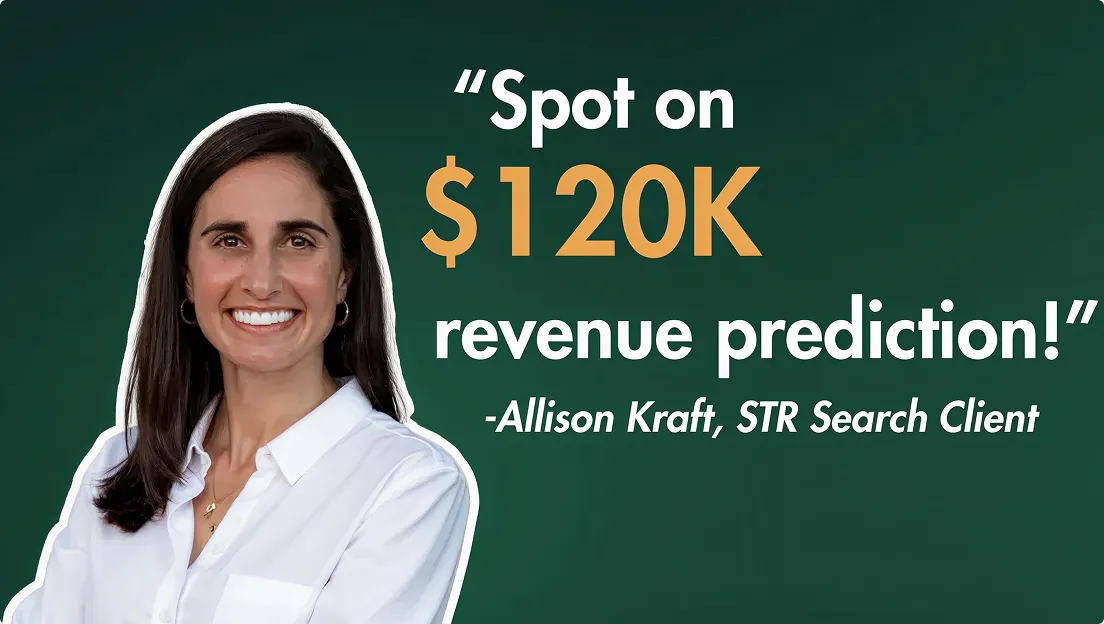
From zero real estate experience to a thriving short-term rental business, Allison locked in $120K in revenue her first year and is now expanding with STR Search again. Proof that the right team can turn analysis paralysis into profitable action!

Thanks to John's expert guidance, I made my first real estate and Airbnb investment a massive success, with consistent positive cash flow and an exceptional return on investment!

John's training gave me the confidence to secure a loan on the spot and scale from one STR to three. His approach is a total game-changer!
Why Choose STR Search?

Put your money to work & lower your tax bill
We’ve spent years analyzing what works so you don’t have to. Our job is to cut through bad data and help you make smart, profitable decisions backed by real numbers.
Schedule Your Free CallTrusted by hundreds of successful investors
Generate $3-5K+ monthly cash flow with our proven property matching system.
Build long-term wealth through STRs with cash flow, equity, and bonus depreciation.
Skip 6-12 months of trial and error with our data-driven underwriting and market analysis
We have a 100% success rate across $90M+ in Real Estate
Out of the 275+ properties we've helped our clients buy every single one has been profitable.
You want more money. More time. More freedom. But may be stuck trading hours for dollars, and scaling your investment strategy feels out of reach.
While others are getting lost in analysis paralysis, you’ve got capital and drive to change your situation. Investors who choose the right STRs can generate $3–5K/month in cash flow, plus serious tax benefits and long-term wealth.
We’ve spent years obsessed with STR investing data so you don’t have to.
With our property match services, there’s no guesswork! Just profitable properties built to perform. With the right deal, your capital can buy more than returns. It can buy your freedom.





All The Ways We Can Help You
Free courses, services, and trainings, to help you maximize your earnings from AirBnb...


Get in touch with us.
Everything Smart Investors Ask About STR Wealth Building
To start an Airbnb in Curtis, Michigan, begin by researching local zoning laws and regulations through Mackinac County's planning department, as Curtis falls under county jurisdiction and may require special use permits for short-term rentals. Contact the Mackinac County Building Department to obtain necessary permits, which typically include a rental license and may require fire safety inspections. Find a suitable property by working with local real estate agents familiar with the Curtis area, focusing on properties near Manistique Lake or within walking distance of local attractions like the Curtis Community Center. Furnish the property with durable, comfortable furniture suitable for Michigan's four-season climate, including warm bedding for winter guests and outdoor furniture for summer lake activities. Create your Airbnb listing with high-quality photos showcasing the property's proximity to outdoor recreation opportunities like fishing, snowmobiling, and hiking in the Hiawatha National Forest. Set competitive pricing by researching similar properties in the Upper Peninsula region, typically ranging from $75-150 per night depending on size and amenities. Manage the property by establishing relationships with local cleaning services, maintenance contractors, and consider using property management companies in nearby Manistique if you're not local, while ensuring compliance with Michigan's 6% sales tax and any local accommodation taxes that Mackinac County may impose.
To identify profitable short-term rental properties in Curtis, Michigan, focus on locations within 1-2 miles of Grand Marais and Lake Superior shoreline access, as well as properties near snowmobile and ATV trail systems that attract year-round outdoor enthusiasts. Target 2-4 bedroom cabins or homes with rustic charm, fireplaces, outdoor spaces, and modern amenities like WiFi and updated kitchens, as these appeal to families and groups seeking Upper Peninsula experiences. Analyze comparable STR rates on Airbnb and VRBO, where Curtis properties typically range from $80-200 per night depending on size and amenities, with peak seasons during summer months (June-August) and winter snowmobile season (December-March). Research competition by monitoring occupancy rates and pricing of existing rentals within a 10-mile radius, noting that Curtis has limited STR inventory compared to nearby Munising or Grand Marais, creating opportunity for well-positioned properties. Utilize AirDNA for market analytics, STR Helper for revenue projections, and local resources like Alger County tourism data and Michigan DNR trail maps to identify high-traffic recreational areas, while consulting with Curtis Township regarding any STR regulations and connecting with local property management companies familiar with seasonal rental demands in the eastern Upper Peninsula market.
To obtain an Airbnb/STR permit in Curtis, Michigan, you'll need to contact the Mackinac County Building Department or the Curtis Township office directly, as Curtis is an unincorporated community in Mackinac County. Start by calling Mackinac County at (906) 643-7300 to inquire about short-term rental regulations and permit requirements. You'll likely need to submit a completed application form, proof of property ownership or lease agreement, a site plan or floor plan of the property, proof of liability insurance (typically $1 million minimum), a septic system inspection certificate if applicable, and fire safety compliance documentation. The application fee is estimated to be between $100-300, with potential annual renewal fees of $50-150. Required documents may also include a business license from Michigan, tax registration with the state, and neighbor notification letters. The approval timeline typically ranges from 30-60 days depending on the completeness of your application and any required inspections. Curtis-specific requirements may include adherence to rural zoning restrictions, well water testing if not on municipal water, and compliance with any seasonal occupancy limitations due to the area's tourism patterns around the nearby Pictured Rocks National Lakeshore.
Short-term rentals (STRs) are generally legal in Curtis, Michigan, as the state of Michigan does not prohibit STRs at the state level, leaving regulation primarily to local municipalities. Curtis, located in Mackinac County in the Upper Peninsula, does not appear to have specific municipal ordinances restricting short-term rentals as of 2024, though property owners must comply with basic zoning requirements and may need to register with the state for tax purposes. The area's rural nature and tourism appeal, particularly given its proximity to outdoor recreation areas, makes STRs a common accommodation option. Property owners should verify compliance with any county-level regulations and ensure proper licensing for tax collection, as Michigan requires STR operators to collect state sales tax and local accommodation taxes where applicable. Recent changes in Michigan have focused more on tax compliance and registration requirements rather than outright restrictions, with most regulatory activity occurring in larger cities like Grand Rapids, Ann Arbor, and Detroit rather than smaller communities like Curtis.
The best Airbnb investment areas in Curtis, Michigan center around the Seney National Wildlife Refuge vicinity and properties near Manistique Lakes, as Curtis serves as a gateway to Michigan's Upper Peninsula outdoor recreation. The downtown Curtis area near Highway 77 offers strong potential due to its proximity to snowmobile trails and serves as a hub for winter sports enthusiasts visiting between December and March. Properties within 2-3 miles of the Manistique River provide excellent fishing tourism opportunities, particularly during salmon runs in fall and ice fishing season. The residential areas along Curtis Road and near the Curtis Community Center attract families visiting for hunting seasons, ATV trails, and summer camping at nearby state forests. Lakefront or lake-view properties on smaller inland lakes like Helmer Lake command premium rates for summer vacationers seeking quiet retreats. The area benefits from consistent demand from outdoor enthusiasts year-round, with peak seasons during hunting (October-November), snowmobiling (January-March), and summer recreation (June-August), making it attractive for investors seeking properties that can generate income across multiple seasons rather than relying solely on summer tourism.
Airbnb properties in Curtis, Michigan are subject to Michigan's 6% state sales tax on lodging accommodations, which applies to all short-term rental stays under 30 days. Additionally, Mackinac County may impose a local accommodation tax of up to 5%, though the exact rate varies by municipality within the county. These taxes are typically collected by Airbnb directly from guests at the time of booking through their automated tax collection system, which began around 2018 for Michigan properties. Property owners who collect taxes independently must register with the Michigan Department of Treasury, file monthly returns by the 20th of the following month, and remit collected taxes electronically through the state's e-filing system. Local county taxes may require separate registration and remittance to Mackinac County's treasurer's office on a monthly or quarterly basis. Exemptions generally apply to stays exceeding 30 consecutive days, which are considered long-term rentals rather than transient accommodations, and certain government or nonprofit organization bookings may qualify for exemptions with proper documentation.
Starting an Airbnb in Curtis, Michigan requires approximately $185,000-$220,000 in total initial investment. Property purchase costs around $150,000-$180,000 based on median home prices in rural Upper Peninsula markets. Furnishing a 2-3 bedroom property typically costs $15,000-$25,000 including beds, linens, kitchen essentials, living room furniture, and appliances. Initial setup expenses including professional photography, listing creation, and basic renovations run $3,000-$5,000. Permits and licensing fees in Schoolcraft County are minimal at $200-$500, though you'll need business registration and potential zoning compliance. Short-term rental insurance costs $1,200-$2,000 annually. Utility setup and deposits for electricity, water, internet, and heating average $800-$1,200. First six months operating costs including utilities ($600/month), cleaning supplies ($100/month), maintenance reserves ($200/month), property management software ($50/month), and marketing ($100/month) total approximately $6,300. Additional considerations include potential septic system maintenance common in rural Michigan properties and higher heating costs during harsh Upper Peninsula winters.
Airbnb properties in Curtis, Michigan, located in the Upper Peninsula near Pictured Rocks National Lakeshore, typically generate annual revenues of $15,000-$35,000 for seasonal cabins and lakefront properties, with peak summer months (June-September) accounting for 70% of bookings at average daily rates of $120-$200. Operating expenses including property taxes ($2,000-$4,000), utilities ($3,000-$5,000), cleaning fees ($40-$60 per turnover), maintenance ($2,000-$3,500), and Airbnb fees (3% host + 14-16% guest fees) typically total $12,000-$18,000 annually, resulting in net profit margins of 20-45% for well-managed properties. Success factors include proximity to outdoor recreation like Tahquamenon Falls and Lake Superior beaches, rustic cabin aesthetics with modern amenities, professional photography showcasing natural surroundings, and responsive host communication, with properties featuring hot tubs, fire pits, and waterfront access commanding premium rates. A typical case study involves a 3-bedroom lakefront cabin purchased for $180,000 in 2019 generating $28,000 in gross revenue with $16,000 in expenses, yielding $12,000 annual profit (21% ROI), though seasonal demand concentration and harsh winters requiring winterization present challenges for year-round profitability in this remote Upper Peninsula market.
Airbnb investments in Curtis, Michigan typically generate annual ROI of 8-12% with cash-on-cash returns ranging from 6-10%, though these figures are conservative due to the rural location and seasonal tourism patterns in the Upper Peninsula. Properties near outdoor recreation areas like the Manistique River or snowmobile trails can achieve higher returns of 12-15% annually during peak seasons, with most investors reaching profitability within 18-24 months assuming 40-60% occupancy rates and average daily rates of $80-120. The market benefits from Curtis's proximity to Mackinac Island tourism routes and winter sports activities, but investors should expect lower occupancy during shoulder seasons, making the timeframe to break-even closer to 2-3 years for properties requiring significant renovations, while turnkey properties in good condition near recreational amenities typically achieve positive cash flow within 12-18 months.
STRSearch is a national platform that specializes in identifying profitable short-term rental properties for investors looking in Curtis, Michigan. Local real estate agents in the Upper Peninsula who focus on investment properties include Coldwell Banker Schmidt Realtors and Century 21 Affiliated, both of which have agents experienced with vacation rental markets in the Pictured Rocks area. RE/MAX agents in nearby Munising and Grand Marais also serve the Curtis market and understand the seasonal rental dynamics of the region. National services like Mashvisor and AirDNA provide market analysis and property identification tools for the Curtis area, while BiggerPockets connects investors with local professionals. Vacasa and RedAwning offer property management services that can help investors identify which properties in Curtis would be most profitable as Airbnbs. Local property management companies like Superior Vacation Rentals and Pictured Rocks Vacation Rentals have intimate knowledge of which neighborhoods and property types perform best for short-term rentals in the area. Investment-focused real estate companies like Roofstock and Awning also analyze markets like Curtis for Airbnb potential, though their inventory in smaller Michigan markets may be limited.
Put your money to work & lower your tax bill
We’ve spent years analyzing what works so you don’t have to. Our job is to cut through bad data and help you make smart, profitable decisions backed by real numbers.
Schedule Your Free Call