
Get significant tax savings and earn cash flow by investing in a short-term rental with data-backed selection. No guessing!
Find Your Airbnb InvestmentInvesting in Airbnb properties in Death Valley, California, presents a unique and highly niche investment opportunity, primarily driven by its status as a renowned national park and extreme climate destination. Current market conditions in Death Valley are characterized by extremely limited residential property availability and very specific zoning regulations, with most accommodations being within the national park's concessions or very few private inholdings. Tourism trends show a consistent flow of visitors, particularly during the cooler months, drawn to its unique landscapes, hiking, and stargazing. However, the extreme summer temperatures significantly impact visitation during those months. Property values within or directly adjacent to the park are exceptionally high and rare to come by, making traditional real estate investment challenging. Investment potential, therefore, lies less in typical residential arbitrage and more in unique, often off-grid or specialized lodging that caters to the specific needs of visitors to a national park with minimal infrastructure. Any investment would require significant research into national park service regulations, environmental considerations, and the very limited private land availability.
Based on available data and market analysis, Airbnb properties in Death Valley, California typically generate monthly revenues ranging from $800 to $3,500, with significant seasonal fluctuations driven by the extreme desert climate and tourist patterns. Peak earning months occur during the cooler winter and spring seasons when temperatures are more tolerable for visitors, with properties averaging $2,200-$3,500 monthly, while summer months see dramatic drops to $800-$1,500 due to extreme heat that can exceed 120°F and reduced visitor demand. Fall months typically yield moderate earnings of $1,400-$2,200 as temperatures begin to cool and tourist activity increases. Key factors affecting earnings include property type and amenities, with unique accommodations like desert glamping sites and properties with pools or air conditioning commanding premium rates, while proximity to park entrances, stargazing opportunities, and hiking trails significantly impact booking rates. The limited accommodation options in the remote area create less competition but also restrict overall market size, and successful properties often cater to specific niches such as astronomy enthusiasts, adventure travelers, and photographers seeking the area's renowned dark skies and dramatic landscapes.
Airbnb investments in Death Valley, California typically generate ROI between 8-15% annually, with higher-end properties near Furnace Creek and Stovepipe Wells achieving returns closer to 12-18% due to premium pricing during peak winter months when temperatures are moderate and tourist activity peaks. The average payback period ranges from 6-9 years, significantly influenced by the extreme seasonality where properties can command $200-400 per night during October through March but may sit vacant or rent for $80-120 during brutal summer months when temperatures exceed 120°F. Compared to long-term rentals which yield modest 4-6% returns due to limited local workforce and housing demand, short-term rentals capitalize on Death Valley's 1.7 million annual visitors, though investors face challenges including high utility costs for cooling, frequent maintenance due to harsh desert conditions, and the need for professional property management given the remote location. Properties within 30 minutes of park entrances typically outperform those in outlying areas like Beatty or Shoshone by 3-5 percentage points, while unique accommodations such as renovated mining cabins or luxury desert retreats can achieve premium returns of 15-22% when properly marketed to adventure travelers and astronomy enthusiasts drawn to the area's dark skies and extreme landscape.
Death Valley Airbnb properties typically experience an average annual occupancy rate of approximately 45-55%, significantly lower than California's statewide average of 65-70% and the national Airbnb average of 48-52%, primarily due to the extreme desert climate and limited tourist season. Peak occupancy occurs during the cooler months from November through March, reaching 70-85% during optimal weather periods in December and January, while summer months from June through September see occupancy rates plummet to 15-25% due to dangerous temperatures often exceeding 120°F. Spring months of April and May, along with October, maintain moderate occupancy rates around 55-65% as temperatures become more tolerable for visitors seeking to experience the unique desert landscape, stargazing opportunities, and national park attractions, though the remote location and limited amenities keep overall performance below broader market averages throughout most of the year.
Death Valley's most lucrative Airbnb investment opportunities center around Furnace Creek, the park's main hub offering proximity to the visitor center, restaurants, and key attractions like Badwater Basin and Artist's Palette, commanding premium rates of $200-400 nightly due to its convenience and limited accommodation options. Stovepipe Wells Village provides excellent investment potential as the second major developed area, attracting guests seeking access to the Mesquite Flat Sand Dunes and serving as a strategic midpoint for park exploration with rates typically $150-300 per night. The Panamint Springs area on the western edge offers unique positioning for guests exploring both Death Valley and the Sierra Nevada mountains, with properties earning $180-350 nightly while serving adventure travelers and those seeking remote luxury experiences. Shoshone, located at the southern gateway, captures visitors entering from Las Vegas and provides year-round investment stability with rates around $120-250 per night, benefiting from its historic charm and proximity to Tecopa Hot Springs. Beatty, Nevada, just outside the park's northern boundary, offers more affordable property acquisition costs while still commanding $100-200 nightly rates from budget-conscious travelers and those exploring the Rhyolite Ghost Town area. The Zabriskie Point vicinity attracts photography enthusiasts and sunrise seekers willing to pay premium rates of $180-320 per night for properties offering iconic valley views. Darwin area properties, though more remote, appeal to astronomy enthusiasts and those seeking complete solitude, generating $150-280 nightly from niche markets valuing dark skies and pristine desert experiences.
Death Valley, California operates under Inyo County jurisdiction for short-term rental regulations, requiring property owners to obtain a Transient Occupancy Registration Certificate and business license before operating any rental under 30 days. Properties must comply with occupancy limits based on septic system capacity and bedroom count, typically allowing 2 guests per bedroom plus 2 additional guests, with a maximum of 12-14 occupants depending on the specific property. No owner-occupancy requirements exist, allowing for non-hosted rentals, but properties must be located in areas zoned for commercial or mixed-use activities, with many residential zones prohibiting short-term rentals entirely. The registration process involves submitting applications to the Inyo County Planning Department, providing proof of septic system adequacy, fire safety compliance, and paying annual fees ranging from $200-500 plus transient occupancy taxes of 10-12%. Recent changes implemented around 2021-2022 include stricter noise ordinances, mandatory 24-hour local contact requirements, enhanced parking provisions requiring one space per bedroom, and increased penalties for violations including potential permit revocation. Properties must also comply with National Park Service regulations when located near Death Valley National Park boundaries, including restrictions on commercial signage and adherence to dark sky lighting requirements to minimize impact on the park's natural environment.
Short-term rentals in Death Valley, California are subject to California state transient occupancy tax of 10-15% depending on the specific jurisdiction within Inyo County, plus an additional local tourism tax of approximately 2-3% collected by the county. Property owners must pay an annual business license fee of around $150-200 to Inyo County, along with a short-term rental permit registration fee of approximately $300-500 initially and $200-300 for annual renewals. Additional costs include a one-time planning department review fee of roughly $250-400, fire department inspection fees of $100-150 annually, and potential homeowners association fees if applicable. Property owners are also responsible for California state income tax on rental income at rates ranging from 1-13.3% depending on income brackets, plus federal income taxes. Some areas may require additional environmental impact fees of $50-100 annually due to the sensitive desert ecosystem, and there may be utility connection or impact fees ranging from $200-500 for properties not previously used for commercial purposes.
Investing in Airbnb properties in Death Valley, California, presents a unique and highly niche investment opportunity, primarily driven by its status as a renowned national park and extreme climate destination. Current market conditions in Death Valley are characterized by extremely limited residential property availability and very specific zoning regulations, with most accommodations being within the national park's concessions or very few private inholdings. Tourism trends show a consistent flow of visitors, particularly during the cooler months, drawn to its unique landscapes, hiking, and stargazing. However, the extreme summer temperatures significantly impact visitation during those months. Property values within or directly adjacent to the park are exceptionally high and rare to come by, making traditional real estate investment challenging. Investment potential, therefore, lies less in typical residential arbitrage and more in unique, often off-grid or specialized lodging that caters to the specific needs of visitors to a national park with minimal infrastructure. Any investment would require significant research into national park service regulations, environmental considerations, and the very limited private land availability.
Based on available data and market analysis, Airbnb properties in Death Valley, California typically generate monthly revenues ranging from $800 to $3,500, with significant seasonal fluctuations driven by the extreme desert climate and tourist patterns. Peak earning months occur during the cooler winter and spring seasons when temperatures are more tolerable for visitors, with properties averaging $2,200-$3,500 monthly, while summer months see dramatic drops to $800-$1,500 due to extreme heat that can exceed 120°F and reduced visitor demand. Fall months typically yield moderate earnings of $1,400-$2,200 as temperatures begin to cool and tourist activity increases. Key factors affecting earnings include property type and amenities, with unique accommodations like desert glamping sites and properties with pools or air conditioning commanding premium rates, while proximity to park entrances, stargazing opportunities, and hiking trails significantly impact booking rates. The limited accommodation options in the remote area create less competition but also restrict overall market size, and successful properties often cater to specific niches such as astronomy enthusiasts, adventure travelers, and photographers seeking the area's renowned dark skies and dramatic landscapes.
Airbnb investments in Death Valley, California typically generate ROI between 8-15% annually, with higher-end properties near Furnace Creek and Stovepipe Wells achieving returns closer to 12-18% due to premium pricing during peak winter months when temperatures are moderate and tourist activity peaks. The average payback period ranges from 6-9 years, significantly influenced by the extreme seasonality where properties can command $200-400 per night during October through March but may sit vacant or rent for $80-120 during brutal summer months when temperatures exceed 120°F. Compared to long-term rentals which yield modest 4-6% returns due to limited local workforce and housing demand, short-term rentals capitalize on Death Valley's 1.7 million annual visitors, though investors face challenges including high utility costs for cooling, frequent maintenance due to harsh desert conditions, and the need for professional property management given the remote location. Properties within 30 minutes of park entrances typically outperform those in outlying areas like Beatty or Shoshone by 3-5 percentage points, while unique accommodations such as renovated mining cabins or luxury desert retreats can achieve premium returns of 15-22% when properly marketed to adventure travelers and astronomy enthusiasts drawn to the area's dark skies and extreme landscape.
Death Valley Airbnb properties typically experience an average annual occupancy rate of approximately 45-55%, significantly lower than California's statewide average of 65-70% and the national Airbnb average of 48-52%, primarily due to the extreme desert climate and limited tourist season. Peak occupancy occurs during the cooler months from November through March, reaching 70-85% during optimal weather periods in December and January, while summer months from June through September see occupancy rates plummet to 15-25% due to dangerous temperatures often exceeding 120°F. Spring months of April and May, along with October, maintain moderate occupancy rates around 55-65% as temperatures become more tolerable for visitors seeking to experience the unique desert landscape, stargazing opportunities, and national park attractions, though the remote location and limited amenities keep overall performance below broader market averages throughout most of the year.
Death Valley's most lucrative Airbnb investment opportunities center around Furnace Creek, the park's main hub offering proximity to the visitor center, restaurants, and key attractions like Badwater Basin and Artist's Palette, commanding premium rates of $200-400 nightly due to its convenience and limited accommodation options. Stovepipe Wells Village provides excellent investment potential as the second major developed area, attracting guests seeking access to the Mesquite Flat Sand Dunes and serving as a strategic midpoint for park exploration with rates typically $150-300 per night. The Panamint Springs area on the western edge offers unique positioning for guests exploring both Death Valley and the Sierra Nevada mountains, with properties earning $180-350 nightly while serving adventure travelers and those seeking remote luxury experiences. Shoshone, located at the southern gateway, captures visitors entering from Las Vegas and provides year-round investment stability with rates around $120-250 per night, benefiting from its historic charm and proximity to Tecopa Hot Springs. Beatty, Nevada, just outside the park's northern boundary, offers more affordable property acquisition costs while still commanding $100-200 nightly rates from budget-conscious travelers and those exploring the Rhyolite Ghost Town area. The Zabriskie Point vicinity attracts photography enthusiasts and sunrise seekers willing to pay premium rates of $180-320 per night for properties offering iconic valley views. Darwin area properties, though more remote, appeal to astronomy enthusiasts and those seeking complete solitude, generating $150-280 nightly from niche markets valuing dark skies and pristine desert experiences.
Death Valley, California operates under Inyo County jurisdiction for short-term rental regulations, requiring property owners to obtain a Transient Occupancy Registration Certificate and business license before operating any rental under 30 days. Properties must comply with occupancy limits based on septic system capacity and bedroom count, typically allowing 2 guests per bedroom plus 2 additional guests, with a maximum of 12-14 occupants depending on the specific property. No owner-occupancy requirements exist, allowing for non-hosted rentals, but properties must be located in areas zoned for commercial or mixed-use activities, with many residential zones prohibiting short-term rentals entirely. The registration process involves submitting applications to the Inyo County Planning Department, providing proof of septic system adequacy, fire safety compliance, and paying annual fees ranging from $200-500 plus transient occupancy taxes of 10-12%. Recent changes implemented around 2021-2022 include stricter noise ordinances, mandatory 24-hour local contact requirements, enhanced parking provisions requiring one space per bedroom, and increased penalties for violations including potential permit revocation. Properties must also comply with National Park Service regulations when located near Death Valley National Park boundaries, including restrictions on commercial signage and adherence to dark sky lighting requirements to minimize impact on the park's natural environment.
Short-term rentals in Death Valley, California are subject to California state transient occupancy tax of 10-15% depending on the specific jurisdiction within Inyo County, plus an additional local tourism tax of approximately 2-3% collected by the county. Property owners must pay an annual business license fee of around $150-200 to Inyo County, along with a short-term rental permit registration fee of approximately $300-500 initially and $200-300 for annual renewals. Additional costs include a one-time planning department review fee of roughly $250-400, fire department inspection fees of $100-150 annually, and potential homeowners association fees if applicable. Property owners are also responsible for California state income tax on rental income at rates ranging from 1-13.3% depending on income brackets, plus federal income taxes. Some areas may require additional environmental impact fees of $50-100 annually due to the sensitive desert ecosystem, and there may be utility connection or impact fees ranging from $200-500 for properties not previously used for commercial purposes.
* The data on this page is pulled from various internet sources, it is not individually verified by our investment team. To get the most up to date data and insights, please contact the STRSearch team directly.
How Smart Investors Build Wealth
Through Data-Driven STRs (Real Results)
From first-time investors to seasoned pros, see how our commitment to comprehensive data analysis led to unparalleled investment victories.
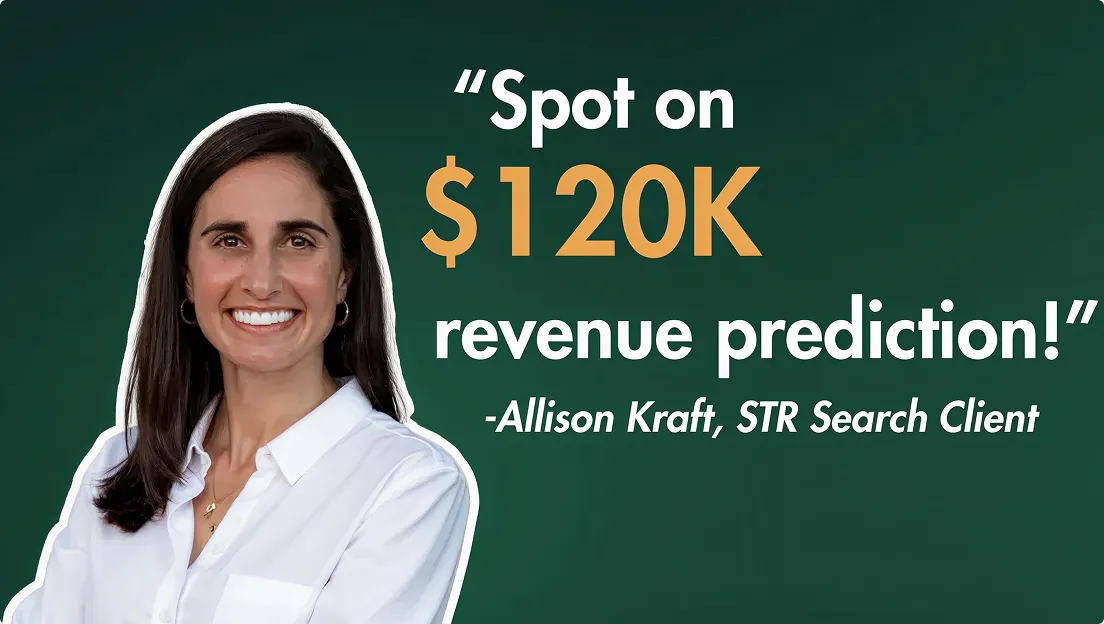
From zero real estate experience to a thriving short-term rental business, Allison locked in $120K in revenue her first year and is now expanding with STR Search again. Proof that the right team can turn analysis paralysis into profitable action!

Thanks to John's expert guidance, I made my first real estate and Airbnb investment a massive success, with consistent positive cash flow and an exceptional return on investment!

John's training gave me the confidence to secure a loan on the spot and scale from one STR to three. His approach is a total game-changer!
Why Choose STR Search?

Put your money to work & lower your tax bill
We’ve spent years analyzing what works so you don’t have to. Our job is to cut through bad data and help you make smart, profitable decisions backed by real numbers.
Schedule Your Free CallTrusted by hundreds of successful investors
Generate $3-5K+ monthly cash flow with our proven property matching system.
Build long-term wealth through STRs with cash flow, equity, and bonus depreciation.
Skip 6-12 months of trial and error with our data-driven underwriting and market analysis
We have a 100% success rate across $90M+ in Real Estate
Out of the 275+ properties we've helped our clients buy every single one has been profitable.
You want more money. More time. More freedom. But may be stuck trading hours for dollars, and scaling your investment strategy feels out of reach.
While others are getting lost in analysis paralysis, you’ve got capital and drive to change your situation. Investors who choose the right STRs can generate $3–5K/month in cash flow, plus serious tax benefits and long-term wealth.
We’ve spent years obsessed with STR investing data so you don’t have to.
With our property match services, there’s no guesswork! Just profitable properties built to perform. With the right deal, your capital can buy more than returns. It can buy your freedom.




All The Ways We Can Help You
Free courses, services, and trainings, to help you maximize your earnings from AirBnb...



Get in touch with us.
Everything Smart Investors Ask About STR Wealth Building
Starting an Airbnb in Death Valley, California requires navigating unique desert regulations and extreme climate considerations. Begin by researching Inyo County's short-term rental ordinances, which typically require a Transient Occupancy Registration Certificate and compliance with zoning laws that may restrict rentals in certain residential areas near Death Valley National Park boundaries. Obtain necessary permits including a business license from Inyo County ($50-150 annually), transient occupancy tax permit, and ensure compliance with California's AB 2273 regulations for short-term rentals. Find property within permitted zones, focusing on areas like Furnace Creek vicinity or nearby communities like Beatty, Nevada (30 miles away) where regulations may be more favorable, with properties typically ranging $200,000-800,000 depending on location and condition. Furnish the property with extreme heat considerations including powerful air conditioning systems rated for 120°F+ temperatures, blackout curtains, backup generators, extra water storage, and desert-appropriate outdoor furniture, budgeting $15,000-40,000 for furnishing. List on Airbnb, VRBO, and Booking.com with emphasis on stargazing, hiking access, and unique desert experience, pricing typically $150-400 per night depending on season and amenities. Manage remotely or hire local property management companies like High Desert Property Management, ensuring 24/7 emergency response for extreme weather conditions, regular HVAC maintenance, and coordination with cleaning services familiar with desert dust and sand management challenges.
Identifying profitable short-term rental properties in Death Valley, California requires focusing on proximity to Death Valley National Park entrances (within 30-60 minutes of Furnace Creek or Stovepipe Wells), with properties in nearby gateway communities like Beatty, Nevada, Shoshone, or Tecopa Springs offering the best accessibility while maintaining reasonable acquisition costs. Target properties with 2-4 bedrooms, outdoor spaces for stargazing, air conditioning systems capable of handling extreme heat, and unique desert-themed features that appeal to adventure travelers and photographers visiting between October and April peak season. Pricing analysis should account for seasonal fluctuations with rates ranging from $150-400 per night during peak winter months and significantly lower summer rates due to extreme temperatures exceeding 120°F. Competition research reveals limited inventory due to the remote location, creating opportunities for well-positioned properties, though occupancy rates typically range 40-60% annually with most bookings concentrated in cooler months. Essential tools include AirDNA for market analysis, VRBO and Airbnb for competitive pricing, STR Helper for performance tracking, and local resources like Inyo County planning departments for zoning compliance, while considering the unique challenges of extreme weather, limited utilities infrastructure, and the need for robust property management systems capable of handling remote locations with potentially limited internet connectivity.
To obtain an Airbnb/STR permit in Death Valley, California, you must apply through Inyo County's Planning Department since Death Valley falls under their jurisdiction, as the area is primarily unincorporated. Submit your application to the Inyo County Planning Department at 224 N Edwards Street, Independence, CA 93526, or online through their permitting portal. Required documents include a completed Conditional Use Permit application, property deed or lease agreement, site plan showing parking and access, septic system certification, well water testing results, fire safety plan, and proof of liability insurance ($1 million minimum). The application fee is approximately $2,500-$3,500 plus additional fees for environmental review ($500-$1,000) and building inspection ($200-$400). The timeline typically takes 4-6 months due to required public hearings and environmental assessments. Specific Death Valley requirements include compliance with dark sky ordinances (shielded lighting only), water conservation measures due to desert conditions, adequate septic capacity for occupancy limits, emergency communication plans due to remote location and limited cell service, and adherence to National Park Service coordination requirements since properties often border Death Valley National Park. Properties must also meet fire safety standards including defensible space clearance and approved access roads for emergency vehicles.
Short-term rentals (STRs) in Death Valley, California face complex regulations due to the area's unique geography spanning multiple jurisdictions. Within Death Valley National Park itself, STRs are prohibited as the National Park Service does not allow commercial lodging operations on federal land. However, in the small communities surrounding the park, such as areas under Inyo County and San Bernardino County jurisdiction, STRs may be permitted with proper licensing and compliance with local ordinances that typically require permits, safety inspections, and adherence to occupancy limits. Recent changes around 2020-2022 have seen both counties tighten regulations requiring business licenses, transient occupancy tax collection, and specific zoning compliance. The legal status varies significantly by exact location within the Death Valley region, with stricter enforcement in environmentally sensitive areas and near park boundaries, while some private properties in designated residential zones may operate STRs legally with appropriate permits and local government approval.
The best Airbnb investment areas in Death Valley, California are Furnace Creek, which serves as the main hub with year-round tourism due to its central location near the visitor center, restaurants, and key attractions like Badwater Basin and Artist's Palette, making it ideal for travelers seeking convenience and proximity to Death Valley National Park's most popular sites. Stovepipe Wells offers excellent potential as a gateway location with strong demand from tourists visiting the Mesquite Flat Sand Dunes and serving as a strategic stopping point for cross-park travelers, particularly during the peak winter season from November through March when temperatures are more comfortable. The Panamint Springs area, though more remote, attracts adventure seekers and provides access to the western entrance of the park, appealing to guests interested in hiking, stargazing, and experiencing the more rugged aspects of Death Valley, with particular strength during spring wildflower blooms and astronomy events that draw specialized tourism throughout the year.
Airbnb properties in Death Valley, California are subject to multiple lodging taxes including California's statewide Transient Occupancy Tax which varies by jurisdiction but typically ranges from 10-15%, with Inyo County (which encompasses much of the Death Valley area) imposing approximately 12% TOT on short-term rentals under 30 days. The California Department of Tax and Fee Administration requires hosts to register for a seller's permit and collect state sales tax at 7.25% plus local taxes, bringing the combined rate to approximately 8.75-9.25% in the region. Airbnb automatically collects and remits these taxes for most bookings through their platform since 2017, but individual hosts remain responsible for registration and compliance verification. Property owners must remit collected taxes monthly or quarterly depending on volume, with payments due by the 20th of the following month, and maintain detailed records of all transactions. Exemptions typically apply to stays exceeding 30 consecutive days, government employees on official business, and certain disabled veterans, though documentation requirements vary by jurisdiction and hosts should verify current rates with Inyo County and the California Department of Tax and Fee Administration as rates can change annually.
Starting an Airbnb in Death Valley, California requires significant upfront investment due to the remote location and extreme climate conditions. Property purchase costs average $180,000-$250,000 for a suitable vacation rental property in nearby gateway communities like Beatty, Nevada or Shoshone, California, as properties directly within Death Valley National Park are extremely limited and expensive. Furnishing costs range $15,000-$25,000 for durable, climate-appropriate furniture and appliances that can withstand desert conditions, including heavy-duty HVAC systems essential for guest comfort. Initial setup expenses including professional photography, listing creation, and marketing materials cost approximately $2,000-$3,500. Permits and fees vary by jurisdiction but expect $500-$1,500 for business licenses, vacation rental permits, and compliance requirements in Inyo County or surrounding areas. Insurance premiums run $2,400-$4,000 annually for comprehensive coverage including liability and property protection in this high-risk desert environment. Utilities including electricity, water, propane, and internet connectivity cost $400-$800 monthly due to remote location surcharges and extreme climate demands. First six months operating costs including utilities ($2,400-$4,800), cleaning services ($1,800-$3,000), maintenance reserves ($2,000), and marketing ($1,000) total approximately $7,200-$10,800. The complete startup investment ranges from $207,600-$295,600, making Death Valley Airbnb ventures capital-intensive but potentially profitable given limited competition and unique destination appeal.
Airbnb properties in Death Valley, California face significant profitability challenges due to extreme seasonal demand fluctuations and harsh environmental conditions. Properties typically generate $8,000-15,000 annually with occupancy rates averaging 35-45%, primarily concentrated during cooler months (November-March) when nightly rates can reach $150-300 for unique accommodations like desert cabins or glamping sites. Operating expenses are notably high, including elevated utility costs ($200-400 monthly for cooling/heating), frequent maintenance due to extreme temperatures and dust storms ($3,000-5,000 annually), and specialized cleaning requirements, resulting in profit margins of 15-25% compared to 30-40% in more temperate markets. Success factors include offering distinctive desert experiences, solar power systems to reduce energy costs, and strategic pricing during peak tourist seasons coinciding with Death Valley National Park visitation of approximately 1.7 million annual visitors. Properties like the Amargosa Opera House area rentals and Furnace Creek vicinity accommodations have shown better performance by capitalizing on astronomy tourism and unique desert experiences, though the limited infrastructure and extreme climate make Death Valley a niche market requiring substantial initial investment and ongoing operational expertise to achieve sustainable profitability.
Airbnb investments in Death Valley, California typically generate annual ROI of 12-18% due to the area's unique position as a dark sky destination and gateway to Death Valley National Park, with peak seasons during cooler months (October-April) driving higher occupancy rates of 65-75%. Cash-on-cash returns generally range from 8-14% annually, with properties near Furnace Creek or Stovepipe Wells commanding premium rates of $150-300 per night during peak season compared to $80-150 in summer months. Initial profitability usually occurs within 18-24 months for well-positioned properties, though investors should account for higher utility costs due to extreme temperatures, potential seasonal vacancy during summer heat waves, and the need for robust HVAC systems. Properties with unique features like stargazing amenities or proximity to popular hiking trails such as Badwater Basin or Artists Palette tend to achieve the higher end of ROI ranges, while standard accommodations typically perform at 10-12% annual returns with break-even occurring around month 20-30 of operation.
STRSearch is a national platform that specializes in identifying profitable short-term rental properties for investors looking in Death Valley, California. Local real estate agents like Desert Properties Realty and Mojave Desert Real Estate have expertise in the unique Death Valley market and understand the seasonal tourism patterns that drive Airbnb demand in this remote desert region. National services such as Mashvisor, BiggerPockets, and AirDNA provide market analysis and property identification tools specifically for short-term rental investments in the area. RedAwning and Vacasa offer property management services for investors who purchase Airbnb properties in Death Valley but prefer professional management. Local companies like High Desert Investment Group and California Desert Realty focus on investment properties in the broader Mojave Desert region including Death Valley. National platforms like Roofstock and HomeUnion occasionally feature Death Valley area properties suitable for short-term rental conversion. Additionally, specialized consultants such as STR Wealth and Short Term Rental University provide coaching and property identification services for investors targeting unique markets like Death Valley, where properties near park entrances and along major tourist routes to attractions like Badwater Basin and Zabriskie Point command premium nightly rates during peak seasons from October through April.
Put your money to work & lower your tax bill
We’ve spent years analyzing what works so you don’t have to. Our job is to cut through bad data and help you make smart, profitable decisions backed by real numbers.
Schedule Your Free Call