
Get significant tax savings and earn cash flow by investing in a short-term rental with data-backed selection. No guessing!
Find Your Airbnb InvestmentInvesting in Airbnb properties on Fire Island, New York, presents a unique and generally favorable opportunity, largely driven by its niche appeal as a seasonal vacation destination. The current market conditions are characterized by high demand during the summer months due to its popularity among tourists seeking a car-free, beach-centric escape. Property values on Fire Island are inherently high due to limited inventory and its exclusive nature, which can translate to significant upfront investment. However, strong tourism trends, particularly from the tri-state area, ensure consistent rental income during peak season. The investment potential lies in maximizing this seasonal demand through premium pricing and efficient management, though investors must also consider the challenges of off-season vacancy and the unique logistical aspects of operating on an island.
Based on available market data and rental analytics, Fire Island Airbnb properties typically generate between $2,500-$8,000 per month during peak summer season (June through August), with shoulder months of May and September averaging $1,200-$3,500 monthly, while off-season months often see minimal bookings ranging from $200-$800 per month due to limited ferry service and seasonal business closures. Oceanfront properties and those in popular communities like Ocean Beach and Cherry Grove command premium rates of $400-$800 per night during peak weekends, while bay-side and interior locations typically earn $200-$450 nightly, with weekly rentals being the dominant booking pattern given the destination's vacation rental culture. Key factors influencing earnings include proximity to beaches and ferry terminals, property size and amenities, local community regulations and rental restrictions, ferry accessibility, and the highly seasonal nature of the market where properties may generate 70-80% of annual revenue during the three-month summer period. Properties with pools, outdoor spaces, and accommodations for larger groups consistently outperform smaller units, while compliance with local rental ordinances and homeowner association rules significantly impacts booking availability and revenue potential.
Fire Island Airbnb investments typically generate ROI between 8-15% annually, with premium oceanfront properties achieving up to 18-20% during peak summer months when nightly rates range from $400-800 for standard homes and $1,000+ for luxury beachfront properties. The payback period averages 7-10 years, significantly faster than the 12-15 year timeline for traditional long-term rentals in the area, primarily due to Fire Island's unique seasonal demand where properties can earn 60-70% of annual revenue during the 16-week summer season from Memorial Day through Labor Day. Compared to long-term rentals that yield 4-6% annually with monthly rents of $3,000-6,000, short-term rentals capitalize on the island's car-free environment, ferry access limitations, and high demand from New York City vacationers, though investors must factor in seasonal vacancy rates of 70-80% during off-season months, higher maintenance costs due to salt air exposure, and property management fees of 20-30% that are essential given the island's remote location and complex logistics.
Fire Island, New York experiences highly seasonal Airbnb occupancy patterns with peak rates reaching approximately 85-90% during summer months (June through August) when visitors flock to the barrier island's beaches and car-free communities, while winter occupancy drops dramatically to around 15-25% due to limited ferry service and harsh weather conditions. Spring and fall shoulder seasons typically see moderate occupancy rates of 45-60%, with Memorial Day and Labor Day weekends marking the transition periods. The annual average occupancy rate for Fire Island Airbnbs is estimated at approximately 55-65%, which significantly exceeds New York State's average of around 45-50% and the national Airbnb average of approximately 48-52%, primarily due to Fire Island's unique appeal as a premium summer destination with limited accommodation options and restricted vehicle access that creates high demand for short-term rentals during peak season.
The best Airbnb investment neighborhoods on Fire Island include Ocean Beach, which offers the highest rental rates due to its central location, vibrant nightlife scene, and proximity to restaurants and bars that attract young professionals and groups willing to pay premium prices for weekend getaways. Cherry Grove commands strong pricing power as a historic LGBTQ+ destination with unique cultural attractions and events that draw repeat visitors throughout the summer season. The Pines appeals to affluent demographics seeking luxury accommodations, with its upscale atmosphere and beautiful beachfront properties generating consistent high-end rental income. Saltaire provides excellent investment potential with its family-friendly environment, historic charm, and restrictions on day-trippers that create a more exclusive feel, attracting families willing to pay for quieter, refined accommodations. Fair Harbor offers good value for investors due to lower property acquisition costs while still maintaining solid rental demand from families and groups seeking affordable Fire Island access. Ocean Bay Park presents opportunities for investors targeting the party crowd and younger demographics with its lively atmosphere and more relaxed regulations, though seasonal fluctuations can be more pronounced. Davis Park rounds out the strong options with its balance of family appeal and reasonable property prices, offering steady rental income from visitors seeking a quieter alternative to the busier communities while still having beach access and basic amenities.
Fire Island, New York operates under Suffolk County regulations and individual community rules that require short-term rental properties to obtain special permits through the local zoning board, with most rentals requiring a minimum 7-day stay during peak summer season and some communities enforcing 14-day minimums. Properties must register with Suffolk County and obtain a certificate of occupancy that specifies maximum occupancy limits typically based on bedroom count plus two additional guests, with most homes capped at 8-12 occupants depending on septic system capacity and square footage. Owner-occupancy is not required, but many Fire Island communities have homeowner association restrictions that limit rental frequency and require owners to provide emergency contact information and property management details. Zoning restrictions vary by hamlet, with some areas like Ocean Beach and Saltaire having stricter controls on commercial rentals in residential zones, while others like Cherry Grove and Fire Island Pines have more permissive policies. The registration process involves submitting applications to both Suffolk County for health and safety compliance and individual community boards for local permit approval, including proof of adequate parking, waste management plans, and liability insurance. Recent changes have included stricter enforcement of noise ordinances, enhanced penalties for overcrowding violations, and new requirements for carbon monoxide detectors and emergency evacuation plans, with several communities implementing digital monitoring systems to track rental compliance and occupancy levels.
Short-term rentals in Fire Island, New York are subject to New York State sales tax of 8% plus Suffolk County sales tax of 0.25% for a combined rate of 8.25% on rental income, along with a Suffolk County hotel/motel tax of 3% on gross receipts. Property owners must obtain a Certificate of Authority from New York State Department of Taxation and Finance (typically $20-50 fee) and register with Suffolk County for tax collection purposes (approximately $100-200 annual fee). Fire Island communities may require additional local permits ranging from $200-500 annually depending on the specific hamlet, with some areas like Ocean Beach and Cherry Grove having stricter regulations and higher permit fees up to $750 per year. Property owners are also subject to standard property taxes which average 2.5-3.5% of assessed value annually in Suffolk County, and must collect and remit occupancy taxes quarterly to both state and county authorities, with penalties of 10-25% for late payments plus interest charges of 1% per month.
Investing in Airbnb properties on Fire Island, New York, presents a unique and generally favorable opportunity, largely driven by its niche appeal as a seasonal vacation destination. The current market conditions are characterized by high demand during the summer months due to its popularity among tourists seeking a car-free, beach-centric escape. Property values on Fire Island are inherently high due to limited inventory and its exclusive nature, which can translate to significant upfront investment. However, strong tourism trends, particularly from the tri-state area, ensure consistent rental income during peak season. The investment potential lies in maximizing this seasonal demand through premium pricing and efficient management, though investors must also consider the challenges of off-season vacancy and the unique logistical aspects of operating on an island.
Based on available market data and rental analytics, Fire Island Airbnb properties typically generate between $2,500-$8,000 per month during peak summer season (June through August), with shoulder months of May and September averaging $1,200-$3,500 monthly, while off-season months often see minimal bookings ranging from $200-$800 per month due to limited ferry service and seasonal business closures. Oceanfront properties and those in popular communities like Ocean Beach and Cherry Grove command premium rates of $400-$800 per night during peak weekends, while bay-side and interior locations typically earn $200-$450 nightly, with weekly rentals being the dominant booking pattern given the destination's vacation rental culture. Key factors influencing earnings include proximity to beaches and ferry terminals, property size and amenities, local community regulations and rental restrictions, ferry accessibility, and the highly seasonal nature of the market where properties may generate 70-80% of annual revenue during the three-month summer period. Properties with pools, outdoor spaces, and accommodations for larger groups consistently outperform smaller units, while compliance with local rental ordinances and homeowner association rules significantly impacts booking availability and revenue potential.
Fire Island Airbnb investments typically generate ROI between 8-15% annually, with premium oceanfront properties achieving up to 18-20% during peak summer months when nightly rates range from $400-800 for standard homes and $1,000+ for luxury beachfront properties. The payback period averages 7-10 years, significantly faster than the 12-15 year timeline for traditional long-term rentals in the area, primarily due to Fire Island's unique seasonal demand where properties can earn 60-70% of annual revenue during the 16-week summer season from Memorial Day through Labor Day. Compared to long-term rentals that yield 4-6% annually with monthly rents of $3,000-6,000, short-term rentals capitalize on the island's car-free environment, ferry access limitations, and high demand from New York City vacationers, though investors must factor in seasonal vacancy rates of 70-80% during off-season months, higher maintenance costs due to salt air exposure, and property management fees of 20-30% that are essential given the island's remote location and complex logistics.
Fire Island, New York experiences highly seasonal Airbnb occupancy patterns with peak rates reaching approximately 85-90% during summer months (June through August) when visitors flock to the barrier island's beaches and car-free communities, while winter occupancy drops dramatically to around 15-25% due to limited ferry service and harsh weather conditions. Spring and fall shoulder seasons typically see moderate occupancy rates of 45-60%, with Memorial Day and Labor Day weekends marking the transition periods. The annual average occupancy rate for Fire Island Airbnbs is estimated at approximately 55-65%, which significantly exceeds New York State's average of around 45-50% and the national Airbnb average of approximately 48-52%, primarily due to Fire Island's unique appeal as a premium summer destination with limited accommodation options and restricted vehicle access that creates high demand for short-term rentals during peak season.
The best Airbnb investment neighborhoods on Fire Island include Ocean Beach, which offers the highest rental rates due to its central location, vibrant nightlife scene, and proximity to restaurants and bars that attract young professionals and groups willing to pay premium prices for weekend getaways. Cherry Grove commands strong pricing power as a historic LGBTQ+ destination with unique cultural attractions and events that draw repeat visitors throughout the summer season. The Pines appeals to affluent demographics seeking luxury accommodations, with its upscale atmosphere and beautiful beachfront properties generating consistent high-end rental income. Saltaire provides excellent investment potential with its family-friendly environment, historic charm, and restrictions on day-trippers that create a more exclusive feel, attracting families willing to pay for quieter, refined accommodations. Fair Harbor offers good value for investors due to lower property acquisition costs while still maintaining solid rental demand from families and groups seeking affordable Fire Island access. Ocean Bay Park presents opportunities for investors targeting the party crowd and younger demographics with its lively atmosphere and more relaxed regulations, though seasonal fluctuations can be more pronounced. Davis Park rounds out the strong options with its balance of family appeal and reasonable property prices, offering steady rental income from visitors seeking a quieter alternative to the busier communities while still having beach access and basic amenities.
Fire Island, New York operates under Suffolk County regulations and individual community rules that require short-term rental properties to obtain special permits through the local zoning board, with most rentals requiring a minimum 7-day stay during peak summer season and some communities enforcing 14-day minimums. Properties must register with Suffolk County and obtain a certificate of occupancy that specifies maximum occupancy limits typically based on bedroom count plus two additional guests, with most homes capped at 8-12 occupants depending on septic system capacity and square footage. Owner-occupancy is not required, but many Fire Island communities have homeowner association restrictions that limit rental frequency and require owners to provide emergency contact information and property management details. Zoning restrictions vary by hamlet, with some areas like Ocean Beach and Saltaire having stricter controls on commercial rentals in residential zones, while others like Cherry Grove and Fire Island Pines have more permissive policies. The registration process involves submitting applications to both Suffolk County for health and safety compliance and individual community boards for local permit approval, including proof of adequate parking, waste management plans, and liability insurance. Recent changes have included stricter enforcement of noise ordinances, enhanced penalties for overcrowding violations, and new requirements for carbon monoxide detectors and emergency evacuation plans, with several communities implementing digital monitoring systems to track rental compliance and occupancy levels.
Short-term rentals in Fire Island, New York are subject to New York State sales tax of 8% plus Suffolk County sales tax of 0.25% for a combined rate of 8.25% on rental income, along with a Suffolk County hotel/motel tax of 3% on gross receipts. Property owners must obtain a Certificate of Authority from New York State Department of Taxation and Finance (typically $20-50 fee) and register with Suffolk County for tax collection purposes (approximately $100-200 annual fee). Fire Island communities may require additional local permits ranging from $200-500 annually depending on the specific hamlet, with some areas like Ocean Beach and Cherry Grove having stricter regulations and higher permit fees up to $750 per year. Property owners are also subject to standard property taxes which average 2.5-3.5% of assessed value annually in Suffolk County, and must collect and remit occupancy taxes quarterly to both state and county authorities, with penalties of 10-25% for late payments plus interest charges of 1% per month.
* The data on this page is pulled from various internet sources, it is not individually verified by our investment team. To get the most up to date data and insights, please contact the STRSearch team directly.
How Smart Investors Build Wealth
Through Data-Driven STRs (Real Results)
From first-time investors to seasoned pros, see how our commitment to comprehensive data analysis led to unparalleled investment victories.
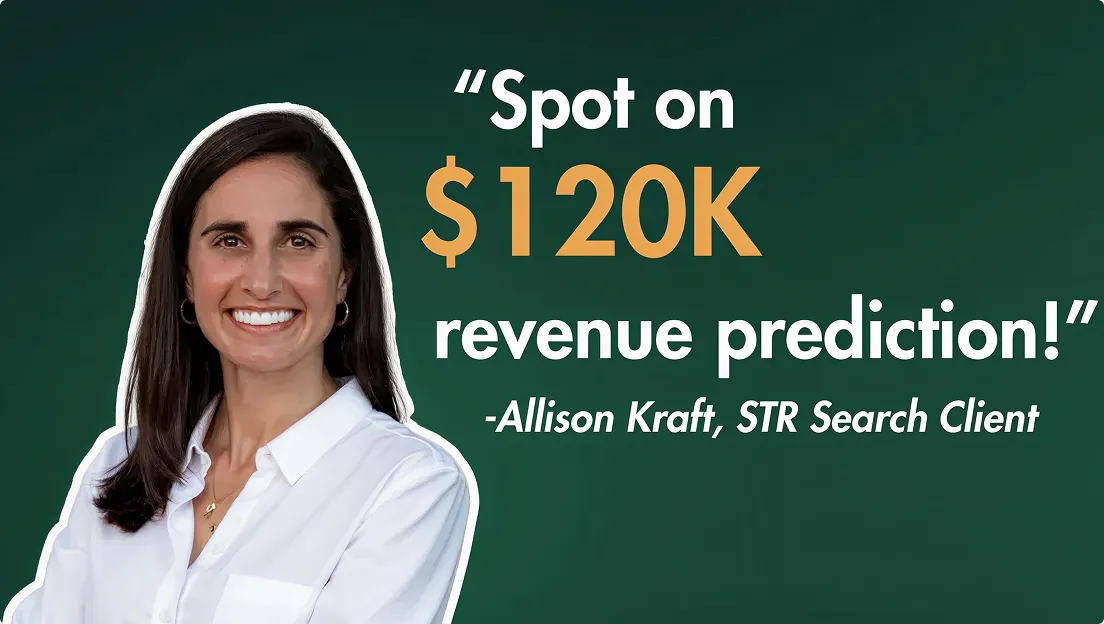
From zero real estate experience to a thriving short-term rental business, Allison locked in $120K in revenue her first year and is now expanding with STR Search again. Proof that the right team can turn analysis paralysis into profitable action!

Thanks to John's expert guidance, I made my first real estate and Airbnb investment a massive success, with consistent positive cash flow and an exceptional return on investment!

John's training gave me the confidence to secure a loan on the spot and scale from one STR to three. His approach is a total game-changer!
Why Choose STR Search?

Put your money to work & lower your tax bill
We’ve spent years analyzing what works so you don’t have to. Our job is to cut through bad data and help you make smart, profitable decisions backed by real numbers.
Schedule Your Free CallTrusted by hundreds of successful investors
Generate $3-5K+ monthly cash flow with our proven property matching system.
Build long-term wealth through STRs with cash flow, equity, and bonus depreciation.
Skip 6-12 months of trial and error with our data-driven underwriting and market analysis
We have a 100% success rate across $90M+ in Real Estate
Out of the 275+ properties we've helped our clients buy every single one has been profitable.
You want more money. More time. More freedom. But may be stuck trading hours for dollars, and scaling your investment strategy feels out of reach.
While others are getting lost in analysis paralysis, you’ve got capital and drive to change your situation. Investors who choose the right STRs can generate $3–5K/month in cash flow, plus serious tax benefits and long-term wealth.
We’ve spent years obsessed with STR investing data so you don’t have to.
With our property match services, there’s no guesswork! Just profitable properties built to perform. With the right deal, your capital can buy more than returns. It can buy your freedom.





All The Ways We Can Help You
Free courses, services, and trainings, to help you maximize your earnings from AirBnb...



Get in touch with us.
Everything Smart Investors Ask About STR Wealth Building
To start an Airbnb in Fire Island, New York, begin by researching local regulations as Fire Island communities like Ocean Beach, Cherry Grove, and Saltaire have strict short-term rental ordinances requiring special permits and limiting rental periods to minimum 7-14 day stays during peak season. Contact the specific village clerk (Ocean Beach Village Hall, Cherry Grove Property Owners Association, etc.) to obtain required short-term rental permits, business licenses, and certificate of occupancy, which typically cost $200-500 annually and require property inspections. Find property by working with Fire Island-specific realtors like Cleary, Gottlieb & Associates or Fire Island Real Estate, focusing on areas like Ocean Bay Park or Fair Harbor that allow rentals, with properties ranging $400,000-2,000,000 depending on location and size. Furnish the property with coastal-themed, durable furniture from retailers like West Elm or Pottery Barn, emphasizing beach essentials like outdoor furniture, beach chairs, umbrellas, and weatherproof materials since properties face salt air and humidity. List your property on Airbnb with professional photography highlighting ocean views, beach access, and ferry proximity, setting rates between $300-800 per night during summer season (May-September) and $150-400 off-season. Manage the property by coordinating with local cleaning services like Fire Island Cleaning Company, arranging ferry logistics for guests through Sayville or Bay Shore terminals, providing detailed arrival instructions including wagon rentals for luggage transport, and maintaining relationships with local handymen since vehicle access is limited and all supplies must arrive by ferry or water taxi.
To identify profitable short-term rental properties in Fire Island, New York, focus on oceanfront or bay-front locations within walking distance to ferry terminals in communities like Ocean Beach, Cherry Grove, or Fire Island Pines, as these areas command premium rates during the May-October season. Target 3-4 bedroom homes with outdoor spaces, updated kitchens, and parking permits, as Fire Island's car-free environment makes properties with golf cart access highly desirable. Analyze pricing using AirDNA and Mashvisor to benchmark against comparable properties, noting that weekly rates range from $3,000-$15,000 depending on location and amenities, with peak summer weeks commanding 40-60% premiums. Research competition by monitoring active listings on Airbnb and VRBO, paying attention to occupancy rates and guest reviews to identify market gaps. Utilize Fire Island-specific resources like the Fire Island Association website for community regulations, consult local real estate agents familiar with STR restrictions in each hamlet, and leverage tools like Rabbu and Wheelhouse for dynamic pricing optimization while ensuring compliance with Suffolk County's short-term rental licensing requirements and individual community association rules that vary significantly across Fire Island's 17 communities.
To obtain an Airbnb/STR permit in Fire Island, New York, you must first contact the Suffolk County Department of Health Services and the specific Fire Island community's village office (such as Ocean Beach, Fair Harbor, or Saltaire) where your property is located, as each community has distinct regulations. Required documents typically include a completed short-term rental application, property deed or lease agreement, certificate of occupancy, floor plan showing maximum occupancy, proof of liability insurance ($1 million minimum), septic system inspection certificate, and fire safety compliance documentation. Application fees generally range from $200-500 for the county permit plus additional village-specific fees of $100-300, with annual renewal fees of $150-250. The approval timeline is typically 6-12 weeks during peak season (March-June) and 4-8 weeks during off-season, though this can extend if additional inspections are required. Fire Island-specific requirements include adherence to strict occupancy limits (often 2 people per bedroom plus 2 additional), mandatory parking permits, compliance with noise ordinances, proper waste management protocols due to limited infrastructure, and seasonal restrictions that may limit rentals during certain periods. You must also register with New York State for tax collection purposes and ensure compliance with Americans with Disabilities Act requirements where applicable, while some communities may require additional permits for properties built before certain years or located in specific zones.
Short-term rentals (STRs) on Fire Island, New York face complex regulations that vary by community, with most incorporated villages having restrictive or prohibitive policies in place as of 2023-2024. The majority of Fire Island's 17 communities, including Ocean Beach, Cherry Grove, Fire Island Pines, and Saltaire, have enacted local laws that either ban STRs entirely or impose strict limitations such as minimum rental periods of 30 days or seasonal restrictions, primarily to preserve the residential character and manage overcrowding concerns. Suffolk County has also implemented registration requirements and safety standards for any permitted STRs, while some communities like Davis Park and Watch Hill may allow limited STR operations under specific conditions. Recent legal changes have generally trended toward more restrictive policies, with several villages tightening regulations between 2020-2023 in response to increased demand during the COVID-19 pandemic and concerns about party houses, noise complaints, and infrastructure strain on the barrier island's limited resources and ferry-dependent transportation system.
The most lucrative Airbnb investment areas on Fire Island include Ocean Beach, which serves as the main commercial hub with restaurants, bars, and nightlife attracting young professionals and party-goers during summer months; Cherry Grove, known for its LGBTQ+ community and events that draw consistent bookings from May through September; Fire Island Pines, an upscale area popular with affluent visitors seeking luxury accommodations near pristine beaches; Kismet, favored by families due to its quieter atmosphere and proximity to Robert Moses State Park; and Saltaire, which offers a more residential feel while still providing easy access to beaches and ferry services. These areas benefit from Fire Island's car-free environment, stunning Atlantic Ocean beaches, proximity to New York City (accessible via Long Island Rail Road and ferry), summer house rentals traditionally commanding premium rates, and the island's reputation as a weekend and vacation destination for Manhattan residents seeking escape from urban life, with peak season running from Memorial Day through Labor Day generating the highest occupancy rates and nightly rates often exceeding $300-500 for quality properties.
Fire Island, New York Airbnb properties are subject to multiple lodging taxes including New York State sales tax at 8% on rental stays under 90 days, Suffolk County occupancy tax at 3% on short-term rentals, and potential local municipal taxes that vary by Fire Island community ranging from 2-5%. The New York State sales tax is collected through the state's tax system with quarterly remittance required, while Suffolk County's occupancy tax must be registered for separately and remitted monthly to the Suffolk County Department of Finance. Local Fire Island community taxes, where applicable, are typically collected through individual village tax departments with varying remittance schedules. Airbnb automatically collects and remits New York State sales tax for hosts, but Suffolk County and local taxes generally require separate host registration and direct remittance. Exemptions may apply for rentals over 90 consecutive days, certain disabled veteran property owners, and properties rented for fewer than 14 days annually, though hosts should verify current exemption criteria with each taxing authority as regulations frequently change.
The total cost to start an Airbnb in Fire Island, New York is approximately $1,150,000-$1,400,000. Property purchase represents the largest expense at $900,000-$1,200,000 for a median 2-3 bedroom beach house, as Fire Island properties command premium prices due to limited inventory and seasonal demand. Furnishing costs range $25,000-$40,000 for beach-appropriate furniture, appliances, linens, and coastal decor suitable for vacation rentals. Initial setup including professional photography, listing creation, and marketing materials costs $2,000-$3,500. Permits and fees total $3,000-$5,000 covering short-term rental permits from Suffolk County, business licenses, and potential homeowner association fees. Insurance runs $8,000-$12,000 annually for comprehensive coverage including liability, property damage, and vacation rental specific policies. Utilities including electricity, water, internet, and seasonal services cost $15,000-$20,000 for six months of operation. First six months operating costs including cleaning services, maintenance, supplies, platform fees (Airbnb charges 3% host fees), property management if outsourced, and marketing total $18,000-$25,000, with peak summer season generating the highest expenses but also maximum revenue potential.
Airbnb properties on Fire Island, New York, demonstrate strong seasonal profitability with average nightly rates ranging from $300-800 during peak summer months (June-September), generating annual revenues of $40,000-120,000 for well-positioned properties. Operating expenses typically include property management fees (15-25%), cleaning costs ($75-150 per turnover), utilities ($200-400 monthly), insurance ($2,000-4,000 annually), and maintenance ($3,000-8,000 yearly), resulting in net profit margins of 25-45% for successful operators. Properties within walking distance of beaches, ferry terminals, or popular areas like Ocean Beach and Cherry Grove command premium rates, with some luxury homes achieving $1,000+ nightly rates and annual profits exceeding $60,000. Success factors include strategic location near amenities, professional photography showcasing ocean views, responsive guest communication, and partnerships with local property management companies like Fire Island Property Management or Saltaire Realty who understand the unique logistics of car-free island operations. The limited housing stock and high demand from New York City residents seeking weekend escapes creates a favorable supply-demand dynamic, though properties must navigate seasonal utility shutoffs, ferry transportation constraints, and strict local regulations in communities like Saltaire and Fair Harbor that can impact occupancy rates and operational complexity.
Airbnb investments in Fire Island, New York typically generate annual ROI of 12-18% due to the area's premium seasonal rental market and limited housing inventory. Cash-on-cash returns range from 8-14% annually, with properties averaging $150-400 per night during peak summer months (June-September) when demand from New York City vacationers is highest. Most investors achieve profitability within 18-24 months, with waterfront and bay-view properties commanding the highest returns at 15-18% ROI, while interior properties typically see 10-14% returns. The seasonal nature means 70-80% of annual revenue is generated between Memorial Day and Labor Day, with shoulder seasons (May and October) contributing an additional 15-20% of income. Properties purchased in the $800K-$1.5M range with 25-30% down payments typically see break-even on initial investment within 2-3 years, factoring in maintenance, property management fees of 20-25%, and Fire Island's unique transportation and utility costs.
STRSearch is a national platform that helps investors identify profitable short-term rental properties including in Fire Island, New York. Local real estate agents specializing in Fire Island Airbnb investments include Netter Real Estate, Fire Island Real Estate Company, and Douglas Elliman's Hamptons division which covers the area. National services that assist with Airbnb property acquisition include AirDNA for market analysis, Mashvisor for investment property search, BiggerPockets for networking and deals, and Roofstock which occasionally features short-term rental properties. Local property management companies that also help with acquisitions include Fire Island Property Management and East End Property Services. Real estate agents like those at Corcoran Group and Compass have expanded their services to the Fire Island market as of 2022-2023. Additional services include STR Helper for market analysis, Awning for investment guidance, and local mortgage brokers like Atlantic Funding Group who understand the unique financing requirements for vacation rental properties in seasonal markets like Fire Island.
Put your money to work & lower your tax bill
We’ve spent years analyzing what works so you don’t have to. Our job is to cut through bad data and help you make smart, profitable decisions backed by real numbers.
Schedule Your Free Call