
Get significant tax savings and earn cash flow by investing in a short-term rental with data-backed selection. No guessing!
Find Your Airbnb InvestmentInvesting in Airbnb properties in Grand Canyon, Arizona, presents a highly promising opportunity, primarily driven by the consistent and immense tourism appeal of one of the world's most iconic natural wonders. The current market conditions are characterized by a steady influx of millions of visitors annually, creating sustained demand for short-term accommodations, often outweighing the available traditional lodging options within or near the park. While property values in areas surrounding the Grand Canyon can be high due to limited supply and strong demand, the potential for high occupancy rates and premium nightly rates makes for a compelling investment potential. Tourism trends show no signs of slowing, ensuring a continuous stream of guests for Airbnb hosts, making it a viable and potentially profitable venture for those looking to capitalize on the region's enduring popularity.
Average Airbnb earnings in Grand Canyon, Arizona typically range from $2,800 to $6,500 per month, with properties closer to the South Rim commanding premium rates of $180-350 per night while those in nearby Tusayan and Valle averaging $120-250 per night. Peak season earnings from March through October can reach $8,000-12,000 monthly for well-positioned properties, while winter months often drop to $1,500-3,500 due to reduced tourism and weather-related park closures. Seasonal variations show the highest demand during spring break, summer vacation months, and fall foliage season, with occupancy rates fluctuating between 45-85% depending on the time of year. Key factors affecting earnings include proximity to park entrances (properties within 10 miles earning 30-50% more), property size and amenities, guest capacity, professional photography and listing optimization, responsive host communication, and local events or park accessibility issues. Properties offering unique experiences like stargazing decks, fire pits, or canyon views typically achieve 15-25% higher nightly rates, while those providing practical amenities such as early check-in for sunrise visits or packed lunch services see improved booking frequency and guest satisfaction scores.
Airbnb investments in the Grand Canyon, Arizona area typically generate ROI between 12-18% annually, significantly outperforming traditional long-term rentals which average 6-8% in the region. Properties within 20 miles of Grand Canyon National Park command premium nightly rates of $180-350 during peak season (April-October) and $120-200 in off-season, with average occupancy rates of 65-75% year-round due to consistent tourist demand. The payback period for initial investment ranges from 5.5-8 years, depending on property acquisition costs which average $350,000-500,000 for suitable vacation rental properties. Compared to long-term rentals generating $1,800-2,500 monthly, short-term rentals can produce $3,500-6,000 monthly during peak months, though seasonal fluctuations require careful cash flow management. The market benefits from limited supply due to zoning restrictions and National Park proximity, creating competitive advantages for existing operators, while operational costs including cleaning, maintenance, and property management typically consume 35-45% of gross revenue.
Grand Canyon Airbnb properties typically maintain an average annual occupancy rate of approximately 65-70%, significantly higher than Arizona's state average of 55-60% and the national Airbnb average of 48-52%. Peak season occurs from March through October, with the highest occupancy rates of 85-95% during summer months (June-August) when tourism peaks, while shoulder seasons in spring (March-May) and fall (September-October) see rates around 70-80%. Winter months (November-February) experience the lowest occupancy at 35-45% due to cooler weather and reduced park accessibility, though holiday periods like Thanksgiving and Christmas see temporary spikes to 60-70%. The Grand Canyon's status as a premier national park destination and UNESCO World Heritage site drives consistently higher demand compared to typical Arizona markets like Phoenix or Tucson, with properties near the South Rim entrance commanding premium rates and occupancy levels year-round, while those further from park entrances or on the less accessible North Rim see more pronounced seasonal variations.
The best Airbnb investment neighborhoods near Grand Canyon include Tusayan, which sits just 7 miles from the South Rim entrance and offers the highest pricing power due to its proximity to the main park entrance, hotels, and restaurants, making it ideal for tourists seeking convenience. Valle offers more affordable property prices about 30 miles south of the canyon with good access to both the Grand Canyon and other northern Arizona attractions, appealing to budget-conscious travelers and those exploring the broader region. Williams, known as the "Gateway to the Grand Canyon," sits 60 miles south along Historic Route 66 and attracts visitors with its nostalgic charm, historic train depot, and reasonable property costs while still maintaining strong rental demand. Flagstaff, though 80 miles southeast, provides year-round rental potential due to Northern Arizona University, diverse attractions, and its position as a regional hub, offering more affordable real estate with consistent occupancy beyond just canyon visitors. Cameron, located 50 miles east, appeals to investors seeking lower property costs while serving visitors to both the Grand Canyon and other attractions like Antelope Canyon, though with more seasonal demand patterns. Fredonia, about 75 miles north, offers the lowest property acquisition costs and serves visitors to the less-crowded North Rim during its seasonal opening, providing a niche market for adventurous travelers seeking solitude.
Grand Canyon, Arizona operates under Coconino County's short-term rental regulations, which require property owners to obtain a conditional use permit and business license before operating vacation rentals, with permits costing approximately $500-800 and requiring annual renewal. Properties are limited to a maximum occupancy of 10 guests or 2 guests per bedroom, whichever is less, and must maintain off-street parking for all guests. Owner-occupancy is not required, but properties must have a designated local contact person available 24/7 within 60 minutes of the rental location. Short-term rentals are only permitted in specific zoning districts including residential and mixed-use areas, with restrictions in some historic and environmentally sensitive zones near the national park. The registration process involves submitting detailed property information, floor plans, septic system capacity verification, and proof of adequate parking, followed by a county inspection. Recent changes implemented in 2022-2023 include stricter noise ordinances with potential permit revocation for repeat violations, enhanced parking requirements, mandatory posting of emergency contact information, and increased penalties for operating without proper permits, with the county also implementing a complaint tracking system and requiring annual compliance certifications from property owners.
Short-term rentals in Grand Canyon, Arizona are subject to several fees and taxes including Arizona state transaction privilege tax at 5.6%, Coconino County lodging tax at 6%, and potential municipal lodging taxes ranging from 2-4% depending on the specific jurisdiction within the Grand Canyon area. Registration fees typically cost between $150-300 annually, with initial permit application fees ranging from $200-500. Property owners must also pay annual business license fees of approximately $50-150, and may be required to obtain a conditional use permit costing $300-800. Additional costs include inspection fees of $100-200, and some areas require a one-time zoning compliance fee of $250-400. Tourism promotion taxes may add another 1-2% to the total tax burden, and there are often administrative processing fees of $25-75 for permit renewals. Fire safety inspection fees can range from $75-150 annually, and waste management fees may apply at $30-60 per month in certain districts.
Investing in Airbnb properties in Grand Canyon, Arizona, presents a highly promising opportunity, primarily driven by the consistent and immense tourism appeal of one of the world's most iconic natural wonders. The current market conditions are characterized by a steady influx of millions of visitors annually, creating sustained demand for short-term accommodations, often outweighing the available traditional lodging options within or near the park. While property values in areas surrounding the Grand Canyon can be high due to limited supply and strong demand, the potential for high occupancy rates and premium nightly rates makes for a compelling investment potential. Tourism trends show no signs of slowing, ensuring a continuous stream of guests for Airbnb hosts, making it a viable and potentially profitable venture for those looking to capitalize on the region's enduring popularity.
Average Airbnb earnings in Grand Canyon, Arizona typically range from $2,800 to $6,500 per month, with properties closer to the South Rim commanding premium rates of $180-350 per night while those in nearby Tusayan and Valle averaging $120-250 per night. Peak season earnings from March through October can reach $8,000-12,000 monthly for well-positioned properties, while winter months often drop to $1,500-3,500 due to reduced tourism and weather-related park closures. Seasonal variations show the highest demand during spring break, summer vacation months, and fall foliage season, with occupancy rates fluctuating between 45-85% depending on the time of year. Key factors affecting earnings include proximity to park entrances (properties within 10 miles earning 30-50% more), property size and amenities, guest capacity, professional photography and listing optimization, responsive host communication, and local events or park accessibility issues. Properties offering unique experiences like stargazing decks, fire pits, or canyon views typically achieve 15-25% higher nightly rates, while those providing practical amenities such as early check-in for sunrise visits or packed lunch services see improved booking frequency and guest satisfaction scores.
Airbnb investments in the Grand Canyon, Arizona area typically generate ROI between 12-18% annually, significantly outperforming traditional long-term rentals which average 6-8% in the region. Properties within 20 miles of Grand Canyon National Park command premium nightly rates of $180-350 during peak season (April-October) and $120-200 in off-season, with average occupancy rates of 65-75% year-round due to consistent tourist demand. The payback period for initial investment ranges from 5.5-8 years, depending on property acquisition costs which average $350,000-500,000 for suitable vacation rental properties. Compared to long-term rentals generating $1,800-2,500 monthly, short-term rentals can produce $3,500-6,000 monthly during peak months, though seasonal fluctuations require careful cash flow management. The market benefits from limited supply due to zoning restrictions and National Park proximity, creating competitive advantages for existing operators, while operational costs including cleaning, maintenance, and property management typically consume 35-45% of gross revenue.
Grand Canyon Airbnb properties typically maintain an average annual occupancy rate of approximately 65-70%, significantly higher than Arizona's state average of 55-60% and the national Airbnb average of 48-52%. Peak season occurs from March through October, with the highest occupancy rates of 85-95% during summer months (June-August) when tourism peaks, while shoulder seasons in spring (March-May) and fall (September-October) see rates around 70-80%. Winter months (November-February) experience the lowest occupancy at 35-45% due to cooler weather and reduced park accessibility, though holiday periods like Thanksgiving and Christmas see temporary spikes to 60-70%. The Grand Canyon's status as a premier national park destination and UNESCO World Heritage site drives consistently higher demand compared to typical Arizona markets like Phoenix or Tucson, with properties near the South Rim entrance commanding premium rates and occupancy levels year-round, while those further from park entrances or on the less accessible North Rim see more pronounced seasonal variations.
The best Airbnb investment neighborhoods near Grand Canyon include Tusayan, which sits just 7 miles from the South Rim entrance and offers the highest pricing power due to its proximity to the main park entrance, hotels, and restaurants, making it ideal for tourists seeking convenience. Valle offers more affordable property prices about 30 miles south of the canyon with good access to both the Grand Canyon and other northern Arizona attractions, appealing to budget-conscious travelers and those exploring the broader region. Williams, known as the "Gateway to the Grand Canyon," sits 60 miles south along Historic Route 66 and attracts visitors with its nostalgic charm, historic train depot, and reasonable property costs while still maintaining strong rental demand. Flagstaff, though 80 miles southeast, provides year-round rental potential due to Northern Arizona University, diverse attractions, and its position as a regional hub, offering more affordable real estate with consistent occupancy beyond just canyon visitors. Cameron, located 50 miles east, appeals to investors seeking lower property costs while serving visitors to both the Grand Canyon and other attractions like Antelope Canyon, though with more seasonal demand patterns. Fredonia, about 75 miles north, offers the lowest property acquisition costs and serves visitors to the less-crowded North Rim during its seasonal opening, providing a niche market for adventurous travelers seeking solitude.
Grand Canyon, Arizona operates under Coconino County's short-term rental regulations, which require property owners to obtain a conditional use permit and business license before operating vacation rentals, with permits costing approximately $500-800 and requiring annual renewal. Properties are limited to a maximum occupancy of 10 guests or 2 guests per bedroom, whichever is less, and must maintain off-street parking for all guests. Owner-occupancy is not required, but properties must have a designated local contact person available 24/7 within 60 minutes of the rental location. Short-term rentals are only permitted in specific zoning districts including residential and mixed-use areas, with restrictions in some historic and environmentally sensitive zones near the national park. The registration process involves submitting detailed property information, floor plans, septic system capacity verification, and proof of adequate parking, followed by a county inspection. Recent changes implemented in 2022-2023 include stricter noise ordinances with potential permit revocation for repeat violations, enhanced parking requirements, mandatory posting of emergency contact information, and increased penalties for operating without proper permits, with the county also implementing a complaint tracking system and requiring annual compliance certifications from property owners.
Short-term rentals in Grand Canyon, Arizona are subject to several fees and taxes including Arizona state transaction privilege tax at 5.6%, Coconino County lodging tax at 6%, and potential municipal lodging taxes ranging from 2-4% depending on the specific jurisdiction within the Grand Canyon area. Registration fees typically cost between $150-300 annually, with initial permit application fees ranging from $200-500. Property owners must also pay annual business license fees of approximately $50-150, and may be required to obtain a conditional use permit costing $300-800. Additional costs include inspection fees of $100-200, and some areas require a one-time zoning compliance fee of $250-400. Tourism promotion taxes may add another 1-2% to the total tax burden, and there are often administrative processing fees of $25-75 for permit renewals. Fire safety inspection fees can range from $75-150 annually, and waste management fees may apply at $30-60 per month in certain districts.
* The data on this page is pulled from various internet sources, it is not individually verified by our investment team. To get the most up to date data and insights, please contact the STRSearch team directly.
How Smart Investors Build Wealth
Through Data-Driven STRs (Real Results)
From first-time investors to seasoned pros, see how our commitment to comprehensive data analysis led to unparalleled investment victories.
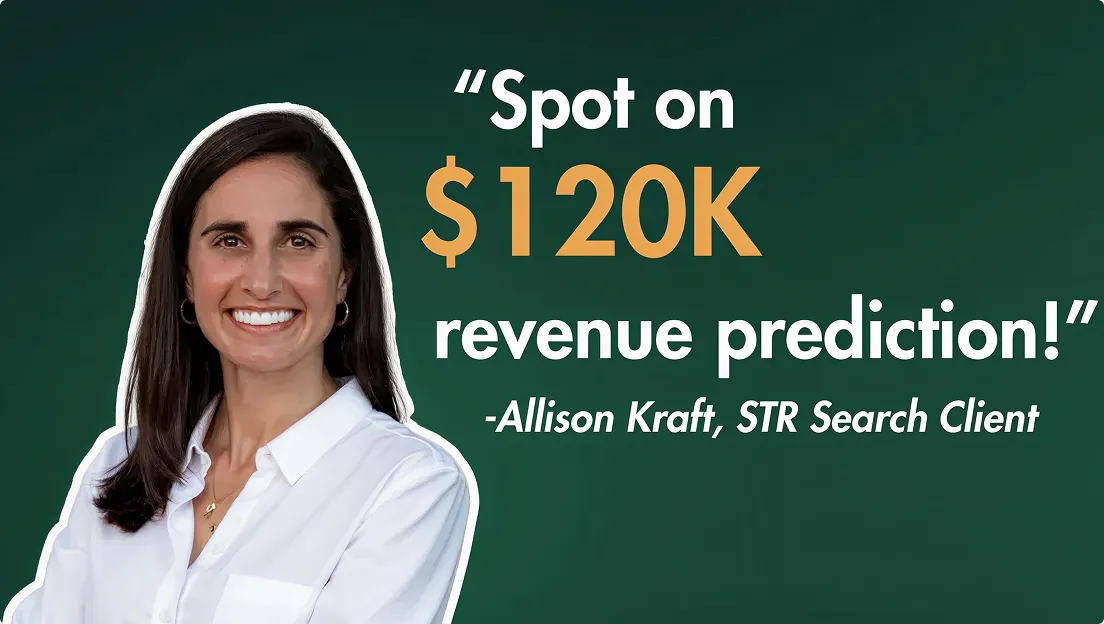
From zero real estate experience to a thriving short-term rental business, Allison locked in $120K in revenue her first year and is now expanding with STR Search again. Proof that the right team can turn analysis paralysis into profitable action!

Thanks to John's expert guidance, I made my first real estate and Airbnb investment a massive success, with consistent positive cash flow and an exceptional return on investment!

John's training gave me the confidence to secure a loan on the spot and scale from one STR to three. His approach is a total game-changer!
Why Choose STR Search?

Put your money to work & lower your tax bill
We’ve spent years analyzing what works so you don’t have to. Our job is to cut through bad data and help you make smart, profitable decisions backed by real numbers.
Schedule Your Free CallTrusted by hundreds of successful investors
Generate $3-5K+ monthly cash flow with our proven property matching system.
Build long-term wealth through STRs with cash flow, equity, and bonus depreciation.
Skip 6-12 months of trial and error with our data-driven underwriting and market analysis
We have a 100% success rate across $90M+ in Real Estate
Out of the 275+ properties we've helped our clients buy every single one has been profitable.
You want more money. More time. More freedom. But may be stuck trading hours for dollars, and scaling your investment strategy feels out of reach.
While others are getting lost in analysis paralysis, you’ve got capital and drive to change your situation. Investors who choose the right STRs can generate $3–5K/month in cash flow, plus serious tax benefits and long-term wealth.
We’ve spent years obsessed with STR investing data so you don’t have to.
With our property match services, there’s no guesswork! Just profitable properties built to perform. With the right deal, your capital can buy more than returns. It can buy your freedom.




All The Ways We Can Help You
Free courses, services, and trainings, to help you maximize your earnings from AirBnb...



Get in touch with us.
Everything Smart Investors Ask About STR Wealth Building
To start an Airbnb in Grand Canyon, Arizona, begin by researching local regulations through Coconino County and the Town of Tusayan, as most Grand Canyon area properties fall under county jurisdiction with specific short-term rental ordinances requiring business licenses and compliance with zoning laws. Obtain necessary permits including a Coconino County business license ($50-100), transient occupancy tax permit, and ensure your property meets fire safety codes and has proper insurance coverage. Find property by focusing on areas like Tusayan, Valle, or nearby residential zones within 30 miles of Grand Canyon National Park, considering properties with 2-4 bedrooms that can accommodate families visiting the park, with typical investment ranges of $300,000-600,000 for suitable homes. Furnish the property with durable, comfortable furniture emphasizing a rustic Arizona theme, including quality mattresses, full kitchen amenities, outdoor seating for stargazing, and Grand Canyon-themed decor, budgeting $15,000-25,000 for complete furnishing. List your property on Airbnb, VRBO, and Booking.com with professional photography highlighting proximity to Grand Canyon (typically 5-60 minutes depending on location), emphasizing outdoor activities and unique desert experiences, setting competitive rates of $150-400 per night depending on season and capacity. Manage the property by establishing relationships with local cleaning services in Flagstaff or Tusayan, creating detailed check-in instructions for the remote location, providing comprehensive area guides including park entry information and local dining options, and maintaining 24/7 communication availability since cell service can be limited in the area.
For identifying profitable short-term rental properties in Grand Canyon, Arizona, focus on locations within 30-60 minutes of Grand Canyon National Park entrances, particularly in Tusayan, Valle, and Williams, as proximity to the park drives 80% of visitor demand. Target 2-4 bedroom properties with rustic or modern cabin aesthetics, outdoor spaces like decks or fire pits, and amenities such as hot tubs, game rooms, and reliable Wi-Fi, as these features command 20-40% higher nightly rates averaging $150-350 depending on season and size. Conduct pricing analysis using AirDNA and Mashvisor to track seasonal fluctuations, with peak rates during summer months (June-August) and shoulder seasons (April-May, September-October) generating the highest occupancy at 70-85%. Research competition by analyzing the top 20 STR listings within a 5-mile radius using tools like AllTheRooms and Transparent, focusing on properties with 4.8+ star ratings and 50+ reviews to understand successful positioning strategies. Utilize Grand Canyon-specific resources including the Coconino County STR regulations database, Arizona Tourism Board data, and local property management companies like RedAwning or Vacasa for market insights, while monitoring National Park Service visitor statistics and seasonal trends through their official website to align investment timing with peak demand periods.
To obtain an Airbnb/STR permit in Grand Canyon, Arizona, you must apply through Coconino County since Grand Canyon Village falls under county jurisdiction rather than having its own municipal government. Start by contacting the Coconino County Community Development Department at 2500 N Fort Valley Road, Flagstaff, AZ 86001, or visit their website to download the Short-Term Rental application form. Required documents include a completed application, property deed or lease agreement, floor plan showing maximum occupancy, septic system inspection (if applicable), fire safety plan, parking plan showing adequate spaces, and proof of liability insurance with minimum $1 million coverage. Submit a $500 application fee plus $200 annual renewal fee, along with a $100 inspection fee. The approval process typically takes 60-90 days including application review, neighbor notification period, site inspection, and final approval. Specific Grand Canyon area requirements include strict occupancy limits based on septic capacity, mandatory quiet hours from 10 PM to 7 AM due to wildlife protection, required bear-proof trash containers, parking restrictions to prevent roadway obstruction, and compliance with National Park Service regulations if your property borders park land. You must also register for Arizona Transaction Privilege Tax and Coconino County bed tax collection, maintain a local contact person available 24/7, and renew your permit annually by December 31st.
Short-term rentals (STRs) are generally not legal within Grand Canyon National Park itself, as the National Park Service prohibits commercial lodging operations within park boundaries, with accommodations limited to authorized concessionaires like Xanterra Parks & Resorts which operates lodges such as El Tovar Hotel and Bright Angel Lodge. However, STRs are legal in nearby communities outside the park boundaries, including the town of Tusayan (immediately south of the park entrance), Flagstaff, Williams, and other surrounding areas in Coconino County, though these municipalities have varying regulations regarding permits, occupancy limits, and operational requirements. Recent changes in 2022-2023 have seen some Arizona communities tightening STR regulations due to housing concerns, but the fundamental prohibition within the actual Grand Canyon National Park remains unchanged, while gateway communities continue to allow regulated STR operations to serve the millions of annual park visitors who need accommodation options beyond the limited in-park lodging facilities.
The best Airbnb investment areas near Grand Canyon, Arizona include Tusayan, which sits just 1-2 miles from the South Rim entrance and attracts millions of annual visitors seeking convenient access to the park's main attractions, restaurants, and visitor centers. Williams, located about 60 miles south, serves as a gateway town along Historic Route 66 and offers the Grand Canyon Railway experience, drawing tourists year-round who prefer a charming small-town atmosphere with lower property costs than Tusayan. Flagstaff, approximately 80 miles southeast, provides excellent investment potential due to its diverse demand from Grand Canyon tourists, Northern Arizona University students and visitors, business travelers, and outdoor enthusiasts accessing nearby Sedona, Snowbowl skiing, and hiking trails. Valle, a small community about 30 miles south of the South Rim, offers budget-friendly property acquisition opportunities while still providing reasonable access to the Grand Canyon for cost-conscious travelers. The South Rim Village area itself, though limited in available properties, commands premium rates due to its unparalleled proximity to viewpoints, lodges, and park facilities, making any available investment properties highly lucrative despite higher acquisition costs.
Airbnb properties in Grand Canyon, Arizona are subject to multiple lodging taxes including Arizona state Transaction Privilege Tax (TPT) at 5.6% on gross rental income, Coconino County bed tax at 3% for properties with fewer than 50 rooms, and a Grand Canyon area tourism tax of approximately 2-4% depending on the specific jurisdiction within the Grand Canyon area. These taxes are typically collected from guests at the time of booking through Airbnb's automatic tax collection system, which remits state and local taxes directly to the appropriate authorities on behalf of hosts for bookings made after 2019. Hosts are responsible for registering with the Arizona Department of Revenue for TPT licensing and may need separate registration with Coconino County for local bed taxes, with monthly or quarterly remittance required depending on volume. Properties rented for 30 days or longer may be exempt from certain transient lodging taxes, and some jurisdictions offer exemptions for rentals under a certain dollar threshold per month, though hosts should verify current exemption criteria as regulations frequently change and enforcement has increased significantly since 2020.
Starting an Airbnb in Grand Canyon, Arizona requires approximately $485,000-$565,000 in total initial investment. Property purchase costs range from $350,000-$425,000 based on median home prices in the Grand Canyon area, with properties near the South Rim commanding premium prices. Furnishing costs typically run $25,000-$35,000 for a complete setup including beds, linens, kitchen appliances, furniture, and décor to create an appealing vacation rental atmosphere. Initial setup expenses including professional photography, listing creation, welcome materials, and basic supplies cost around $3,000-$5,000. Permits and fees in Coconino County include business license ($150), transient occupancy tax registration ($100), potential HOA approval fees ($500-$1,500), and vacation rental permit ($200-$800). Insurance costs approximately $2,500-$4,000 annually for short-term rental coverage through companies like Proper Insurance or CBIZ. Utility setup and deposits for electricity, water, internet, and cable run $1,500-$2,500 initially. First six months of operating costs including utilities ($900/month), cleaning services ($150 per turnover averaging 8 turnovers monthly), property management software like Airbnb or VRBO fees (3-5% of bookings), maintenance reserves ($300/month), and marketing expenses total approximately $12,000-$18,000, assuming 60-70% occupancy rates typical for Grand Canyon area vacation rentals during peak seasons.
Airbnb properties near Grand Canyon, Arizona typically generate strong profitability due to high tourist demand, with average nightly rates ranging from $150-400 depending on proximity to the park and property type. Properties within 30 miles of Grand Canyon National Park can achieve 65-80% occupancy rates during peak season (March-October), generating annual revenues of $35,000-75,000 for well-positioned properties. Operating expenses typically include 25-30% for cleaning and maintenance, 10-15% for utilities, 3% Airbnb service fees, and 8-12% for property management if outsourced, resulting in net profit margins of 35-45% for owner-operated properties. Success factors include proximity to the South Rim entrance, unique property features like canyon views or luxury amenities, professional photography, and responsive guest communication. Case studies from Tusayan and Valle show that properties offering shuttle services to the park or unique experiences like stargazing decks command premium rates, with some luxury cabins near the park generating over $100,000 annually. However, seasonality significantly impacts winter revenues (November-February), when occupancy can drop to 30-40%, making year-round cash flow management crucial for sustained profitability in this market.
Airbnb investments in Grand Canyon, Arizona typically generate annual ROI of 12-18% with cash-on-cash returns ranging from 8-15%, driven by the area's proximity to Grand Canyon National Park which attracts over 6 million visitors annually. Properties within 30 miles of the South Rim entrance command premium nightly rates of $150-300 depending on size and amenities, with occupancy rates averaging 65-75% year-round due to consistent tourist demand. Initial profitability usually occurs within 18-24 months for well-positioned properties, with vacation rental management companies like Vacasa and RedAwning reporting strong performance metrics in the region. The market benefits from limited hotel inventory near the park, creating sustained demand for short-term rentals, though investors should expect seasonal fluctuations with peak performance during spring and fall months when weather conditions are optimal for park visitation.
STRSearch is a leading national platform that specializes in identifying profitable short-term rental properties for Airbnb investors, offering comprehensive market analysis and property recommendations for the Grand Canyon, Arizona area. Local real estate agents serving this market include Flagstaff-based Canyon Country Realty and Grand Canyon Real Estate Group, both of which have expertise in vacation rental properties near the national park. National services like Mashvisor (founded 2014) and AirDNA provide detailed Airbnb market analytics and investment property identification tools for the Grand Canyon region. BiggerPockets, established in 2004, offers investor networking and educational resources with local Arizona investor groups. Roofstock and Awning (acquired by RedAwning in 2019) are national platforms that specifically focus on turnkey rental properties including short-term rentals in tourist destinations like Grand Canyon. Local property management companies such as Grand Canyon Vacation Rentals and Northern Arizona Property Management assist investors with both acquisition and ongoing management of Airbnb properties. Real estate investment firms like HomeUnion and Mynd provide end-to-end services for out-of-state investors looking to purchase profitable vacation rentals in the Grand Canyon market, while local brokerages such as Realty One Group Mountain Desert and Coldwell Banker High Country Realty have agents specializing in investment properties near Tusayan and the South Rim area.
Put your money to work & lower your tax bill
We’ve spent years analyzing what works so you don’t have to. Our job is to cut through bad data and help you make smart, profitable decisions backed by real numbers.
Schedule Your Free Call