
Get significant tax savings and earn cash flow by investing in a short-term rental with data-backed selection. No guessing!
Find Your Airbnb InvestmentInvesting in Airbnb properties in Hilo, Hawaii, presents a compelling opportunity given the city's unique natural attractions and steady tourism appeal. Hilo's market is characterized by its proximity to Hawaii Volcanoes National Park, stunning waterfalls, and authentic Hawaiian culture that attracts visitors seeking a more authentic Big Island experience away from the resort areas. This consistent demand from eco-tourists, adventure seekers, and cultural enthusiasts supports solid occupancy rates for short-term rentals. While property values in Hawaii are notably high, making initial investments substantial, the potential for strong rental income is driven by the island's year-round tourism and Hilo's position as a gateway to the island's natural wonders. Investors should, however, consider Hawaii's strict short-term rental regulations, higher operating costs due to the island location, and potential competition from traditional hotels and resorts, which can impact profitability.
Based on available market data and rental performance analytics, Airbnb properties in Hilo, Hawaii typically generate average monthly revenues ranging from $2,800 to $4,500 for standard two-bedroom units, with luxury properties and oceanfront locations commanding $5,000 to $8,000 monthly. Seasonal variations show peak earnings during winter months (December through March) when mainland visitors escape cold weather, with revenues increasing approximately 25-35% above summer averages, while spring and fall represent moderate earning periods. Key factors significantly impacting earnings include proximity to Hawaii Volcanoes National Park (properties within 30 minutes typically earn 20-30% more), ocean views or beachfront access (premium of 40-60%), property amenities such as hot tubs or private pools (15-25% increase), and local events like the Merrie Monarch Festival which can triple nightly rates during event weeks. Properties in residential neighborhoods average lower occupancy rates around 60-70% compared to tourist-focused areas achieving 75-85% occupancy, while the overall average daily rate ranges from $150-250 depending on property type and location, with successful hosts maintaining occupancy rates above 70% and achieving annual gross revenues between $35,000-65,000 per property.
Airbnb investments in Hilo, Hawaii typically generate ROI between 8-12% annually, with properties averaging $150-200 per night and 60-70% occupancy rates throughout the year due to steady tourism and business travel to the Big Island's eastern side. The payback period for most Hilo Airbnb investments ranges from 8-12 years, depending on initial purchase price and renovation costs, with median home prices around $650,000-750,000 requiring substantial upfront investment. Compared to long-term rentals in Hilo, which typically yield 6-8% ROI with average monthly rents of $2,500-3,200 for comparable properties, short-term rentals can generate 30-50% higher returns but require significantly more active management, higher operating expenses including cleaning fees, utilities, and maintenance, plus exposure to seasonal fluctuations and regulatory changes. The Hilo market benefits from consistent demand due to Hawaii Volcanoes National Park proximity, University of Hawaii presence, and fewer vacation rental restrictions compared to other Hawaiian markets, though investors must factor in higher property taxes, insurance costs, and the need for professional property management services that typically charge 20-25% of gross rental income.
Airbnb occupancy rates in Hilo, Hawaii typically average around 65-70% annually, with significant seasonal variations that peak during winter months (December through March) at approximately 75-85% occupancy when mainland visitors escape cold weather, and summer months (June through August) reaching 70-80% during family vacation season. The lowest occupancy occurs during shoulder seasons in April-May and September-November, dropping to around 50-60% due to increased rainfall and fewer tourist arrivals. Hilo's occupancy rates generally lag behind the statewide Hawaii average of 75-80% and popular destinations like Waikiki or Maui which often exceed 80%, primarily due to Hilo's reputation as a rainier, less beach-focused destination on the Big Island's windward side. Compared to national Airbnb averages of approximately 48-52%, Hilo still performs significantly better due to Hawaii's consistent tourist appeal, though it underperforms relative to other Hawaiian markets due to its focus on eco-tourism, cultural attractions, and volcanic activities rather than traditional beach resort experiences.
The best Airbnb investment neighborhoods in Hilo include Downtown Hilo, which offers proximity to Hilo Bay, local restaurants, farmers markets, and cultural attractions with strong appeal to tourists seeking an authentic Hawaiian experience and moderate pricing power due to walkability to amenities. Liliuokalani Gardens area provides scenic waterfront locations near the Japanese gardens and Banyan Drive hotels, attracting visitors who want luxury proximity without hotel prices, offering higher rental rates due to bay views and resort-like atmosphere. The Waiakea-Uka neighborhood sits in the foothills with cooler temperatures and lush surroundings, appealing to visitors seeking a more residential Hawaiian experience while maintaining easy access to downtown, providing moderate pricing with longer-stay potential. Reed's Island offers exclusive waterfront living with limited inventory, creating premium pricing opportunities for discerning guests willing to pay for privacy and direct water access. Keaukaha provides authentic local Hawaiian community experience near beaches and tide pools, attracting culturally-minded visitors and offering competitive rates with strong occupancy due to unique cultural immersion opportunities. The Wailuku River area combines natural beauty with accessibility to Rainbow Falls and other attractions, providing solid rental potential with appeal to nature-focused tourists seeking convenient access to Hilo's natural wonders while maintaining reasonable investment entry points.
Short-term rental regulations in Hilo, Hawaii are governed by both Hawaii County and state regulations, requiring operators to obtain a Nonconforming Use Certificate (NUC) or Conditional Permit through Hawaii County, with new permits generally prohibited in residential zones since 2018-2019 regulatory changes. Properties must comply with occupancy limits typically based on bedroom count plus two additional guests, with maximum occupancy generally not exceeding 10-12 people depending on the specific property. Owner-occupancy requirements vary by zoning district, with some areas requiring the owner to live on-site or on the same island, while others allow absentee ownership for grandfathered properties. Zoning restrictions are particularly strict, with short-term rentals prohibited in most residential districts except for those with existing legal nonconforming status, and primarily allowed in resort and commercial zones. The registration process involves submitting applications to Hawaii County Planning Department, providing proof of compliance with building codes, fire safety requirements, and tax clearances, along with paying fees ranging from $500-2000 annually. Recent regulatory changes include stricter enforcement mechanisms implemented around 2019-2020, increased penalties for illegal operations, mandatory online registration systems, and enhanced neighbor notification requirements, with the county conducting regular compliance audits and imposing fines up to $10,000 per violation for unpermitted operations.
Short-term rentals in Hilo, Hawaii are subject to multiple fees and taxes including Hawaii's Transient Accommodations Tax (TAT) at 10.25% of gross rental receipts, Hawaii General Excise Tax (GET) at 4.712% on gross income, and Hawaii County's Real Property Tax which varies by property classification but typically ranges from $6.50 to $13.90 per $1,000 of assessed value annually. Operators must obtain a Nonconforming Use Certificate from Hawaii County costing approximately $1,000-$2,500 depending on the property type, plus annual renewal fees of around $500-$1,000. Additional requirements include a State Tax License ($20), business registration fees ($50-$100), and potential homeowner association fees if applicable. Properties may also be subject to special assessment districts or improvement fees ranging from $200-$800 annually, and operators must maintain liability insurance which typically costs $800-$2,000 per year depending on coverage limits and property value.
Investing in Airbnb properties in Hilo, Hawaii, presents a compelling opportunity given the city's unique natural attractions and steady tourism appeal. Hilo's market is characterized by its proximity to Hawaii Volcanoes National Park, stunning waterfalls, and authentic Hawaiian culture that attracts visitors seeking a more authentic Big Island experience away from the resort areas. This consistent demand from eco-tourists, adventure seekers, and cultural enthusiasts supports solid occupancy rates for short-term rentals. While property values in Hawaii are notably high, making initial investments substantial, the potential for strong rental income is driven by the island's year-round tourism and Hilo's position as a gateway to the island's natural wonders. Investors should, however, consider Hawaii's strict short-term rental regulations, higher operating costs due to the island location, and potential competition from traditional hotels and resorts, which can impact profitability.
Based on available market data and rental performance analytics, Airbnb properties in Hilo, Hawaii typically generate average monthly revenues ranging from $2,800 to $4,500 for standard two-bedroom units, with luxury properties and oceanfront locations commanding $5,000 to $8,000 monthly. Seasonal variations show peak earnings during winter months (December through March) when mainland visitors escape cold weather, with revenues increasing approximately 25-35% above summer averages, while spring and fall represent moderate earning periods. Key factors significantly impacting earnings include proximity to Hawaii Volcanoes National Park (properties within 30 minutes typically earn 20-30% more), ocean views or beachfront access (premium of 40-60%), property amenities such as hot tubs or private pools (15-25% increase), and local events like the Merrie Monarch Festival which can triple nightly rates during event weeks. Properties in residential neighborhoods average lower occupancy rates around 60-70% compared to tourist-focused areas achieving 75-85% occupancy, while the overall average daily rate ranges from $150-250 depending on property type and location, with successful hosts maintaining occupancy rates above 70% and achieving annual gross revenues between $35,000-65,000 per property.
Airbnb investments in Hilo, Hawaii typically generate ROI between 8-12% annually, with properties averaging $150-200 per night and 60-70% occupancy rates throughout the year due to steady tourism and business travel to the Big Island's eastern side. The payback period for most Hilo Airbnb investments ranges from 8-12 years, depending on initial purchase price and renovation costs, with median home prices around $650,000-750,000 requiring substantial upfront investment. Compared to long-term rentals in Hilo, which typically yield 6-8% ROI with average monthly rents of $2,500-3,200 for comparable properties, short-term rentals can generate 30-50% higher returns but require significantly more active management, higher operating expenses including cleaning fees, utilities, and maintenance, plus exposure to seasonal fluctuations and regulatory changes. The Hilo market benefits from consistent demand due to Hawaii Volcanoes National Park proximity, University of Hawaii presence, and fewer vacation rental restrictions compared to other Hawaiian markets, though investors must factor in higher property taxes, insurance costs, and the need for professional property management services that typically charge 20-25% of gross rental income.
Airbnb occupancy rates in Hilo, Hawaii typically average around 65-70% annually, with significant seasonal variations that peak during winter months (December through March) at approximately 75-85% occupancy when mainland visitors escape cold weather, and summer months (June through August) reaching 70-80% during family vacation season. The lowest occupancy occurs during shoulder seasons in April-May and September-November, dropping to around 50-60% due to increased rainfall and fewer tourist arrivals. Hilo's occupancy rates generally lag behind the statewide Hawaii average of 75-80% and popular destinations like Waikiki or Maui which often exceed 80%, primarily due to Hilo's reputation as a rainier, less beach-focused destination on the Big Island's windward side. Compared to national Airbnb averages of approximately 48-52%, Hilo still performs significantly better due to Hawaii's consistent tourist appeal, though it underperforms relative to other Hawaiian markets due to its focus on eco-tourism, cultural attractions, and volcanic activities rather than traditional beach resort experiences.
The best Airbnb investment neighborhoods in Hilo include Downtown Hilo, which offers proximity to Hilo Bay, local restaurants, farmers markets, and cultural attractions with strong appeal to tourists seeking an authentic Hawaiian experience and moderate pricing power due to walkability to amenities. Liliuokalani Gardens area provides scenic waterfront locations near the Japanese gardens and Banyan Drive hotels, attracting visitors who want luxury proximity without hotel prices, offering higher rental rates due to bay views and resort-like atmosphere. The Waiakea-Uka neighborhood sits in the foothills with cooler temperatures and lush surroundings, appealing to visitors seeking a more residential Hawaiian experience while maintaining easy access to downtown, providing moderate pricing with longer-stay potential. Reed's Island offers exclusive waterfront living with limited inventory, creating premium pricing opportunities for discerning guests willing to pay for privacy and direct water access. Keaukaha provides authentic local Hawaiian community experience near beaches and tide pools, attracting culturally-minded visitors and offering competitive rates with strong occupancy due to unique cultural immersion opportunities. The Wailuku River area combines natural beauty with accessibility to Rainbow Falls and other attractions, providing solid rental potential with appeal to nature-focused tourists seeking convenient access to Hilo's natural wonders while maintaining reasonable investment entry points.
Short-term rental regulations in Hilo, Hawaii are governed by both Hawaii County and state regulations, requiring operators to obtain a Nonconforming Use Certificate (NUC) or Conditional Permit through Hawaii County, with new permits generally prohibited in residential zones since 2018-2019 regulatory changes. Properties must comply with occupancy limits typically based on bedroom count plus two additional guests, with maximum occupancy generally not exceeding 10-12 people depending on the specific property. Owner-occupancy requirements vary by zoning district, with some areas requiring the owner to live on-site or on the same island, while others allow absentee ownership for grandfathered properties. Zoning restrictions are particularly strict, with short-term rentals prohibited in most residential districts except for those with existing legal nonconforming status, and primarily allowed in resort and commercial zones. The registration process involves submitting applications to Hawaii County Planning Department, providing proof of compliance with building codes, fire safety requirements, and tax clearances, along with paying fees ranging from $500-2000 annually. Recent regulatory changes include stricter enforcement mechanisms implemented around 2019-2020, increased penalties for illegal operations, mandatory online registration systems, and enhanced neighbor notification requirements, with the county conducting regular compliance audits and imposing fines up to $10,000 per violation for unpermitted operations.
Short-term rentals in Hilo, Hawaii are subject to multiple fees and taxes including Hawaii's Transient Accommodations Tax (TAT) at 10.25% of gross rental receipts, Hawaii General Excise Tax (GET) at 4.712% on gross income, and Hawaii County's Real Property Tax which varies by property classification but typically ranges from $6.50 to $13.90 per $1,000 of assessed value annually. Operators must obtain a Nonconforming Use Certificate from Hawaii County costing approximately $1,000-$2,500 depending on the property type, plus annual renewal fees of around $500-$1,000. Additional requirements include a State Tax License ($20), business registration fees ($50-$100), and potential homeowner association fees if applicable. Properties may also be subject to special assessment districts or improvement fees ranging from $200-$800 annually, and operators must maintain liability insurance which typically costs $800-$2,000 per year depending on coverage limits and property value.
* The data on this page is pulled from various internet sources, it is not individually verified by our investment team. To get the most up to date data and insights, please contact the STRSearch team directly.
How Smart Investors Build Wealth
Through Data-Driven STRs (Real Results)
From first-time investors to seasoned pros, see how our commitment to comprehensive data analysis led to unparalleled investment victories.
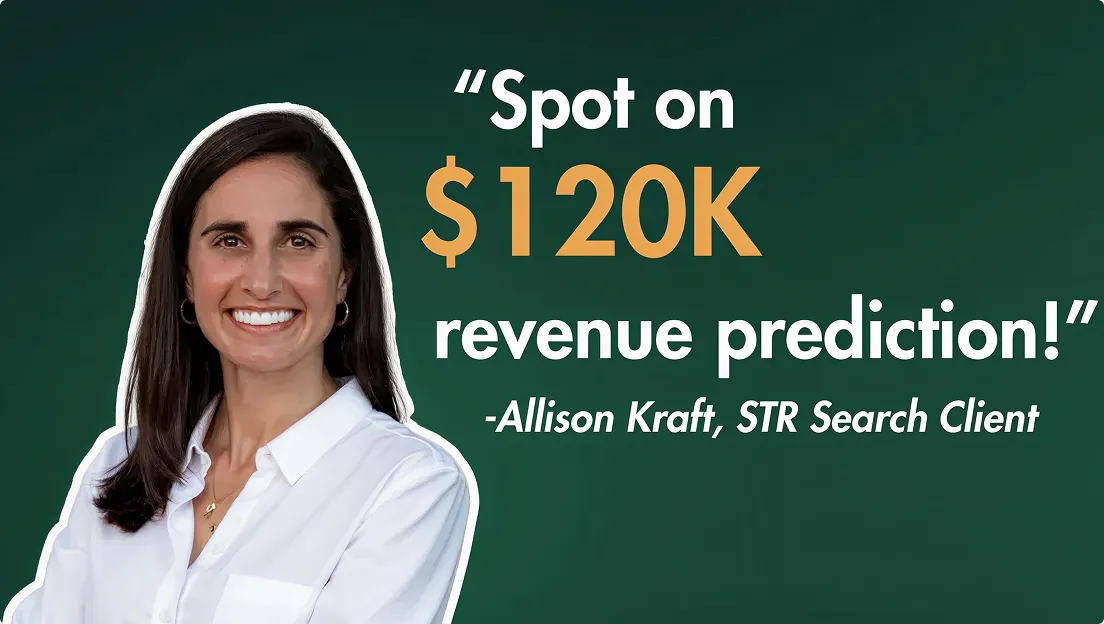
From zero real estate experience to a thriving short-term rental business, Allison locked in $120K in revenue her first year and is now expanding with STR Search again. Proof that the right team can turn analysis paralysis into profitable action!

Thanks to John's expert guidance, I made my first real estate and Airbnb investment a massive success, with consistent positive cash flow and an exceptional return on investment!

John's training gave me the confidence to secure a loan on the spot and scale from one STR to three. His approach is a total game-changer!
Why Choose STR Search?

Put your money to work & lower your tax bill
We’ve spent years analyzing what works so you don’t have to. Our job is to cut through bad data and help you make smart, profitable decisions backed by real numbers.
Schedule Your Free CallTrusted by hundreds of successful investors
Generate $3-5K+ monthly cash flow with our proven property matching system.
Build long-term wealth through STRs with cash flow, equity, and bonus depreciation.
Skip 6-12 months of trial and error with our data-driven underwriting and market analysis
We have a 100% success rate across $90M+ in Real Estate
Out of the 275+ properties we've helped our clients buy every single one has been profitable.
You want more money. More time. More freedom. But may be stuck trading hours for dollars, and scaling your investment strategy feels out of reach.
While others are getting lost in analysis paralysis, you’ve got capital and drive to change your situation. Investors who choose the right STRs can generate $3–5K/month in cash flow, plus serious tax benefits and long-term wealth.
We’ve spent years obsessed with STR investing data so you don’t have to.
With our property match services, there’s no guesswork! Just profitable properties built to perform. With the right deal, your capital can buy more than returns. It can buy your freedom.





All The Ways We Can Help You
Free courses, services, and trainings, to help you maximize your earnings from AirBnb...


Get in touch with us.
Everything Smart Investors Ask About STR Wealth Building
To start an Airbnb in Hilo, Hawaii, begin by researching Hawaii County's strict short-term rental regulations, which require a Nonconforming Use Certificate (NUC) for properties established before 2018 or operating in approved zones, as new short-term rental permits are extremely limited outside of resort areas. Contact Hawaii County Planning Department to verify if your target property can legally operate as a short-term rental, as many residential areas in Hilo are restricted. If eligible, apply for the required permits including the NUC ($500-1,000), General Excise Tax license, and Transient Accommodations Tax registration with the Hawaii Department of Taxation. Find a suitable property in Hilo considering proximity to attractions like Rainbow Falls, Liliuokalani Gardens, and downtown, ensuring it meets county zoning requirements and has adequate parking. Furnish the space with tropical, hurricane-resistant furniture, high-quality linens, kitchen essentials, and local Hawaiian touches while ensuring compliance with safety requirements including smoke detectors, carbon monoxide detectors, and fire extinguishers. Create your Airbnb listing with professional photos highlighting Hilo's unique features like the historic downtown and Big Island attractions, set competitive pricing (typically $80-200/night depending on size and location), and write detailed descriptions mentioning nearby activities. Manage the property by establishing cleaning protocols between guests, coordinating with local cleaning services, maintaining responsive communication with guests, and ensuring compliance with Hawaii's 14.25% combined TAT and GET taxes, while considering hiring a local property management company familiar with Hawaii County's specific regulations and the unique challenges of Hilo's tropical climate.
To identify profitable short-term rental properties in Hilo, Hawaii, focus on locations within 2-3 miles of downtown Hilo, near Hilo Bay, or with easy access to Hawaii Volcanoes National Park and Rainbow Falls, as these areas attract the highest tourist traffic. Target properties with 2-4 bedrooms, outdoor spaces like lanais or gardens, parking availability, and unique Hawaiian architectural features, while ensuring reliable internet for remote workers who increasingly visit Hilo for extended stays. Conduct pricing analysis using AirDNA and Mashvisor to benchmark nightly rates ($150-300 for 2-3 bedroom properties as of 2023-2024), occupancy rates (typically 60-75% for well-positioned properties), and seasonal demand patterns, with peak seasons during winter months and summer vacation periods. Research competition by analyzing similar properties within a 5-mile radius on Airbnb and VRBO, noting their amenities, pricing strategies, and guest reviews to identify market gaps. Utilize Hawaii-specific resources like the Hawaii Tourism Authority data, Big Island Visitors Bureau reports, and local STR management companies like RedAwning or Vacasa for market insights, while ensuring compliance with Hawaii County's short-term rental regulations and obtaining proper permits through the County of Hawaii Planning Department.
To obtain an Airbnb/STR permit in Hilo, Hawaii, you must apply through Hawaii County's Planning Department by submitting a Conditional Permit application, as short-term rentals require conditional use permits in most residential zones. Required documents include a completed application form, site plan showing the property layout, floor plans, parking arrangements, septic system compliance certificate, water usage assessment, neighbor notification affidavits (properties within 300 feet), and proof of liability insurance. The application fee is approximately $1,500-$2,500 depending on property size and complexity, with additional fees for environmental assessments if required. The timeline typically ranges from 6-12 months due to public hearing requirements and county review processes. Specific Hilo requirements include maintaining adequate off-street parking (minimum 2 spaces), ensuring septic systems can handle increased occupancy, limiting occupancy to 2 people per bedroom plus 2 additional guests, providing 24/7 local contact information, and complying with noise ordinances. Properties must also meet building code requirements, obtain a General Excise Tax license, and register with the state for Transient Accommodations Tax collection. Applications are submitted to Hawaii County Planning Department at 101 Pauahi Street, Suite 3, Hilo, HI 96720, and applicants should expect to attend public hearings as part of the approval process.
Short-term rentals (STRs) in Hilo, Hawaii are legal but heavily regulated under Hawaii County's comprehensive ordinance system implemented in 2019-2020. The county requires all STR operators to obtain proper permits and comply with strict zoning requirements, with STRs generally prohibited in residential districts but allowed in resort and commercial zones. Hilo specifically has limited areas where STRs can operate legally, primarily in commercially zoned districts, while most residential neighborhoods prohibit them entirely. The county caps the total number of STR permits and requires operators to pay transient accommodation taxes, maintain liability insurance, and follow noise and parking restrictions. Recent changes include stricter enforcement mechanisms, increased penalties for illegal operations, and enhanced neighbor notification requirements, with the county actively pursuing unpermitted STRs through fines and legal action.
The best areas for Airbnb investment in Hilo, Hawaii include the Hilo Bay Front area near Liliuokalani Gardens and Banyan Drive, which attracts tourists visiting the historic hotels district and offers easy access to Hilo Bay activities and downtown attractions. The Reed's Island neighborhood provides a more secluded, upscale option with waterfront properties appealing to visitors seeking privacy while remaining close to Hilo's center. Downtown Hilo around Kamehameha Avenue and Furneaux Lane offers excellent walkability to restaurants, shops, farmers markets, and cultural sites like the Pacific Tsunami Museum, making it ideal for tourists who prefer not to rent cars. The Waiakea area near Prince Kuhio Plaza attracts business travelers due to its proximity to shopping, dining, and the University of Hawaii at Hilo, while also serving tourists heading to Hawaii Volcanoes National Park. The Keaukaha area along the coast provides access to tide pools, local beaches, and a more authentic Hawaiian residential experience, appealing to visitors seeking cultural immersion and natural beauty away from typical tourist zones.
Airbnb properties in Hilo, Hawaii are subject to multiple lodging taxes including the Hawaii General Excise Tax (GET) of 4.712% on gross rental income, the Transient Accommodations Tax (TAT) of 10.25% on gross rental receipts, and Hawaii County's additional TAT surcharge of 3% effective since 2019, bringing the total tax burden to approximately 17.962%. The GET applies to all business income in Hawaii and must be collected from guests or absorbed by hosts, while the TAT specifically targets short-term rental accommodations under 180 days. Hosts typically collect these taxes from guests at booking and must register with the Hawaii Department of Taxation to obtain GET and TAT licenses, filing monthly returns by the 20th of the following month for properties with significant activity, though smaller operators may qualify for quarterly or annual filing. The state began requiring vacation rental platforms like Airbnb to collect and remit TAT directly in 2020, though hosts remain responsible for GET collection and remittance. Exemptions are limited and generally apply only to rentals exceeding 180 consecutive days to the same guest, certain government employees on official business, or properties that qualify as permanent residences rather than transient accommodations.
The total cost to start an Airbnb in Hilo, Hawaii is approximately $650,000-$750,000. Property purchase represents the largest expense at $500,000-$600,000 for a median-priced home suitable for short-term rental. Furnishing costs range from $25,000-$35,000 to create an attractive, fully-equipped vacation rental including furniture, appliances, linens, and décor. Initial setup costs of $3,000-$5,000 cover professional photography, listing creation, and marketing materials. Permits and fees total $2,000-$4,000 including Hawaii's transient accommodation tax registration, county permits, and business licenses. Insurance costs $3,000-$5,000 annually for short-term rental coverage, with six months costing $1,500-$2,500. Utilities setup and deposits require $1,000-$2,000, while six months of operating costs including utilities, internet, cleaning supplies, maintenance, and property management fees range from $8,000-$15,000. Additional considerations include potential HOA fees, professional cleaning services at $100-$150 per turnover, and marketing expenses for platforms like Airbnb and VRBO which charge 3-5% commission fees.
Airbnb properties in Hilo, Hawaii typically generate annual revenues between $35,000-$65,000 for well-positioned properties, with average daily rates ranging from $120-$180 depending on proximity to attractions like Rainbow Falls and Hilo Bay. Operating expenses generally consume 40-50% of gross revenue, including cleaning fees ($75-$100 per turnover), property management (15-25% of revenue), utilities ($200-$350 monthly), insurance ($2,000-$3,500 annually), and maintenance costs averaging $3,000-$5,000 yearly. Net profit margins typically range from 15-25% for owner-operated properties, with successful hosts like those managing oceanview properties near Liliuokalani Gardens achieving occupancy rates of 70-85% and profit margins approaching 30%. Key success factors include strategic location within 10 minutes of Hilo International Airport, professional photography showcasing the property's proximity to Hawaii Volcanoes National Park, competitive pricing during peak seasons (December-April), and maintaining superhost status through consistent 4.8+ ratings. Properties featuring unique amenities like outdoor showers, tropical gardens, or volcano views command premium rates, with some luxury properties near Banyan Drive generating over $80,000 annually while maintaining profit margins of 20-28% after accounting for higher operational standards and furnishing costs.
Airbnb investments in Hilo, Hawaii typically generate annual ROI of 8-12% with cash-on-cash returns ranging from 6-10% based on current market conditions. Properties in desirable areas near Rainbow Falls or Liliuokalani Gardens can achieve occupancy rates of 65-75% with average daily rates of $150-220 depending on property size and amenities. Initial investment recovery and profitability usually occurs within 18-24 months for well-positioned properties, with vacation rental management companies like RedAwning and Vacasa reporting strong performance metrics for Big Island properties. The Hilo market benefits from consistent tourist demand driven by Hawaii Volcanoes National Park proximity and lower property acquisition costs compared to Kona, though investors should factor in Hawaii's 10.25% transient accommodation tax and potential regulatory changes affecting short-term rentals that could impact these returns by 2025.
STRSearch is a national platform that specializes in identifying profitable short-term rental investment properties and provides market analysis for Airbnb investments in Hilo, Hawaii. Local real estate agents in Hilo who focus on investment properties include Hawaii Life Real Estate Brokers, Coldwell Banker Island Properties, and Big Island Realty, with agents like those at Berkshire Hathaway HomeServices Island Properties having experience in vacation rental investments. National services that assist with Airbnb property acquisition include Awning, which offers end-to-end investment property services, Mashvisor for property analysis and market data, and AirDNA for short-term rental market insights and performance metrics. Local property management companies such as Big Island Vacation Rentals, Hawaii Vacation Rental Management, and Aloha Condos also provide consultation services for investors looking to purchase profitable vacation rental properties in the Hilo market. Additionally, companies like Vacasa and RedAwning offer national vacation rental management services and can provide market insights for potential investors considering properties in Hilo's growing short-term rental market.
Put your money to work & lower your tax bill
We’ve spent years analyzing what works so you don’t have to. Our job is to cut through bad data and help you make smart, profitable decisions backed by real numbers.
Schedule Your Free Call