
Ithaca Airbnb Rules & Investment Guide (2026)

Confirm City eligibility, primary residency, inspections, permits, occupancy taxes, and enforcement risk before underwriting an Ithaca short-term rental.

Find Your Airbnb Investment
Ithaca, New York market research

Ithaca Short-Term Rental Investment Review

Primary residenceHost lives on the property 184+ days yearly
$400Current City permit fee
1 yearOperating permit term
10%Combined City and County occupancy tax
Decision point

Ithaca Short-Term Rental Investment Decision

An Ithaca acquisition starts with the host, parcel, dwelling type, and permit path rather than projected nightly revenue.

  • The property must be the host’s primary residence, where the host lives at least 184 days per year.
  • Only natural persons can hold an operating permit; corporations, LLCs, trusts, and similar entities are ineligible.
  • A lawful strategy must fit an eligible residential use, pass the City review, and maintain a Certificate of Compliance.
  • There is no annual rental-day cap while the host maintains primary residence and a valid permit.
  • Build revenue, occupancy, nightly rate, financing, and operating costs from property-level evidence rather than citywide averages.
Eligibility

Ithaca STR Host and Property Eligibility

City eligibility depends on the residence relationship and the building configuration.

  • Short-term rentals are allowed only in zones where residential uses are permitted.
  • Eligible housing includes single-family dwellings, accessory dwelling units, and two-unit residential buildings.
  • In a multiple dwelling or mixed-use building, only an owner-occupied unit can qualify.
  • An owner-occupant may offer multiple eligible units on the same property, but each unit needs a separate permit and fee.
  • A long-term leaseholder may offer only the leaseholder’s primary-residence unit and must provide notarized owner authorization.
Permit

Ithaca STR Permit and Annual Renewal

Every eligible unit needs a City operating permit before it is advertised or offered for a short stay.

  • Apply through the City’s OpenGov portal after confirming property and host eligibility.
  • The July 2026 City guide lists a $400 permit payment, including a $100 nonrefundable application fee.
  • Submit two different types of primary-residence evidence, with at least one from the City’s required category.
  • The operating permit is nontransferable, tied to the approved unit and host, and valid for one year.
  • Renew before expiration and remain current on occupancy taxes to continue advertising or hosting.
Inspection

Ithaca Certificate of Compliance Review

A valid Certificate of Compliance is required before permit issuance and throughout the permitted rental period.

  • Units without a current certificate must pass a Building Division housing inspection.
  • Certificates generally remain valid for five years in single- and two-family dwellings and three years in multiple dwellings.
  • If an inspection identifies violations, the City guide says a reinspection is scheduled to allow 30 days for corrections.
  • The maximum occupancy stated on the certificate is the STR occupancy ceiling.
  • An expired certificate must be replaced before permit renewal; failure to maintain one can revoke the STR permit.
Operations

Ithaca STR Posting and Local Contact Duties

The permit creates ongoing listing, posting, contact, and guest-safety duties.

  • Include the City operating-permit number in every short-term rental listing.
  • Post the permit and Certificate of Compliance in the unit’s main entryway.
  • Post emergency contacts for police, fire, and poison control with the property’s full physical address.
  • Name a local contact who remains physically present in Tompkins County during each stay.
  • The City guide says the local contact must be able to respond to the property within 60 minutes.
Taxes

Ithaca STR City and County Occupancy Taxes

An operator inside the City must address separate City and Tompkins County lodging-tax obligations.

  • The City imposes a 5% hotel room occupancy tax on qualifying short-term stays.
  • Tompkins County separately imposes a 5% room occupancy tax, creating a combined 10% local occupancy-tax rate.
  • Register with the City Controller and obtain a City Certificate of Authority before the permit application is complete.
  • Register the short-term-rental unit with Tompkins County and obtain the County tax authority required for lodging operators.
  • The City requires quarterly returns or a no-tax-collected filing, while County filing and remittance duties must be handled separately.
  • Confirm platform collection, exemptions, records, direct-booking tax, and filing duties with both tax authorities.
Enforcement

Ithaca STR Revocation and Violation Risk

The ordinance uses immediate revocation and daily advertising violations to enforce the program.

  • Failure to satisfy any ordinance requirement results in immediate permit revocation.
  • Two or more covered convictions on separate dates within six months require revocation.
  • After revocation, the host cannot apply for an STR permit at any property for three years.
  • Advertising, offering, or renting without a valid permit is a separate violation for each day.
  • Operating or advertising without a valid Certificate of Compliance is also a separate daily violation.
Due diligence

Ithaca STR Acquisition Checklist

Document the legal and operating case before relying on any short-term rental income.

  • Confirm the address is inside Ithaca city limits and residential use is allowed in the applicable zone.
  • Verify ownership or lease authority, natural-person applicant status, and primary-residence evidence.
  • Review property records, dwelling type, Certificate of Compliance, inspection history, open violations, and lawful occupancy.
  • Price the annual permit, inspections and corrections, taxes, insurance, cleaning, maintenance, platform costs, and local response.
  • Underwrite a lawful long-term alternative if the property, host, or ownership structure cannot maintain City eligibility.
Contacts

Ithaca STR Contacts and Property Research

Use City and County records to confirm the parcel, permit path, inspection status, taxes, and unresolved compliance issues.

  • STR permit and eligibility questions: str@cityofithaca.org.
  • Certificate of Compliance and inspection questions: Building Division at ibd@cityofithaca.org or 607-274-6508.
  • City Certificate of Authority and occupancy-tax questions: Controller’s Office at hdyess@cityofithaca.org or 607-274-6576.
  • Use City property and permit records to verify lawful use, unit count, inspections, and violations.
  • Contact Tompkins County Finance to confirm County registration, returns, exemptions, and platform collection.

For a parcel-specific eligibility and fallback-use review, plan an Ithaca property strategy call.

Primary sources

Ithaca Official STR Sources

Official sources checked September 28, 2026. Current underwriting should rely on City of Ithaca and Tompkins County materials rather than copied summaries.

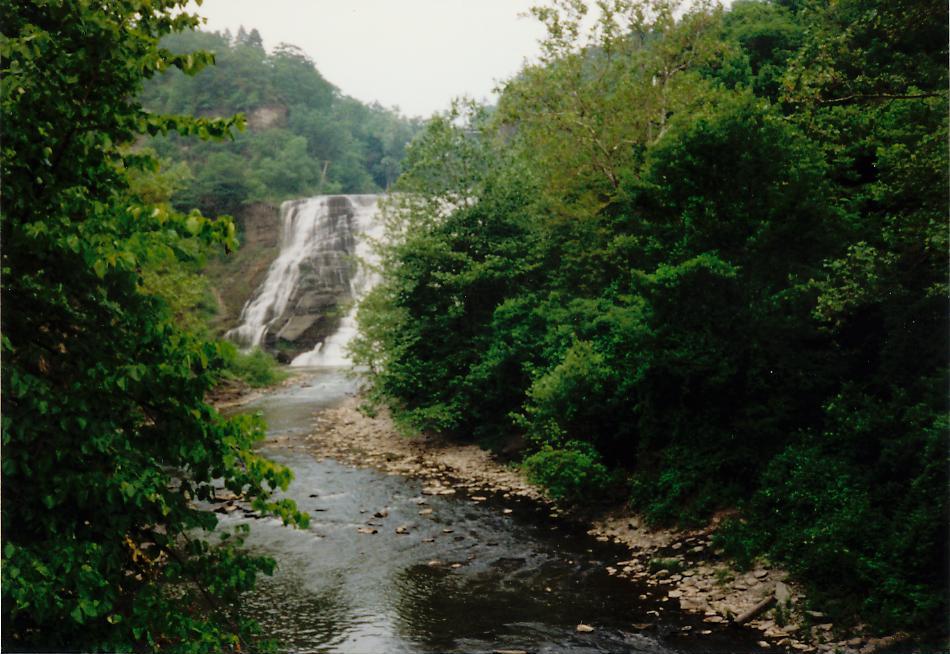
Ithaca Falls in Ithaca, New York
Ithaca Falls. Public-domain image by Angr via Wikimedia Commons.
Common questions

Ithaca Airbnb Investment FAQs

How should an investor start evaluating an Ithaca short-term rental?

Start with City jurisdiction, host eligibility, and the dwelling configuration before modeling income.

  • Confirm that the parcel is inside Ithaca city limits and residential use is allowed in its zone.
  • Verify that a natural-person host can satisfy the 184-day primary-residence test.
  • Review the Certificate of Compliance, occupancy limit, ownership or lease authority, and a lawful fallback use.
What property screening rules apply to an Ithaca Airbnb?

City eligibility depends on both the host and the residential unit.

  • Eligible configurations include single-family dwellings, accessory dwelling units, two-unit buildings, and owner-occupied units in multiple or mixed-use buildings.
  • A leaseholder may offer only the leaseholder’s primary-residence unit and needs notarized owner authorization.
  • Each proposed rental unit needs a separate operating permit and fee.
What local approvals does an Ithaca short-term rental need?

A qualifying unit needs a City operating permit and a valid Certificate of Compliance before advertising or hosting.

  • Apply through the Ithaca OpenGov short-term-rental portal.
  • Provide two different types of primary-residence evidence and complete the required City occupancy-tax registration.
  • A unit without a current Certificate of Compliance must pass the applicable City housing inspection.
Can a non-owner-occupied property operate as an Ithaca Airbnb?

Generally no. Ithaca ties short-term-rental eligibility to the host’s primary residence.

  • The host must live at the property for at least 184 days per year.
  • Only natural persons may hold an operating permit; companies, LLCs, and trusts are not eligible applicants.
  • A non-owner-occupied unit in a multiple dwelling or mixed-use building is not eligible.
Does Ithaca limit where an investor can operate a short-term rental?

The property must lie within City jurisdiction and in a zone that permits residential use.

  • A City mailing address alone does not establish municipal jurisdiction.
  • Confirm zoning, legal unit count, dwelling type, and open violations for the exact parcel.
  • Recorded restrictions, lease terms, and insurance requirements can be more restrictive than City approval.
What taxes apply to an Ithaca short-term rental?

Qualifying stays inside the City are subject to separate 5% City and 5% Tompkins County occupancy taxes.

  • Register with both taxing authorities and obtain the required Certificates of Authority.
  • The City requires quarterly action even when no City occupancy tax was collected.
  • Platform collection does not eliminate registration, recordkeeping, return, or direct-booking duties.
What costs should an Ithaca Airbnb budget include?

The current City guide lists a $400 annual permit payment, including a $100 nonrefundable application fee.

  • Budget separately for inspections, corrections, City and County taxes, insurance, utilities, cleaning, maintenance, and platform charges.
  • Permit renewal depends on continued eligibility, a valid Certificate of Compliance, and current occupancy-tax records.
  • Confirm current fees and property-specific repair costs before committing capital.
How should an investor evaluate Ithaca short-term-rental profitability?

Use property-level revenue and expense evidence rather than unsupported market averages.

  • Model the lawful occupancy stated on the Certificate of Compliance and realistic booking assumptions.
  • Include financing, taxes, insurance, maintenance, cleaning, utilities, platform costs, reserves, and local-response costs.
  • Stress-test the result against vacancy, repair expense, permit loss, and a long-term rental fallback.
How should an investor calculate ROI for an Ithaca Airbnb?

Calculate returns from verified acquisition costs, operating cash flow, and the legal operating case for the exact property.

  • Include purchase and closing costs, renovations, furnishings, required corrections, and working capital in invested cash.
  • Use net operating cash flow after recurring expenses, taxes, reserves, and management costs.
  • Compare the short-term-rental case with a lawful long-term use and obtain qualified tax and financial advice.
Who should help review an Ithaca short-term-rental purchase?

Use City and County officials for approvals and qualified professionals for acquisition and operating advice.

  • Ask Ithaca Planning and Building staff about eligibility, zoning, permits, inspections, and the Certificate of Compliance.
  • Confirm City and Tompkins County tax registration, filing, exemptions, and platform collection with both finance offices.
  • Involve qualified legal, title, insurance, tax, lending, property-management, and STR Search advisors before closing.