
Get significant tax savings and earn cash flow by investing in a short-term rental with data-backed selection. No guessing!
Find Your Airbnb InvestmentInvesting in Airbnb properties in Kailua, Hawaii, presents a unique set of opportunities and challenges. Current market conditions in Kailua are characterized by high property values, reflecting its desirable location and strong tourism appeal. Tourism trends remain robust, particularly for visitors seeking a more relaxed, residential experience away from the bustling urban centers of Oahu. This consistent demand, coupled with limited inventory, creates a favorable environment for high occupancy rates and premium nightly rates. However, potential investors must carefully consider the stringent local regulations on short-term rentals, which are designed to preserve the residential character of the community and limit transient vacation units. Despite these regulations, the strong rental income potential, driven by Kailua's enduring popularity and high property appreciation, suggests that a well-managed and legally compliant Airbnb can be a lucrative investment.
Based on available market data, Airbnb properties in Kailua, Hawaii typically generate average monthly revenues ranging from $3,500 to $8,500, with beachfront and luxury properties commanding the higher end of this spectrum. Seasonal variations show peak earnings during winter months (December through March) when mainland visitors escape cold weather, with revenues potentially increasing 25-40% above average, while summer months see moderate demand with revenues closer to the annual average. Spring and fall represent shoulder seasons with slightly lower occupancy rates and revenues dropping 15-20% below peak periods. Key factors affecting earnings include proximity to Kailua Beach (properties within walking distance earn 30-50% more), property size and amenities (pools, air conditioning, and parking significantly boost rates), property management quality, and local regulations that limit new short-term rental permits, creating scarcity value for existing legal properties. Ocean views, modern renovations, and professional photography can increase nightly rates by $50-150, while properties further inland or lacking amenities typically fall into the lower revenue ranges. Market data suggests successful hosts maintain occupancy rates between 65-85% annually, with nightly rates ranging from $150-400 depending on property characteristics and seasonality.
Airbnb investments in Kailua, Hawaii typically generate ROI between 8-15% annually, with premium oceanfront properties achieving up to 18-20% returns due to the area's exceptional tourist demand and limited inventory. The average payback period ranges from 6-10 years, significantly faster than traditional real estate investments, with properties averaging $400-800 per night during peak seasons and maintaining 70-85% occupancy rates year-round. Compared to long-term rentals in Kailua, which typically yield 4-6% annually with rental rates around $3,000-5,000 monthly for comparable properties, short-term rentals can generate 2-3 times higher returns despite higher operational costs including cleaning, maintenance, and property management fees that typically consume 25-35% of gross revenue. The market benefits from Kailua's reputation as one of the world's best beaches, consistent international tourism, and strict local zoning that limits new short-term rental permits, creating a supply-constrained environment that supports premium pricing and strong occupancy rates even during slower periods.
Airbnb occupancy rates in Kailua, Hawaii typically average around 65-70% annually, with significant seasonal variations that peak during winter months (December through March) at approximately 80-85% occupancy when mainland visitors escape cold weather, and summer months (June through August) reaching 75-80% during family vacation season. The lowest occupancy occurs during shoulder seasons in April-May and September-November, dropping to around 50-60%. Kailua's occupancy rates generally exceed Hawaii's statewide average of approximately 60-65% due to its pristine beaches and proximity to Honolulu, and significantly outperform the national Airbnb average of roughly 48-52%, reflecting the destination's strong appeal as a premium beach location. Holiday periods like Christmas, New Year's, and spring break can push occupancy rates above 90%, while the area experiences brief dips during hurricane season (June through November) and periods of heavy rainfall, though these typically don't severely impact overall annual performance given Kailua's consistent appeal to both domestic and international travelers seeking luxury beach accommodations.
The most lucrative Airbnb neighborhoods in Kailua center around Kailua Beach area where properties command premium rates due to direct beach access and proximity to the world-famous powdery white sand beach, attracting high-spending tourists willing to pay $400-800 per night for beachfront or beach-adjacent rentals. Lanikai neighborhood offers exceptional investment potential with its exclusive residential feel and proximity to Lanikai Beach, consistently ranked among the world's best beaches, where luxury vacation rentals can achieve occupancy rates above 80% and nightly rates of $500-1000 due to the upscale demographic and limited inventory. The Enchanted Lake area provides a more affordable entry point while still maintaining strong rental demand from families seeking spacious homes with canal access and short drives to Kailua Beach, typically generating $250-450 per night with good year-round occupancy. Kailua Town center properties benefit from walkability to restaurants, shops, and beach access, appealing to tourists who prefer not to rent cars, with typical rates of $300-600 per night and consistent bookings from the convenience factor. Beachside Kailua properties along the northern stretch near Kailua Beach Park offer excellent investment returns due to public beach access, parking availability, and appeal to budget-conscious families, generating $200-400 per night with high turnover rates. The residential areas between Kailua Road and the beach provide a sweet spot for investors, offering larger properties that can accommodate groups while maintaining reasonable acquisition costs and achieving $350-650 per night depending on amenities and exact location.
Short-term rental regulations in Kailua, Hawaii are governed by both Honolulu County ordinances and state laws, requiring operators to obtain a Nonconforming Use Certificate (NUC) for properties that were legally operating before 2019, as new short-term rental permits are generally prohibited in residential areas. Properties must comply with occupancy limits typically set at two guests per bedroom plus two additional guests, with a maximum of 10-12 guests depending on the specific property size and zoning. Owner-occupancy requirements vary by zoning district, with some areas requiring the owner to live on-site for a minimum number of days per year, while others prohibit short-term rentals entirely in residential zones. Kailua falls primarily under residential and resort zoning, with stricter regulations in residential areas where short-term rentals face significant restrictions or outright bans implemented through Bill 89 (2021) and Bill 41 (2022). The registration process involves obtaining proper permits through Honolulu's Department of Planning and Permitting, securing a General Excise Tax license, and paying Transient Accommodations Tax. Recent regulatory changes include the phase-out of short-term rentals in residential areas, with existing legal operations grandfathered but facing stricter enforcement, increased penalties for violations, and enhanced monitoring systems implemented between 2019-2023 to address community concerns about housing availability and neighborhood character preservation.
Short-term rentals in Kailua, Hawaii are subject to multiple fees and taxes including Hawaii's Transient Accommodations Tax (TAT) at 10.25% of gross rental receipts, Hawaii General Excise Tax (GET) at 4.712% on gross income, and Honolulu County's additional TAT surcharge of 3% effective since 2021. Property owners must obtain a Nonconforming Use Certificate (NUC) from Honolulu County, which costs approximately $1,000-$2,000 in application fees, and renew annually for around $500-$750. Additional requirements include a Hawaii Tax License (free to obtain but requires GET payments), business registration fees of approximately $25-$50 annually, and potential homeowner association fees if applicable. Properties must also comply with fire safety inspections costing $200-$400 and may require septic system inspections at $300-$500 depending on the property type. The combined tax burden typically ranges from 17.962% to 20% of gross rental income when including all state and county taxes, making Kailua one of the more heavily taxed short-term rental markets in Hawaii due to its popularity and the county's efforts to regulate vacation rentals in residential areas.
Investing in Airbnb properties in Kailua, Hawaii, presents a unique set of opportunities and challenges. Current market conditions in Kailua are characterized by high property values, reflecting its desirable location and strong tourism appeal. Tourism trends remain robust, particularly for visitors seeking a more relaxed, residential experience away from the bustling urban centers of Oahu. This consistent demand, coupled with limited inventory, creates a favorable environment for high occupancy rates and premium nightly rates. However, potential investors must carefully consider the stringent local regulations on short-term rentals, which are designed to preserve the residential character of the community and limit transient vacation units. Despite these regulations, the strong rental income potential, driven by Kailua's enduring popularity and high property appreciation, suggests that a well-managed and legally compliant Airbnb can be a lucrative investment.
Based on available market data, Airbnb properties in Kailua, Hawaii typically generate average monthly revenues ranging from $3,500 to $8,500, with beachfront and luxury properties commanding the higher end of this spectrum. Seasonal variations show peak earnings during winter months (December through March) when mainland visitors escape cold weather, with revenues potentially increasing 25-40% above average, while summer months see moderate demand with revenues closer to the annual average. Spring and fall represent shoulder seasons with slightly lower occupancy rates and revenues dropping 15-20% below peak periods. Key factors affecting earnings include proximity to Kailua Beach (properties within walking distance earn 30-50% more), property size and amenities (pools, air conditioning, and parking significantly boost rates), property management quality, and local regulations that limit new short-term rental permits, creating scarcity value for existing legal properties. Ocean views, modern renovations, and professional photography can increase nightly rates by $50-150, while properties further inland or lacking amenities typically fall into the lower revenue ranges. Market data suggests successful hosts maintain occupancy rates between 65-85% annually, with nightly rates ranging from $150-400 depending on property characteristics and seasonality.
Airbnb investments in Kailua, Hawaii typically generate ROI between 8-15% annually, with premium oceanfront properties achieving up to 18-20% returns due to the area's exceptional tourist demand and limited inventory. The average payback period ranges from 6-10 years, significantly faster than traditional real estate investments, with properties averaging $400-800 per night during peak seasons and maintaining 70-85% occupancy rates year-round. Compared to long-term rentals in Kailua, which typically yield 4-6% annually with rental rates around $3,000-5,000 monthly for comparable properties, short-term rentals can generate 2-3 times higher returns despite higher operational costs including cleaning, maintenance, and property management fees that typically consume 25-35% of gross revenue. The market benefits from Kailua's reputation as one of the world's best beaches, consistent international tourism, and strict local zoning that limits new short-term rental permits, creating a supply-constrained environment that supports premium pricing and strong occupancy rates even during slower periods.
Airbnb occupancy rates in Kailua, Hawaii typically average around 65-70% annually, with significant seasonal variations that peak during winter months (December through March) at approximately 80-85% occupancy when mainland visitors escape cold weather, and summer months (June through August) reaching 75-80% during family vacation season. The lowest occupancy occurs during shoulder seasons in April-May and September-November, dropping to around 50-60%. Kailua's occupancy rates generally exceed Hawaii's statewide average of approximately 60-65% due to its pristine beaches and proximity to Honolulu, and significantly outperform the national Airbnb average of roughly 48-52%, reflecting the destination's strong appeal as a premium beach location. Holiday periods like Christmas, New Year's, and spring break can push occupancy rates above 90%, while the area experiences brief dips during hurricane season (June through November) and periods of heavy rainfall, though these typically don't severely impact overall annual performance given Kailua's consistent appeal to both domestic and international travelers seeking luxury beach accommodations.
The most lucrative Airbnb neighborhoods in Kailua center around Kailua Beach area where properties command premium rates due to direct beach access and proximity to the world-famous powdery white sand beach, attracting high-spending tourists willing to pay $400-800 per night for beachfront or beach-adjacent rentals. Lanikai neighborhood offers exceptional investment potential with its exclusive residential feel and proximity to Lanikai Beach, consistently ranked among the world's best beaches, where luxury vacation rentals can achieve occupancy rates above 80% and nightly rates of $500-1000 due to the upscale demographic and limited inventory. The Enchanted Lake area provides a more affordable entry point while still maintaining strong rental demand from families seeking spacious homes with canal access and short drives to Kailua Beach, typically generating $250-450 per night with good year-round occupancy. Kailua Town center properties benefit from walkability to restaurants, shops, and beach access, appealing to tourists who prefer not to rent cars, with typical rates of $300-600 per night and consistent bookings from the convenience factor. Beachside Kailua properties along the northern stretch near Kailua Beach Park offer excellent investment returns due to public beach access, parking availability, and appeal to budget-conscious families, generating $200-400 per night with high turnover rates. The residential areas between Kailua Road and the beach provide a sweet spot for investors, offering larger properties that can accommodate groups while maintaining reasonable acquisition costs and achieving $350-650 per night depending on amenities and exact location.
Short-term rental regulations in Kailua, Hawaii are governed by both Honolulu County ordinances and state laws, requiring operators to obtain a Nonconforming Use Certificate (NUC) for properties that were legally operating before 2019, as new short-term rental permits are generally prohibited in residential areas. Properties must comply with occupancy limits typically set at two guests per bedroom plus two additional guests, with a maximum of 10-12 guests depending on the specific property size and zoning. Owner-occupancy requirements vary by zoning district, with some areas requiring the owner to live on-site for a minimum number of days per year, while others prohibit short-term rentals entirely in residential zones. Kailua falls primarily under residential and resort zoning, with stricter regulations in residential areas where short-term rentals face significant restrictions or outright bans implemented through Bill 89 (2021) and Bill 41 (2022). The registration process involves obtaining proper permits through Honolulu's Department of Planning and Permitting, securing a General Excise Tax license, and paying Transient Accommodations Tax. Recent regulatory changes include the phase-out of short-term rentals in residential areas, with existing legal operations grandfathered but facing stricter enforcement, increased penalties for violations, and enhanced monitoring systems implemented between 2019-2023 to address community concerns about housing availability and neighborhood character preservation.
Short-term rentals in Kailua, Hawaii are subject to multiple fees and taxes including Hawaii's Transient Accommodations Tax (TAT) at 10.25% of gross rental receipts, Hawaii General Excise Tax (GET) at 4.712% on gross income, and Honolulu County's additional TAT surcharge of 3% effective since 2021. Property owners must obtain a Nonconforming Use Certificate (NUC) from Honolulu County, which costs approximately $1,000-$2,000 in application fees, and renew annually for around $500-$750. Additional requirements include a Hawaii Tax License (free to obtain but requires GET payments), business registration fees of approximately $25-$50 annually, and potential homeowner association fees if applicable. Properties must also comply with fire safety inspections costing $200-$400 and may require septic system inspections at $300-$500 depending on the property type. The combined tax burden typically ranges from 17.962% to 20% of gross rental income when including all state and county taxes, making Kailua one of the more heavily taxed short-term rental markets in Hawaii due to its popularity and the county's efforts to regulate vacation rentals in residential areas.
* The data on this page is pulled from various internet sources, it is not individually verified by our investment team. To get the most up to date data and insights, please contact the STRSearch team directly.
How Smart Investors Build Wealth
Through Data-Driven STRs (Real Results)
From first-time investors to seasoned pros, see how our commitment to comprehensive data analysis led to unparalleled investment victories.
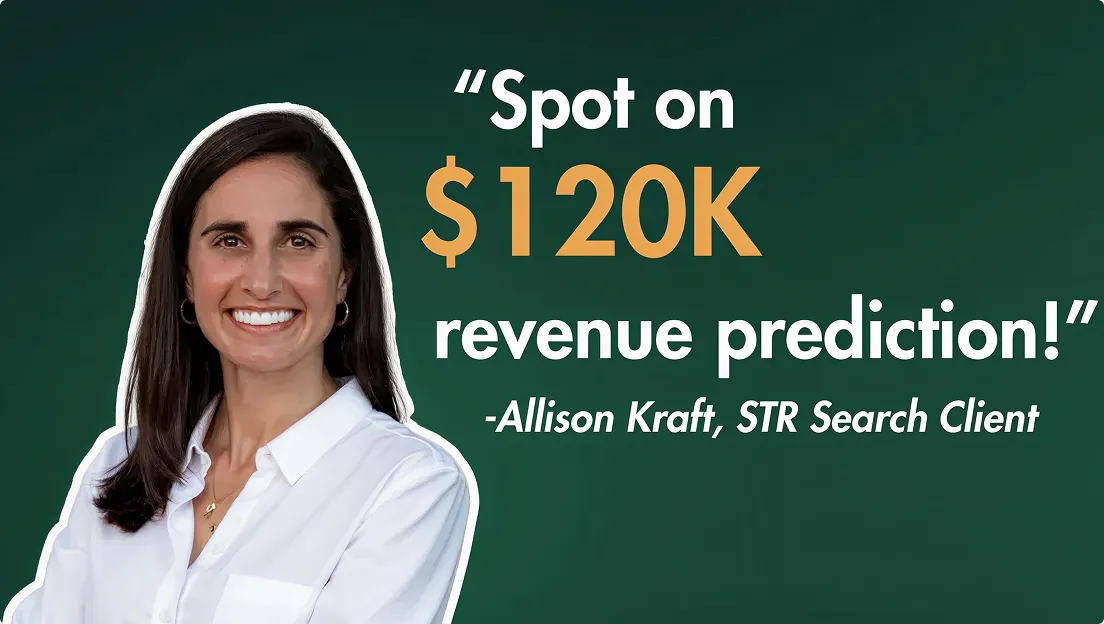
From zero real estate experience to a thriving short-term rental business, Allison locked in $120K in revenue her first year and is now expanding with STR Search again. Proof that the right team can turn analysis paralysis into profitable action!

Thanks to John's expert guidance, I made my first real estate and Airbnb investment a massive success, with consistent positive cash flow and an exceptional return on investment!

John's training gave me the confidence to secure a loan on the spot and scale from one STR to three. His approach is a total game-changer!
Why Choose STR Search?

Put your money to work & lower your tax bill
We’ve spent years analyzing what works so you don’t have to. Our job is to cut through bad data and help you make smart, profitable decisions backed by real numbers.
Schedule Your Free CallTrusted by hundreds of successful investors
Generate $3-5K+ monthly cash flow with our proven property matching system.
Build long-term wealth through STRs with cash flow, equity, and bonus depreciation.
Skip 6-12 months of trial and error with our data-driven underwriting and market analysis
We have a 100% success rate across $90M+ in Real Estate
Out of the 275+ properties we've helped our clients buy every single one has been profitable.
You want more money. More time. More freedom. But may be stuck trading hours for dollars, and scaling your investment strategy feels out of reach.
While others are getting lost in analysis paralysis, you’ve got capital and drive to change your situation. Investors who choose the right STRs can generate $3–5K/month in cash flow, plus serious tax benefits and long-term wealth.
We’ve spent years obsessed with STR investing data so you don’t have to.
With our property match services, there’s no guesswork! Just profitable properties built to perform. With the right deal, your capital can buy more than returns. It can buy your freedom.





All The Ways We Can Help You
Free courses, services, and trainings, to help you maximize your earnings from AirBnb...


Get in touch with us.
Everything Smart Investors Ask About STR Wealth Building
To start an Airbnb in Kailua, Hawaii, begin by researching Honolulu County's strict short-term rental regulations, as Kailua falls under a special resort zoning area where new vacation rental permits have been largely prohibited since 2019, with existing legal operations grandfathered under Nonconforming Use Certificates (NUCs). First, verify if your target property has an existing legal vacation rental permit or NUC through the Department of Planning and Permitting, as obtaining new permits is extremely difficult due to community opposition and regulatory restrictions. If you find a property with legal status, expect to pay $2-5 million for oceanfront properties or $1-3 million for properties within walking distance of Kailua Beach and Lanikai Beach. Obtain necessary business licenses including a General Excise Tax license from Hawaii Department of Taxation and register with the county for Transient Accommodations Tax collection. Furnish the property with high-quality, tropical-themed furniture emphasizing outdoor living spaces, beach equipment like snorkeling gear and beach chairs, and ensure robust WiFi for remote workers, budgeting $50,000-100,000 for complete furnishing. List your property on Airbnb, VRBO, and local platforms like Hawaii Life Vacations, emphasizing proximity to Kailua Beach, Lanikai Beach, and outdoor activities like kayaking to the Mokulua Islands. For management, either handle operations personally or hire local companies like RedAwning or Vacasa, ensuring 24/7 guest support, professional cleaning between stays, and compliance with noise ordinances and parking restrictions that are strictly enforced in residential Kailua neighborhoods.
To identify profitable STR properties in Kailua, Hawaii, focus on locations within 0.5 miles of Kailua Beach or Lanikai Beach, prioritizing properties with ocean views, beach access, or those in the Lanikai neighborhood where nightly rates can reach $400-800 compared to $200-400 in other Kailua areas. Target 2-4 bedroom single-family homes or condos with outdoor spaces, parking, air conditioning, and modern amenities, as these command 20-30% higher rates than basic properties. Conduct pricing analysis using AirDNA and STR data platforms to identify properties generating $150,000+ annually, while analyzing seasonal demand patterns where peak winter months (December-March) see 40-50% higher rates than summer periods. Research competition by monitoring the 200+ active STRs in Kailua through Airbnb and VRBO, identifying gaps in luxury amenities or unique property features like private pools or beachfront access. Utilize tools like Mashvisor, AirDNA, and local MLS data through Hawaii Information Service, while consulting with Kailua-based property managers like Elite Pacific Properties or Hawaiian Beach Rentals who understand the market's $300-500 average daily rate range and 75-85% average occupancy rates, and ensure compliance with Honolulu County's STR regulations including proper permits and the 90-day minimum rental requirement in residential areas.
To obtain an Airbnb/STR permit in Kailua, Hawaii, you must apply through the City and County of Honolulu's Department of Planning and Permitting (DPP) online portal or in person at their offices at 650 South King Street, Honolulu. Required documents include a completed application form, property deed or lease agreement, tax map key information, floor plans, parking verification, septic system compliance (if applicable), and neighbor notification affidavits. The application fee is approximately $1,000-$1,500 depending on property size and type, with additional fees for inspections and processing. The timeline typically ranges from 6-12 months due to extensive review processes and potential appeals. Kailua-specific requirements include strict density limitations allowing only a limited number of STR permits in residential areas, mandatory on-site parking for each unit, compliance with septic system regulations due to environmental concerns, adherence to noise ordinances, and meeting specific setback requirements from beaches and sensitive areas. You must also provide proof of liability insurance, demonstrate compliance with building and fire codes, and may need to attend community meetings as part of the approval process, with final approval subject to neighborhood board review and potential community input sessions.
Short-term rentals (STRs) in Kailua, Hawaii are heavily restricted and largely prohibited under Honolulu County ordinances that took effect in 2019-2021. The city banned new STR permits in residential areas and only allows existing legally permitted operations to continue, with approximately 1,700 legal STR units remaining countywide compared to an estimated 8,000 that operated previously. In Kailua specifically, which is zoned primarily residential, new STR permits are not issued, and only properties with valid nonconforming use certificates or existing legal permits can operate as vacation rentals. The restrictions were implemented to address housing shortages and community concerns about over-tourism, with violations subject to fines up to $10,000 per day. Properties in resort and commercial zones may still qualify for STR permits, but residential neighborhoods in Kailua are effectively off-limits for new vacation rental operations, making legal STRs extremely limited and primarily grandfathered operations.
The most lucrative Airbnb investment areas in Kailua, Hawaii include the beachfront properties along Kailua Beach Road and Kalaheo Avenue, which command premium rates due to direct beach access and proximity to the world-famous Kailua Beach with its powdery white sand and turquoise waters that attract tourists year-round. The Lanikai neighborhood, particularly properties near Mokulua Drive and Aalapapa Drive, offers exceptional investment potential with its exclusive residential feel, stunning beach access, and proximity to the iconic Mokulua Islands, drawing high-end travelers willing to pay top dollar for luxury accommodations. Properties in the Enchanted Lake area provide a more affordable entry point while still offering water views and easy beach access, appealing to families and budget-conscious travelers. The Kailua Town center vicinity, especially near Kailua Road and Hahani Street, attracts investors due to walkability to restaurants, shops, and services, making it convenient for tourists who prefer not to rent cars. Areas near Bellows Field Beach Park and Waimanalo Beach offer emerging opportunities with lower property costs but growing tourism interest, particularly among adventure travelers and those seeking less crowded beach experiences, while still maintaining reasonable proximity to Kailua's main attractions and Honolulu's business district for occasional corporate travelers.
Airbnb properties in Kailua, Hawaii are subject to multiple lodging and occupancy taxes including Hawaii's General Excise Tax (GET) of 4.712% on gross rental income, the Transient Accommodations Tax (TAT) of 10.25% on gross rental receipts, and Honolulu County's additional TAT surcharge of 3% effective 2021, bringing the total tax burden to approximately 17.962%. These taxes are collected either directly by Airbnb through their tax collection service for participating hosts or must be collected by individual hosts from guests and remitted to the Hawaii Department of Taxation monthly if gross receipts exceed $4,000 annually, or annually if below that threshold. Hosts must register for GET and TAT licenses, file returns using Form G-45 for GET and Form TA-2 for TAT, and remit payments by the 20th of the month following the tax period. Exemptions are limited and generally apply only to rentals of 180 days or longer to the same tenant, which would be considered long-term residential rather than transient accommodations, though hosts should verify current exemption criteria as regulations frequently change and Kailua has implemented strict short-term rental permitting requirements that may affect tax obligations.
The total cost to start an Airbnb in Kailua, Hawaii is approximately $1,850,000 to $2,100,000. Property purchase represents the largest expense at $1,600,000 to $1,800,000 for a median 2-3 bedroom home or condo suitable for vacation rental. Furnishing costs range from $35,000 to $50,000 for high-quality, durable furniture and appliances that can withstand heavy guest turnover. Initial setup including professional photography, listing creation, and marketing materials costs around $3,000 to $5,000. Permits and fees in Hawaii include transient vacation rental permits ($1,000-$2,000), business licenses ($500), and potential homeowner association approvals ($500-$1,500). Insurance for short-term rentals runs $8,000 to $12,000 annually, with the first year paid upfront. Utilities setup and deposits total approximately $2,000 to $3,000. First six months operating costs including property management (20-30% of revenue), cleaning services ($150-$200 per turnover), maintenance reserves, marketing, and miscellaneous expenses range from $45,000 to $65,000, assuming average occupancy rates of 60-70% and nightly rates of $300-$500 depending on property size and location within Kailua.
Airbnb properties in Kailua, Hawaii demonstrate strong profitability potential with average daily rates ranging from $200-400 for beachfront properties and $150-250 for properties within walking distance of Kailua Beach. A typical 2-bedroom vacation rental generates approximately $8,000-12,000 monthly during peak seasons (December-April, June-August) and $5,000-8,000 during shoulder periods, resulting in annual gross revenues of $80,000-130,000. Operating expenses typically consume 40-50% of gross revenue, including property management fees (20-25%), cleaning costs ($100-150 per turnover), utilities ($200-400 monthly), insurance ($3,000-5,000 annually), and maintenance reserves (5-10% of revenue). Properties within 0.5 miles of Kailua Beach consistently achieve 75-85% occupancy rates with profit margins of 25-35%, while those offering premium amenities like private pools or direct beach access can command 20-30% rate premiums. Success factors include professional photography showcasing the property's proximity to Kailua's pristine beaches, responsive guest communication, partnerships with local activity providers, and maintaining consistently high cleanliness standards. Case studies from 2022-2023 show that well-managed properties in prime Kailua locations generated net profits of $30,000-60,000 annually, with some luxury beachfront homes exceeding $100,000 in annual net income, though investors must navigate Hawaii's strict short-term rental regulations and potential legislative changes affecting the vacation rental market.
Airbnb investments in Kailua, Hawaii typically generate annual ROI of 8-12% with cash-on-cash returns ranging from 6-10% for well-positioned properties near Kailua Beach and Lanikai Beach. Properties purchased in the $800,000-$1.2 million range can expect gross rental yields of $80,000-$120,000 annually, with average daily rates of $250-$400 depending on property size and proximity to the beach. After accounting for property management fees (25-30%), maintenance, insurance, and Hawaii's transient accommodation tax, net returns typically fall in the 6-8% range. Most investors achieve profitability within 18-24 months of initial investment, though this timeline can extend to 36 months for properties requiring significant renovations or those facing regulatory challenges. The Kailua market benefits from consistent year-round demand due to its world-renowned beaches, with occupancy rates averaging 70-80% for well-managed properties, though investors should factor in Hawaii's strict short-term rental regulations and potential future legislative changes that could impact returns.
STRSearch leads the market in Airbnb investment property analysis for Kailua, Hawaii, providing comprehensive data on rental performance and market trends. Local specialists include Kailua Real Estate Group and Hawaii Life Real Estate Brokers, both established around 2008-2012, who focus specifically on vacation rental investments in the area. Compass Hawaii and Coldwell Banker Pacific Properties have dedicated short-term rental investment teams serving Kailua since approximately 2015. National services like Mashvisor (founded 2014), BiggerPockets (2004), and AirDNA (2015) offer market analysis tools and property recommendations for the Kailua market. RedAwning and Vacasa provide property management services while also helping investors identify profitable opportunities. Local property management companies such as Elite Pacific Properties and Gather Vacations, operating since around 2016-2018, often assist investors in finding suitable properties. Investment-focused real estate agents like those at Hawaii Information Service and Locations LLC specialize in analyzing cap rates and occupancy projections for Airbnb properties in Kailua's beachfront and residential areas.
Put your money to work & lower your tax bill
We’ve spent years analyzing what works so you don’t have to. Our job is to cut through bad data and help you make smart, profitable decisions backed by real numbers.
Schedule Your Free Call