
Get significant tax savings and earn cash flow by investing in a short-term rental with data-backed selection. No guessing!
Find Your Airbnb InvestmentLake Tahoe, California, presents a complex investment landscape for Airbnb. Current market conditions show high property values, driven by its popularity as a year-round tourist destination for both summer and winter activities. Tourism trends indicate a strong and consistent demand for short-term rentals, especially during peak seasons, which can lead to high occupancy rates and substantial rental income. However, the high property values also mean a significant initial investment, and strict local regulations on short-term rentals, varying by specific area within Lake Tahoe, can impact profitability and ease of operation. Investors should carefully research these regulations and assess the specific sub-market within Lake Tahoe to determine the true investment potential and ensure compliance.
Average Airbnb earnings in Lake Tahoe, California typically range from $2,500 to $8,000 per month, with significant seasonal fluctuations driven by the area's dual appeal as both a summer and winter destination. Peak summer months (June through August) generally yield the highest revenues of $6,000 to $12,000 monthly for well-positioned properties, while winter ski season (December through February) produces strong earnings of $4,000 to $9,000 per month. Spring and fall shoulder seasons typically see reduced income of $1,500 to $4,000 monthly due to lower tourist demand. Key factors affecting earnings include proximity to the lake or ski resorts, property size and amenities, with lakefront cabins and luxury homes commanding premium rates of $300-600 per night compared to standard properties at $150-300 per night. Occupancy rates fluctuate from 40-60% during off-peak periods to 75-90% during peak seasons, while properties offering hot tubs, lake access, or ski-in/ski-out convenience typically achieve 15-25% higher revenues than comparable standard rentals. Market saturation and local regulations also impact earnings potential, with some areas experiencing increased competition among hosts.
Airbnb investments in Lake Tahoe typically generate ROI between 8-15% annually, with premium lakefront properties achieving up to 18-20% returns during peak seasons, significantly outperforming the national Airbnb average of 6-10%. The payback period for Lake Tahoe short-term rentals averages 7-10 years, compared to 12-15 years for traditional long-term rentals in the area, due to nightly rates ranging from $200-800 depending on proximity to the lake and seasonal demand. Short-term rentals in Lake Tahoe generate approximately 2.5-3 times more revenue than long-term rentals, with annual gross revenues of $60,000-150,000 for well-positioned properties versus $25,000-50,000 for traditional rentals, though operating expenses are higher at 35-45% of gross revenue for Airbnb properties compared to 25-30% for long-term rentals. The Lake Tahoe market benefits from year-round tourism with 70% occupancy rates during summer months and 45-55% during winter ski season, making it one of California's most profitable short-term rental markets despite recent regulatory restrictions in some municipalities that have limited new permit issuance and capped the total number of allowable short-term rentals.
Lake Tahoe Airbnb properties typically maintain an average annual occupancy rate of approximately 65-70%, significantly higher than California's statewide average of around 55% and the national Airbnb average of 48-52%. The region experiences dramatic seasonal fluctuations, with peak winter occupancy rates reaching 85-90% during ski season (December through March) due to proximity to world-class ski resorts like Heavenly and Northstar, while summer months (June through August) see occupancy rates of 75-80% driven by hiking, boating, and beach activities around the lake. Spring shoulder season (April-May) typically sees occupancy drop to 45-55%, while fall (September-November) maintains moderate rates around 60-65% as visitors enjoy autumn foliage and fewer crowds. The area's year-round appeal as both a winter sports destination and summer recreation hub, combined with its proximity to major California metropolitan areas and limited hotel inventory, contributes to occupancy rates that consistently outperform broader market averages, though property performance varies significantly based on specific location around the lake, with South Lake Tahoe and Incline Village generally commanding higher occupancy than more remote areas.
The most lucrative Airbnb neighborhoods in Lake Tahoe include South Lake Tahoe near the Heavenly Village area, which offers year-round appeal with ski access in winter and beach proximity in summer, commanding premium rates of $300-500 nightly due to walkability to casinos, restaurants, and gondola access. The Tahoe Keys neighborhood provides waterfront luxury properties with private docks and canal access, attracting high-end guests willing to pay $400-800 per night for exclusive lakefront experiences. North Lake Tahoe's Crystal Bay area offers a quieter, upscale atmosphere with stunning lake views and proximity to championship golf courses, generating strong occupancy rates among affluent travelers seeking privacy. The Carnelian Bay to Tahoe Vista corridor features mid-range properties with excellent lake access and family-friendly beaches, maintaining steady bookings at $250-400 nightly throughout peak seasons. Incline Village on the Nevada side provides luxury mountain living with exclusive beach clubs and golf courses, commanding the highest rates of $500-1000 nightly due to its prestigious reputation and tax advantages. Kings Beach offers more affordable entry points for investors while still providing lake access and proximity to Northstar ski resort, generating solid returns at $200-350 per night. Tahoma and Homewood on the west shore provide secluded, scenic locations with easy access to ski resorts and hiking trails, appealing to guests seeking authentic mountain experiences at $250-450 nightly rates.
Short-term rental regulations in Lake Tahoe, California vary by jurisdiction but generally require permits and registration with local authorities, with most areas limiting occupancy to 2 people per bedroom plus 2 additional guests or a maximum of 10-12 people total. Many jurisdictions require owner-occupancy for a minimum of 3-6 months per year and restrict short-term rentals to specific zoning districts, typically excluding multi-family residential areas. The registration process involves submitting applications with property details, obtaining business licenses, paying annual fees ranging from $200-800, and providing proof of insurance and safety compliance including smoke detectors and emergency contact information. Recent regulatory changes have included stricter enforcement mechanisms, increased penalties for violations, caps on the total number of permits issued in certain areas, and enhanced noise and parking requirements. Properties must typically be registered annually, maintain guest registries, post permit numbers in advertisements, and comply with health and safety standards including maximum vehicle limits of 2-4 cars per property. Some areas have implemented lottery systems for new permits due to caps, and violations can result in fines of $1,000-5,000 per incident with potential permit revocation for repeat offenders.
Short-term rentals in Lake Tahoe, California are subject to multiple fees and taxes that vary by jurisdiction, with most properties falling under either Placer County or El Dorado County regulations. In South Lake Tahoe, operators must pay a 12% Transient Occupancy Tax (TOT) to the city, while unincorporated areas of El Dorado County typically charge 10-12% TOT. Placer County areas around North Lake Tahoe generally impose a 10% TOT rate. Registration fees range from $200-500 annually depending on the specific municipality, with initial permit application fees typically costing $300-800. Annual permit renewal costs average $150-400 per year. Additional requirements include business license fees of $50-150 annually, and some jurisdictions require a one-time planning review fee of $500-1,200. Property owners may also face inspection fees of $100-300 and must often pay into local housing mitigation funds, which can range from $1,000-3,000 annually depending on property size and location. The Tahoe Regional Planning Agency (TRPA) may require additional environmental fees of $200-500 for certain properties, and operators must maintain liability insurance with minimum coverage typically requiring premiums of $800-2,000 annually.
Lake Tahoe, California, presents a complex investment landscape for Airbnb. Current market conditions show high property values, driven by its popularity as a year-round tourist destination for both summer and winter activities. Tourism trends indicate a strong and consistent demand for short-term rentals, especially during peak seasons, which can lead to high occupancy rates and substantial rental income. However, the high property values also mean a significant initial investment, and strict local regulations on short-term rentals, varying by specific area within Lake Tahoe, can impact profitability and ease of operation. Investors should carefully research these regulations and assess the specific sub-market within Lake Tahoe to determine the true investment potential and ensure compliance.
Average Airbnb earnings in Lake Tahoe, California typically range from $2,500 to $8,000 per month, with significant seasonal fluctuations driven by the area's dual appeal as both a summer and winter destination. Peak summer months (June through August) generally yield the highest revenues of $6,000 to $12,000 monthly for well-positioned properties, while winter ski season (December through February) produces strong earnings of $4,000 to $9,000 per month. Spring and fall shoulder seasons typically see reduced income of $1,500 to $4,000 monthly due to lower tourist demand. Key factors affecting earnings include proximity to the lake or ski resorts, property size and amenities, with lakefront cabins and luxury homes commanding premium rates of $300-600 per night compared to standard properties at $150-300 per night. Occupancy rates fluctuate from 40-60% during off-peak periods to 75-90% during peak seasons, while properties offering hot tubs, lake access, or ski-in/ski-out convenience typically achieve 15-25% higher revenues than comparable standard rentals. Market saturation and local regulations also impact earnings potential, with some areas experiencing increased competition among hosts.
Airbnb investments in Lake Tahoe typically generate ROI between 8-15% annually, with premium lakefront properties achieving up to 18-20% returns during peak seasons, significantly outperforming the national Airbnb average of 6-10%. The payback period for Lake Tahoe short-term rentals averages 7-10 years, compared to 12-15 years for traditional long-term rentals in the area, due to nightly rates ranging from $200-800 depending on proximity to the lake and seasonal demand. Short-term rentals in Lake Tahoe generate approximately 2.5-3 times more revenue than long-term rentals, with annual gross revenues of $60,000-150,000 for well-positioned properties versus $25,000-50,000 for traditional rentals, though operating expenses are higher at 35-45% of gross revenue for Airbnb properties compared to 25-30% for long-term rentals. The Lake Tahoe market benefits from year-round tourism with 70% occupancy rates during summer months and 45-55% during winter ski season, making it one of California's most profitable short-term rental markets despite recent regulatory restrictions in some municipalities that have limited new permit issuance and capped the total number of allowable short-term rentals.
Lake Tahoe Airbnb properties typically maintain an average annual occupancy rate of approximately 65-70%, significantly higher than California's statewide average of around 55% and the national Airbnb average of 48-52%. The region experiences dramatic seasonal fluctuations, with peak winter occupancy rates reaching 85-90% during ski season (December through March) due to proximity to world-class ski resorts like Heavenly and Northstar, while summer months (June through August) see occupancy rates of 75-80% driven by hiking, boating, and beach activities around the lake. Spring shoulder season (April-May) typically sees occupancy drop to 45-55%, while fall (September-November) maintains moderate rates around 60-65% as visitors enjoy autumn foliage and fewer crowds. The area's year-round appeal as both a winter sports destination and summer recreation hub, combined with its proximity to major California metropolitan areas and limited hotel inventory, contributes to occupancy rates that consistently outperform broader market averages, though property performance varies significantly based on specific location around the lake, with South Lake Tahoe and Incline Village generally commanding higher occupancy than more remote areas.
The most lucrative Airbnb neighborhoods in Lake Tahoe include South Lake Tahoe near the Heavenly Village area, which offers year-round appeal with ski access in winter and beach proximity in summer, commanding premium rates of $300-500 nightly due to walkability to casinos, restaurants, and gondola access. The Tahoe Keys neighborhood provides waterfront luxury properties with private docks and canal access, attracting high-end guests willing to pay $400-800 per night for exclusive lakefront experiences. North Lake Tahoe's Crystal Bay area offers a quieter, upscale atmosphere with stunning lake views and proximity to championship golf courses, generating strong occupancy rates among affluent travelers seeking privacy. The Carnelian Bay to Tahoe Vista corridor features mid-range properties with excellent lake access and family-friendly beaches, maintaining steady bookings at $250-400 nightly throughout peak seasons. Incline Village on the Nevada side provides luxury mountain living with exclusive beach clubs and golf courses, commanding the highest rates of $500-1000 nightly due to its prestigious reputation and tax advantages. Kings Beach offers more affordable entry points for investors while still providing lake access and proximity to Northstar ski resort, generating solid returns at $200-350 per night. Tahoma and Homewood on the west shore provide secluded, scenic locations with easy access to ski resorts and hiking trails, appealing to guests seeking authentic mountain experiences at $250-450 nightly rates.
Short-term rental regulations in Lake Tahoe, California vary by jurisdiction but generally require permits and registration with local authorities, with most areas limiting occupancy to 2 people per bedroom plus 2 additional guests or a maximum of 10-12 people total. Many jurisdictions require owner-occupancy for a minimum of 3-6 months per year and restrict short-term rentals to specific zoning districts, typically excluding multi-family residential areas. The registration process involves submitting applications with property details, obtaining business licenses, paying annual fees ranging from $200-800, and providing proof of insurance and safety compliance including smoke detectors and emergency contact information. Recent regulatory changes have included stricter enforcement mechanisms, increased penalties for violations, caps on the total number of permits issued in certain areas, and enhanced noise and parking requirements. Properties must typically be registered annually, maintain guest registries, post permit numbers in advertisements, and comply with health and safety standards including maximum vehicle limits of 2-4 cars per property. Some areas have implemented lottery systems for new permits due to caps, and violations can result in fines of $1,000-5,000 per incident with potential permit revocation for repeat offenders.
Short-term rentals in Lake Tahoe, California are subject to multiple fees and taxes that vary by jurisdiction, with most properties falling under either Placer County or El Dorado County regulations. In South Lake Tahoe, operators must pay a 12% Transient Occupancy Tax (TOT) to the city, while unincorporated areas of El Dorado County typically charge 10-12% TOT. Placer County areas around North Lake Tahoe generally impose a 10% TOT rate. Registration fees range from $200-500 annually depending on the specific municipality, with initial permit application fees typically costing $300-800. Annual permit renewal costs average $150-400 per year. Additional requirements include business license fees of $50-150 annually, and some jurisdictions require a one-time planning review fee of $500-1,200. Property owners may also face inspection fees of $100-300 and must often pay into local housing mitigation funds, which can range from $1,000-3,000 annually depending on property size and location. The Tahoe Regional Planning Agency (TRPA) may require additional environmental fees of $200-500 for certain properties, and operators must maintain liability insurance with minimum coverage typically requiring premiums of $800-2,000 annually.
* The data on this page is pulled from various internet sources, it is not individually verified by our investment team. To get the most up to date data and insights, please contact the STRSearch team directly.
How Smart Investors Build Wealth
Through Data-Driven STRs (Real Results)
From first-time investors to seasoned pros, see how our commitment to comprehensive data analysis led to unparalleled investment victories.
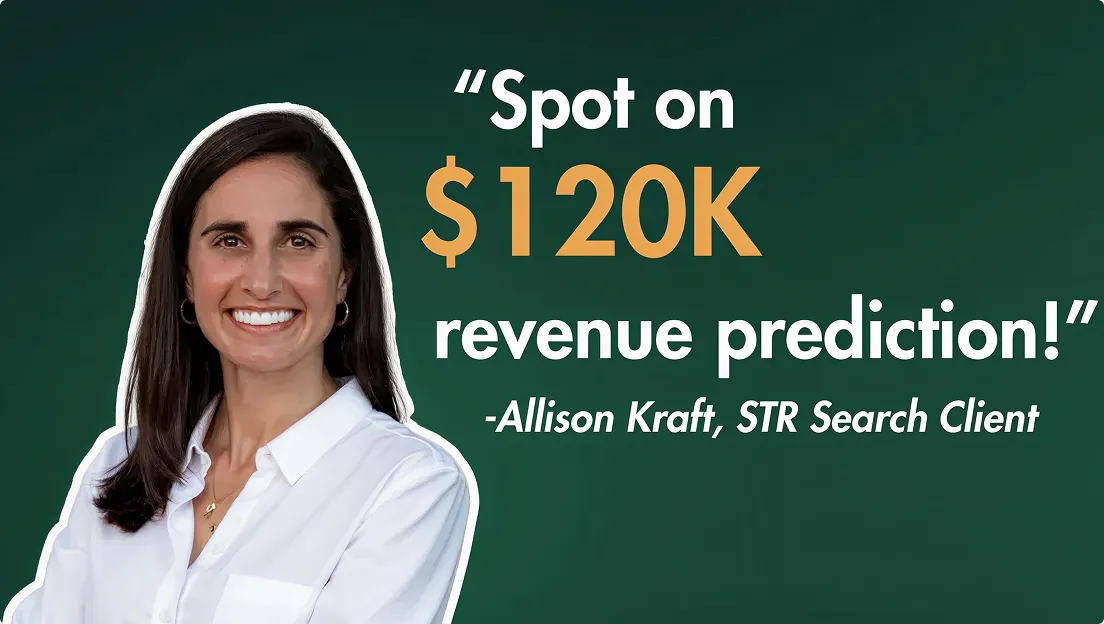
From zero real estate experience to a thriving short-term rental business, Allison locked in $120K in revenue her first year and is now expanding with STR Search again. Proof that the right team can turn analysis paralysis into profitable action!

Thanks to John's expert guidance, I made my first real estate and Airbnb investment a massive success, with consistent positive cash flow and an exceptional return on investment!

John's training gave me the confidence to secure a loan on the spot and scale from one STR to three. His approach is a total game-changer!
Why Choose STR Search?

Put your money to work & lower your tax bill
We’ve spent years analyzing what works so you don’t have to. Our job is to cut through bad data and help you make smart, profitable decisions backed by real numbers.
Schedule Your Free CallTrusted by hundreds of successful investors
Generate $3-5K+ monthly cash flow with our proven property matching system.
Build long-term wealth through STRs with cash flow, equity, and bonus depreciation.
Skip 6-12 months of trial and error with our data-driven underwriting and market analysis
We have a 100% success rate across $90M+ in Real Estate
Out of the 275+ properties we've helped our clients buy every single one has been profitable.
You want more money. More time. More freedom. But may be stuck trading hours for dollars, and scaling your investment strategy feels out of reach.
While others are getting lost in analysis paralysis, you’ve got capital and drive to change your situation. Investors who choose the right STRs can generate $3–5K/month in cash flow, plus serious tax benefits and long-term wealth.
We’ve spent years obsessed with STR investing data so you don’t have to.
With our property match services, there’s no guesswork! Just profitable properties built to perform. With the right deal, your capital can buy more than returns. It can buy your freedom.





All The Ways We Can Help You
Free courses, services, and trainings, to help you maximize your earnings from AirBnb...


Get in touch with us.
Everything Smart Investors Ask About STR Wealth Building
To start an Airbnb in Lake Tahoe, California, begin by researching local regulations as the area has strict short-term rental ordinances - contact the Placer County or El Dorado County planning departments (depending on your location) to understand zoning requirements, as many areas prohibit short-term rentals or require conditional use permits. Obtain necessary permits including a Transient Occupancy Tax (TOT) certificate from the county, business license, and potentially a conditional use permit which can cost $2,000-5,000 and take 3-6 months to process. Find a suitable property in permitted zones, typically costing $800,000-2,000,000 for a cabin or condo near the lake, ensuring it meets fire safety requirements including defensible space clearance due to wildfire risks. Furnish the property with durable, mountain-appropriate furniture, high-quality linens, kitchen essentials, and outdoor gear like snowshoes or beach chairs, budgeting $15,000-30,000 for a complete setup. Create your Airbnb listing with professional photography showcasing lake and mountain views, emphasizing seasonal activities like skiing at Heavenly or Northstar, and hiking trails. For management, consider hiring local companies like Vacasa or RedAwning who charge 20-35% commission but handle cleaning, maintenance, and guest communication, or self-manage using dynamic pricing tools and local cleaning services that typically charge $150-250 per turnover, while maintaining compliance with noise ordinances and parking restrictions that are strictly enforced in residential neighborhoods.
To identify profitable short-term rental properties in Lake Tahoe, California, focus on locations within 0.5-1 mile of popular beaches like Kings Beach or Emerald Bay, ski resorts such as Northstar or Heavenly, and downtown areas in South Lake Tahoe or Tahoe City, while ensuring properties comply with local STR ordinances which vary by jurisdiction. Prioritize properties with 3-4 bedrooms, hot tubs, lake or mountain views, parking for multiple vehicles, and winter amenities like fireplaces since Lake Tahoe attracts both summer and winter tourists. Conduct pricing analysis using AirDNA and Mashvisor to target properties generating $150-300 per night during peak seasons (June-August, December-February) with annual revenues of $75,000-150,000, while analyzing comparable properties within a 2-mile radius. Research competition by monitoring occupancy rates of similar properties on Airbnb and VRBO, identifying gaps in amenities or pricing, and studying seasonal demand patterns since Lake Tahoe experiences 70-80% occupancy during peak months but drops to 30-40% in shoulder seasons. Utilize tools like Rabbu and Rentometer for rental analysis, consult local STR management companies like Vacasa or RedAwning for market insights, and leverage the Tahoe Regional Planning Agency website for zoning regulations, while partnering with local real estate agents familiar with STR-friendly properties and HOA restrictions.
To obtain an Airbnb/STR permit in Lake Tahoe, California, you must apply through the specific jurisdiction where your property is located, as Lake Tahoe spans multiple counties and cities including South Lake Tahoe, Placer County, and El Dorado County, each with different requirements. For South Lake Tahoe, submit your application to the City Planning Department with required documents including property deed, floor plans, parking plan, neighborhood compatibility statement, and proof of insurance, along with a $1,200-$1,500 application fee. The process typically takes 60-90 days and requires a public hearing, compliance with occupancy limits (usually 2 guests per bedroom plus 2 additional), designated parking spaces, 24/7 local contact person, and adherence to noise ordinances. For Placer County areas, apply through the Planning Department with similar documentation plus a conditional use permit application, paying fees around $2,000-$3,000, with processing taking 90-120 days. El Dorado County requires a Transient Rental Permit through their Planning and Building Department, costing approximately $1,000-$1,500 with a 60-90 day timeline. All jurisdictions require annual renewals, business licenses, TOT (Transient Occupancy Tax) registration, and compliance with fire safety codes, septic system capacity verification for some areas, and maximum occupancy restrictions typically ranging from 10-16 guests depending on property size and location.
Short-term rentals (STRs) in Lake Tahoe, California are legal but heavily regulated through a complex patchwork of local ordinances that vary by jurisdiction within the Tahoe Basin. The primary governing bodies include Placer County, El Dorado County, and the City of South Lake Tahoe, each with distinct regulations developed between 2018-2023. Most areas require permits, business licenses, and compliance with occupancy limits, noise ordinances, and parking requirements. Placer County allows STRs in most residential zones but caps the total number of permits and requires annual renewals, while El Dorado County has implemented similar permit systems with geographic restrictions in some neighborhoods. The City of South Lake Tahoe permits STRs but prohibits them in certain residential zones and requires hosted rentals in some areas. Recent changes include stricter enforcement mechanisms, increased permit fees, and enhanced neighbor notification processes implemented around 2022-2023. The Tahoe Regional Planning Agency (TRPA) also influences regulations through environmental and development standards. Key restrictions across jurisdictions typically include maximum occupancy of two people per bedroom plus two additional guests, mandatory 24-hour local contact persons, parking requirements of one space per bedroom, and quiet hours enforcement, with violations potentially resulting in permit revocation and substantial fines.
The best Airbnb investment areas in Lake Tahoe, California include South Lake Tahoe near the Heavenly Village and California Lodge area, which attracts year-round visitors for skiing at Heavenly Mountain Resort and summer lake activities, plus proximity to Nevada casinos. The Tahoe Keys neighborhood offers waterfront properties with private docks that command premium rates from boaters and luxury travelers. Incline Village on the north shore provides upscale vacation rental opportunities due to its exclusive beaches, championship golf courses at Incline Village Golf Course, and proximity to Crystal Bay casinos. The Carnelian Bay to Tahoe City corridor along the west shore is ideal for families seeking quieter lake access with easy access to hiking trails and Squaw Valley (now Palisades Tahoe) skiing. Kings Beach offers more affordable investment entry points while still providing lake access and attracting budget-conscious families and groups. These areas benefit from Lake Tahoe's consistent tourism driven by world-class skiing from December through April, summer water sports and hiking from May through September, and year-round appeal for corporate retreats and special events, with occupancy rates typically ranging from 60-80% annually depending on property quality and location.
Airbnb properties in Lake Tahoe, California are subject to multiple lodging and occupancy taxes that vary by jurisdiction, with most areas imposing a Transient Occupancy Tax (TOT) ranging from 10% to 14% of gross rental receipts. In South Lake Tahoe, the TOT rate is approximately 12%, while North Lake Tahoe areas like Tahoe City and Truckee typically charge between 10-12%. These taxes are collected either directly by Airbnb through their automatic tax collection service in participating jurisdictions, or must be collected by hosts and remitted monthly or quarterly to the respective city or county tax collector's office. El Dorado County and Placer County each have their own collection procedures, with hosts required to register for a business license and TOT permit before operating. Some jurisdictions also impose additional fees such as business license taxes ($50-200 annually) and tourism improvement district assessments. Exemptions are rare but may apply to stays exceeding 30 consecutive days in some areas, which are then considered long-term rentals rather than transient occupancy. Hosts must maintain detailed records of all bookings and tax collections, and failure to comply can result in penalties of 10-25% of unpaid taxes plus interest, with some cities like South Lake Tahoe conducting regular audits of short-term rental operators.
Starting an Airbnb in Lake Tahoe, California requires significant upfront investment with property purchase being the largest expense at approximately $1,200,000 for a median-priced home suitable for short-term rental. Furnishing costs typically range from $25,000-$40,000 to create an attractive, fully-equipped rental including furniture, appliances, linens, and décor. Initial setup expenses include professional photography ($500-$1,000), listing creation, and marketing materials totaling around $2,000. Permits and fees vary by jurisdiction but expect $1,500-$3,000 for business licenses, transient occupancy tax registration, and potential HOA approval processes. Insurance costs run $3,000-$5,000 annually for specialized short-term rental coverage. Monthly utilities average $300-$500 including electricity, gas, water, internet, and cable services. First six months operating costs encompass cleaning services ($150-$250 per turnover), maintenance reserves ($500-$1,000 monthly), property management fees if applicable (20-30% of revenue), restocking supplies ($200-$400 monthly), and marketing expenses ($300-$500 monthly), totaling approximately $15,000-$25,000. The complete startup investment ranges from $1,250,000-$1,280,000, making Lake Tahoe one of the more expensive markets for Airbnb investment due to high property values and seasonal operational complexities.
Airbnb properties in Lake Tahoe, California demonstrate strong profitability potential with average annual revenues ranging from $45,000-$85,000 for well-positioned properties, driven by the area's year-round appeal for skiing and summer recreation. Operating expenses typically consume 40-50% of gross revenue, including property management fees (15-25%), cleaning costs ($150-250 per turnover), utilities ($200-400 monthly), insurance ($2,000-4,000 annually), and maintenance reserves, resulting in net profit margins of 25-35% for successful operators. A typical 3-bedroom cabin near Heavenly Ski Resort can generate $6,500-8,000 monthly during peak winter months and $5,000-7,000 in summer, with shoulder seasons dropping to $3,000-4,500, while expenses remain relatively fixed at $2,500-3,500 monthly. Success factors include proximity to ski lifts or lake access, professional photography, dynamic pricing strategies, maintaining 4.8+ star ratings, offering amenities like hot tubs or game rooms, and partnering with local property management companies like Vacasa or RedAwning who report occupancy rates of 65-80% for premium properties. Properties within walking distance of Heavenly Village or with lake views command 30-50% premium rates, with some luxury properties achieving $200-400 nightly rates during peak periods, though investors should budget for seasonal cash flow variations and potential regulatory changes as South Lake Tahoe continues evaluating short-term rental policies.
Airbnb investments in Lake Tahoe, California typically generate annual ROI of 8-15% with cash-on-cash returns ranging from 12-22%, depending on property location and seasonal demand patterns. Properties closer to ski resorts like Heavenly or Northstar can achieve higher returns during winter months (December-March) with nightly rates of $300-800, while lakefront properties command premium summer rates of $400-1,200 per night during peak season (June-September). Initial investment recovery typically occurs within 6-8 years for well-positioned properties, with monthly gross rental income averaging $4,000-12,000 depending on property size and amenities. The market benefits from year-round tourism with occupancy rates of 65-75% annually, though investors should factor in seasonal fluctuations, local regulations limiting short-term rentals in some areas, and higher property acquisition costs averaging $800,000-2.5 million for investment-grade properties. Cash-on-cash returns are optimized when leveraging 70-80% financing on properties that can accommodate 6-12 guests, with break-even typically achieved within 18-24 months of operation.
STRSearch is a leading national platform that specializes in identifying profitable short-term rental properties for investors in Lake Tahoe, California. Local real estate agents who focus on Airbnb investment properties in the Lake Tahoe area include Tahoe Mountain Realty, Chase International, and Coldwell Banker Lake Tahoe, with agents like those at Sierra Sotheby's International Realty also providing specialized vacation rental investment services. National companies serving the Lake Tahoe market include Awning (formerly Roofstock Rentals), Mashvisor for property analytics, AirDNA for market data and investment analysis, and RedAwning for vacation rental property sourcing. Additional services include Vacasa for property management and investment guidance, AvantStay for luxury short-term rental investments, and local firms like Tahoe Vacation Rentals and North Lake Tahoe Rentals that offer both management and acquisition consulting. Property management companies such as Tahoe Mountain Lodging and Granlibakken also provide investment advisory services, while platforms like BiggerPockets connect investors with local Lake Tahoe specialists who understand the unique regulations and seasonal dynamics of the South Lake Tahoe and North Lake Tahoe markets.
Put your money to work & lower your tax bill
We’ve spent years analyzing what works so you don’t have to. Our job is to cut through bad data and help you make smart, profitable decisions backed by real numbers.
Schedule Your Free Call