
Get significant tax savings and earn cash flow by investing in a short-term rental with data-backed selection. No guessing!
Find Your Airbnb InvestmentInvesting in Airbnb properties in Providence, Rhode Island, offers a promising outlook, primarily driven by its growing tourism sector and evolving real estate market. The city benefits from a steady influx of visitors drawn to its historic architecture, vibrant arts scene, numerous universities (like Brown University and RISD), and diverse culinary landscape. Current market conditions in Providence show a sustained demand for short-term rentals, particularly during academic terms, cultural festivals, and holiday seasons. While property values in Providence have seen a general upward trend, they remain relatively more accessible compared to major coastal cities, presenting a more favorable entry point for investors. This balance of increasing visitor numbers and reasonable property costs contributes to a healthy investment potential for Airbnb operators looking for steady rental income and potential property appreciation.
Based on available market data, Airbnb hosts in Providence, Rhode Island typically earn between $1,200 to $3,500 per month, with entire home listings averaging around $2,100 monthly while private rooms generate approximately $800 to $1,400 monthly. Seasonal variations show peak earnings during summer months and fall foliage season when revenue can increase by 25-40% above winter averages, with particularly strong demand during Brown University events and Newport tourism season spillover. Properties in Federal Hill, The Hill neighborhood, and downtown areas near the convention center command premium rates of $85-150 per night, while suburban locations typically earn $60-95 nightly. Key factors influencing earnings include proximity to downtown Providence, Brown University, and major highways, with waterfront or historic properties commanding 15-20% premiums, while amenities like parking, full kitchens, and professional photography can boost bookings by 30-50%. Occupancy rates generally range from 45-65% annually, with successful hosts maintaining 60%+ occupancy through competitive pricing, responsive communication, and consistent five-star ratings, though market saturation in popular neighborhoods has intensified competition and slightly compressed average daily rates compared to peak growth periods.
Airbnb investments in Providence, Rhode Island typically generate ROI between 8-15% annually, with well-located properties near Brown University, downtown, or Federal Hill achieving the higher end of this range. The average payback period for initial investment ranges from 7-12 years, depending on property acquisition costs and renovation expenses. Properties in desirable neighborhoods like The Hill, Armory District, or near the convention center can generate $80-150 per night with 60-75% occupancy rates, translating to $17,000-40,000 in annual gross revenue for a typical 2-bedroom unit. Compared to traditional long-term rentals in Providence, which yield approximately 6-9% ROI with monthly rents averaging $1,200-2,000 for similar properties, short-term rentals can provide 20-40% higher returns but require significantly more active management, higher operating expenses (cleaning, utilities, maintenance), and carry greater vacancy risk. The Providence market benefits from steady demand from Brown University visitors, medical tourism to local hospitals, business travelers, and tourists exploring New England, though seasonal fluctuations occur with lower winter occupancy rates of 45-55% compared to summer peaks of 75-85%.
Providence, Rhode Island Airbnb properties maintain an average annual occupancy rate of approximately 65-70%, with significant seasonal variations that peak during summer months (July-September) at 80-85% occupancy due to tourism, university activities, and favorable weather conditions. Spring months (April-June) typically see 70-75% occupancy rates driven by graduation seasons and mild weather, while fall (October-December) drops to 55-65% as tourism declines and winter approaches. Winter months (January-March) represent the lowest occupancy period at 45-55% due to harsh weather and reduced travel demand. Providence's occupancy rates generally align closely with Rhode Island's statewide average of 68% but fall slightly below the national Airbnb average of 72-75%, primarily due to the city's smaller tourism market compared to major metropolitan areas and limited year-round attractions. The city's proximity to Boston and New York provides steady business travel demand, while Brown University and RISD contribute to consistent bookings during academic periods, helping maintain relatively stable occupancy compared to purely tourism-dependent markets.
The best neighborhoods for Airbnb investment in Providence include Federal Hill, known for its authentic Italian restaurants and vibrant nightlife that attracts food tourists willing to pay premium rates for walkable access to Atwells Avenue's dining scene. The Hill neighborhood offers strong investment potential due to its proximity to Brown University and RISD, creating consistent demand from visiting families, prospective students, and academic guests, with properties typically commanding higher rates during graduation and move-in periods. Downtown Providence provides excellent year-round occupancy potential with its concentration of business travelers, convention center visitors, and tourists exploring WaterFire events, Federal buildings, and the entertainment district. Elmwood presents an emerging opportunity with lower acquisition costs but growing appeal due to its proximity to downtown and ongoing neighborhood revitalization, attracting budget-conscious travelers and longer-term stays. The West End offers solid returns with its historic Victorian architecture appealing to tourists seeking authentic New England charm, while maintaining reasonable property prices and good walkability to downtown attractions. Armory District provides strong potential due to its arts scene and proximity to the train station, attracting both leisure and business travelers, particularly those commuting between Boston and New York. Smith Hill rounds out the list as an up-and-coming area with affordable entry points and increasing appeal due to its diverse dining options and improving safety profile.
Providence, Rhode Island requires short-term rental operators to obtain a business license and register with the city, with permits costing approximately $100-200 annually and requiring property inspections for safety compliance. Properties are limited to a maximum occupancy of two people per bedroom plus two additional guests, with total occupancy not exceeding 10 people regardless of property size. Owner-occupancy requirements vary by zoning district, with some residential zones requiring the owner to live on-site for at least 185 days per year, while others allow non-owner-occupied rentals with additional restrictions. Short-term rentals are generally prohibited in certain historic districts and multi-family zones with more than three units, and properties must maintain off-street parking equivalent to one space per bedroom. The registration process involves submitting applications with property details, insurance documentation, emergency contact information, and proof of compliance with fire safety codes, with renewals required annually. Recent changes implemented around 2019-2020 included stricter enforcement mechanisms, increased fines for violations ranging from $300-1000, mandatory neighbor notification requirements, and enhanced inspection protocols, while the city has also established a complaint hotline and requires platforms to collect and remit local taxes on behalf of hosts.
Short-term rentals in Providence, Rhode Island are subject to several fees and taxes including the state hotel tax of 13% on gross receipts, which consists of a 7% state sales tax and 6% hotel occupancy tax. The city of Providence imposes an additional local hotel tax of 6%, bringing the total lodging tax rate to approximately 19%. Property owners must obtain a short-term rental permit from the city, which typically costs around $150-200 annually for registration and renewal fees. Business license fees range from $50-100 depending on the property type and location. Properties may also be subject to regular property taxes and potential fire safety inspection fees of approximately $75-150. Some neighborhoods may require additional zoning permits or special use permits costing $200-500. Host platform fees from companies like Airbnb and VRBO typically range from 3-5% of booking revenue, though these are separate from municipal requirements.
Investing in Airbnb properties in Providence, Rhode Island, offers a promising outlook, primarily driven by its growing tourism sector and evolving real estate market. The city benefits from a steady influx of visitors drawn to its historic architecture, vibrant arts scene, numerous universities (like Brown University and RISD), and diverse culinary landscape. Current market conditions in Providence show a sustained demand for short-term rentals, particularly during academic terms, cultural festivals, and holiday seasons. While property values in Providence have seen a general upward trend, they remain relatively more accessible compared to major coastal cities, presenting a more favorable entry point for investors. This balance of increasing visitor numbers and reasonable property costs contributes to a healthy investment potential for Airbnb operators looking for steady rental income and potential property appreciation.
Based on available market data, Airbnb hosts in Providence, Rhode Island typically earn between $1,200 to $3,500 per month, with entire home listings averaging around $2,100 monthly while private rooms generate approximately $800 to $1,400 monthly. Seasonal variations show peak earnings during summer months and fall foliage season when revenue can increase by 25-40% above winter averages, with particularly strong demand during Brown University events and Newport tourism season spillover. Properties in Federal Hill, The Hill neighborhood, and downtown areas near the convention center command premium rates of $85-150 per night, while suburban locations typically earn $60-95 nightly. Key factors influencing earnings include proximity to downtown Providence, Brown University, and major highways, with waterfront or historic properties commanding 15-20% premiums, while amenities like parking, full kitchens, and professional photography can boost bookings by 30-50%. Occupancy rates generally range from 45-65% annually, with successful hosts maintaining 60%+ occupancy through competitive pricing, responsive communication, and consistent five-star ratings, though market saturation in popular neighborhoods has intensified competition and slightly compressed average daily rates compared to peak growth periods.
Airbnb investments in Providence, Rhode Island typically generate ROI between 8-15% annually, with well-located properties near Brown University, downtown, or Federal Hill achieving the higher end of this range. The average payback period for initial investment ranges from 7-12 years, depending on property acquisition costs and renovation expenses. Properties in desirable neighborhoods like The Hill, Armory District, or near the convention center can generate $80-150 per night with 60-75% occupancy rates, translating to $17,000-40,000 in annual gross revenue for a typical 2-bedroom unit. Compared to traditional long-term rentals in Providence, which yield approximately 6-9% ROI with monthly rents averaging $1,200-2,000 for similar properties, short-term rentals can provide 20-40% higher returns but require significantly more active management, higher operating expenses (cleaning, utilities, maintenance), and carry greater vacancy risk. The Providence market benefits from steady demand from Brown University visitors, medical tourism to local hospitals, business travelers, and tourists exploring New England, though seasonal fluctuations occur with lower winter occupancy rates of 45-55% compared to summer peaks of 75-85%.
Providence, Rhode Island Airbnb properties maintain an average annual occupancy rate of approximately 65-70%, with significant seasonal variations that peak during summer months (July-September) at 80-85% occupancy due to tourism, university activities, and favorable weather conditions. Spring months (April-June) typically see 70-75% occupancy rates driven by graduation seasons and mild weather, while fall (October-December) drops to 55-65% as tourism declines and winter approaches. Winter months (January-March) represent the lowest occupancy period at 45-55% due to harsh weather and reduced travel demand. Providence's occupancy rates generally align closely with Rhode Island's statewide average of 68% but fall slightly below the national Airbnb average of 72-75%, primarily due to the city's smaller tourism market compared to major metropolitan areas and limited year-round attractions. The city's proximity to Boston and New York provides steady business travel demand, while Brown University and RISD contribute to consistent bookings during academic periods, helping maintain relatively stable occupancy compared to purely tourism-dependent markets.
The best neighborhoods for Airbnb investment in Providence include Federal Hill, known for its authentic Italian restaurants and vibrant nightlife that attracts food tourists willing to pay premium rates for walkable access to Atwells Avenue's dining scene. The Hill neighborhood offers strong investment potential due to its proximity to Brown University and RISD, creating consistent demand from visiting families, prospective students, and academic guests, with properties typically commanding higher rates during graduation and move-in periods. Downtown Providence provides excellent year-round occupancy potential with its concentration of business travelers, convention center visitors, and tourists exploring WaterFire events, Federal buildings, and the entertainment district. Elmwood presents an emerging opportunity with lower acquisition costs but growing appeal due to its proximity to downtown and ongoing neighborhood revitalization, attracting budget-conscious travelers and longer-term stays. The West End offers solid returns with its historic Victorian architecture appealing to tourists seeking authentic New England charm, while maintaining reasonable property prices and good walkability to downtown attractions. Armory District provides strong potential due to its arts scene and proximity to the train station, attracting both leisure and business travelers, particularly those commuting between Boston and New York. Smith Hill rounds out the list as an up-and-coming area with affordable entry points and increasing appeal due to its diverse dining options and improving safety profile.
Providence, Rhode Island requires short-term rental operators to obtain a business license and register with the city, with permits costing approximately $100-200 annually and requiring property inspections for safety compliance. Properties are limited to a maximum occupancy of two people per bedroom plus two additional guests, with total occupancy not exceeding 10 people regardless of property size. Owner-occupancy requirements vary by zoning district, with some residential zones requiring the owner to live on-site for at least 185 days per year, while others allow non-owner-occupied rentals with additional restrictions. Short-term rentals are generally prohibited in certain historic districts and multi-family zones with more than three units, and properties must maintain off-street parking equivalent to one space per bedroom. The registration process involves submitting applications with property details, insurance documentation, emergency contact information, and proof of compliance with fire safety codes, with renewals required annually. Recent changes implemented around 2019-2020 included stricter enforcement mechanisms, increased fines for violations ranging from $300-1000, mandatory neighbor notification requirements, and enhanced inspection protocols, while the city has also established a complaint hotline and requires platforms to collect and remit local taxes on behalf of hosts.
Short-term rentals in Providence, Rhode Island are subject to several fees and taxes including the state hotel tax of 13% on gross receipts, which consists of a 7% state sales tax and 6% hotel occupancy tax. The city of Providence imposes an additional local hotel tax of 6%, bringing the total lodging tax rate to approximately 19%. Property owners must obtain a short-term rental permit from the city, which typically costs around $150-200 annually for registration and renewal fees. Business license fees range from $50-100 depending on the property type and location. Properties may also be subject to regular property taxes and potential fire safety inspection fees of approximately $75-150. Some neighborhoods may require additional zoning permits or special use permits costing $200-500. Host platform fees from companies like Airbnb and VRBO typically range from 3-5% of booking revenue, though these are separate from municipal requirements.
* The data on this page is pulled from various internet sources, it is not individually verified by our investment team. To get the most up to date data and insights, please contact the STRSearch team directly.
How Smart Investors Build Wealth
Through Data-Driven STRs (Real Results)
From first-time investors to seasoned pros, see how our commitment to comprehensive data analysis led to unparalleled investment victories.
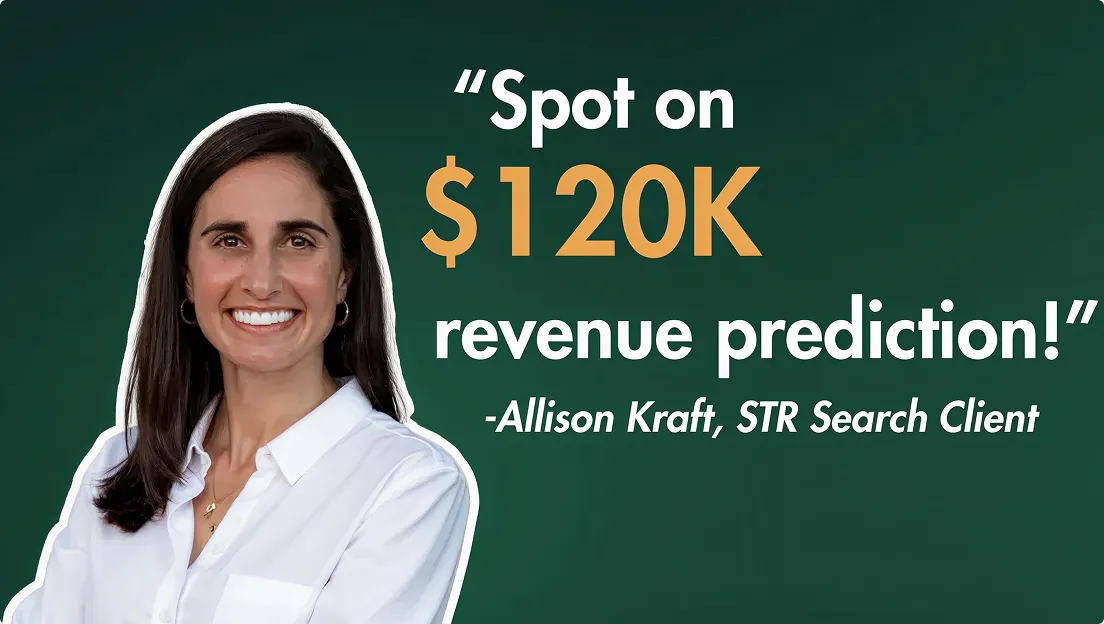
From zero real estate experience to a thriving short-term rental business, Allison locked in $120K in revenue her first year and is now expanding with STR Search again. Proof that the right team can turn analysis paralysis into profitable action!

Thanks to John's expert guidance, I made my first real estate and Airbnb investment a massive success, with consistent positive cash flow and an exceptional return on investment!

John's training gave me the confidence to secure a loan on the spot and scale from one STR to three. His approach is a total game-changer!
Why Choose STR Search?

Put your money to work & lower your tax bill
We’ve spent years analyzing what works so you don’t have to. Our job is to cut through bad data and help you make smart, profitable decisions backed by real numbers.
Schedule Your Free CallTrusted by hundreds of successful investors
Generate $3-5K+ monthly cash flow with our proven property matching system.
Build long-term wealth through STRs with cash flow, equity, and bonus depreciation.
Skip 6-12 months of trial and error with our data-driven underwriting and market analysis
We have a 100% success rate across $90M+ in Real Estate
Out of the 275+ properties we've helped our clients buy every single one has been profitable.
You want more money. More time. More freedom. But may be stuck trading hours for dollars, and scaling your investment strategy feels out of reach.
While others are getting lost in analysis paralysis, you’ve got capital and drive to change your situation. Investors who choose the right STRs can generate $3–5K/month in cash flow, plus serious tax benefits and long-term wealth.
We’ve spent years obsessed with STR investing data so you don’t have to.
With our property match services, there’s no guesswork! Just profitable properties built to perform. With the right deal, your capital can buy more than returns. It can buy your freedom.




All The Ways We Can Help You
Free courses, services, and trainings, to help you maximize your earnings from AirBnb...


Get in touch with us.
Everything Smart Investors Ask About STR Wealth Building
To start an Airbnb in Providence, Rhode Island, begin by researching local zoning laws as Providence requires short-term rentals to comply with residential zoning restrictions and obtain a Certificate of Occupancy from the city's Building Department. Contact Providence's Planning Department to verify your property is in an area that permits short-term rentals, as some neighborhoods have restrictions. Apply for a business license through the city clerk's office and register with the Rhode Island Division of Taxation for state tax collection. Find a suitable property in permitted zones like Federal Hill, The Hill, or downtown areas, ensuring it meets safety requirements including smoke detectors, carbon monoxide detectors, and proper egress windows. Furnish the space with quality basics including comfortable bedding, kitchen essentials, WiFi, and local guidebooks, while ensuring compliance with Providence's occupancy limits (typically 2 people per bedroom plus 2 additional). Create your Airbnb listing with professional photos highlighting Providence's attractions like Federal Hill's restaurants, Brown University proximity, or downtown access. For management, establish a cleaning protocol between guests, install keyless entry systems, maintain 24/7 communication availability, and consider hiring local property management companies like RedAwning or Vacasa if you're not local. Register for Rhode Island's 7% state sales tax and Providence's 1% local occupancy tax, remitting payments quarterly, and maintain detailed records of income and expenses for tax purposes while staying updated on Providence's evolving short-term rental regulations through the city's planning department.
To identify profitable short-term rental properties in Providence, Rhode Island, focus on location criteria including proximity to Brown University, RISD, downtown Federal Hill, and the Historic Hill neighborhood, as these areas attract students, tourists, and business travelers year-round. Target properties with 2-4 bedrooms, parking availability, updated kitchens and bathrooms, and unique character features like historic details that appeal to visitors seeking authentic New England experiences. Conduct pricing analysis using AirDNA and Mashvisor to evaluate average daily rates ($80-150 depending on season and location), occupancy rates (typically 60-75% for well-positioned properties), and seasonal demand patterns that peak during university events, summer months, and fall foliage season. Research competition by analyzing similar properties within a 1-mile radius, studying their amenities, pricing strategies, and guest reviews to identify market gaps and positioning opportunities. Utilize Providence-specific resources including the city's STR registration requirements, local property management companies like RedAwning or Vacasa for market insights, Rhode Island MLS data, and neighborhood-specific Facebook groups to understand local regulations, upcoming developments, and community sentiment that could impact rental demand and profitability.
To obtain an Airbnb/STR permit in Providence, Rhode Island, you must first register with the Rhode Island Division of Taxation for state registration, then apply through the City of Providence's Department of Inspections and Standards. Required documents include a completed short-term rental application, proof of property ownership or lease agreement with landlord consent, certificate of occupancy, fire safety inspection certificate, general liability insurance policy ($1 million minimum coverage), floor plan of the rental unit, and contact information for a local representative available 24/7. The city application fee is approximately $200-300 annually, plus inspection fees of around $100-150, while the state registration fee is $100. The process typically takes 4-6 weeks from application submission, including scheduling and completing required inspections for fire safety, building code compliance, and zoning verification. Providence-specific requirements include maintaining occupancy limits based on the number of bedrooms, ensuring adequate parking availability, installing smoke and carbon monoxide detectors in all sleeping areas, providing emergency contact information to neighbors, and adhering to noise ordinances with quiet hours from 10 PM to 7 AM. Properties in certain historic districts may require additional Historic District Commission approval, and all rentals must comply with the city's 3% hotel tax collection and remittance requirements.
Short-term rentals (STRs) are legal in Providence, Rhode Island, but operate under strict regulations implemented in 2019. The city requires STR operators to obtain a business license and register their properties, with different rules for owner-occupied versus non-owner-occupied units. Owner-occupied STRs (where the host lives on-site) face fewer restrictions, while non-owner-occupied units are subject to a cap system and stricter oversight. STRs are prohibited in certain residential zones and must comply with zoning requirements, fire safety codes, and noise ordinances. The city implemented a 4% local tax on STR bookings in addition to state taxes, and operators must maintain liability insurance. Recent changes include enhanced enforcement mechanisms and clearer definitions of what constitutes a short-term rental versus traditional lodging. Properties must be registered annually, and the city maintains a public registry of approved STRs. Violations can result in fines and license revocation, with the city actively monitoring platforms like Airbnb and VRBO for compliance.
The best Airbnb investment areas in Providence, Rhode Island include Federal Hill, known for its authentic Italian restaurants and cultural attractions that draw food tourists year-round; The Hill neighborhood near Brown University and RISD, which generates consistent demand from visiting parents, prospective students, and academic conferences; Downtown Providence around the Financial District and Convention Center, attracting business travelers, convention attendees, and tourists visiting WaterFire events and the Providence Performing Arts Center; Wickenden Street area in Fox Point, popular with young professionals and tourists seeking trendy restaurants, vintage shops, and proximity to the waterfront; and Armory District/West Side, an emerging arts district with galleries, breweries, and music venues that appeals to cultural tourists and millennials. Federal Hill offers the strongest food tourism draw, the university areas provide steady academic-related bookings, downtown captures business and event travel, Wickenden Street attracts lifestyle tourists, and the Armory District represents an up-and-coming area with growth potential as Providence's arts scene expands.
In Providence, Rhode Island, Airbnb hosts are subject to multiple lodging taxes including the state hotel tax of 5.5% and the Providence local occupancy tax of 6%, for a combined rate of 11.5% on gross rental receipts. The Rhode Island Division of Taxation requires hosts to register for a hotel tax permit and collect these taxes from guests at the time of booking or check-in. Airbnb automatically collects and remits these taxes for most bookings made through their platform as of 2019, but hosts remain responsible for ensuring compliance and may need to file monthly returns by the 20th of the following month if collecting taxes independently. The state hotel tax applies to all short-term rentals under 30 days with no exemptions for small operators, while the local Providence tax similarly applies to all transient accommodations. Hosts must maintain detailed records of all transactions and tax collections, and failure to comply can result in penalties of up to 25% of unpaid taxes plus interest. Some exemptions may apply for stays exceeding 28 consecutive days or for certain government and charitable organization bookings, but these are limited and require proper documentation.
Starting an Airbnb in Providence, Rhode Island requires approximately $350,000-$400,000 in total initial investment. Property purchase costs average $320,000 based on Providence's median home price as of 2023. Furnishing a 2-3 bedroom property typically costs $15,000-$25,000 including furniture, appliances, linens, and décor to create an attractive rental space. Initial setup expenses including professional photography, listing creation, and basic renovations run $3,000-$5,000. Permits and fees in Providence include a short-term rental license ($150), business license ($50), and potential zoning compliance costs totaling approximately $500-$1,000. Insurance premiums for short-term rental coverage average $2,000-$3,000 annually, with the first year paid upfront. Utility setup and deposits for electricity, gas, water, internet, and cable services cost roughly $1,500-$2,500. First six months of operating costs including utilities ($1,800), cleaning services ($2,400), property management software ($300), maintenance reserves ($1,500), and marketing expenses ($500) total approximately $6,500. Additional considerations include potential HOA fees, property taxes, and emergency repair funds that could add another $5,000-$10,000 to initial capital requirements.
Airbnb properties in Providence, Rhode Island demonstrate moderate to strong profitability potential, with average nightly rates ranging from $85-150 depending on location and property type, generating annual revenues of $25,000-45,000 for well-managed properties with 60-70% occupancy rates. Properties near Brown University, downtown Federal Hill, and the Historic Hill neighborhood typically achieve the highest returns, with profit margins averaging 25-35% after accounting for expenses including mortgage payments ($1,200-2,000 monthly), utilities ($150-250), cleaning fees ($40-60 per turnover), property management (10-20% of revenue), insurance ($1,500-2,500 annually), and maintenance costs ($2,000-4,000 yearly). Success factors include proximity to Brown University and RISD for consistent student and visitor demand, professional photography and staging, responsive guest communication, and competitive pricing strategies that adjust for seasonal fluctuations during graduation periods and summer tourism. A typical case study involves a renovated Victorian near The Hill generating $38,000 annually with $27,000 in total expenses, yielding approximately $11,000 net profit (29% margin), while properties in less desirable areas like South Providence may struggle with 40-50% occupancy and correspondingly lower returns of 15-20% profit margins.
Based on Providence, Rhode Island market data, Airbnb investments typically generate annual ROI of 8-12% with cash-on-cash returns ranging from 6-10% depending on property location and management efficiency. Properties in desirable neighborhoods like Federal Hill, The Hill, and downtown areas near Brown University and RISD command higher nightly rates of $80-150, leading to gross rental yields of 10-15% annually. Initial profitability usually occurs within 12-18 months after accounting for startup costs, furnishing, and marketing expenses, with properties requiring approximately $15,000-25,000 in upfront investment beyond the down payment. The Providence market benefits from consistent demand from university visitors, medical tourism to local hospitals, and business travelers, with occupancy rates averaging 65-75% throughout the year and peak summer months reaching 80-85% occupancy.
STRSearch is a national platform that helps investors identify profitable short-term rental properties in Providence, Rhode Island, providing market analysis and investment metrics. Local real estate agents specializing in Airbnb investments include Keller Williams Realty agents who focus on investment properties, RE/MAX professionals with vacation rental expertise, and Coldwell Banker agents experienced in multi-family properties suitable for short-term rentals. National services include BiggerPockets for networking and deal analysis, Mashvisor for rental property analytics and market data, AirDNA for short-term rental market insights and revenue projections, and Awning for turnkey Airbnb investment properties. Local property management companies like RedAwning and Vacasa offer full-service Airbnb management, while investment-focused firms such as Roofstock and Arrived Homes provide opportunities to invest in rental properties. Additionally, local real estate investment groups and meetups in Providence connect investors with agents and services specializing in vacation rental properties, and companies like AvantStay focus on group-friendly rental investments in emerging markets like Providence's Federal Hill and Downcity neighborhoods.
Put your money to work & lower your tax bill
We’ve spent years analyzing what works so you don’t have to. Our job is to cut through bad data and help you make smart, profitable decisions backed by real numbers.
Schedule Your Free Call