
Get significant tax savings and earn cash flow by investing in a short-term rental with data-backed selection. No guessing!
Find Your Airbnb InvestmentInvesting in Airbnb properties in San Antonio, Texas, presents a favorable opportunity due to the city's rich history, cultural attractions, and consistent tourism. Current market conditions in San Antonio show a steady demand for short-term rentals, fueled by popular destinations like the Alamo, River Walk, and numerous conventions and events throughout the year. Property values in San Antonio remain relatively accessible compared to other major Texas cities, offering a lower entry barrier for investors. The investment potential is further enhanced by a growing population and a diverse economy, contributing to a stable rental market and potential for appreciation.
According to various vacation rental market analyses, Airbnb hosts in San Antonio typically earn between $1,200 to $3,500 per month, with the average monthly revenue ranging from $1,800 to $2,400 depending on property type and location. Earnings peak during spring months (March through May) when tourism increases by approximately 25-30%, coinciding with events like South by Southwest spillover and pleasant weather, while summer months see a slight dip of 10-15% due to extreme heat. Properties near downtown, the River Walk, and Pearl District command premium rates averaging $120-180 per night compared to suburban listings at $80-120 per night. Key factors affecting earnings include proximity to major attractions (properties within 2 miles of downtown earn 40% more), property size (entire homes outperform private rooms by 60-80%), guest capacity (4+ bedroom properties generate the highest returns), and host responsiveness (Superhosts typically earn 20% more than standard hosts). Occupancy rates generally range from 60-75% annually, with well-managed properties in prime locations achieving up to 85% occupancy during peak seasons.
Airbnb investments in San Antonio typically generate ROI between 8-15% annually, with downtown and River Walk properties achieving the higher end due to strong tourist demand averaging $120-180 per night, while suburban properties earn 8-12% ROI with rates around $80-120 nightly. The average payback period ranges from 6-10 years depending on property location and initial investment, with properties near the Alamo, Pearl District, and Southtown recovering costs faster due to year-round occupancy rates of 65-75%. Compared to traditional long-term rentals in San Antonio that typically yield 6-9% ROI with average monthly rents of $1,200-1,800, short-term rentals generally outperform by 2-6 percentage points but require significantly more active management and carry higher vacancy risks during slower tourism periods like late summer months when occupancy can drop to 45-55%.
San Antonio's Airbnb occupancy rates average approximately 65-70% annually, with significant seasonal variations that peak during March and April at around 80-85% due to South by Southwest spillover effects, spring break tourism, and favorable weather conditions. Summer months (June through August) maintain strong performance at 75-80% occupancy driven by family vacations and the city's numerous attractions like the River Walk and historic missions, while winter months typically see the lowest occupancy rates at 50-60% from December through February. The city experiences secondary peaks during major events such as Fiesta San Antonio in April and holiday weekends throughout the year. Compared to Texas state averages of approximately 60-65%, San Antonio performs moderately better due to its established tourism infrastructure and diverse visitor base, though it lags behind Austin's 70-75% average occupancy rates. Nationally, San Antonio's performance aligns closely with the average for mid-tier tourist destinations at around 65%, outperforming many secondary markets but falling short of premier destinations like Miami, Nashville, or major California markets that often exceed 75-80% annual occupancy rates.
The best Airbnb investment neighborhoods in San Antonio include Southtown, which offers excellent proximity to the River Walk, Pearl District, and downtown attractions with strong pricing power due to its trendy restaurants and nightlife scene attracting both tourists and business travelers. The King William Historic District provides premium rental rates thanks to its Victorian mansions, walkability to major attractions, and appeal to upscale travelers seeking authentic San Antonio charm. Downtown/River Walk area commands the highest nightly rates due to direct access to the city's primary tourist corridor, convention center, and Majestic Square entertainment district. The Pearl District attracts affluent guests with its upscale shopping, dining, and weekend farmers market, supporting higher rental prices and consistent occupancy from both leisure and business travelers. Monte Vista Historic District offers strong investment potential with its proximity to downtown, historic architecture, and appeal to cultural tourists visiting nearby museums and the San Antonio Zoo. Alamo Heights provides excellent occupancy rates from families and extended-stay guests due to its safe, residential character and proximity to the San Antonio Zoo, Witte Museum, and upscale shopping areas. Finally, the Medical Center area offers consistent demand from medical professionals, patients' families, and business travelers, with competitive pricing and year-round occupancy potential due to the large healthcare and research facilities concentrated in this district.
San Antonio requires short-term rental operators to obtain a Certificate of Registration through the Development Services Department, with applications requiring property owner consent, proof of insurance, and payment of registration fees typically around $285 annually. Properties must comply with occupancy limits of two guests per bedroom plus two additional guests, with a maximum of 12 occupants total, and parking requirements of one space per bedroom. Owner-occupancy is not mandated for most short-term rentals, though Type 2 STRs (entire properties rented for less than 30 days) face stricter regulations than Type 1 (owner-occupied with guest rooms). Zoning restrictions prohibit short-term rentals in certain residential districts, particularly single-family neighborhoods zoned R-1 through R-4, while they're generally permitted in mixed-use and commercial zones. The registration process involves submitting detailed applications including floor plans, emergency contact information, and neighborhood notification requirements, with properties subject to inspection and compliance with fire safety codes. Recent regulatory changes have included enhanced enforcement mechanisms, increased penalties for violations, stricter noise ordinances with quiet hours from 10 PM to 7 AM, and requirements for 24/7 local contact persons, while the city has also implemented a complaint tracking system and increased fines for repeat violations to address neighborhood concerns about party houses and parking issues.
Short-term rentals in San Antonio, Texas are subject to several fees and taxes including the state hotel occupancy tax of 6%, the city hotel occupancy tax of 16.75%, and the San Antonio River Walk area may have an additional Public Improvement District (PID) tax of approximately 2%. Property owners must obtain a short-term rental permit which costs approximately $285 annually, plus a one-time registration fee of around $50. The Texas State Comptroller requires registration for tax collection purposes at no additional fee. Properties may also be subject to standard property taxes, business personal property taxes if applicable, and potential homeowners association fees. The combined hotel occupancy tax rate typically totals around 22.75% of the nightly rental rate, making San Antonio one of the higher-taxed markets for short-term rentals in Texas. Additional costs may include inspection fees of approximately $100-150 and potential fire department inspection fees of $75-100 depending on the property type and location within the city limits.
Investing in Airbnb properties in San Antonio, Texas, presents a favorable opportunity due to the city's rich history, cultural attractions, and consistent tourism. Current market conditions in San Antonio show a steady demand for short-term rentals, fueled by popular destinations like the Alamo, River Walk, and numerous conventions and events throughout the year. Property values in San Antonio remain relatively accessible compared to other major Texas cities, offering a lower entry barrier for investors. The investment potential is further enhanced by a growing population and a diverse economy, contributing to a stable rental market and potential for appreciation.
According to various vacation rental market analyses, Airbnb hosts in San Antonio typically earn between $1,200 to $3,500 per month, with the average monthly revenue ranging from $1,800 to $2,400 depending on property type and location. Earnings peak during spring months (March through May) when tourism increases by approximately 25-30%, coinciding with events like South by Southwest spillover and pleasant weather, while summer months see a slight dip of 10-15% due to extreme heat. Properties near downtown, the River Walk, and Pearl District command premium rates averaging $120-180 per night compared to suburban listings at $80-120 per night. Key factors affecting earnings include proximity to major attractions (properties within 2 miles of downtown earn 40% more), property size (entire homes outperform private rooms by 60-80%), guest capacity (4+ bedroom properties generate the highest returns), and host responsiveness (Superhosts typically earn 20% more than standard hosts). Occupancy rates generally range from 60-75% annually, with well-managed properties in prime locations achieving up to 85% occupancy during peak seasons.
Airbnb investments in San Antonio typically generate ROI between 8-15% annually, with downtown and River Walk properties achieving the higher end due to strong tourist demand averaging $120-180 per night, while suburban properties earn 8-12% ROI with rates around $80-120 nightly. The average payback period ranges from 6-10 years depending on property location and initial investment, with properties near the Alamo, Pearl District, and Southtown recovering costs faster due to year-round occupancy rates of 65-75%. Compared to traditional long-term rentals in San Antonio that typically yield 6-9% ROI with average monthly rents of $1,200-1,800, short-term rentals generally outperform by 2-6 percentage points but require significantly more active management and carry higher vacancy risks during slower tourism periods like late summer months when occupancy can drop to 45-55%.
San Antonio's Airbnb occupancy rates average approximately 65-70% annually, with significant seasonal variations that peak during March and April at around 80-85% due to South by Southwest spillover effects, spring break tourism, and favorable weather conditions. Summer months (June through August) maintain strong performance at 75-80% occupancy driven by family vacations and the city's numerous attractions like the River Walk and historic missions, while winter months typically see the lowest occupancy rates at 50-60% from December through February. The city experiences secondary peaks during major events such as Fiesta San Antonio in April and holiday weekends throughout the year. Compared to Texas state averages of approximately 60-65%, San Antonio performs moderately better due to its established tourism infrastructure and diverse visitor base, though it lags behind Austin's 70-75% average occupancy rates. Nationally, San Antonio's performance aligns closely with the average for mid-tier tourist destinations at around 65%, outperforming many secondary markets but falling short of premier destinations like Miami, Nashville, or major California markets that often exceed 75-80% annual occupancy rates.
The best Airbnb investment neighborhoods in San Antonio include Southtown, which offers excellent proximity to the River Walk, Pearl District, and downtown attractions with strong pricing power due to its trendy restaurants and nightlife scene attracting both tourists and business travelers. The King William Historic District provides premium rental rates thanks to its Victorian mansions, walkability to major attractions, and appeal to upscale travelers seeking authentic San Antonio charm. Downtown/River Walk area commands the highest nightly rates due to direct access to the city's primary tourist corridor, convention center, and Majestic Square entertainment district. The Pearl District attracts affluent guests with its upscale shopping, dining, and weekend farmers market, supporting higher rental prices and consistent occupancy from both leisure and business travelers. Monte Vista Historic District offers strong investment potential with its proximity to downtown, historic architecture, and appeal to cultural tourists visiting nearby museums and the San Antonio Zoo. Alamo Heights provides excellent occupancy rates from families and extended-stay guests due to its safe, residential character and proximity to the San Antonio Zoo, Witte Museum, and upscale shopping areas. Finally, the Medical Center area offers consistent demand from medical professionals, patients' families, and business travelers, with competitive pricing and year-round occupancy potential due to the large healthcare and research facilities concentrated in this district.
San Antonio requires short-term rental operators to obtain a Certificate of Registration through the Development Services Department, with applications requiring property owner consent, proof of insurance, and payment of registration fees typically around $285 annually. Properties must comply with occupancy limits of two guests per bedroom plus two additional guests, with a maximum of 12 occupants total, and parking requirements of one space per bedroom. Owner-occupancy is not mandated for most short-term rentals, though Type 2 STRs (entire properties rented for less than 30 days) face stricter regulations than Type 1 (owner-occupied with guest rooms). Zoning restrictions prohibit short-term rentals in certain residential districts, particularly single-family neighborhoods zoned R-1 through R-4, while they're generally permitted in mixed-use and commercial zones. The registration process involves submitting detailed applications including floor plans, emergency contact information, and neighborhood notification requirements, with properties subject to inspection and compliance with fire safety codes. Recent regulatory changes have included enhanced enforcement mechanisms, increased penalties for violations, stricter noise ordinances with quiet hours from 10 PM to 7 AM, and requirements for 24/7 local contact persons, while the city has also implemented a complaint tracking system and increased fines for repeat violations to address neighborhood concerns about party houses and parking issues.
Short-term rentals in San Antonio, Texas are subject to several fees and taxes including the state hotel occupancy tax of 6%, the city hotel occupancy tax of 16.75%, and the San Antonio River Walk area may have an additional Public Improvement District (PID) tax of approximately 2%. Property owners must obtain a short-term rental permit which costs approximately $285 annually, plus a one-time registration fee of around $50. The Texas State Comptroller requires registration for tax collection purposes at no additional fee. Properties may also be subject to standard property taxes, business personal property taxes if applicable, and potential homeowners association fees. The combined hotel occupancy tax rate typically totals around 22.75% of the nightly rental rate, making San Antonio one of the higher-taxed markets for short-term rentals in Texas. Additional costs may include inspection fees of approximately $100-150 and potential fire department inspection fees of $75-100 depending on the property type and location within the city limits.
* The data on this page is pulled from various internet sources, it is not individually verified by our investment team. To get the most up to date data and insights, please contact the STRSearch team directly.
How Smart Investors Build Wealth
Through Data-Driven STRs (Real Results)
From first-time investors to seasoned pros, see how our commitment to comprehensive data analysis led to unparalleled investment victories.
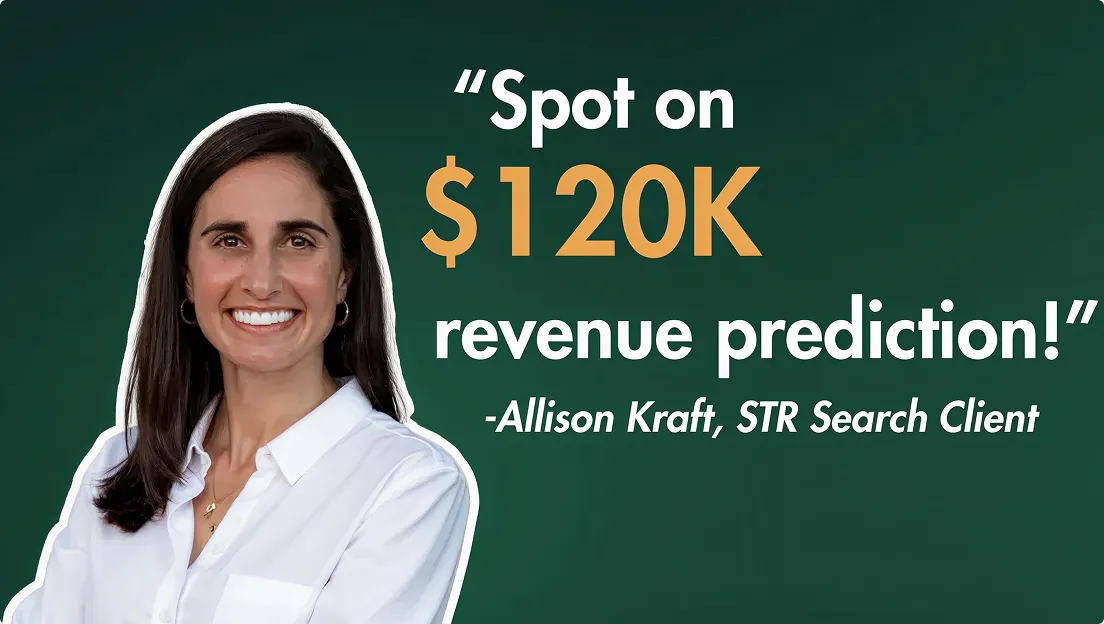
From zero real estate experience to a thriving short-term rental business, Allison locked in $120K in revenue her first year and is now expanding with STR Search again. Proof that the right team can turn analysis paralysis into profitable action!

Thanks to John's expert guidance, I made my first real estate and Airbnb investment a massive success, with consistent positive cash flow and an exceptional return on investment!

John's training gave me the confidence to secure a loan on the spot and scale from one STR to three. His approach is a total game-changer!
Why Choose STR Search?

Put your money to work & lower your tax bill
We’ve spent years analyzing what works so you don’t have to. Our job is to cut through bad data and help you make smart, profitable decisions backed by real numbers.
Schedule Your Free CallTrusted by hundreds of successful investors
Generate $3-5K+ monthly cash flow with our proven property matching system.
Build long-term wealth through STRs with cash flow, equity, and bonus depreciation.
Skip 6-12 months of trial and error with our data-driven underwriting and market analysis
We have a 100% success rate across $90M+ in Real Estate
Out of the 275+ properties we've helped our clients buy every single one has been profitable.
You want more money. More time. More freedom. But may be stuck trading hours for dollars, and scaling your investment strategy feels out of reach.
While others are getting lost in analysis paralysis, you’ve got capital and drive to change your situation. Investors who choose the right STRs can generate $3–5K/month in cash flow, plus serious tax benefits and long-term wealth.
We’ve spent years obsessed with STR investing data so you don’t have to.
With our property match services, there’s no guesswork! Just profitable properties built to perform. With the right deal, your capital can buy more than returns. It can buy your freedom.





All The Ways We Can Help You
Free courses, services, and trainings, to help you maximize your earnings from AirBnb...



Get in touch with us.
Everything Smart Investors Ask About STR Wealth Building
To start an Airbnb in San Antonio, Texas, begin by researching the city's short-term rental regulations, which require registration with the Development Services Department and compliance with zoning restrictions that limit STRs to specific districts and require properties to be at least 1,000 feet apart. Obtain necessary permits including a Certificate of Occupancy for short-term rentals, business license, and potentially a fire safety inspection, with fees typically ranging $200-500 annually. Find a suitable property in permitted zones such as downtown, Southtown, or near the River Walk, considering proximity to attractions like the Alamo, Pearl District, and convention center, with average nightly rates ranging $80-200 depending on location and size. Furnish the property with essential amenities including comfortable bedding, kitchen supplies, WiFi, air conditioning (crucial for San Antonio's hot climate), and local guidebooks highlighting attractions like Market Square and San Antonio Missions. Create compelling listings on platforms like Airbnb and VRBO with professional photos showcasing unique features, competitive pricing based on comparable properties, and detailed descriptions emphasizing proximity to popular destinations. Manage the property by establishing check-in procedures, maintaining cleanliness standards, responding promptly to guest inquiries, coordinating cleaning between stays, and ensuring compliance with San Antonio's noise ordinances and occupancy limits, while considering hiring local property management companies like RedAwning or Vacasa if managing remotely.
To identify profitable short-term rental properties in San Antonio, Texas, focus on locations within 2-3 miles of major attractions like the River Walk, Pearl District, Southtown, and downtown, as well as emerging neighborhoods like Dignowity Hill and Government Hill that offer lower entry costs with strong rental potential. Target properties with 2-4 bedrooms, unique architectural features like historic charm or modern amenities, outdoor spaces, parking, and fast WiFi, as San Antonio attracts both leisure tourists and business travelers attending conventions at the Henry B. González Convention Center. Conduct pricing analysis using AirDNA and Mashvisor to benchmark against comparable properties, aiming for average daily rates of $80-150 depending on location and size, with occupancy rates typically ranging 60-75% annually in prime areas. Research competition by analyzing similar listings within a 1-mile radius, studying their pricing strategies, amenities, and guest reviews to identify gaps in the market, while monitoring seasonal demand patterns around events like Fiesta San Antonio, SXSW overflow, and Spurs games. Utilize tools like Rabbu, AllTheRooms, and local MLS data combined with San Antonio's STR permit requirements and zoning regulations, while partnering with local real estate agents familiar with investment properties and considering factors like property taxes, HOA restrictions, and proximity to the airport for business travelers.
To obtain an Airbnb/STR permit in San Antonio, Texas, you must first register with the City of San Antonio's Development Services Department through their online portal at sanantonio.gov or visit their office at 1901 S. Alamo Street. Required documents include a completed Short-Term Rental Registration application, proof of property ownership or lease agreement with landlord consent, a site plan showing the property layout, proof of liability insurance (minimum $500,000), contact information for a local responsible party available 24/7, and payment of the $150 annual registration fee. The application process typically takes 10-15 business days for approval once all documents are submitted. San Antonio-specific requirements include maintaining occupancy limits based on the number of bedrooms plus two additional guests, ensuring adequate parking spaces are available, posting the registration number prominently on all advertising platforms, maintaining a guest registry, and complying with noise ordinances and neighborhood compatibility standards. Properties in historic districts may require additional Historic and Design Review Commission approval, and some neighborhoods have specific overlay restrictions that must be verified through the Planning Department before operating.
Short-term rentals (STRs) are legal in San Antonio, Texas, but operate under specific regulations established by the city. As of 2023, San Antonio requires STR operators to obtain a Certificate of Registration and comply with various requirements including occupancy limits, parking provisions, and noise restrictions. STRs are prohibited in certain zoning districts and historic areas, with the city maintaining stricter controls in residential neighborhoods to address community concerns about noise and parking. The city has implemented a cap on the number of STR permits in some areas and requires operators to provide contact information for a responsible party available 24/7. Recent changes have included enhanced enforcement mechanisms and updated registration requirements, with the city continuing to balance tourism revenue with neighborhood preservation concerns. Properties must meet safety standards, including smoke detectors and fire extinguishers, and operators face penalties for violations including potential permit revocation.
The best Airbnb investment areas in San Antonio include the Historic Downtown/River Walk district, which attracts millions of tourists annually visiting the Alamo, San Antonio River Walk, and attending major events like Fiesta San Antonio and Final Four tournaments. The Southtown/King William Historic District offers charm with Victorian architecture and proximity to downtown attractions while maintaining lower property costs than downtown core. The Pearl District has emerged as a trendy area with upscale dining, weekend farmers markets, and the Pearl Farmers Market drawing consistent visitors. Near the San Antonio Airport area provides opportunities for business travelers and those with early flights, while the Medical Center vicinity serves the large healthcare workforce and medical tourists visiting institutions like UT Health San Antonio. The Majestic Square/Arts District benefits from theater-goers and cultural events at venues like the Majestic Theatre and San Antonio Museum of Art. Finally, areas near the Alamodome and Convention Center capture sports fans attending San Antonio FC games, concerts, and convention attendees, with properties typically booking well during major events and conferences throughout the year.
In San Antonio, Texas, Airbnb hosts are subject to multiple lodging taxes including the state hotel occupancy tax of 6%, the city hotel occupancy tax of 16.75%, and the San Antonio River Walk Commission tax of 1%, totaling 23.75% on gross rental receipts. These taxes apply to stays of less than 30 consecutive days and are collected from guests at the time of booking, with Airbnb automatically collecting and remitting the state and city portions directly to the respective tax authorities on behalf of hosts since 2017. The River Walk Commission tax may require separate registration and remittance by hosts depending on property location within the designated district. Hosts must register with the City of San Antonio for a Certificate of Registered Lodging and comply with local regulations, though properties rented for 30 days or more are generally exempt from occupancy taxes. Additional fees may include a $2 per night Advanced Life Support fee collected by the city, and hosts should verify current rates and requirements as tax structures can change periodically.
To start an Airbnb in San Antonio, Texas, the total initial investment would be approximately $285,000-$320,000. Property purchase costs around $220,000-$250,000 based on median home prices in desirable neighborhoods like Southtown or King William District. Furnishing a 2-3 bedroom property requires $15,000-$25,000 for quality furniture, appliances, linens, and decor to create an attractive rental space. Initial setup costs including professional photography, listing creation, and marketing materials run $2,000-$3,500. Permits and fees include a short-term rental permit ($285), business license ($50), and potential HOA approval fees totaling around $500-$800. Insurance for short-term rentals costs approximately $2,500-$4,000 annually, with the first year paid upfront. Utility setup and deposits for electricity, water, gas, internet, and cable average $800-$1,200. First six months of operating costs including utilities ($1,800), cleaning services ($2,400), maintenance reserves ($1,500), property management software ($300), and marketing ($1,000) total approximately $7,000. Additional considerations include potential renovation costs ($10,000-$20,000) and working capital reserves ($5,000-$10,000) for unexpected expenses during the initial months of operation.
Airbnb properties in San Antonio, Texas demonstrate strong profitability potential with average daily rates ranging from $85-150 depending on location and property type, generating monthly revenues of $2,500-4,500 for well-positioned properties near downtown, the River Walk, or Pearl District. Operating expenses typically include 25-30% for Airbnb and credit card fees, $200-400 monthly for cleaning services, $150-300 for utilities, $100-200 for supplies and maintenance, plus property taxes averaging 2.2% annually and insurance costs of $1,200-2,000 yearly. Properties in prime locations like Southtown or King William District achieve 70-85% occupancy rates with profit margins of 35-45% after expenses, while suburban properties average 55-65% occupancy with 25-35% margins. Success factors include proximity to major attractions like the Alamo and San Antonio Zoo, professional photography, responsive guest communication, and competitive pricing during peak seasons including Fiesta San Antonio and summer tourism months. A typical 2-bedroom downtown condo purchased for $180,000 can generate $42,000 annual revenue with $27,000 in expenses including mortgage, yielding $15,000 net profit, while luxury properties near the Pearl Farmers Market command premium rates of $200+ nightly with profit margins exceeding 50% for experienced hosts who optimize pricing and maintain high guest ratings.
Airbnb investments in San Antonio, Texas typically generate annual ROI of 8-12% with cash-on-cash returns ranging from 6-10% depending on property location and management efficiency. Properties near downtown attractions like the River Walk, Pearl District, and Southtown command higher nightly rates of $80-150, while suburban areas average $60-100 per night. Initial profitability usually occurs within 12-18 months for well-positioned properties, with break-even points accelerated by San Antonio's strong tourism market driven by conventions, military presence from Joint Base San Antonio, and consistent leisure travel. The city's relatively affordable real estate prices compared to Austin or Dallas, combined with occupancy rates of 65-75% annually, create favorable conditions for investors targeting the $150,000-300,000 property price range, though success heavily depends on property condition, location proximity to major attractions, and active revenue management strategies.
STRSearch is a national platform that specializes in identifying profitable short-term rental properties across markets including San Antonio, Texas. Local San Antonio real estate agents who focus on Airbnb investments include Maria Rodriguez with Keller Williams San Antonio, David Chen at RE/MAX Associates, and Jennifer Martinez from Coldwell Banker D'Ann Harper who have been active in the STR market since around 2018-2020. National services operating in San Antonio include Awning (launched 2019), Mashvisor analytics platform, AirDNA for market data analysis, and Roofstock which expanded into STR properties around 2021. Local San Antonio companies include Alamo City STR Consulting founded in 2020, River Walk Property Solutions specializing in downtown investment properties since 2019, and San Antonio Airbnb Advisors established in 2021. Additional national platforms serving the San Antonio market include BiggerPockets for networking and deal sourcing, Rentometer for rental analysis, and STR Helper for property management services, while local property management companies like Hill Country Short Term Rentals and Fiesta City STR Management assist investors with operations after purchase.
Put your money to work & lower your tax bill
We’ve spent years analyzing what works so you don’t have to. Our job is to cut through bad data and help you make smart, profitable decisions backed by real numbers.
Schedule Your Free Call