
Get significant tax savings and earn cash flow by investing in a short-term rental with data-backed selection. No guessing!
Find Your Airbnb InvestmentInvesting in Airbnb properties in San Diego, California, presents a mixed but generally favorable outlook. Current market conditions show strong demand for short-term rentals, driven by San Diego's popularity as a tourist destination with its beaches, attractions like the San Diego Zoo, and convention center. Tourism trends remain robust, indicating a steady flow of visitors. Property values in San Diego are high, which means a significant initial investment, but they have also shown consistent appreciation, offering potential for long-term capital gains. The investment potential is further bolstered by the city's diverse economy and consistent visitor numbers, which contribute to healthy occupancy rates. However, potential investors should be aware of evolving local regulations regarding short-term rentals, which can impact profitability and operational flexibility.
According to various vacation rental market analyses, Airbnb hosts in San Diego typically earn between $2,500 to $6,000 per month, with the average falling around $3,800 monthly for a one-bedroom property and $5,200 for a two-bedroom unit. Seasonal variations show peak earnings during summer months (June through August) when revenues can increase by 25-40% above average, while winter months typically see a 15-20% decrease in bookings and rates. Properties located within 2 miles of popular beaches like Mission Beach, Pacific Beach, and La Jolla command premium rates averaging $180-250 per night, compared to $120-180 for inland locations. Key factors affecting earnings include proximity to attractions like Balboa Park and the Gaslamp Quarter, property amenities such as parking and outdoor spaces, guest capacity, and host responsiveness, with Superhosts typically earning 15-20% more than standard hosts. Market saturation in certain neighborhoods has intensified competition, with occupancy rates ranging from 65-85% depending on location and property quality, according to data from vacation rental analytics platforms and local market reports.
Airbnb investments in San Diego typically generate ROI between 8-15% annually, with prime coastal areas like Mission Beach and Pacific Beach achieving the higher end of this range due to strong tourist demand and average daily rates of $200-350. The payback period for initial investment and setup costs generally ranges from 6-10 years, depending on property location and purchase price. Short-term rentals in desirable neighborhoods can generate 20-40% higher revenue than traditional long-term rentals, with annual gross rental yields averaging $45,000-75,000 for a typical 2-bedroom property versus $30,000-50,000 for long-term rentals. However, Airbnb properties face higher operating expenses including cleaning fees, maintenance, utilities, and San Diego's Transient Occupancy Tax of 10.5-14%, plus potential HOA restrictions and city permit requirements that can impact profitability. The market shows strong seasonal performance with peak summer months generating 30-50% higher rates than winter periods, and occupancy rates typically ranging from 65-80% annually in well-managed properties near beaches, Balboa Park, or downtown areas.
San Diego Airbnb properties maintain an average annual occupancy rate of approximately 65-70%, with significant seasonal variations that peak during summer months (June through August) at around 80-85% occupancy, while winter months (December through February) typically see rates drop to 50-55%. The city experiences secondary peaks during spring break (March) and major events like Comic-Con in July, which can push occupancy rates above 90% in certain neighborhoods. San Diego's occupancy rates consistently outperform both California's state average of approximately 60-65% and the national average of 55-60%, largely due to its year-round temperate climate, consistent tourism demand, and proximity to beaches and attractions. Coastal areas like Mission Beach, Pacific Beach, and La Jolla tend to achieve higher occupancy rates (70-75% annually) compared to inland neighborhoods, while downtown and Gaslamp Quarter properties benefit from business travel and convention traffic, maintaining more stable occupancy throughout the year at around 68-72%.
The top Airbnb investment neighborhoods in San Diego include Pacific Beach, which offers strong rental demand from young professionals and tourists seeking beachfront access with average nightly rates of $150-250 due to its proximity to the ocean, nightlife, and dining scene. Mission Beach provides excellent short-term rental potential with rates of $200-350 nightly thanks to its boardwalk, amusement park attractions, and prime beach location that attracts families and groups year-round. Gaslamp Quarter downtown commands premium rates of $180-300 per night due to its walkable urban environment, convention center proximity, nightlife, restaurants, and business traveler demand. La Jolla offers luxury market positioning with rates of $250-500 nightly, attracting affluent tourists drawn to upscale shopping, fine dining, pristine beaches, and the scenic coastline. Ocean Beach appeals to budget-conscious travelers and younger demographics with rates of $120-200 nightly, featuring a bohemian atmosphere, dog beach, pier, and local surf culture. Hillcrest provides strong mid-range investment opportunities with rates of $100-180 nightly, benefiting from its central location, diverse dining scene, proximity to Balboa Park, and appeal to LGBTQ+ travelers. Mission Hills rounds out the top neighborhoods with rates of $130-220 nightly, offering historic charm, walkability to downtown attractions, and appeal to professionals and couples seeking a quieter alternative to beach areas while maintaining urban accessibility.
San Diego requires short-term rental operators to obtain a Transient Occupancy Registration Certificate and comply with zoning regulations that generally limit vacation rentals to single-family residential zones, with multi-family properties in certain areas also eligible under specific conditions. Properties must register through the city's online portal, pay annual fees, and maintain liability insurance of at least $1 million, while occupancy is typically limited to two guests per bedroom plus two additional guests with a maximum of 12 people total. Owner-occupancy requirements vary by zone, with some areas requiring the owner to live on-site as their primary residence for at least six months per year, while others allow non-owner-occupied rentals with additional restrictions and higher fees. The city has implemented a cap on the total number of vacation rental permits in certain high-density areas and requires operators to provide 24-hour contact information, post permit numbers in listings, collect transient occupancy tax, and ensure compliance with noise ordinances and parking requirements. Recent changes have included stricter enforcement mechanisms, increased penalties for violations, enhanced neighbor notification processes, and periodic reviews of permit allocations in popular coastal and tourist areas to balance tourism revenue with neighborhood livability concerns.
Short-term rentals in San Diego, California are subject to multiple fees and taxes including a Transient Occupancy Tax (TOT) of 10.5% on gross rental receipts, which applies to stays of 30 days or less. Property owners must obtain a Short-Term Residential Rental (STRR) permit with an initial application fee of approximately $1,089 and annual renewal fees of around $548. Additionally, there is a California state tax of 7.25% base sales tax plus local taxes totaling approximately 8.75% on rental income. The city requires a business tax certificate costing between $34-$125 annually depending on gross receipts. Properties must also comply with a $25 per unit annual registration fee for the city's rental registry, and owners may face inspection fees of $200-$400 for required safety inspections. Some neighborhoods may impose additional homeowner association fees ranging from $100-$500 annually, and there are potential fines of $1,000-$5,000 for operating without proper permits or violating regulations.
Investing in Airbnb properties in San Diego, California, presents a mixed but generally favorable outlook. Current market conditions show strong demand for short-term rentals, driven by San Diego's popularity as a tourist destination with its beaches, attractions like the San Diego Zoo, and convention center. Tourism trends remain robust, indicating a steady flow of visitors. Property values in San Diego are high, which means a significant initial investment, but they have also shown consistent appreciation, offering potential for long-term capital gains. The investment potential is further bolstered by the city's diverse economy and consistent visitor numbers, which contribute to healthy occupancy rates. However, potential investors should be aware of evolving local regulations regarding short-term rentals, which can impact profitability and operational flexibility.
According to various vacation rental market analyses, Airbnb hosts in San Diego typically earn between $2,500 to $6,000 per month, with the average falling around $3,800 monthly for a one-bedroom property and $5,200 for a two-bedroom unit. Seasonal variations show peak earnings during summer months (June through August) when revenues can increase by 25-40% above average, while winter months typically see a 15-20% decrease in bookings and rates. Properties located within 2 miles of popular beaches like Mission Beach, Pacific Beach, and La Jolla command premium rates averaging $180-250 per night, compared to $120-180 for inland locations. Key factors affecting earnings include proximity to attractions like Balboa Park and the Gaslamp Quarter, property amenities such as parking and outdoor spaces, guest capacity, and host responsiveness, with Superhosts typically earning 15-20% more than standard hosts. Market saturation in certain neighborhoods has intensified competition, with occupancy rates ranging from 65-85% depending on location and property quality, according to data from vacation rental analytics platforms and local market reports.
Airbnb investments in San Diego typically generate ROI between 8-15% annually, with prime coastal areas like Mission Beach and Pacific Beach achieving the higher end of this range due to strong tourist demand and average daily rates of $200-350. The payback period for initial investment and setup costs generally ranges from 6-10 years, depending on property location and purchase price. Short-term rentals in desirable neighborhoods can generate 20-40% higher revenue than traditional long-term rentals, with annual gross rental yields averaging $45,000-75,000 for a typical 2-bedroom property versus $30,000-50,000 for long-term rentals. However, Airbnb properties face higher operating expenses including cleaning fees, maintenance, utilities, and San Diego's Transient Occupancy Tax of 10.5-14%, plus potential HOA restrictions and city permit requirements that can impact profitability. The market shows strong seasonal performance with peak summer months generating 30-50% higher rates than winter periods, and occupancy rates typically ranging from 65-80% annually in well-managed properties near beaches, Balboa Park, or downtown areas.
San Diego Airbnb properties maintain an average annual occupancy rate of approximately 65-70%, with significant seasonal variations that peak during summer months (June through August) at around 80-85% occupancy, while winter months (December through February) typically see rates drop to 50-55%. The city experiences secondary peaks during spring break (March) and major events like Comic-Con in July, which can push occupancy rates above 90% in certain neighborhoods. San Diego's occupancy rates consistently outperform both California's state average of approximately 60-65% and the national average of 55-60%, largely due to its year-round temperate climate, consistent tourism demand, and proximity to beaches and attractions. Coastal areas like Mission Beach, Pacific Beach, and La Jolla tend to achieve higher occupancy rates (70-75% annually) compared to inland neighborhoods, while downtown and Gaslamp Quarter properties benefit from business travel and convention traffic, maintaining more stable occupancy throughout the year at around 68-72%.
The top Airbnb investment neighborhoods in San Diego include Pacific Beach, which offers strong rental demand from young professionals and tourists seeking beachfront access with average nightly rates of $150-250 due to its proximity to the ocean, nightlife, and dining scene. Mission Beach provides excellent short-term rental potential with rates of $200-350 nightly thanks to its boardwalk, amusement park attractions, and prime beach location that attracts families and groups year-round. Gaslamp Quarter downtown commands premium rates of $180-300 per night due to its walkable urban environment, convention center proximity, nightlife, restaurants, and business traveler demand. La Jolla offers luxury market positioning with rates of $250-500 nightly, attracting affluent tourists drawn to upscale shopping, fine dining, pristine beaches, and the scenic coastline. Ocean Beach appeals to budget-conscious travelers and younger demographics with rates of $120-200 nightly, featuring a bohemian atmosphere, dog beach, pier, and local surf culture. Hillcrest provides strong mid-range investment opportunities with rates of $100-180 nightly, benefiting from its central location, diverse dining scene, proximity to Balboa Park, and appeal to LGBTQ+ travelers. Mission Hills rounds out the top neighborhoods with rates of $130-220 nightly, offering historic charm, walkability to downtown attractions, and appeal to professionals and couples seeking a quieter alternative to beach areas while maintaining urban accessibility.
San Diego requires short-term rental operators to obtain a Transient Occupancy Registration Certificate and comply with zoning regulations that generally limit vacation rentals to single-family residential zones, with multi-family properties in certain areas also eligible under specific conditions. Properties must register through the city's online portal, pay annual fees, and maintain liability insurance of at least $1 million, while occupancy is typically limited to two guests per bedroom plus two additional guests with a maximum of 12 people total. Owner-occupancy requirements vary by zone, with some areas requiring the owner to live on-site as their primary residence for at least six months per year, while others allow non-owner-occupied rentals with additional restrictions and higher fees. The city has implemented a cap on the total number of vacation rental permits in certain high-density areas and requires operators to provide 24-hour contact information, post permit numbers in listings, collect transient occupancy tax, and ensure compliance with noise ordinances and parking requirements. Recent changes have included stricter enforcement mechanisms, increased penalties for violations, enhanced neighbor notification processes, and periodic reviews of permit allocations in popular coastal and tourist areas to balance tourism revenue with neighborhood livability concerns.
Short-term rentals in San Diego, California are subject to multiple fees and taxes including a Transient Occupancy Tax (TOT) of 10.5% on gross rental receipts, which applies to stays of 30 days or less. Property owners must obtain a Short-Term Residential Rental (STRR) permit with an initial application fee of approximately $1,089 and annual renewal fees of around $548. Additionally, there is a California state tax of 7.25% base sales tax plus local taxes totaling approximately 8.75% on rental income. The city requires a business tax certificate costing between $34-$125 annually depending on gross receipts. Properties must also comply with a $25 per unit annual registration fee for the city's rental registry, and owners may face inspection fees of $200-$400 for required safety inspections. Some neighborhoods may impose additional homeowner association fees ranging from $100-$500 annually, and there are potential fines of $1,000-$5,000 for operating without proper permits or violating regulations.
* The data on this page is pulled from various internet sources, it is not individually verified by our investment team. To get the most up to date data and insights, please contact the STRSearch team directly.
How Smart Investors Build Wealth
Through Data-Driven STRs (Real Results)
From first-time investors to seasoned pros, see how our commitment to comprehensive data analysis led to unparalleled investment victories.
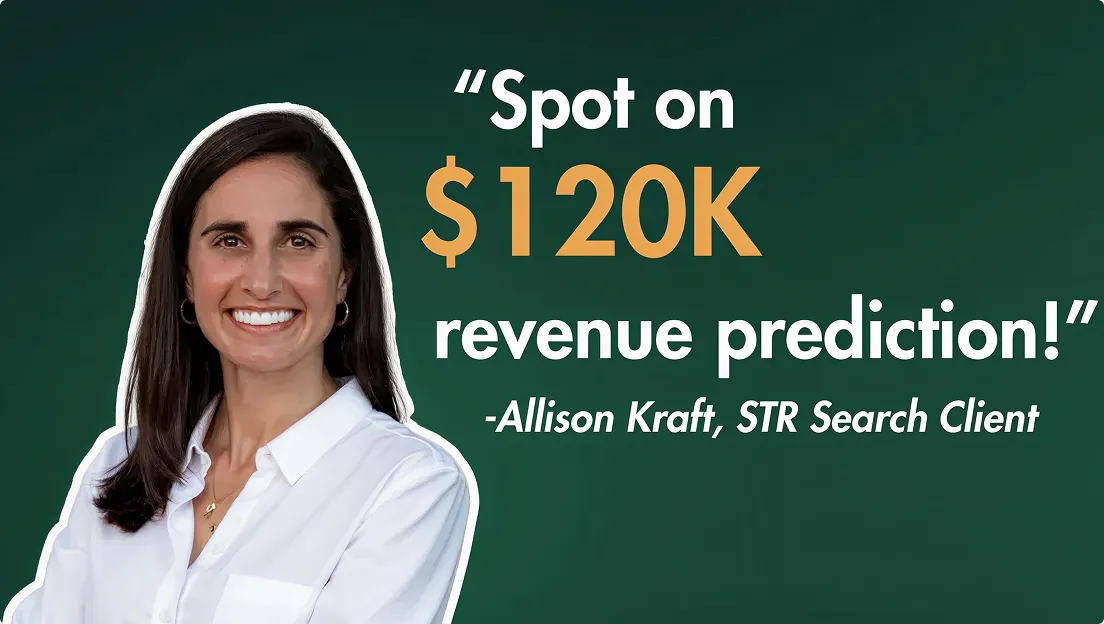
From zero real estate experience to a thriving short-term rental business, Allison locked in $120K in revenue her first year and is now expanding with STR Search again. Proof that the right team can turn analysis paralysis into profitable action!

Thanks to John's expert guidance, I made my first real estate and Airbnb investment a massive success, with consistent positive cash flow and an exceptional return on investment!

John's training gave me the confidence to secure a loan on the spot and scale from one STR to three. His approach is a total game-changer!
Why Choose STR Search?

Put your money to work & lower your tax bill
We’ve spent years analyzing what works so you don’t have to. Our job is to cut through bad data and help you make smart, profitable decisions backed by real numbers.
Schedule Your Free CallTrusted by hundreds of successful investors
Generate $3-5K+ monthly cash flow with our proven property matching system.
Build long-term wealth through STRs with cash flow, equity, and bonus depreciation.
Skip 6-12 months of trial and error with our data-driven underwriting and market analysis
We have a 100% success rate across $90M+ in Real Estate
Out of the 275+ properties we've helped our clients buy every single one has been profitable.
You want more money. More time. More freedom. But may be stuck trading hours for dollars, and scaling your investment strategy feels out of reach.
While others are getting lost in analysis paralysis, you’ve got capital and drive to change your situation. Investors who choose the right STRs can generate $3–5K/month in cash flow, plus serious tax benefits and long-term wealth.
We’ve spent years obsessed with STR investing data so you don’t have to.
With our property match services, there’s no guesswork! Just profitable properties built to perform. With the right deal, your capital can buy more than returns. It can buy your freedom.





All The Ways We Can Help You
Free courses, services, and trainings, to help you maximize your earnings from AirBnb...


Get in touch with us.
Everything Smart Investors Ask About STR Wealth Building
To start an Airbnb in San Diego, California, begin by researching the city's strict short-term rental regulations, which require hosts to obtain a Transient Occupancy Registration Certificate (TORC) from the City Treasurer's office and comply with zoning restrictions that limit short-term rentals in certain residential areas, particularly in coastal zones and multi-family properties. Apply for your TORC permit ($200-400 annually) and ensure your property meets safety requirements including smoke detectors, carbon monoxide detectors, and fire extinguishers, while also obtaining a business tax certificate if operating commercially. Find a suitable property by focusing on areas like Mission Beach, Pacific Beach, downtown Gaslamp Quarter, or Hillcrest where short-term rentals are more commonly permitted, keeping in mind that many HOAs and apartment complexes prohibit Airbnb operations. Furnish your space with quality, durable furniture, essential amenities like WiFi, kitchen supplies, linens, and local guidebooks, while ensuring the property reflects San Diego's beach culture and outdoor lifestyle. Create your Airbnb listing with professional photos highlighting ocean views, proximity to attractions like Balboa Park or the San Diego Zoo, and include detailed descriptions of nearby beaches, restaurants, and transportation options. Manage your property by setting competitive rates ($100-300+ per night depending on location and season), maintaining quick response times to guests, coordinating cleaning services between stays, collecting and remitting the required 10.75% Transient Occupancy Tax to the city, and staying compliant with noise ordinances and parking restrictions that are strictly enforced in many San Diego neighborhoods.
To identify profitable short-term rental properties in San Diego, California, focus on locations within 2-3 miles of major attractions like Balboa Park, Gaslamp Quarter, Mission Beach, and La Jolla Cove, as these areas consistently generate higher occupancy rates and nightly rates ranging from $150-400. Target properties with 2-4 bedrooms, outdoor spaces like patios or balconies, parking availability, and modern amenities including high-speed WiFi and air conditioning, as San Diego's year-round tourism demands comfort and convenience. Conduct pricing analysis using AirDNA and Mashvisor to identify neighborhoods where average daily rates exceed $200 and occupancy rates stay above 70%, particularly in coastal areas like Pacific Beach, Mission Bay, and downtown districts where properties can achieve 15-25% annual returns. Research competition by analyzing similar properties within a 1-mile radius using tools like Rabbu and AllTheRooms to identify market gaps and optimal pricing strategies, paying attention to seasonal fluctuations during Comic-Con (July), peak summer months, and winter visitor patterns. Leverage San Diego-specific resources including the San Diego Tourism Authority data, STR Helper for local regulation compliance, and platforms like Awning and Roofstock for market analysis, while ensuring properties comply with the city's short-term rental permit requirements and TOT (Transient Occupancy Tax) regulations that vary by neighborhood.
To obtain an Airbnb/STR permit in San Diego, California, you must apply through the City of San Diego's Development Services Department online portal or in person at 1222 First Avenue. Required documents include a completed Short-Term Residential Occupancy (STRO) permit application, proof of property ownership or authorization letter from owner, site plan showing the rental unit location, floor plan of the dwelling unit, parking plan demonstrating compliance with requirements, and payment of applicable fees. The permit fee is approximately $1,891 for new applications, with additional fees for inspections and renewals. The timeline typically ranges from 4-8 weeks for processing, depending on completeness of application and inspection scheduling. San Diego-specific requirements include maintaining a minimum of one off-street parking space per rental unit, ensuring the property meets all building and fire safety codes, obtaining a Transient Occupancy Tax certificate, limiting occupancy to two persons per bedroom plus two additional persons, maintaining a 24-hour contact person available to respond to complaints, and ensuring compliance with noise ordinances and neighborhood compatibility standards. The permit must be renewed annually, and operators must collect and remit the 10.75% Transient Occupancy Tax to the City Treasurer's Office monthly.
Short-term rentals (STRs) are legal in San Diego, California, but operate under strict regulations implemented through the city's Short-Term Residential Occupancy (STRO) ordinance that took effect in 2019. The city requires all STR operators to obtain a Transient Occupancy Registration Certificate and limits rentals to a maximum of 20 nights per month for non-hosted rentals, while hosted rentals (where the owner is present) have no night restrictions. STRs are prohibited in certain residential zones including single-family neighborhoods in coastal areas like Mission Beach, Pacific Beach, and Ocean Beach, as well as in some multi-family zones, though they remain allowed in many other residential areas and all commercial zones. Recent changes include stricter enforcement mechanisms implemented around 2021-2022, increased penalties for violations, and enhanced monitoring systems to track compliance with the 20-night monthly limit. The city also requires STR operators to pay transient occupancy taxes, maintain liability insurance, and comply with noise ordinances and occupancy limits, with violations potentially resulting in permit revocation and significant fines.
The best Airbnb investment areas in San Diego include Gaslamp Quarter, which attracts tourists with its nightlife, restaurants, and proximity to Petco Park and the Convention Center, generating strong business and leisure travel demand. Mission Beach and Pacific Beach offer beachfront locations with high summer occupancy from vacationers seeking ocean access and the vibrant boardwalk scene. La Jolla commands premium rates due to its upscale reputation, beautiful beaches, and proximity to UC San Diego, attracting both leisure travelers and visiting academics or business professionals. Balboa Park area benefits from year-round tourism to the park's museums, San Diego Zoo, and cultural attractions, while also serving business travelers downtown. Ocean Beach appeals to budget-conscious travelers and younger demographics seeking a bohemian beach experience with consistent demand. Little Italy has emerged as a trendy neighborhood with excellent restaurants, weekend farmers markets, and walkability to downtown attractions, drawing both tourists and business travelers. Finally, Hillcrest offers more affordable investment opportunities while still providing good occupancy rates from visitors to the San Diego Zoo, medical professionals at nearby hospitals, and LGBTQ+ travelers attracted to the area's welcoming atmosphere.
In San Diego, California, Airbnb hosts are subject to multiple lodging taxes including the city's Transient Occupancy Tax (TOT) of 10.5% on gross rental receipts for stays under 30 days, which applies to all short-term rentals regardless of property type or rental frequency. Additionally, hosts must collect the California state sales tax of 7.25% plus local district taxes that can bring the total state and local sales tax to approximately 8.75%, though this varies by specific location within San Diego County. The TOT is collected by Airbnb directly from guests for participating hosts and remitted monthly to the city, while hosts can register to have Airbnb handle collection and remittance, or they can self-remit by registering for a TOT certificate with the city and filing monthly returns by the 15th of the following month. Sales tax must be collected by hosts and remitted to the California Department of Tax and Fee Administration quarterly or monthly depending on volume. There are no exemptions for the TOT based on rental duration under 30 days, property value, or host income level, and the tax applies to the full rental amount including cleaning fees and other charges, with hosts required to maintain detailed records of all transactions for at least four years and ensure proper business licensing through the city's short-term rental permit process.
Starting an Airbnb in San Diego, California requires approximately $850,000-$950,000 in total initial investment. Property purchase costs average $825,000 for a median-priced 2-bedroom condo or small home suitable for short-term rentals. Furnishing costs range $15,000-$25,000 including furniture, appliances, linens, and décor from retailers like IKEA, West Elm, and Amazon. Initial setup expenses total $3,000-$5,000 covering professional photography, listing creation, smart locks, and technology upgrades. Permits and fees include San Diego's short-term rental permit ($500-$1,000), business license ($35-$100), and potential HOA approval fees ($200-$500). Insurance costs $2,000-$4,000 annually for specialized short-term rental coverage through companies like Proper Insurance or CBIZ. Utility setup and deposits require $500-$1,000 for electricity, gas, water, internet, and cable services. First six months operating costs total approximately $8,000-$12,000 including utilities ($200-$300/month), cleaning services ($75-$150 per turnover), Airbnb platform fees (3% host fee), property management software ($50-$100/month), supplies and maintenance ($200-$400/month), and marketing expenses ($100-$300/month).
Airbnb properties in San Diego, California demonstrate strong profitability potential with average daily rates ranging from $150-300 depending on location and property type, generating annual revenues of $40,000-80,000 for well-positioned properties. Properties in prime areas like Mission Beach, Pacific Beach, and downtown Gaslamp Quarter typically achieve 70-85% occupancy rates with gross profit margins of 25-40% after accounting for expenses including mortgage payments ($2,500-4,500/month), cleaning fees ($75-150 per turnover), property management (10-20% of revenue), utilities ($200-400/month), insurance ($150-300/month), and maintenance costs ($200-500/month). Success factors include proximity to beaches and attractions, professional photography, responsive host communication, and consistent 4.8+ star ratings. A case study of a 2-bedroom condo near Balboa Park purchased for $650,000 in 2019 generated $65,000 annual revenue with $42,000 in total expenses, yielding a 23% profit margin and 12% return on investment, while beachfront properties in Mission Beach have achieved even higher returns of 15-18% annually despite higher acquisition costs of $800,000-1.2 million, benefiting from premium nightly rates of $250-400 and strong year-round demand driven by San Diego's favorable climate and tourism industry.
Airbnb investments in San Diego, California typically generate annual ROI of 8-15% with cash-on-cash returns ranging from 12-22% depending on property location and management efficiency. Properties in prime areas like La Jolla, Mission Beach, and Gaslamp Quarter command higher nightly rates of $150-400, while inland neighborhoods average $80-180 per night. Initial profitability usually occurs within 6-18 months after accounting for startup costs, furnishing, and marketing expenses. The San Diego market benefits from year-round tourism, with peak seasons during summer months and major events like Comic-Con driving occupancy rates of 70-85% for well-managed properties. Investment properties typically require $50,000-150,000 down payment with total acquisition costs ranging from $600,000-1.5 million depending on proximity to beaches and attractions, while gross rental yields average 6-12% annually before expenses.
STRSearch is a leading national platform that specializes in identifying profitable short-term rental properties for investors in San Diego, California. Local San Diego companies include Airbnb Automated (founded 2018), which offers full-service property acquisition and management, and Pacific Coast Property Partners, a real estate group focused on vacation rental investments since 2019. National services operating in San Diego include Mashvisor, which provides Airbnb investment analytics and property recommendations, AirDNA for market data and property performance analysis, and BiggerPockets' short-term rental marketplace. Real estate agents specializing in Airbnb investments include Jennifer Martinez with Compass San Diego, who has facilitated over $50 million in vacation rental acquisitions since 2020, and David Chen with Coldwell Banker, focusing on coastal investment properties. Additional services include STR Helper for property management and optimization, Vacasa for full-service vacation rental management with acquisition services, and RedAwning's investment property platform. Local boutique firms like San Diego STR Investments and Coastal Vacation Rental Advisors provide personalized consulting for investors seeking profitable Airbnb properties in prime locations like Mission Beach, Pacific Beach, and downtown San Diego.
Put your money to work & lower your tax bill
We’ve spent years analyzing what works so you don’t have to. Our job is to cut through bad data and help you make smart, profitable decisions backed by real numbers.
Schedule Your Free Call