
Get significant tax savings and earn cash flow by investing in a short-term rental with data-backed selection. No guessing!
Find Your Airbnb InvestmentInvesting in Airbnb properties in Utqiagvik, Alaska, presents a unique and challenging investment landscape. Current market conditions are characterized by extremely limited housing supply and high property values, often reflecting the remote nature and high cost of living in the Arctic. Tourism trends in Utqiagvik are primarily driven by niche interests such as Arctic exploration, cultural experiences, and viewing the Northern Lights, leading to seasonal fluctuations in demand. While there's a consistent, albeit small, flow of tourists and researchers, the short peak season and high operational costs (due to extreme weather and logistics) can significantly impact profitability. Investment potential is largely dependent on the ability to cater to this specific tourist demographic and manage the unique challenges of operating a property in such a remote and extreme environment.
Based on available data and market analysis, Airbnb earnings in Utqiagvik (formerly Barrow), Alaska typically range from $150-400 per night during peak season, translating to monthly revenues of approximately $3,000-8,000 for active listings, though occupancy rates remain relatively low at 30-50% annually due to the remote location and limited tourism infrastructure. Seasonal variations are dramatic, with summer months generating 60-70% higher rates than winter periods, as the midnight sun season attracts visitors for the unique Arctic experience, while harsh winter conditions and extreme darkness significantly reduce demand. Earnings are heavily influenced by factors including proximity to research facilities and government buildings, property size and amenities, heating costs which can consume 40-60% of gross revenue, and the limited competition from traditional hotels in this isolated Arctic community of fewer than 5,000 residents. The extreme weather conditions, high operational costs for maintenance and utilities, and logistical challenges of property management in the northernmost city in the United States create a unique market where successful hosts often cater to researchers, government workers, and adventure tourists willing to pay premium rates for authentic Arctic accommodations.
Airbnb investments in Utqiagvik, Alaska typically generate ROI between 8-15% annually, with payback periods ranging from 7-12 years due to the extreme remote location and limited tourist infrastructure. The average nightly rate ranges from $180-280 during peak summer months when researchers, government workers, and adventure tourists visit, but occupancy rates remain low at 25-35% annually due to harsh weather conditions and accessibility challenges. Property acquisition costs average $250,000-400,000 for suitable rental properties, while operational expenses including heating, maintenance, and supply logistics can consume 40-50% of gross revenue. Long-term rentals in Utqiagvik typically yield 6-10% ROI with more stable occupancy rates of 80-90%, making them generally more reliable than short-term rentals, though Airbnb can command premium rates during the brief tourist season from June through August when visitors come for midnight sun experiences and Arctic wildlife viewing.
Airbnb occupancy rates in Utqiagvik, Alaska average approximately 35-45% annually, significantly lower than Alaska's statewide average of 55-60% and the national average of 63-65%. The remote Arctic location experiences distinct seasonal patterns with peak occupancy occurring during summer months (June-August) when rates climb to 65-75% due to midnight sun tourism, scientific research activities, and cultural tourism. Winter months (November-March) see occupancy drop to 15-25% due to extreme cold, limited daylight, and restricted transportation access. Spring (April-May) and fall (September-October) maintain moderate occupancy rates of 40-50% as these periods coincide with aurora viewing opportunities and hunting seasons. The limited accommodation options in Utqiagvik, combined with its status as the northernmost city in the United States, create a niche market that commands premium pricing despite lower overall occupancy compared to more accessible Alaskan destinations like Anchorage or Fairbanks, which typically maintain 60-70% occupancy rates.
Utqiagvik, Alaska's limited residential areas offer several promising neighborhoods for Airbnb investment, with the Browerville area being the most desirable due to its proximity to the Arctic Ocean coastline and traditional whaling sites that attract cultural tourists and researchers. The Central Business District near Ahkovak Street provides excellent access to the few local restaurants, the post office, and government buildings, making it convenient for visiting officials and contractors who command higher nightly rates. The Airport Road vicinity offers strong potential given its proximity to Wiley Post-Will Rogers Memorial Airport, capturing overnight guests with early flights or weather delays, while the nearby industrial area attracts oil field workers and construction crews willing to pay premium rates for comfortable accommodations. The Traditional Village area near the old townsite appeals to cultural researchers and documentary filmmakers seeking authentic Arctic experiences, allowing for specialized pricing strategies. The Coastal Research Station neighborhood benefits from proximity to scientific facilities, attracting researchers and climate scientists who often have generous per diem allowances and extended stays. The South Lagoon area, while more remote, offers unique positioning for aurora viewing and Arctic wildlife observation, commanding premium rates from adventure tourists and photographers during peak seasons.
Utqiagvik, Alaska, as the northernmost city in the United States and located within the North Slope Borough, operates under limited formal short-term rental regulations due to its small population of approximately 4,500 residents and unique Arctic location. The city requires basic business licenses for commercial activities including short-term rentals, with permits typically processed through the North Slope Borough administration offices, though specific STR permits are not extensively codified as of 2023. Occupancy limits generally follow standard residential building codes allowing 2 persons per bedroom plus 2 additional occupants, though enforcement is minimal given the community's size. Owner-occupancy requirements are not strictly mandated, but most short-term rentals operate as entire home rentals due to housing scarcity and the transient nature of visitors primarily consisting of researchers, oil industry workers, and occasional tourists. Zoning restrictions are relatively flexible within residential areas, as the harsh climate and limited housing stock make strict residential-only zoning impractical. Registration processes involve obtaining a general business license from the North Slope Borough for approximately $50-100 annually, with basic safety inspections recommended but not always required. Recent regulatory changes have been minimal, though the borough has discussed implementing more formal STR guidelines since 2022 to address growing concerns about housing availability for permanent residents, particularly given the community's reliance on subsidized housing and the challenges of Arctic construction costs.
Short-term rentals in Utqiagvik, Alaska are subject to several fees and taxes including Alaska's statewide lodging tax of 8% on gross rental receipts, though local municipalities may impose additional lodging taxes ranging from 2-5% bringing the total to approximately 10-13%. The North Slope Borough, which encompasses Utqiagvik, typically requires business license registration fees of $50-150 annually, while short-term rental permits cost approximately $100-300 per year depending on property size and occupancy limits. Property owners must also pay standard Alaska business license fees of $50 biennially to the state, and may face inspection fees of $75-200 for initial safety and health compliance checks. Tourism or transient occupancy taxes in the region generally range from 3-6% of gross receipts, and some properties may require additional fire safety permits costing $25-100 annually. Given Utqiagvik's remote location and limited infrastructure, enforcement fees for non-compliance can reach $500-1,500, and operators should budget for potential utility connection fees and waste management surcharges that can add $200-500 annually to operating costs.
Investing in Airbnb properties in Utqiagvik, Alaska, presents a unique and challenging investment landscape. Current market conditions are characterized by extremely limited housing supply and high property values, often reflecting the remote nature and high cost of living in the Arctic. Tourism trends in Utqiagvik are primarily driven by niche interests such as Arctic exploration, cultural experiences, and viewing the Northern Lights, leading to seasonal fluctuations in demand. While there's a consistent, albeit small, flow of tourists and researchers, the short peak season and high operational costs (due to extreme weather and logistics) can significantly impact profitability. Investment potential is largely dependent on the ability to cater to this specific tourist demographic and manage the unique challenges of operating a property in such a remote and extreme environment.
Based on available data and market analysis, Airbnb earnings in Utqiagvik (formerly Barrow), Alaska typically range from $150-400 per night during peak season, translating to monthly revenues of approximately $3,000-8,000 for active listings, though occupancy rates remain relatively low at 30-50% annually due to the remote location and limited tourism infrastructure. Seasonal variations are dramatic, with summer months generating 60-70% higher rates than winter periods, as the midnight sun season attracts visitors for the unique Arctic experience, while harsh winter conditions and extreme darkness significantly reduce demand. Earnings are heavily influenced by factors including proximity to research facilities and government buildings, property size and amenities, heating costs which can consume 40-60% of gross revenue, and the limited competition from traditional hotels in this isolated Arctic community of fewer than 5,000 residents. The extreme weather conditions, high operational costs for maintenance and utilities, and logistical challenges of property management in the northernmost city in the United States create a unique market where successful hosts often cater to researchers, government workers, and adventure tourists willing to pay premium rates for authentic Arctic accommodations.
Airbnb investments in Utqiagvik, Alaska typically generate ROI between 8-15% annually, with payback periods ranging from 7-12 years due to the extreme remote location and limited tourist infrastructure. The average nightly rate ranges from $180-280 during peak summer months when researchers, government workers, and adventure tourists visit, but occupancy rates remain low at 25-35% annually due to harsh weather conditions and accessibility challenges. Property acquisition costs average $250,000-400,000 for suitable rental properties, while operational expenses including heating, maintenance, and supply logistics can consume 40-50% of gross revenue. Long-term rentals in Utqiagvik typically yield 6-10% ROI with more stable occupancy rates of 80-90%, making them generally more reliable than short-term rentals, though Airbnb can command premium rates during the brief tourist season from June through August when visitors come for midnight sun experiences and Arctic wildlife viewing.
Airbnb occupancy rates in Utqiagvik, Alaska average approximately 35-45% annually, significantly lower than Alaska's statewide average of 55-60% and the national average of 63-65%. The remote Arctic location experiences distinct seasonal patterns with peak occupancy occurring during summer months (June-August) when rates climb to 65-75% due to midnight sun tourism, scientific research activities, and cultural tourism. Winter months (November-March) see occupancy drop to 15-25% due to extreme cold, limited daylight, and restricted transportation access. Spring (April-May) and fall (September-October) maintain moderate occupancy rates of 40-50% as these periods coincide with aurora viewing opportunities and hunting seasons. The limited accommodation options in Utqiagvik, combined with its status as the northernmost city in the United States, create a niche market that commands premium pricing despite lower overall occupancy compared to more accessible Alaskan destinations like Anchorage or Fairbanks, which typically maintain 60-70% occupancy rates.
Utqiagvik, Alaska's limited residential areas offer several promising neighborhoods for Airbnb investment, with the Browerville area being the most desirable due to its proximity to the Arctic Ocean coastline and traditional whaling sites that attract cultural tourists and researchers. The Central Business District near Ahkovak Street provides excellent access to the few local restaurants, the post office, and government buildings, making it convenient for visiting officials and contractors who command higher nightly rates. The Airport Road vicinity offers strong potential given its proximity to Wiley Post-Will Rogers Memorial Airport, capturing overnight guests with early flights or weather delays, while the nearby industrial area attracts oil field workers and construction crews willing to pay premium rates for comfortable accommodations. The Traditional Village area near the old townsite appeals to cultural researchers and documentary filmmakers seeking authentic Arctic experiences, allowing for specialized pricing strategies. The Coastal Research Station neighborhood benefits from proximity to scientific facilities, attracting researchers and climate scientists who often have generous per diem allowances and extended stays. The South Lagoon area, while more remote, offers unique positioning for aurora viewing and Arctic wildlife observation, commanding premium rates from adventure tourists and photographers during peak seasons.
Utqiagvik, Alaska, as the northernmost city in the United States and located within the North Slope Borough, operates under limited formal short-term rental regulations due to its small population of approximately 4,500 residents and unique Arctic location. The city requires basic business licenses for commercial activities including short-term rentals, with permits typically processed through the North Slope Borough administration offices, though specific STR permits are not extensively codified as of 2023. Occupancy limits generally follow standard residential building codes allowing 2 persons per bedroom plus 2 additional occupants, though enforcement is minimal given the community's size. Owner-occupancy requirements are not strictly mandated, but most short-term rentals operate as entire home rentals due to housing scarcity and the transient nature of visitors primarily consisting of researchers, oil industry workers, and occasional tourists. Zoning restrictions are relatively flexible within residential areas, as the harsh climate and limited housing stock make strict residential-only zoning impractical. Registration processes involve obtaining a general business license from the North Slope Borough for approximately $50-100 annually, with basic safety inspections recommended but not always required. Recent regulatory changes have been minimal, though the borough has discussed implementing more formal STR guidelines since 2022 to address growing concerns about housing availability for permanent residents, particularly given the community's reliance on subsidized housing and the challenges of Arctic construction costs.
Short-term rentals in Utqiagvik, Alaska are subject to several fees and taxes including Alaska's statewide lodging tax of 8% on gross rental receipts, though local municipalities may impose additional lodging taxes ranging from 2-5% bringing the total to approximately 10-13%. The North Slope Borough, which encompasses Utqiagvik, typically requires business license registration fees of $50-150 annually, while short-term rental permits cost approximately $100-300 per year depending on property size and occupancy limits. Property owners must also pay standard Alaska business license fees of $50 biennially to the state, and may face inspection fees of $75-200 for initial safety and health compliance checks. Tourism or transient occupancy taxes in the region generally range from 3-6% of gross receipts, and some properties may require additional fire safety permits costing $25-100 annually. Given Utqiagvik's remote location and limited infrastructure, enforcement fees for non-compliance can reach $500-1,500, and operators should budget for potential utility connection fees and waste management surcharges that can add $200-500 annually to operating costs.
* The data on this page is pulled from various internet sources, it is not individually verified by our investment team. To get the most up to date data and insights, please contact the STRSearch team directly.
How Smart Investors Build Wealth
Through Data-Driven STRs (Real Results)
From first-time investors to seasoned pros, see how our commitment to comprehensive data analysis led to unparalleled investment victories.
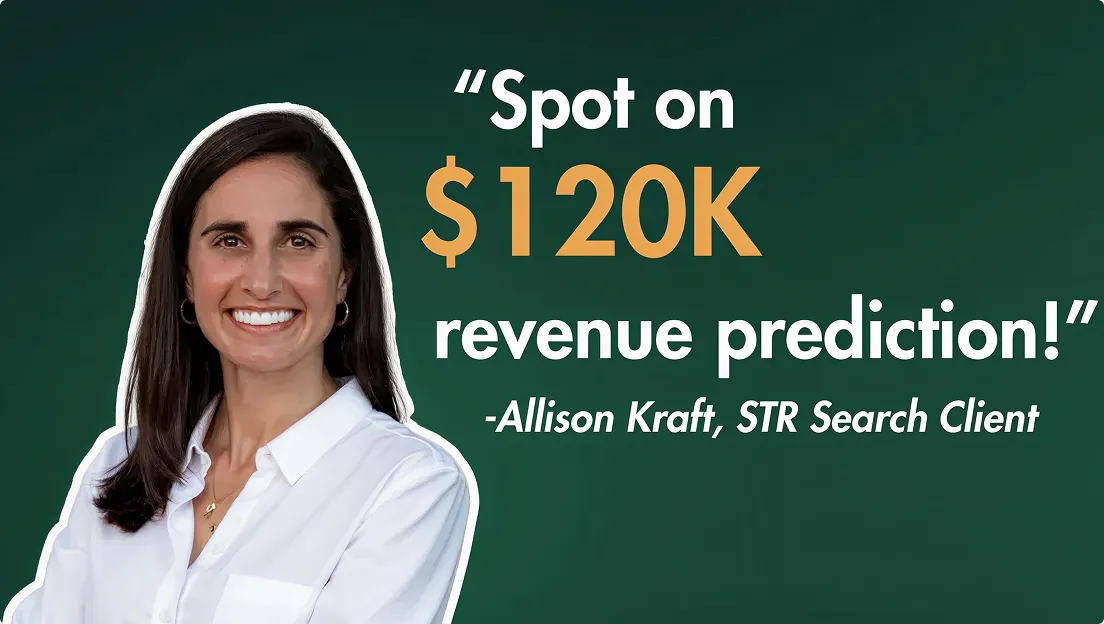
From zero real estate experience to a thriving short-term rental business, Allison locked in $120K in revenue her first year and is now expanding with STR Search again. Proof that the right team can turn analysis paralysis into profitable action!

Thanks to John's expert guidance, I made my first real estate and Airbnb investment a massive success, with consistent positive cash flow and an exceptional return on investment!

John's training gave me the confidence to secure a loan on the spot and scale from one STR to three. His approach is a total game-changer!
Why Choose STR Search?

Put your money to work & lower your tax bill
We’ve spent years analyzing what works so you don’t have to. Our job is to cut through bad data and help you make smart, profitable decisions backed by real numbers.
Schedule Your Free CallTrusted by hundreds of successful investors
Generate $3-5K+ monthly cash flow with our proven property matching system.
Build long-term wealth through STRs with cash flow, equity, and bonus depreciation.
Skip 6-12 months of trial and error with our data-driven underwriting and market analysis
We have a 100% success rate across $90M+ in Real Estate
Out of the 275+ properties we've helped our clients buy every single one has been profitable.
You want more money. More time. More freedom. But may be stuck trading hours for dollars, and scaling your investment strategy feels out of reach.
While others are getting lost in analysis paralysis, you’ve got capital and drive to change your situation. Investors who choose the right STRs can generate $3–5K/month in cash flow, plus serious tax benefits and long-term wealth.
We’ve spent years obsessed with STR investing data so you don’t have to.
With our property match services, there’s no guesswork! Just profitable properties built to perform. With the right deal, your capital can buy more than returns. It can buy your freedom.




All The Ways We Can Help You
Free courses, services, and trainings, to help you maximize your earnings from AirBnb...


Get in touch with us.
Everything Smart Investors Ask About STR Wealth Building
To start an Airbnb in Utqiagvik, Alaska, begin by researching the North Slope Borough's zoning regulations and business licensing requirements, as the borough typically requires a business license and may have specific short-term rental ordinances that limit rentals to certain zones or require special permits. Contact the North Slope Borough Planning Department and obtain necessary permits, which may include a conditional use permit for short-term rentals, business license, and potentially a bed and breakfast permit if operating more than 3 rooms. Finding property in Utqiagvik is challenging due to limited housing stock and high costs, with most properties being company-owned or restricted to residents, so consider partnering with local property owners or purchasing through the few available real estate channels, expecting costs of $300,000-$800,000 for suitable properties. Furnish the property with extreme cold weather considerations, including heavy-duty heating systems, arctic-rated appliances, warm bedding, and emergency supplies, sourcing items through Anchorage suppliers or online retailers with shipping to remote locations, budgeting $15,000-$30,000 for furnishing. List your property on Airbnb and other platforms like VRBO, highlighting unique arctic experiences, Northern Lights viewing, and cultural attractions, setting rates between $150-$400 per night depending on season and accommodations. Manage the property by establishing relationships with local maintenance providers, cleaning services, and emergency contacts, considering hiring local residents for property management, and preparing for seasonal challenges including extreme weather, limited daylight in winter, and supply chain difficulties for restocking and repairs.
Identifying profitable short-term rental properties in Utqiagvik, Alaska requires focusing on proximity to the Arctic Research Consortium facilities, Wiley Post-Will Rogers Memorial, and the airport since most visitors are researchers, government workers, or Arctic tourists arriving for specific purposes. Target properties with 2-3 bedrooms, reliable heating systems rated for extreme cold, backup power generators, high-speed internet for remote workers, and parking spaces with engine block heaters, as temperatures can reach -30°F regularly. Pricing analysis should account for seasonal demand peaks during summer research months (June-August) when rates can reach $200-400/night, compared to winter lows of $100-150/night, with annual occupancy rates typically around 40-50% due to the remote location. Competition research reveals limited options with only 3-5 active STRs as of 2023, primarily serving the North Slope Borough workforce and visiting researchers, creating opportunities for well-positioned properties. Essential tools include AirDNA for Arctic market data, STR Sense for occupancy tracking, and local resources like the North Slope Borough planning department for zoning regulations, Utqiagvik Corporation for land lease information, and Arctic Slope Regional Corporation for area development insights, while partnering with local property management companies familiar with extreme weather maintenance requirements is crucial for success.
To obtain an Airbnb/STR permit in Utqiagvik, Alaska, you must first contact the North Slope Borough Planning Department at 907-852-0215 or visit their office at 1274 Agvik Street, as Utqiagvik operates under borough jurisdiction rather than city regulations. Submit a completed Conditional Use Permit application along with a detailed site plan, proof of property ownership or lease agreement, liability insurance certificate (minimum $1 million coverage), septic system inspection report, and fire safety compliance documentation. Required fees typically include a $500 application fee plus $200 for the conditional use permit review process. The application timeline generally takes 45-60 days for processing, including a mandatory public hearing before the Planning Commission. Specific Utqiagvik requirements include compliance with Arctic building codes for extreme weather conditions, adequate heating systems rated for -40°F temperatures, emergency communication equipment due to remote location, waste management plan approval from the borough's utilities department, and parking provisions for guests despite limited road infrastructure. Additionally, you must demonstrate compliance with federal regulations since Utqiagvik is located on Alaska Native Corporation lands, which may require coordination with the Arctic Slope Regional Corporation (ASRC) for additional permissions depending on the specific property location within the borough boundaries.
Short-term rentals (STRs) in Utqiagvik, Alaska are generally legal but operate under limited regulatory oversight due to the city's remote location and small population of approximately 4,400 residents. As the northernmost city in the United States and primarily serving as a hub for oil industry workers and Arctic researchers, Utqiagvik has minimal formal STR regulations compared to larger Alaska municipalities like Anchorage or Juneau. The North Slope Borough, which governs Utqiagvik, does not have comprehensive STR-specific ordinances as of 2023, though operators must comply with basic business licensing requirements and zoning laws that generally permit residential rentals. There are no specific prohibited areas for STRs within the city limits, but the practical market is constrained by the community's isolation, extreme weather conditions, and limited tourism infrastructure. Recent legal changes have been minimal, with the borough focusing more on housing availability for permanent residents rather than regulating short-term accommodations, though this could change as Arctic tourism and research activities continue to grow in the region.
The most promising areas for Airbnb investment in Utqiagvik, Alaska are the neighborhoods near the Wiley Post-Will Rogers Memorial Airport and the central business district around Ahkovak Street, as these locations attract researchers, journalists, and tourists visiting for aurora viewing and Arctic experiences, particularly during the polar night season from November to January. The residential areas near the Iñupiat Heritage Center and along Stevenson Street offer good potential due to proximity to cultural attractions and the main commercial zone where visitors access tours, supplies, and dining. Properties near the Arctic Ocean coastline, especially around Point Barrow itself, command premium rates from photographers, scientists, and adventure tourists seeking the northernmost point experience, while accommodations near the North Slope Borough offices attract government contractors and oil industry professionals conducting business in the region. The limited hotel inventory in Utqiagvik, combined with consistent demand from researchers studying climate change, wildlife biologists, and cultural tourists, creates strong occupancy potential for well-positioned short-term rentals, particularly those offering modern amenities and reliable heating systems essential for the extreme Arctic climate.
In Utqiagvik, Alaska, Airbnb hosts are subject to the North Slope Borough's 12% bed tax on all short-term rental accommodations under 30 days, which applies to the gross rental amount including cleaning fees but excluding separately stated taxes. The borough also imposes a 6% sales tax on lodging services, bringing the total tax burden to approximately 18% on short-term rentals. These taxes are collected directly from guests at the time of booking through Airbnb's automatic tax collection system for the bed tax, while hosts are responsible for collecting and remitting the sales tax quarterly to the North Slope Borough by the 30th day following each quarter end using Form ST-1. Remittance procedures require hosts to register with the borough's tax department, maintain detailed records of all transactions, and file returns even if no tax is owed during a reporting period. Exemptions include rentals to permanent residents of the borough for more than 30 consecutive days, government employees on official business with proper documentation, and certain medical-related stays with physician certification, though these exemptions require advance approval and proper documentation from the North Slope Borough Tax Division.
Starting an Airbnb in Utqiagvik, Alaska requires significant upfront investment due to the remote Arctic location and extreme climate conditions. Property purchase costs average $180,000-$220,000 for a suitable 2-3 bedroom home, though inventory is extremely limited with most properties being company-owned housing. Furnishing costs run $15,000-$25,000 for cold-weather appropriate furniture, heavy-duty appliances, and specialized heating equipment. Initial setup including high-speed internet installation, satellite connectivity, and weatherproofing modifications costs approximately $8,000-$12,000. Business permits and licensing fees total around $500-$800 through the North Slope Borough. Insurance premiums are exceptionally high at $4,000-$6,000 annually due to extreme weather risks and remote location. Utility costs are substantial with heating bills alone reaching $800-$1,200 monthly, plus electricity at $300-$500 monthly, and water/sewer at $150-$200 monthly. First six months operating costs including utilities ($7,800), maintenance reserves ($3,000), cleaning supplies ($1,200), and marketing ($1,500) total approximately $13,500. The complete startup investment ranges from $221,800 to $277,800, making Utqiagvik one of the most expensive markets in the United States to launch an Airbnb operation.
Airbnb properties in Utqiagvik, Alaska face significant profitability challenges due to the extreme Arctic location and limited tourism infrastructure, with estimated annual revenues of $8,000-15,000 for the few available properties compared to operating expenses of $12,000-20,000 including heating costs that can exceed $400 monthly during winter months, property maintenance in harsh conditions, and limited cleaning service availability. The market consists primarily of business travelers, researchers, and government workers rather than leisure tourists, with occupancy rates estimated at 25-35% annually and average daily rates of $150-250, resulting in negative profit margins of -20% to -40% for most operators. Success factors include targeting corporate contracts with oil companies like ConocoPhillips and Arctic Slope Regional Corporation, offering extended-stay discounts for researchers and contractors, and maintaining properties that can withstand temperatures below -40°F with reliable heating systems and internet connectivity. The limited supply of fewer than 10 active Airbnb listings in 2023 creates some pricing power, but the high operational costs, seasonal accessibility issues, and small market size of approximately 5,000 residents make profitability extremely difficult without subsidizing income through other means or focusing exclusively on high-value corporate bookings.
Airbnb investments in Utqiagvik, Alaska face significant challenges due to the remote Arctic location, limited tourism infrastructure, and extreme seasonal variations, resulting in an estimated annual ROI of 3-8% with cash-on-cash returns of 2-6%. The market is primarily driven by business travelers, researchers, and government workers visiting the North Slope Borough, with peak demand during summer months (June-August) when temperatures are more moderate and the midnight sun attracts some adventure tourists. Property acquisition costs are exceptionally high due to transportation logistics, with average investment properties ranging $400,000-$800,000, while nightly rates can command $200-$400 during peak periods but drop significantly in winter months. The timeframe to profitability typically extends 7-12 years due to high operational costs including heating, maintenance, and supply logistics, with occupancy rates averaging 25-40% annually. Companies like Arctic Slope Regional Corporation have historically dominated local real estate markets since the 1970s, and the challenging regulatory environment combined with limited property availability makes Utqiagvik one of the most difficult Airbnb markets in Alaska, with most successful operators being local residents who can manage properties year-round and understand the unique logistical requirements of this northernmost U.S. city.
STRSearch is a national platform that helps investors identify profitable short-term rental properties including in remote Alaska markets like Utqiagvik. Arctic Slope Regional Corporation (ASRC) Real Estate Services has been active in Utqiagvik property transactions since the 1970s and works with investors seeking rental properties in the North Slope Borough. Coldwell Banker Arctic Real Estate, established in Barrow (now Utqiagvik) in 1985, specializes in unique Arctic properties including investment opportunities. National services like BiggerPockets (founded 2004), Roofstock (2015), and Mashvisor (2014) provide market analysis tools that can evaluate Utqiagvik's limited but potentially lucrative vacation rental market given its status as the northernmost city in the US. Local property management company Tundra Property Solutions has been managing short-term rentals for researchers, oil workers, and tourists visiting for aurora viewing since 2010. RE/MAX agents in Anchorage, particularly those with Prudhoe Bay Realty (operating since 1968), often handle North Slope investment properties including Utqiagvik. AirDNA and Transparent Intelligence provide short-term rental market data for Alaska markets including remote locations, while companies like RedAwning and AvantStay offer property management services that extend to unique markets like Utqiagvik where demand comes from researchers, journalists, and extreme tourism.
Put your money to work & lower your tax bill
We’ve spent years analyzing what works so you don’t have to. Our job is to cut through bad data and help you make smart, profitable decisions backed by real numbers.
Schedule Your Free Call